

The premiere of Food Network’s latest culinary competition, Pitmasters, has signaled a significant shift in the landscape of televised outdoor cooking, bringing together established digital influencers and seasoned barbecue experts in a grueling multi-day format. Among the inaugural contestants are Susie Bulloch, founder of the prominent barbecue platform Hey Grill Hey, and Christie Vanover, the creator of Girls Can Grill. The series represents a departure from traditional studio-based cooking shows, opting instead for a remote, open-air environment that tests the limits of culinary skill, physical endurance, and environmental adaptability. The competition features nine teams of two, tasked with surviving seven days and nights in a secluded location while producing high-caliber barbecue under the scrutiny of a prestigious judging panel.
The Evolution of Competitive Barbecue Television
The launch of Pitmasters occurs amidst a sustained period of growth in the American barbecue industry. According to market research, the barbecue grill market in the United States was valued at approximately $2.81 billion in 2022 and is projected to continue its upward trajectory. This commercial interest has mirrored a cultural shift toward "live-fire" cooking, a trend that Pitmasters seeks to capture by stripping away the luxuries of modern kitchens.
Unlike previous iterations of barbecue competitions that focused on the Kansas City Barbeque Society (KCBS) circuit style—characterized by strict presentation rules and specific protein categories—this new format emphasizes creativity and the mastery of fire management. The production’s choice of a high-altitude, outdoor setting introduces variables such as fluctuating air pressure and wind patterns, which significantly impact smoke density and heat retention. For competitors like Bulloch and Vanover, the transition from controlled backyard environments to a rugged competitive arena requires a sophisticated understanding of thermodynamics and meat science.
The Judging Panel: A Convergence of Culinary Disciplines
To evaluate the output of the nine teams, Food Network assembled a panel representing diverse sectors of the culinary world. The panel includes Andrew Zimmern, an Emmy-winning personality known for his expertise in global food cultures; Big Moe Cason, a Navy veteran and world-renowned pitmaster; Ernest Servantes, a decorated competition cook and chef; and Jess Pryles, a meat scientist and author.
This panel composition ensures that the dishes are judged not only on traditional barbecue metrics—such as tenderness and smoke profile—but also on technical execution, flavor balance, and cultural authenticity. The inclusion of a meat scientist like Pryles underscores the technical nature of the competition, where the chemical reactions occurring within the meat fibers are as critical as the aesthetic presentation.

Chronology of Episode One: The "Flash Burn" and "Big Burn" Challenges
The first episode of Pitmasters introduced a dual-challenge structure designed to test both speed and long-term strategy. The participants were subjected to two distinct cooking windows: the "Flash Burn" and the "Big Burn."
The Flash Burn: High-Stakes Micro-Gastronomy
The "Flash Burn" challenge required teams to produce a single, impactful bite within a strict 60-minute timeframe. This segment carries a $2,000 cash prize for the winning team, providing an immediate financial incentive and psychological advantage. Bulloch and Vanover opted for a fusion dish titled "Buffalo Chicken Lumpia." This selection combined Vanover’s expertise in Filipino-inspired cuisine—a nod to her husband’s heritage—with Bulloch’s signature Buffalo chicken profile.
The technical execution involved cooking chicken thighs on planchas over an open flame, a method that requires constant temperature monitoring to prevent the skin from scorching while ensuring the interior remains succulent. The chicken was then incorporated into lumpia wrappers and fried in a Dutch oven placed directly over hot coals. The dish was served with a cabbage slaw and a creamy Buffalo ranch dressing. During the judging phase, Andrew Zimmern expressed initial skepticism regarding the concept but ultimately praised the execution, highlighting the successful integration of disparate flavor profiles.
The Big Burn: Managing the 10-Hour Window
Simultaneously, the teams were engaged in the "Big Burn," a 10-hour marathon requiring the preparation of two proteins and at least one side dish. This challenge is the cornerstone of the episode, as it mirrors the traditional "low and slow" philosophy of barbecue while introducing the stressors of a ticking clock.
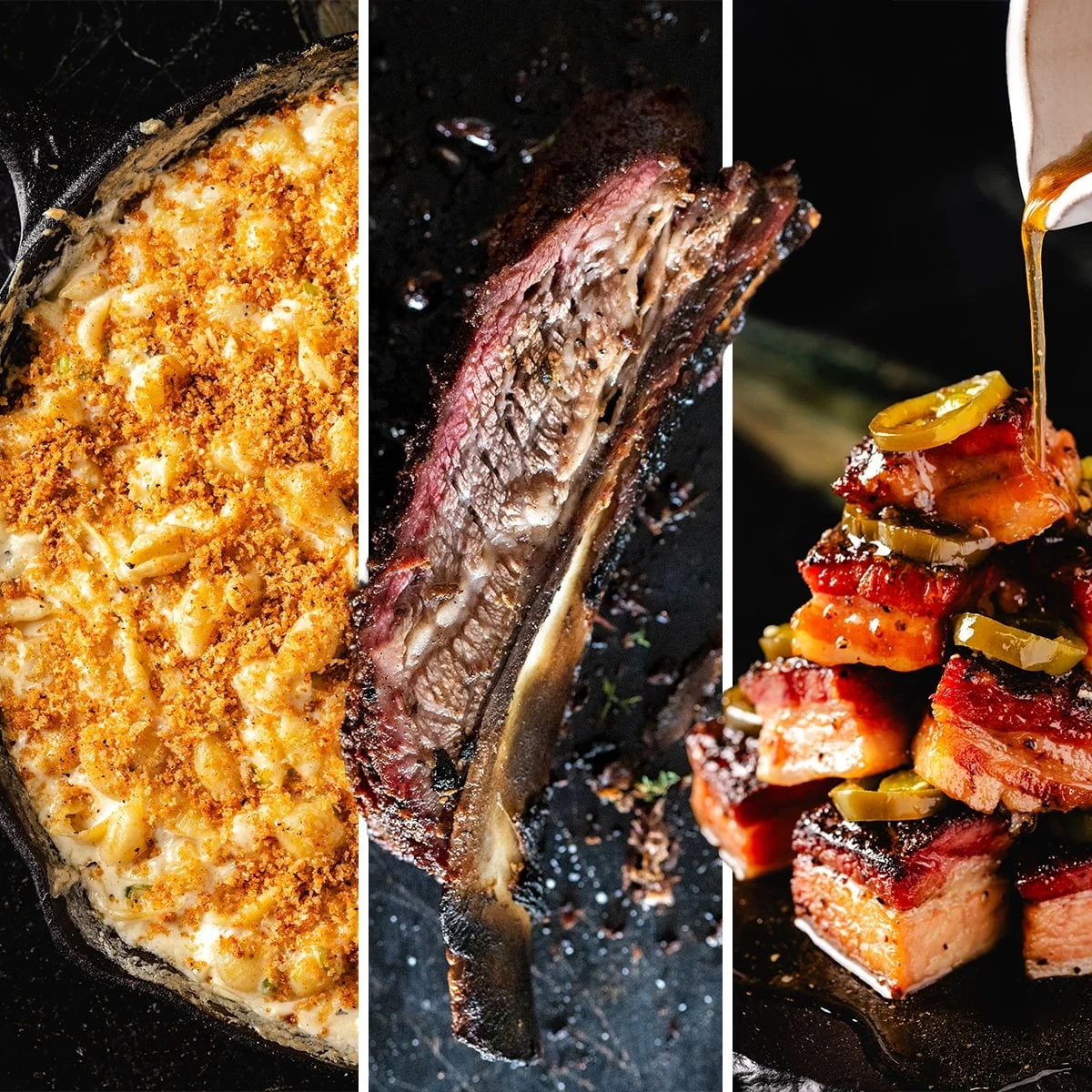
Bulloch and Vanover’s menu featured three primary components:
- Candied Jalapeño Pork Belly Burnt Ends: A dish characterized by its high fat content and requirement for precise rendering.
- Smoked Poblano Shells and White Cheddar: A sophisticated take on macaroni and cheese, utilizing extra sharp white cheddar and smoked gouda to complement the heat of the poblanos.
- "Dino" Ribs (Beef Plate Ribs): Prepared by Vanover, these massive ribs require significant time to break down the tough connective tissues (collagen) into gelatin.
Technical Analysis: Overcoming the High-Altitude "Stall"
One of the most critical moments of the episode involved the thermal physics of the pork belly. During the smoking process, meat often hits a "stall"—a period where the internal temperature plateaus due to evaporative cooling. In the high-altitude setting of the competition, where the boiling point of water is lower and the air is thinner, managing the stall becomes exponentially more difficult.

When the pork belly failed to progress through the stall, the team employed the "Texas Crutch" method. This involves wrapping the meat in foil or butcher paper to trap moisture and heat, effectively steaming the meat through the plateau. This tactical decision was essential for ensuring the protein reached the desired tenderness within the 10-hour limit. Failure to account for the altitude-induced stall could have resulted in under-rendered fat, rendering the pork belly unpalatable for the judges.
Strategic Menu Development and Cultural Fusion
The menu presented by Bulloch and Vanover reflects a broader trend in the barbecue community: the move away from regional silos toward "New American Barbecue." By combining Filipino lumpia with Buffalo chicken and pairing beef plate ribs with a bright spinach salad, the team demonstrated a sophisticated understanding of palate fatigue.
Traditional barbecue can often be heavy and monochromatic in flavor. The inclusion of candied jalapeños and a vinegar-based slaw provides the necessary acidity to cut through the richness of the beef fat and the creaminess of the smoked gouda shells. From a journalistic perspective, this strategy highlights the evolution of barbecue from a rustic craft to a nuanced culinary art form capable of competing on a global stage.
Environmental Constraints and Production Realities
The production of Pitmasters faced significant logistical challenges that impacted the contestants’ performance. Judging took place after sundown in a mountainous region, where temperatures dropped precipitously. The transition from the intense heat of the pits to the near-freezing ambient air during the hours-long judging process added a layer of physical hardship.
Observations from the set indicated that contestants and judges alike were forced to utilize multiple layers of thermal clothing, a detail that underscores the "open-fire" nature of the show. For the pitmasters, maintaining the temperature of the finished food for the judges in such conditions required meticulous timing and the use of insulated resting techniques.
Broader Impact and Industry Implications
The participation of digital-first entrepreneurs like Susie Bulloch in a major Food Network production signifies the blurring lines between social media influence and traditional culinary authority. Bulloch, whose "Hey Grill Hey" platform has achieved top-tier rankings in search engine results for recipes like smoked macaroni and cheese, brings a pre-existing audience to the network.

This synergy benefits both the creators and the broadcaster. For the creators, it validates their expertise in a high-pressure, peer-reviewed environment. For Food Network, it taps into the "backyard hero" demographic—individuals who may not be professional chefs but are highly invested in the gear, techniques, and culture of barbecue.
The episode concluded with a face-to-face feedback session, a format that encourages transparency and professional growth among the competitors. While the specific winner of the first episode remains a focal point for viewers, the broader narrative is one of resilience. The ability of the teams to produce "Dino Ribs" and "Buffalo Chicken Lumpia" in the middle of a wilderness setting serves as a testament to the versatility of modern barbecue techniques.
Conclusion
Pitmasters Episode One has set a high bar for the remainder of the season, establishing a narrative of technical mastery versus environmental adversity. By focusing on the science of the smoke, the strategy of the menu, and the endurance of the cooks, the show provides an informative look at the complexities of live-fire cooking. As the season progresses, the industry will likely watch closely to see how these experts handle the escalating challenges and what new innovations emerge from the smoke. For enthusiasts and professionals alike, the series offers a masterclass in the application of traditional methods to modern, high-stakes scenarios.
