

The implementation of Regulation (EU) 2019/787 has introduced a refined framework for the definition, description, and presentation of spirit drinks, specifically addressing the long-standing technical requirements for one of the world’s most recognizable spirits: London Dry Gin. Despite these legislative updates, which were further amended under Regulation (EU) 2021/1465, the fundamental essence of the "London Dry" designation remains a matter of process rather than geography or flavor. For the global distilling industry and the millions of consumers who favor the spirit, understanding these nuances is essential, as the designation serves as a rigorous quality control benchmark that dictates how a spirit is produced, rather than where it is made or how it must taste.
Historically, the term "London Dry Gin" has functioned as a process-based seal of quality. In the modern era, the distinction between "Distilled Gin" and "London Gin" is governed by precise chemical and procedural requirements. While the United Kingdom has retained the version of the legislation in effect at the time of its departure from the European Union, the core standards remain largely harmonized across the continent. This regulatory landscape ensures that any bottle bearing the London Dry label has adhered to a strict set of distillation protocols designed to guarantee purity and traditional production methods.
A Chronological History of Quality Control
The necessity for such stringent regulations is rooted in the volatile history of gin production. During the 18th and 19th centuries, particularly during the period known as the "Gin Craze," spirits were often produced from low-quality grains and agricultural waste. These early distillates were frequently harsh and potentially toxic, leading many producers to add heavy amounts of sugar, turpentine, or other adulterants to mask the unpalatable flavors.
The turning point for the industry arrived with the 1830 invention of the continuous column still by Aeneas Coffey. Unlike the traditional pot still, which could only reach an alcoholic strength of approximately 50-60% in a single pass, the column still allowed distillers to produce a highly rectified, clean, and neutral spirit reaching up to 96% alcohol by volume (ABV). This technological leap facilitated the creation of a "dry" style of gin that did not require sweetening to be consumable. By the late 19th century, London became the epicenter for this high-quality, unsweetened distillation style, giving birth to the name that would eventually be codified into international law.
Technical Specifications of London Gin Production
Under the current EU and UK frameworks, the production of London Gin is a multi-stage process that begins with a base spirit of agricultural origin. This base must be distilled to an initial alcoholic strength of at least 96% ABV, effectively ensuring that the starting material is a completely neutral ethanol, free from the impurities often found in lower-proof distillates.
The regulation specifies that this neutral spirit must then be redistilled in traditional stills in the presence of Juniperus communis L. (juniper berries) and other natural botanicals. For a spirit to be classified as London Gin, several critical criteria must be met:
- Methanol Limits: The methanol content of the ethyl alcohol used must not exceed 5 grams per hectoliter of 100% vol. alcohol. Methanol, often called "wood alcohol," is a toxic byproduct of fermentation. While modern distillation techniques naturally remove methanol, the inclusion of this limit in the London Gin definition serves as a historical and contemporary guarantee of safety and purity.
- Distillation Strength: The resulting distillate must come off the still at an alcoholic strength of at least 70% ABV. This ensures that the botanical flavors are captured efficiently during the vapor-infusion or maceration-distillation process.
- No Post-Distillation Additives: Perhaps the most defining characteristic of London Gin is the prohibition of added flavorings or colorings after the final distillation. All flavors must be imparted exclusively through the distillation of the neutral spirit in the presence of natural plant materials.
- The "Dry" Requirement: While the regulation technically defines "London Gin," it mandates that if the term "dry" is appended, the finished product must contain no more than 0.1 grams of sweetening products per liter, expressed as invert sugar. In practice, almost all London Gins meet this requirement, making "London Dry Gin" the industry standard.
The Distinction Between Distilled and London Gin
A common point of confusion for consumers lies in the difference between "Distilled Gin" and "London Dry Gin." According to Section 21.a of Regulation 2019/787, Distilled Gin allows for the addition of flavoring substances or preparations after the distillation process.
This distinction is why famous brands such as Hendrick’s or Martin Miller’s cannot use the "London Dry" designation. Hendrick’s, for instance, adds essences of cucumber and Bulgarian rose after the distillation is complete. Similarly, Martin Miller’s transports its distillate to Iceland to be blended with local water, and also incorporates flavor elements post-distillation. While these are high-quality "Distilled Gins," they do not meet the "exclusive distillation" requirement necessary for the London Gin label.
Furthermore, the regulation permits the use of "concentrates" in Distilled Gin, where a highly concentrated botanical spirit is diluted with neutral alcohol and water. While London Gin can also be made via a concentrate method, the added neutral spirit must meet the same rigorous purity and methanol standards as the original distillate.
Botanical Restrictions and the Juniper Predominance Problem
Despite the technical rigor of the distillation process, the legal definition of gin flavor remains surprisingly subjective. Both the EU and UK regulations state that the "taste must be predominantly that of juniper." However, the law provides no numerical or chemical metric to define "predominant."
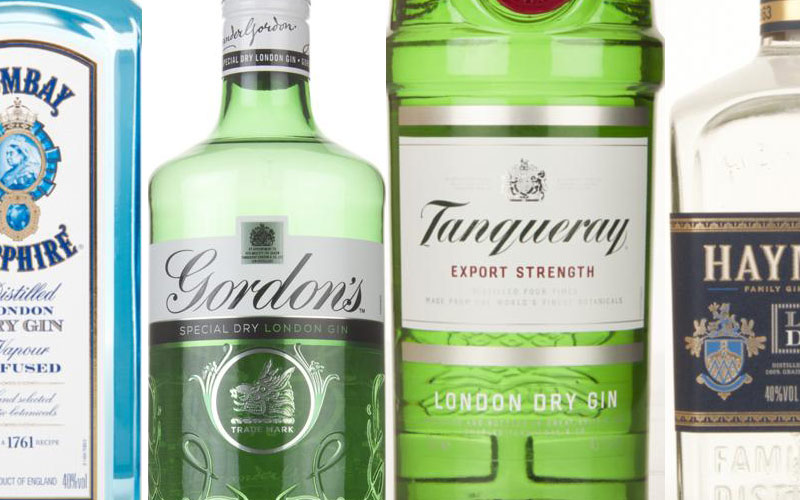
This lack of clarity has led to the rise of "Contemporary" or "New Western" style gins, where citrus, floral, or spice notes often rival the juniper profile. While some traditionalists argue that these spirits push the boundaries of the gin category, the regulatory bodies have yet to implement strict flavor-profile testing.
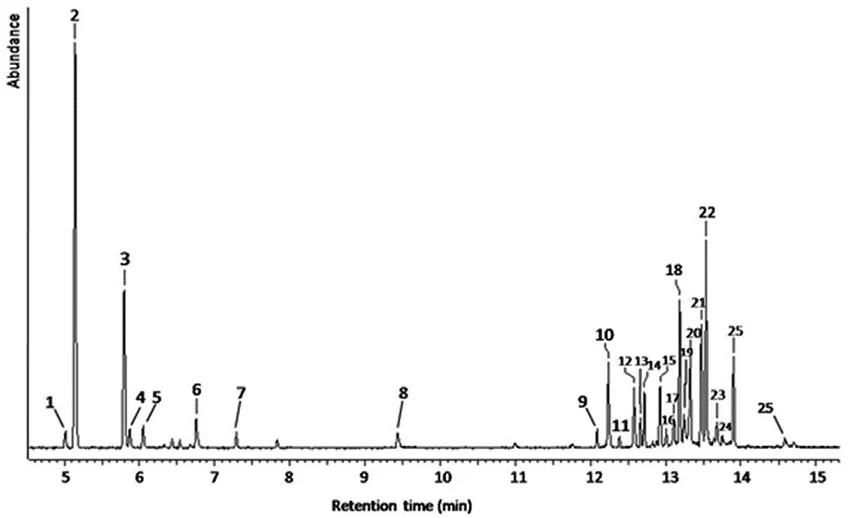
Some elite distilleries, such as Laverstoke Mill (the home of Bombay Sapphire), utilize Gas Chromatography-Mass Spectrometry (GC-MS) to analyze the volatile compounds in their spirits. This technology allows them to map the chemical "signature" of their gin, ensuring consistency in the levels of alpha-pinene (juniper) and limonene (citrus) across batches. However, for smaller craft distillers, such laboratory analysis is often cost-prohibitive, leaving the enforcement of "juniper predominance" to the subjective palates of quality control officers.
Additionally, the London Gin designation specifies that flavors must come from "natural plant materials." This phrasing creates unique hurdles for experimental distillers. For example, a spirit distilled with mushrooms (fungi) or honey (an animal byproduct) may technically fail to meet the London Gin criteria because these ingredients are not classified as plants. Similarly, Portobello Road’s "Pechuga" gin, which involves suspending a turkey breast in the still during distillation, cannot be labeled as London Dry due to the use of animal protein.
The Role of Sugar and Anti-Counterfeiting Measures
The allowance of 0.1 grams of sugar per liter in a "dry" gin often raises questions. If the goal of a dry gin is to be unsweetened, why allow any sugar at all? The answer lies in industrial security rather than flavor.
Major global brands often use "sugar dyes" or tracer molecules to protect their intellectual property. These tracers allow companies to identify counterfeit products that may be using their branding but containing inferior spirits. By allowing a microscopic amount of sugar, the law permits these essential anti-counterfeiting measures to remain in place without disqualifying the spirit from the London Dry category.
Global Market Impact and Geographical Status
Unlike Scotch Whisky, Cognac, or Champagne, "London Dry Gin" does not currently hold a Geographical Indication (GI) status that ties it to a specific city. A London Dry Gin can be legally produced in Tokyo, New York, or Madrid, provided the process adheres to the EU or local equivalent regulations.
In 2015, there were significant discussions within the industry regarding whether London Dry Gin should seek GI status. However, the proposal was largely abandoned because GI status requires a "technical file" that is often extremely restrictive. For example, the GI for Gin de Mahón (from Menorca) specifies exact maceration times and botanical sources. Applying such rigid rules to the entire London Dry category would likely have disqualified hundreds of existing brands that use diverse botanical recipes and distillation timings.
In the United States, the Alcohol and Tobacco Tax and Trade Bureau (TTB) maintains a slightly more inclusive definition. The U.S. standard focuses on the "main characteristic flavor derived from juniper berries" but does not enforce the same strict "no-additives-after-distillation" rule for all gins, though it does recognize "Distilled Gin" as a specific category.
Broader Implications for the Spirits Industry
The 2019/787 regulations represent an effort to modernize spirit definitions while respecting the traditions that built the industry. As of 2024, the global gin market is estimated to be worth over $15 billion, with the "premium" segment—largely dominated by London Dry and high-end Distilled Gins—showing the most significant growth.
For the consumer, the "London Dry" label remains a mark of transparency. It guarantees that the flavors in the glass were created through the artistry of the still, rather than the chemistry of post-distillation additives. For the distiller, it remains a badge of technical proficiency.
As the industry continues to evolve, the "predominant flavor" clause will likely remain the primary battlefield for regulators. If consumer confusion grows regarding what constitutes a "gin" versus a "flavored botanical spirit," we may see the introduction of more concrete numerical measures, such as minimum levels of juniper-derived terpenes. Until then, London Dry Gin stands as a testament to a 19th-century process that continues to define 21st-century quality.
