

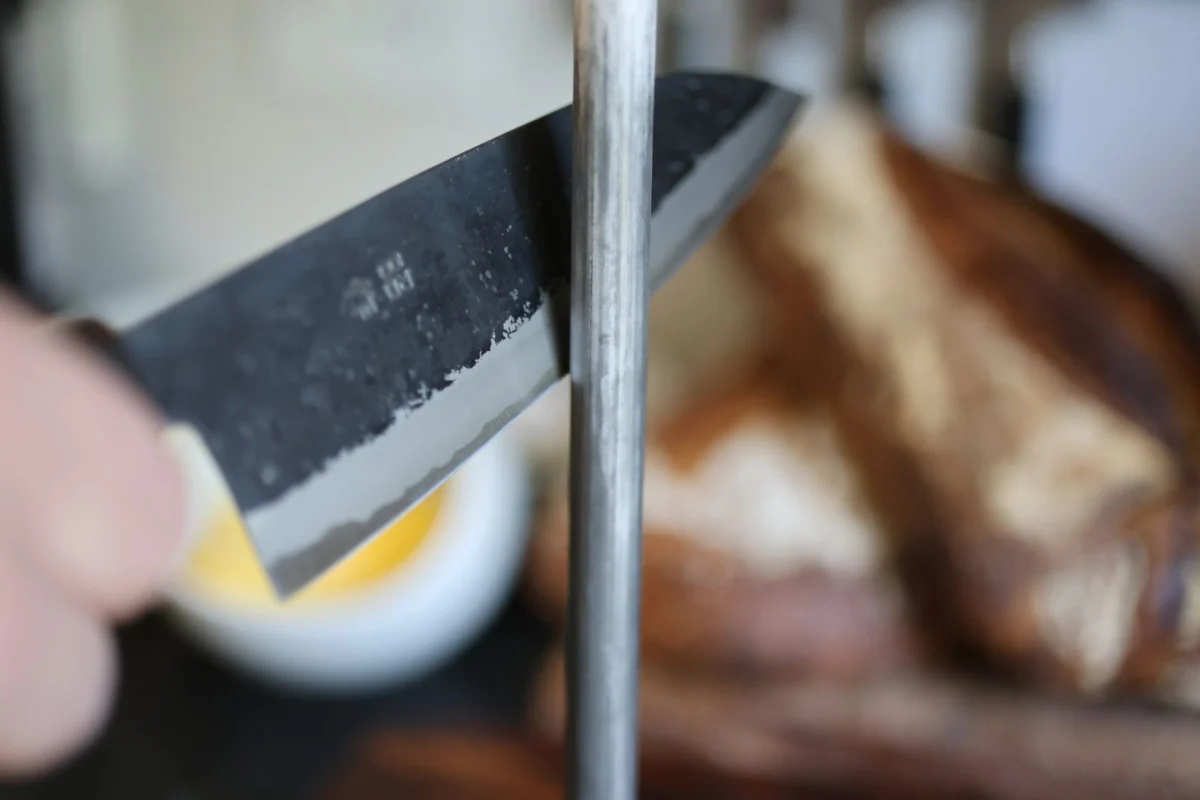
The relentless pursuit of culinary excellence often hinges on a fundamental truth: a chef is only as good as the sharpness of their knives. This isn’t merely anecdotal; it’s a principle echoed in professional kitchens and competitive cooking arenas worldwide, where contestants are frequently observed making last-minute adjustments to their blade edges with a honing rod before diving into meticulous prep work. While commonly mistaken for sharpening, this crucial act of honing serves a distinct purpose: it realigns the microscopically thin, often bent or folded, edge of a knife, restoring its cutting efficacy without removing significant material, much like straightening a paperclip that has lost its form. However, not all honing rods are created equal, and discerning the appropriate tool is paramount, particularly in an era of increasingly specialized knife metallurgy. The effectiveness of a honing rod is inextricably linked to the hardness of the knife steel it’s intended to maintain. While conventional steel rods suffice for softer, more pliable blades, high-quality, harder steel knives—especially those prevalent in contemporary culinary landscapes—demand the gentle yet effective abrasive properties of a ceramic honing rod to realign their delicate edges without incurring damage. The intricacies of this relationship, from the scientific principles governing blade integrity to the practical implications for both professional chefs and passionate home cooks, warrant a deeper exploration.
Understanding the Blade: Metallurgy and the Rockwell Scale
To appreciate the necessity of a ceramic honing rod, one must first grasp the fundamental science behind knife steel and its properties. The journey of a knife blade begins with its forging, a process where steel is subjected to extreme temperatures, typically ranging between 1,500°F and 1,800°F. This intense heat allows the steel’s molecular structure to become malleable. Following this, the steel undergoes rapid cooling, often through quenching, which forces these molecules to realign into a denser, harder state. This hardening process, crucial for edge retention, imparts rigidity to the blade but also introduces a degree of brittleness.
The hardness of a knife blade is quantitatively measured using the Rockwell Hardness Scale, specifically the HRC (Hardness Rockwell C) rating. This scale provides a standardized metric for comparing the resistance of a material to indentation. For knives, an HRC rating typically falls within a range, with values around 60–61 HRC indicating a significantly harder steel. Knives in this higher HRC range are renowned for their superior edge retention, meaning they resist deformation and stay sharp for longer periods, even with extensive use on cutting boards. This resilience is a direct consequence of their rigid molecular structure. However, this increased hardness comes with a trade-off: greater brittleness. Such blades are more susceptible to chipping, particularly when encountering extremely hard materials like frozen food or bone – tasks generally ill-suited for a fine kitchen knife.
Conversely, knives crafted from softer steels, typically registering around 56–58 HRC on the Rockwell scale, exhibit different characteristics. While still capable of holding a respectable edge, these blades are more prone to micro-deformation. Rather than chipping, their edges are more likely to dent, fold, or bend under pressure. Even routine cutting board contact will eventually cause the microscopic edge to roll over slightly. For these softer knives, a traditional steel honing rod proves highly effective. Its surface is hard enough to physically reshape and straighten out these minor deformities, pushing the bent edge back into alignment. However, the same steel rod will have minimal impact on harder steels, which require a different approach due to their inherent rigidity and fine, brittle edges.
The Anatomy of Sharpness: Honing vs. Sharpening
The terms "honing" and "sharpening" are frequently used interchangeably, yet they describe distinct processes vital to knife maintenance. Understanding this distinction is fundamental to proper blade care.
-
Sharpening: This is the process of actively removing material from the knife blade to create a new, sharper edge. It involves grinding the blade against an abrasive surface, such as a whetstone (also known as a sharpening stone), a pull-through sharpener, or an electric sharpener. The goal is to establish a fresh apex where the two bevels of the blade meet, effectively restoring a dull or damaged edge. Sharpening is typically performed when a knife has truly lost its cutting ability, feeling dull or snagging on ingredients. Depending on usage, sharpening might be needed every few months to once a year.
-
Honing: In contrast, honing does not create a new edge by removing substantial material. Instead, it realigns an existing edge that has merely become bent, folded, or otherwise deformed through regular use. Microscopic examination of a knife edge after some use would reveal that the very tip, or "apex," of the blade often gets pushed out of alignment, creating a tiny, almost invisible burr or curl. This misaligned edge is what makes a knife feel dull, even if it hasn’t lost much material. A honing rod, whether steel or ceramic, works by straightening this microscopic deformation, pushing the metal back into its proper place. This process restores the blade’s keenness and allows it to cut smoothly again. Honing is a maintenance task performed frequently, often before each use or several times during a prolonged cooking session.

The analogy of a bent paperclip is particularly apt: sharpening is like getting a brand-new paperclip, while honing is like carefully straightening a slightly bent one to make it functional again. While a dull knife will eventually require sharpening, regular honing can significantly extend the intervals between sharpening sessions, preserving the knife’s overall lifespan and maintaining consistent performance.
Evolution of Honing Tools: From Steel to Ceramic
The evolution of knife care tools mirrors the advancements in knife metallurgy itself. For centuries, various forms of natural stones and rough surfaces were used to sharpen blades. The concept of a "honing" tool, a rod designed for quick edge realignment, gained prominence with the widespread use of steel knives.
Traditional steel honing rods, often found in butchers’ shops and professional kitchens, have been the standard for generations. These rods are typically made from hardened steel and feature fine grooves or a slightly abrasive texture. Their efficacy lies in their ability to "peen" or push the softer steel of many Western-style knives back into alignment. For blades with HRC ratings in the 56-58 range, these steel rods are remarkably effective at correcting minor edge deformities, restoring a serviceable cutting edge with a few swift passes.
However, the culinary world has witnessed a significant shift towards knives made from harder, more advanced steels, particularly with the surging popularity of Japanese knives. These blades, often crafted from high-carbon steel alloys, boast HRC ratings ranging from 59 to 61 or even higher. While their superior hardness provides exceptional edge retention, it also makes their edges more brittle and less forgiving. When a hard steel edge deforms, it tends to micro-chip rather than bend, or if it does bend, it resists realignment by a softer steel rod. Attempting to hone a hard steel knife with a traditional steel rod can be largely ineffective, and in some cases, might even cause more damage by attempting to force a rigid edge that prefers to chip.
This metallurgical evolution necessitated a corresponding advancement in honing technology. The answer emerged in ceramic honing rods. Composed of materials significantly harder than most knife steels, ceramic rods bridge the gap between simple realignment and subtle abrasive sharpening.
The Ceramic Advantage: Precision and Preservation
Ceramic honing rods represent a sophisticated leap in knife maintenance, offering a dual benefit that traditional steel rods cannot. They are, in essence, a hybrid tool: capable of realigning a bent edge while simultaneously imparting a micro-sharpening effect.
The key to their effectiveness lies in their material composition. Ceramic, particularly the fine-grit ceramic used in these rods, is considerably harder than even the toughest knife steels. This inherent hardness means that when a knife edge is drawn across a ceramic rod, the rod doesn’t just push the metal; it actually removes a minute amount of material. This abrasive action is akin to using an extremely fine-grit whetstone (often comparable to 1200 grit or higher), effectively polishing and refining the blade’s apex with each pass.
For hard steel knives (59-61 HRC), this gentle abrasive quality is precisely what’s needed. Their rigid edges, when deformed, often require more than mere realignment; they benefit from the removal of the minute, often invisible, chipped or rolled-over particles that compromise sharpness. The ceramic rod meticulously grinds away these imperfections, revealing a fresh, perfectly aligned cutting surface. This capability makes ceramic rods indispensable for maintaining the razor-sharp precision characteristic of high-end Japanese knives without the aggressive material removal associated with full sharpening.

The benefits extend beyond just hard steels. Even for softer knives (56-58 HRC) that could technically be honed with a steel rod, a ceramic rod offers superior performance. Its fine abrasive action will not only realign the edge but also refine it to a higher degree of sharpness than a steel rod alone, leaving a more polished and keener edge. This means that a single ceramic honing rod can effectively serve the maintenance needs of an entire knife block, regardless of the individual blade’s steel hardness.
Crucially, regular use of a ceramic honing rod can significantly extend the period between professional sharpenings. By consistently refreshing and refining the edge, users can maintain optimal cutting performance for months longer than they would with less effective honing methods. This translates to prolonged knife life, reduced wear on the blade from less frequent heavy sharpening, and a consistently pleasurable cooking experience.
Tailoring Your Tool: Matching Honing Rods to Knife Steel
Choosing the right honing rod requires a basic understanding of your knife collection. The primary differentiator, as discussed, is the steel’s hardness, typically indicated by its Rockwell Hardness Scale (HRC) rating.
Identifying Your Knife’s HRC
Most reputable knife manufacturers provide the HRC rating on their product pages or in their specifications. For those uncertain, a general rule of thumb applies:
- Western-style knives: Traditional legacy brands from Europe and America, such as Wüsthof and Henckels, commonly forge their blades from softer stainless steels, typically landing in the 56–58 HRC range. These steels are known for their durability and ease of maintenance with a steel honing rod, though a ceramic rod will still offer a finer edge.
- Japanese-style knives: These blades are frequently crafted from higher carbon steels or specialized alloys, resulting in significantly harder edges, usually between 59–61 HRC, and sometimes even higher. This hardness contributes to their legendary sharpness and edge retention but necessitates more delicate handling and maintenance. These knives are the prime candidates for ceramic honing rods.
The Universal Solution
If uncertainty persists about a knife’s HRC, opting for a ceramic honing rod is the safest and most effective course of action. Its gentle abrasive properties ensure that it will not damage softer steels while providing the necessary refinement for harder ones. It outperforms a steel honing rod on virtually all types of kitchen knives, making it a versatile and intelligent investment for any culinary enthusiast. By maintaining the entire knife block with a ceramic rod, users ensure consistent, high-quality edges across their entire arsenal, thereby prolonging the life and performance of each blade.
Expert Insights and Practical Applications
Culinary professionals and metallurgists consistently underscore the critical role of diligent knife maintenance. "A sharp knife is not just about efficiency; it’s fundamentally about safety," states Chef Antoine Dubois, a seasoned culinary instructor. "Dull knives require more force to cut, increasing the risk of slips and serious injury. Regular honing, especially with a ceramic rod for our higher-end blades, ensures predictable cuts and a much safer working environment."
From a metallurgical perspective, Dr. Elena Petrova, a material science expert specializing in blade alloys, emphasizes the long-term benefits. "The micro-abrasive action of a ceramic rod gently removes the tiniest imperfections, preventing the propagation of micro-fractures that could eventually lead to chipping or rolling. This proactive maintenance significantly extends the useful life of a high-performance blade, reducing the need for more aggressive sharpening which inherently removes more material."
For the home cook, incorporating a ceramic honing rod into the daily routine is a simple yet transformative practice. A few passes (typically 5-10 per side) at a consistent angle before or after each use can maintain an edge that feels "freshly sharpened." This not only enhances the joy of cooking by making ingredient preparation effortless but also fosters a deeper appreciation for the tools themselves.

Tips for Effective Honing:
- Angle Consistency: Maintain a consistent angle (typically 15-20 degrees per side, matching your knife’s grind) throughout the stroke.
- Light Pressure: Use light, even pressure. Let the ceramic’s abrasive quality do the work, not brute force.
- Full Edge Coverage: Ensure the entire length of the blade’s edge makes contact with the rod during each pass.
- Cleanliness: Wipe your blade clean after honing to remove any metallic dust. Store your ceramic rod carefully to prevent damage, as ceramic can be brittle.
Market Overview and Key Recommendations
The market for ceramic honing rods has grown in response to increasing consumer demand for effective knife maintenance solutions. While many ceramic rods offer similar fundamental performance due to the material’s properties, variations in length, handle material, and brand reputation can influence choice.
Two prominent and highly regarded options stand out for their quality and effectiveness: the MAC Ceramic Honing Rod and the Messermeister Ceramic Sharpening Rod. Both are crafted from fine-grit ceramic, typically around 1200 grit, ensuring a delicate yet effective abrasive action.
-
MAC Ceramic Honing Rod: This model typically features an 8.5-inch ceramic rod paired with a wooden handle. Its shorter length makes it slightly more compact and potentially easier to store, which is a significant consideration given the brittleness of ceramic. The wooden handle offers a classic aesthetic and comfortable grip. However, wood requires more gentle cleaning and thorough drying to prevent water damage or warping over time. It’s an excellent choice for those with smaller knife collections or who prioritize a traditional feel.
-
Messermeister 12-Inch Ceramic Sharpening Rod: As its name suggests, this option boasts a full 12-inch ceramic rod and is usually equipped with a durable plastic handle. The extended length provides a greater surface area, which can be advantageous for honing longer knives, allowing for smoother, more deliberate passes. However, its increased length may pose storage challenges, and ceramic rods, being brittle, are susceptible to breakage if mishandled or simply tossed into a crowded utensil drawer. The plastic handle offers superior durability and is easier to clean and maintain than wood, making it a practical choice for busy kitchens.
When selecting between these or other ceramic rods, consider:
- Knife Length: If you primarily use
