

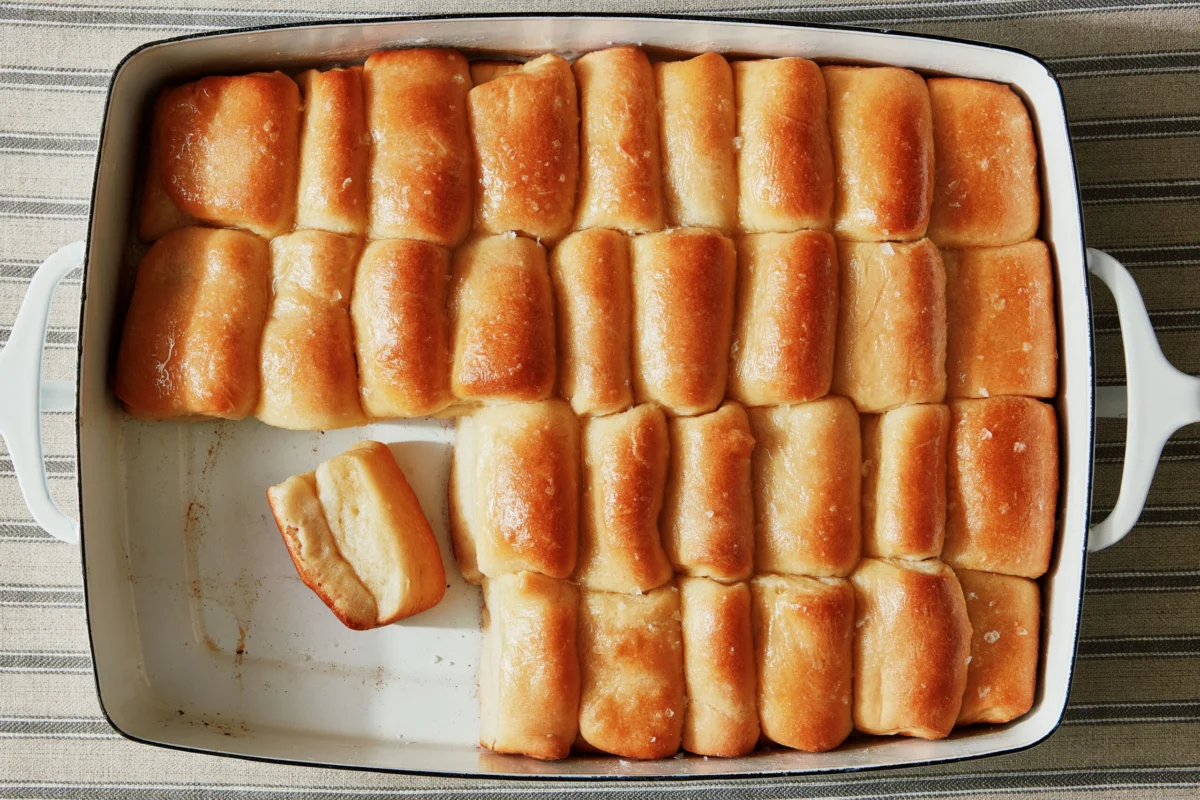
With burnished tops, buttery layers, and a sprinkle of flaky sea salt, Parker House rolls are not merely a classic American dinner roll but a culinary institution, embodying a rich history and a testament to enduring gastronomic appeal. Originating from the storied kitchens of Boston’s Parker House Hotel in the 19th century, these soft, fluffy yeast rolls quickly transcended their birthplace to become a beloved staple across the United States. Often affectionately referred to as "pocketbook rolls" due to their distinctive folded shape, they seamlessly bridge the gap between everyday meals and celebratory feasts, serving as an indispensable accompaniment to holiday turkeys or festive hams, and later transforming into a delectable breakfast treat slathered with honey or jam.
A Glimpse into History: The Parker House Hotel’s Culinary Cradle
The genesis of the Parker House roll is inextricably linked to the Omni Parker House Hotel, a landmark establishment steeped in American history and culinary innovation. Opened in 1855 by Harvey D. Parker, the Parker House Hotel holds the distinction of being the longest continuously operating hotel in the United States. Situated in the heart of downtown Boston, it quickly became a beacon of luxury, hospitality, and gastronomic excellence, attracting a distinguished clientele that included literary giants like Charles Dickens and Ralph Waldo Emerson, as well as political figures and influential socialites.
The hotel’s kitchens were renowned for their pioneering spirit, credited with introducing several iconic American dishes. Beyond the rolls, the Parker House is famously the birthplace of the Boston Cream Pie, declared the official state dessert of Massachusetts in 1996, and is often cited as the origin point for the term "scrod," referring to a young cod or haddock prepared in a specific, fresh manner. This environment of culinary creativity and innovation provided the perfect crucible for the development of a bread that would stand the test of time.
While the exact moment of the Parker House roll’s creation is shrouded in a delightful blend of fact and culinary folklore, the most widely accepted accounts place its origin sometime in the mid-19th century. One popular, albeit apocryphal, tale recounts a disgruntled baker at the Parker House, angered by a customer’s complaint or a sudden disturbance, haphazardly throwing unfinished rolls into an oven, causing them to fold over in their signature pocketbook shape. Another, more plausible narrative, suggests a deliberate act of culinary experimentation by a talented baker aiming to create a uniquely rich and tender dinner roll. This baker, likely leveraging the burgeoning understanding of yeast leavening and the increasing availability of high-quality butter, developed a dough that, when shaped and baked in a specific manner, yielded an exceptionally soft interior and a delicately crisp, buttery exterior. Regardless of its precise origin story, the roll’s immediate popularity within the hotel’s dining rooms ensured its place in the establishment’s storied culinary repertoire.
The Anatomy of a Classic: What Makes a Parker House Roll Unique?
The enduring appeal of the Parker House roll lies in a meticulous combination of its distinctive shape, rich ingredients, and specific preparation techniques. Unlike conventional dinner rolls, which are often shaped into simple balls or knots, Parker House rolls are characterized by their signature "pocketbook" fold. This shaping method involves rolling out the dough into rectangles, brushing one half with melted butter, and then folding the unbuttered half over the buttered half. This seemingly simple step is crucial, as it creates a buttery seam that not only makes the rolls easy to pull apart but also contributes significantly to their tender, layered texture and rich flavor profile. The result is a roll that is remarkably soft and fluffy on the inside, with a delicate crust and a distinct buttery aroma.
The dough itself is typically enriched with milk, sugar, and a generous amount of butter, which contributes to its incredible tenderness and flavor. Yeast acts as the leavening agent, creating the light, airy texture that is a hallmark of these rolls. The careful balance of these ingredients ensures a dough that is pliable and forgiving, making it accessible even for novice bread bakers.
The technique of applying butter is a two-stage process that is fundamental to achieving the rolls’ characteristic sheen and flavor. The first application, as mentioned, occurs before folding, creating the buttery seam. The second, equally critical application, involves brushing the baked rolls with additional melted butter immediately after they emerge from the oven. This final "swab" not only enhances their burnished appearance but also imbues them with an irresistible richness and a glossy finish, often complemented by a final sprinkle of flaky sea salt to provide a subtle counterpoint to the butter’s richness. This attention to detail in both ingredients and technique elevates the Parker House roll beyond a mere bread item to a truly exceptional culinary experience.
Mastering the Art: Practical Guidance for Bakers
The accessibility of the Parker House roll recipe has played a significant role in its widespread adoption and continued popularity in home kitchens. Recipes adapted from seminal works like The Fannie Farmer Baking Book by Marion Cunningham have demystified the process, making it straightforward enough for even those new to bread making. The dough, while rich, is generally easy to knead by hand, offering a tactile and rewarding experience, although a stand mixer with a dough hook can certainly streamline the process for those seeking convenience.
One of the most practical aspects of Parker House rolls, particularly for busy households or during extensive holiday meal preparations, is their adaptability to make-ahead strategies. The dough can be mixed and refrigerated for up to 8 hours, allowing for fermentation to develop flavor overnight or throughout the day. This flexibility is invaluable for managing the complex logistics of holiday cooking, such as Thanksgiving or Christmas dinners, where oven space and time are often at a premium. Furthermore, once shaped, the rolls can be covered and refrigerated for at least 30 minutes and up to 6 hours before baking. This staged preparation ensures that freshly baked, warm rolls can be served with minimal last-minute effort. For even greater convenience, rolls can be partially baked earlier in the day—removed from the oven about five minutes before they are fully done, when they are puffed and cooked through but not yet golden—and then finished baking just before serving, allowing them to emerge piping hot and perfectly golden.
However, like any yeast-leavened bread, Parker House rolls require a degree of precision to achieve optimal results. A common frustration for bakers is dense rolls, which can typically be attributed to two primary issues: too much flour or insufficient (or, paradoxically, over-sufficient) rising. To mitigate the risk of over-flouring, which can lead to a dry, heavy dough, culinary experts strongly recommend weighing flour rather than scooping it by volume. A digital kitchen scale provides far greater accuracy, ensuring the correct flour-to-liquid ratio.
Proper proofing is equally critical. The dough must be allowed to rise until doubled in size before shaping, indicating adequate yeast activity. Conversely, overproofing, where the yeast expends all its energy before baking, can also result in a dense, sometimes crumbly texture due to the collapse of the gluten structure. To pinpoint the ideal moment for baking, the "poke test" is an indispensable technique: gently press two fingers into the dough; if the indentation springs back slowly and partially, the dough is perfectly proofed and ready for the oven. If it springs back immediately, it needs more time; if it collapses entirely, it is likely overproofed. Understanding and applying these simple yet crucial techniques can elevate a home baker’s success considerably.
For long-term preservation, Parker House rolls are also remarkably freezer-friendly. Baked and then cooled rolls can be frozen for up to a month. To restore their soft texture, they should be thawed and gently rewarmed in a low oven. A light spritz of water on top of the rolls before reheating helps maintain their plushness and prevents them from becoming too dark or dry. For those who prefer the aroma of freshly baked bread, risen but unbaked rolls can also be frozen for up to a month. These can be baked directly from the freezer, though an additional five minutes of cooking time should be factored in to ensure they are thoroughly cooked and beautifully golden. This freezing versatility underscores their utility, allowing families to enjoy this classic treat with minimal fuss, whenever the craving strikes.
Beyond the Dinner Table: Cultural Impact and Enduring Appeal
The journey of the Parker House roll from a single hotel kitchen in Boston to a beloved national classic is a testament to its intrinsic quality and its ability to resonate with American culinary preferences. It represents a particular era of American hospitality and baking, where richness, comfort, and a touch of elegance were highly valued. As America expanded and culinary traditions were shared through cookbooks, domestic science classes, and the growing influence of national media, the Parker House roll became a symbol of well-appointed dining, particularly during holiday seasons.
Its presence on Thanksgiving and Christmas tables across the nation is not merely a matter of taste but also of tradition. For many, the sight and smell of these buttery rolls evoke powerful feelings of nostalgia, family gatherings, and festive celebration. They are a dish that has been passed down through generations, often alongside cherished family recipes for turkey, stuffing, and pie.
While the culinary landscape has evolved dramatically, with a proliferation of artisanal breads and international influences, the Parker House roll has maintained its revered status. It remains a staple on the menus of high-end restaurants, where chefs often put their own subtle spin on the classic, and continues to be a favorite in countless home kitchens. Its enduring popularity can be attributed to its timeless qualities: a perfect balance of texture and flavor, its comforting richness, and its adaptability to various meals and occasions.
The Parker House roll is more than just bread; it is a piece of American culinary history, a symbol of ingenuity, and a source of comfort. Its simple yet elegant design, combined with its buttery tenderness, has secured its place as an iconic dish that continues to delight diners and bakers alike. From its storied beginnings at Boston’s Parker House Hotel to its current status as a national treasure, this pocketbook roll continues to unfold its delicious legacy, one buttery layer at a time.
Conclusion: A Timeless Tradition Continues
The Parker House roll stands as a culinary monument, a testament to the power of a well-conceived recipe to transcend time and trends. Its humble origins in a bustling 19th-century Boston hotel blossomed into a nationwide phenomenon, securing its place as a quintessential element of American dining. The meticulous balance of rich ingredients, distinctive shaping, and accessible baking techniques, further popularized by foundational cookbooks, has ensured its enduring appeal for both experienced chefs and budding home bakers. As families gather for holiday feasts or simply seek a touch of comforting elegance in their everyday meals, the Parker House roll, with its burnished top and buttery layers, remains a cherished and timeless tradition, perpetually reminding us of the simple yet profound joy that a perfectly baked bread can bring to the table.
