

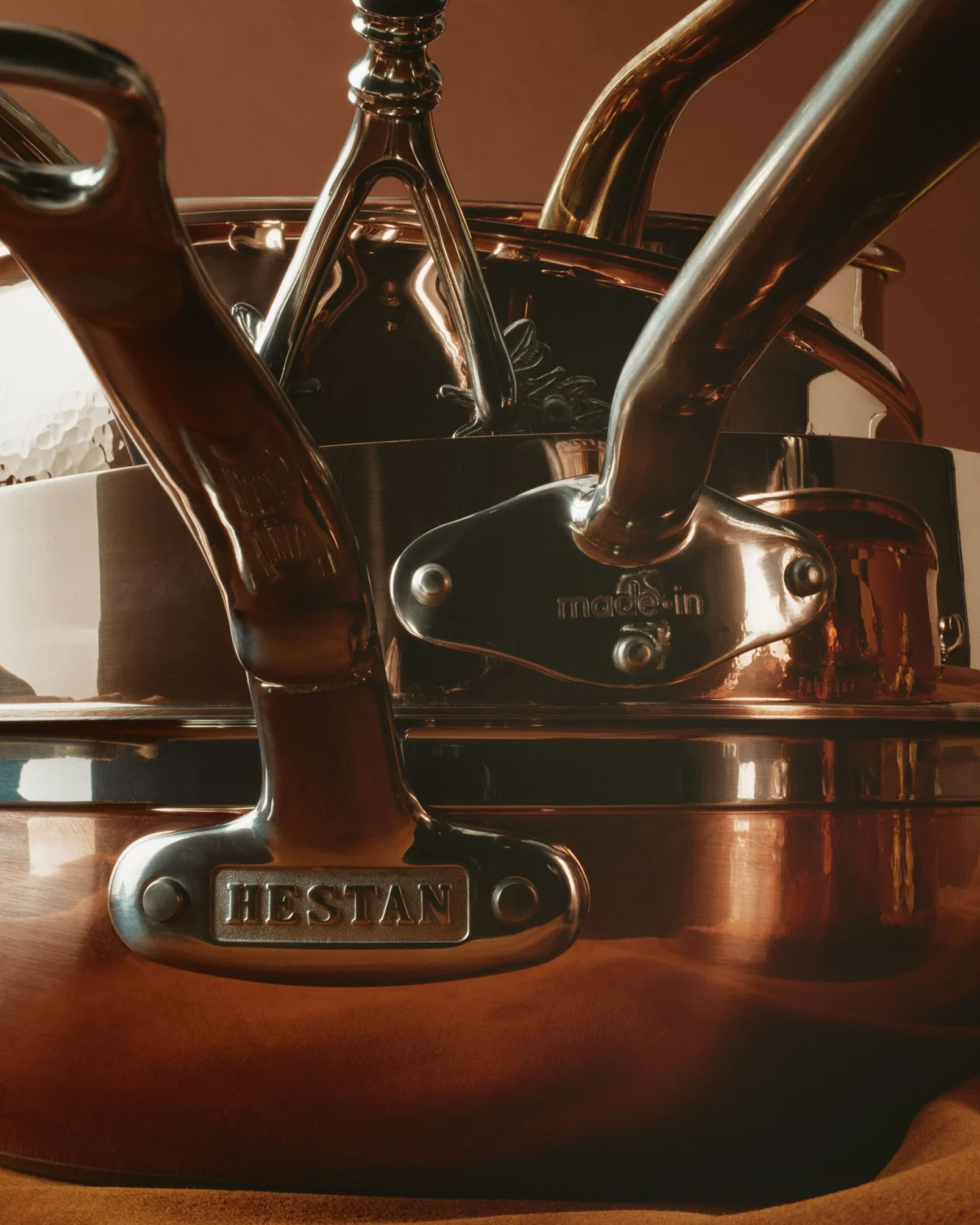
The allure of copper cookware in professional and aspirational home kitchens is undeniable, often serving as a gleaming emblem of culinary sophistication. Its rich, warm hue and association with the precise techniques of French haute cuisine, as vividly depicted in cinematic classics like Babette’s Feast (1987), The Taste of Things (2023), and even the animated Ratatouille (2007), elevate it beyond mere utility to a symbol of prestige and artistry. This aesthetic appeal, coupled with a long-held reputation for superior thermal properties, has cemented copper’s place as a high-end investment for serious cooks. However, the market is awash with various types of copper cookware, each promising exceptional performance, yet the reality, as often found in the meticulous world of material science and empirical testing, is far more nuanced.
Understanding the Core Attributes of High-Performance Cookware
At the heart of any cookware’s performance lies its material composition and construction. Unlike the visually driven choices made for front-of-house aesthetics, professional kitchens demand tools that deliver consistent, predictable results under intense conditions. The conventional wisdom posits that copper’s exceptional thermal conductivity—its ability to rapidly transfer heat—makes it ideal for delicate preparations requiring instantaneous temperature adjustments, such as sauces, custards, and caramel. This responsiveness is crucial for preventing scorching and achieving perfectly uniform cooking. The historical embrace of copper by culinary masters dates back centuries, with its presence in the kitchens of European aristocracy and eventually, the burgeoning fine dining scene, solidifying its status as an indispensable tool for precision cooking.

To delve into the true efficacy of copper, an in-depth understanding of material science is paramount. Michael Tarkanian, MS, a senior lecturer of material science and engineering at MIT, highlights several critical factors that govern a pan’s performance:
- Thermal Conductivity (k): This measures how efficiently a material transfers heat. Copper boasts one of the highest thermal conductivities among common cookware metals (approximately 385 Watts per meter-Kelvin, W/mK). For comparison, aluminum is around 205 W/mK, and stainless steel is significantly lower at about 16 W/mK. A higher ‘k’ value means faster heat transfer from the burner to the food, facilitating quick temperature changes.
- Heat Capacity (C): This refers to the amount of heat energy required to raise a material’s temperature by a certain amount. Materials with lower heat capacity heat up and cool down more quickly, contributing directly to responsiveness—a key attribute for delicate culinary tasks.
- Density (ρ): The mass per unit volume. Denser metals contribute to heavier pans, impacting handling and maneuverability, especially in a busy kitchen environment where speed and agility are critical. Copper is notably denser than both aluminum and stainless steel.
- Thickness: The overall gauge of the metal significantly affects heat distribution and retention. A thicker layer of a highly conductive metal can help spread heat more evenly across the cooking surface and maintain temperature stability, resisting localized hot spots.
- Cladding/Layering: Most modern cookware utilizes multiple layers of different metals (clad construction) to combine desirable properties while mitigating individual drawbacks. For instance, a highly conductive core might be sandwiched between durable, non-reactive outer layers. However, the interfaces between these dissimilar metal layers can introduce thermal resistance, effectively hindering the efficient transfer of heat and potentially compromising the overall performance that a single, pure metal might offer.
A Deep Dive into Common Cookware Metals and Their Historical Context
The choice of metal, or combination of metals, fundamentally shapes a pan’s characteristics and its suitability for various cooking applications. The evolution of cookware materials reflects ongoing efforts to balance performance, durability, and cost. Early cooking vessels were often ceramic or cast iron, offering durability and heat retention but lacking responsiveness. The advent of copper, particularly in Europe, marked a significant advancement, allowing for more precise control over heat.
-
Stainless Steel:

- Pros: Extremely durable, resistant to corrosion, and non-reactive to acidic foods, making it safe for all types of ingredients. It is also relatively easy to clean and maintain. Its low thermal conductivity means it holds temperature well and changes temperature gradually, which can be advantageous for long, slow simmers and braising.
- Cons: Heats slowly and is sluggish in reacting to temperature changes due to its inherently low conductivity. It is also dense, making purely stainless steel pans quite heavy. For these reasons, stainless steel is rarely used alone for the entire cooking surface, most commonly serving as an inner or outer layer in clad constructions to provide a durable, non-reactive cooking surface.
-
Aluminum:
- Pros: Lightweight, boasts high thermal conductivity (though less than copper), and has a relatively high heat capacity, making it responsive to heat changes and capable of consistent heating despite its low density. It is also considerably more affordable than copper, making it a popular choice for budget-friendly and professional-grade cookware.
- Cons: Highly reactive to acidic foods, which can cause discoloration of the pan and potentially leach metallic flavors into food. This reactivity is why aluminum is almost exclusively used as a core layer in clad cookware, protected by non-reactive materials like stainless steel or non-stick coatings.
-
Copper:
- Pros: Possesses the highest rate of thermal conductivity among common cookware metals and a relatively low heat capacity, making it one of the quickest and most responsive materials. This allows for unparalleled control over cooking temperatures, enabling chefs to fine-tune heat with precision, a critical factor for delicate emulsions and temperature-sensitive dishes.
- Cons: Highly reactive to acidic foods and can leach potentially harmful amounts of copper into food if not properly lined. This necessitates an inert inner coating for culinary safety. Copper is also denser than aluminum and steel, contributing to heavier pans, which can be a consideration for ease of use. Furthermore, it is significantly more expensive to acquire and maintain.
-
Tin:
- Pros: Non-reactive, lightweight, with decent conductivity and low heat capacity, making it very responsive to changes in heat. Traditionally, tin was the preferred lining for high-end copper cookware for centuries, offering a smooth, naturally non-stick-like surface when properly seasoned, making it ideal for delicate preparations.
- Cons: Its low melting point (between 450–475°F / 232–246°C) and softness mean it is significantly less durable than stainless steel. Overheating can easily damage the lining, causing it to bubble or melt, and wear over time necessitates re-tinning by a specialized artisan. This fragility contrasts sharply with the "lifetime" durability often associated with modern stainless steel linings.
The interplay of these properties, particularly in clad cookware, determines the overall performance. A pan might contain a thick copper layer, but if it’s encased in poorly conducting stainless steel, much of copper’s inherent advantage can be lost due to thermal resistance at the interfaces and the low conductivity of the outer layers. This complex interaction necessitates practical testing to ascertain real-world efficacy, moving beyond theoretical benefits to tangible cooking results.

Experimental Design: Unpacking Copper’s True Performance
To move beyond anecdotal evidence and marketing claims, a rigorous experimental approach was adopted. The study aimed to evaluate various copper cookware constructions against a reliable control, focusing on two critical performance metrics: heat distribution evenness and heating/cooling responsiveness. The methodology was designed to simulate practical cooking conditions while providing objective, quantifiable data.
The Test Subjects: An assortment of chef’s pans, chosen to represent the primary categories of copper cookware available today, was assembled for comprehensive evaluation:
- Copper-Core Stainless Steel: This category included pans featuring a layer of copper sandwiched between stainless steel, such as the Hestan CopperBond and All-Clad Copper Core. This modern construction aims to marry copper’s high conductivity with stainless steel’s durability and non-reactivity. These pans typically feature a thinner copper layer, often visible only at the rim.
- Solid Copper with Stainless Steel Lining: This group comprised pans with a substantial solid copper body lined internally with stainless steel, exemplified by the Ruffoni Opus Cupra, Mauviel M’Heritage M’150, and Made In pans. This construction represents a more traditional approach, where the bulk of the pan is copper, but with a modern, more durable stainless steel lining replacing traditional tin.
- Traditional Tin-Lined Copper: The Ruffoni Historia represented this classic construction—a solid copper pan with an interior meticulously lined with tin. This style is often lauded by purists for its responsiveness and historical authenticity.
The Control: An All-Clad D3 chef’s pan, a tri-ply stainless-steel pan with an aluminum core, was utilized as a benchmark. This pan is widely regarded as a high-quality, efficient piece of cookware and a standard in many professional and home kitchens, providing a baseline for comparison against copper variants.

Methodology for Thermal Performance Assessment:
Each pan was subjected to a standardized heating and cooling cycle to measure its thermal properties quantitatively.
- Heating Phase: Each pan was placed over a medium-heat gas burner for precisely two minutes. This ensured a consistent heat input across all pans, eliminating variability from the heat source.
- Temperature Measurement: Surface temperature readings were taken immediately upon removal from the heat source, and subsequently at one-minute intervals for four minutes while off the heat. Two separate, high-accuracy surface temperature thermometers (specifically, ThermoWorks Pro-Surface Thermapens, known for their rapid and precise readings) were used. Measurements were consistently taken at the center and the edge (approximately three inches apart) of the cooking surface. This dual-point measurement allowed for the calculation of the temperature differential, which directly indicates the pan’s heat distribution evenness. A smaller differential signifies more even heating.
- Responsiveness: The rate at which the pan’s surface temperature changed, both during the initial heating phase and the subsequent cooling phase, was meticulously recorded. Faster heating and cooling rates indicate higher responsiveness, which is critical for precise temperature control.
Practical Cooking Test: To complement the quantitative thermal data with real-world cooking insights, a qualitative performance test was performed.
- Chicken Thighs: A standardized batch of chicken thighs was cooked in each pan. This allowed for an assessment of practical performance metrics under actual cooking conditions, including:
- Browning Quality: Evaluation of the uniformity and depth of browning across the chicken’s surface, indicating even heat distribution.
- Stickiness: Observation of how easily food released from the pan surface, providing insight into the pan’s non-stick properties (especially relevant for tin linings) and heat control.
- Temperature Control: Subjective assessment of how effectively the pan responded to adjustments in heat during the cooking process, and whether it created hot spots or cold zones.
Empirical Findings: Challenging Conventional Wisdom
The comprehensive testing yielded results that both affirmed and challenged long-held beliefs about copper cookware. The data underscored that the mere presence of copper is not a guarantee of superior performance; rather, its integration into the pan’s construction and the choice of lining material are critical determinants of its functional efficacy.

1. Even Heating: The Unrivaled Performance of Tin-Lined Copper
In the crucial metric of thermal distribution—the ability of a pan to heat uniformly across its surface—the traditional tin-lined Ruffoni Historia pan stood out significantly from all other contenders.
- Ruffoni Historia: This pan achieved a near-zero temperature differential (0°F difference) between its center and edge shortly after the one-minute mark off heat. This rapid equilibration of temperature across the cooking surface signifies exceptional even heating, minimizing hot spots and cold zones.
- All-Clad D3 (Control): The stainless steel and aluminum-core control pan, while respectable, took an additional two minutes to achieve a similar level of temperature uniformity (reaching 0°F differential at the three-minute mark off heat).
- Other Copper Pans: The remaining copper pans, particularly those with stainless steel cladding or linings, consistently exhibited greater temperature variations across their surfaces even after four minutes off the heat. For instance, the All-Clad Copper Core still showed a 25°F difference, while the Hestan CopperBond showed a 20°F difference. This indicates that the stainless steel layers, despite containing copper, significantly impede the rapid and even heat distribution that copper is celebrated for, essentially creating thermal barriers.
Key Takeaway: The data strongly suggests that stainless steel cladding noticeably negates the effectiveness of copper’s inherent thermal conductivity for even heating. The superior performance of the tin-lined pan is attributed to tin’s higher thermal conductivity and lower heat capacity compared to stainless steel, allowing for more efficient heat
