

The global publishing landscape in 2022 was characterized by a significant shift toward themes of resilience, historical reclamation, and the intersection of physical health with psychological well-being. This trend is exemplified in the annual curation provided by Jodi Ettenberg, a former attorney and travel writer whose work through Legal Nomads has increasingly focused on the complexities of chronic illness and global culture. Ettenberg, who has been managing a debilitating spinal cerebrospinal fluid (CSF) leak since 2017, released her 2022 recommendations as a standalone analysis of works that challenge traditional narratives in gastronomy, science, and personal memoir.
The 2022 selection highlights a broader industry movement where authors are moving beyond surface-level storytelling to address deeper systemic issues, such as the lasting impacts of colonialism and the biological roots of trauma. This transition comes at a time when the global book market has seen a resurgence in nonfiction, with the "Self-Help" and "Psychology" categories seeing steady growth as readers seek frameworks to navigate a post-pandemic reality.
The Evolution of Culinary Literature and Global Foodways
A primary focus of the 2022 literary cycle was the preservation of indigenous and regional food traditions that are often overshadowed by Western culinary standards. Naomi Duguid’s The Miracle of Salt: Recipes and Techniques to Preserve, Ferment, and Transform Your Food serves as a cornerstone for this category. Duguid’s work provides a comprehensive examination of how salt serves as a universal foundational element in food preservation across continents. From a journalistic perspective, the book is less a collection of recipes and more a socio-historical study of human survival and trade.

Parallel to Duguid’s technical exploration are works that use food as a medium for cultural preservation in conflict zones. Romy Gill’s On the Himalayan Trail documents the culinary heritage of Kashmir and Ladakh, regions where political instability threatens to erase local traditions. Similarly, Cynthia Shanmugalingam’s Rambutan introduces Sri Lankan cuisine to a wider North American audience, focusing on the "joy" of South Asian flavors as a form of cultural defiance.
Industry data suggests that the global cookbook market, valued at approximately $1.2 billion in 2022, has pivoted toward "narrative-driven" cookbooks. These publications prioritize the stories of the people behind the food, reflecting a growing consumer interest in authenticity and ethical consumption. The inclusion of the Explorer’s Library by the Atlas Obscura and Gastro Obscura teams further emphasizes this trend, showcasing the "quirky and wild" aspects of global geography and gastronomy as a means of fostering curiosity.
Chronology of 2022 Fiction: Legacy and Retelling
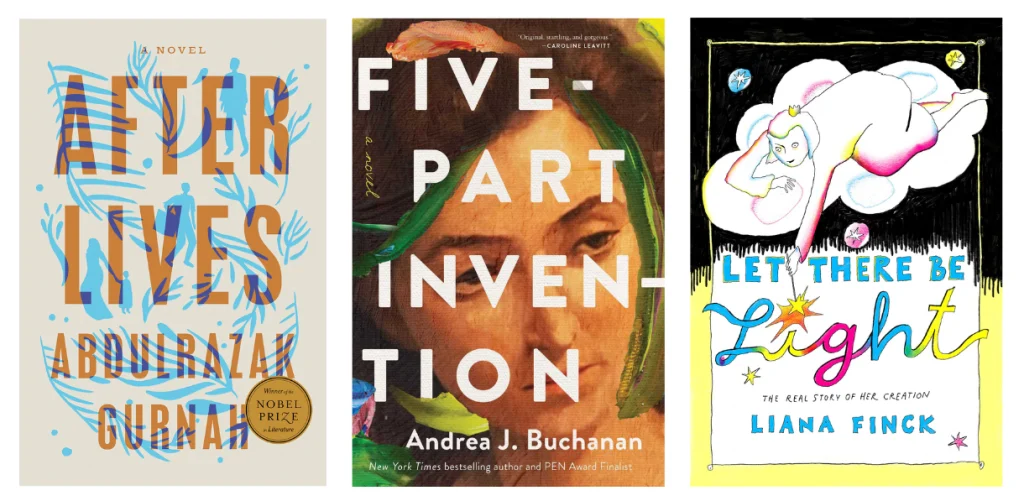
The fiction category of 2022 was dominated by themes of intergenerational legacy and the subversion of classical narratives. A notable entry is Afterlives by Abdulrazak Gurnah. Although initially published in the United Kingdom in 2020, its North American paperback release in 2022 brought renewed attention to the Nobel laureate’s exploration of German colonial rule in East Africa. The novel follows four protagonists through the transition from colonial disruption to independence in what is now Tanzania, providing a fictionalized but historically grounded account of the displacement caused by European expansion.
In the realm of contemporary fiction, Andrea J. Buchanan’s Five-Part Invention addresses the transmission of trauma across five generations of women. Buchanan, like Ettenberg, is a known advocate for patients with spinal CSF leaks, and her transition into fiction allows for a more abstract exploration of how physical and emotional suffering are inherited.

The year also saw experimental approaches to theology and mythology. Liana Finck’s Let There Be Light: The Real Story of Her Creation offers an illustrated retelling of the Book of Genesis. By reimagining the Creator as female and placing biblical figures like Abraham in modern-day New York City, Finck utilizes humor and irreverence to question traditional social hierarchies and the "baggage" of human behavior.
Scientific Inquiry and the Mechanics of Perception
Nonfiction in 2022 saw a surge in "narrative science"—works that translate complex biological and psychological data into accessible prose. Ed Yong, a Pulitzer Prize-winning journalist for The Atlantic, released An Immense World, which examines the sensory "Umwelten" (environments) of various animal species. Yong’s research highlights how different organisms perceive reality through vibrations, heat sensors, and magnetic fields, challenging the human-centric view of the natural world.
The intersection of history and science was also explored in Candice Millard’s River of the Gods. The book provides a detailed chronology of the 19th-century search for the source of the Nile, focusing on the volatile relationship between explorers Richard Burton and John Hanning Speke. Crucially, Millard restores the historical narrative of Sidi Mubarak Bombay, an enslaved East African man whose navigation and leadership were essential to the expedition’s success, yet who was largely omitted from Victorian-era accounts.
In the social sciences, David McRaney’s How Minds Change and Adriana Barton’s Wired for Music provided frameworks for understanding human behavior. McRaney’s work investigates the neurobiology of persuasion and the mechanisms required to bridge ideological divides in a polarized social climate. Barton’s research focuses on the "science of sound," presenting evidence that music is a biological necessity that aids in the management of pain, sleep, and social isolation.

Reimagining Chronic Illness and the Trauma-Health Link
One of the most significant thematic clusters in the 2022 curation involves the re-evaluation of health and the "myth of normalcy." Dr. Gabor Maté’s The Myth of Normal: Trauma, Illness, and Healing in a Toxic Culture emerged as a seminal text in this field. Maté argues that modern medicine often fails by treating symptoms in isolation rather than addressing the "epigenetic triggers" of childhood trauma and environmental stress. He differentiates between "Big T" trauma (catastrophic events) and "small t" trauma (daily attachment dysfunctions), suggesting that the latter is a pervasive but unrecognized root of chronic disease.
Meghan O’Rourke’s The Invisible Kingdom: Reimagining Chronic Illness complements Maté’s research by providing a first-hand account of the "gauntlet" of the Western medical system. O’Rourke, a patient with Ehlers-Danlos Syndrome (EDS), documents the marginalization of those with "invisible" or poorly understood conditions. The publication of this book coincided with the rising global incidence of Long COVID, making it a critical resource for medical professionals and policymakers grappling with post-viral syndromes.
Further exploring the theme of resilience, Mike Mariani’s What Doesn’t Kill Us Makes Us challenges the popular adage that suffering inherently builds strength. Through a series of case studies on catastrophic life changes, Mariani posits that the goal should not be a return to a pre-trauma state, but rather "amor fati"—a love of one’s fate—as a means of forging a new identity.
Broad Impact and Literary Implications
The curation of these works suggests a growing demand for literature that provides both "wonder" and "utility." Authors like Susan Cain, in her book Bittersweet, and Yung Pueblo, in Lighter, argue that the path to emotional maturity involves the integration of sorrow and the practice of self-compassion. This shift reflects a broader cultural movement toward "slow living" and "intentional consumption," as evidenced by the success of Julie Bogart’s Raising Critical Thinkers, which provides parents with strategies to guide children through the complexities of the digital age.

From a social justice perspective, the 2022 list emphasizes the voices of the disabled and the marginalized. Alice Wong’s Year of the Tiger utilizes a mix of transcripts, recipes, and prose to document the realities of living with progressive muscular dystrophy. Wong’s work is a critique of systemic ableism, yet it is noted for its "shimmering joy and purpose," moving the disability memoir away from tropes of pity and toward a narrative of power and artistry.
In conclusion, the literary output of 2022, as analyzed through this diverse selection, indicates that readers are increasingly seeking works that offer a synthesis of rigorous research and lived experience. Whether exploring the historical nuances of Hong Kong in Louisa Lim’s Indelible City or the "hidden beauty" in Ella Francis Sanders’ Everything, Beautiful, these titles reflect a collective effort to find meaning in an era of significant global and personal upheaval. The enduring legacy of these books lies in their ability to foster empathy, challenge historical myths, and provide a roadmap for navigating the complexities of the human condition.
