

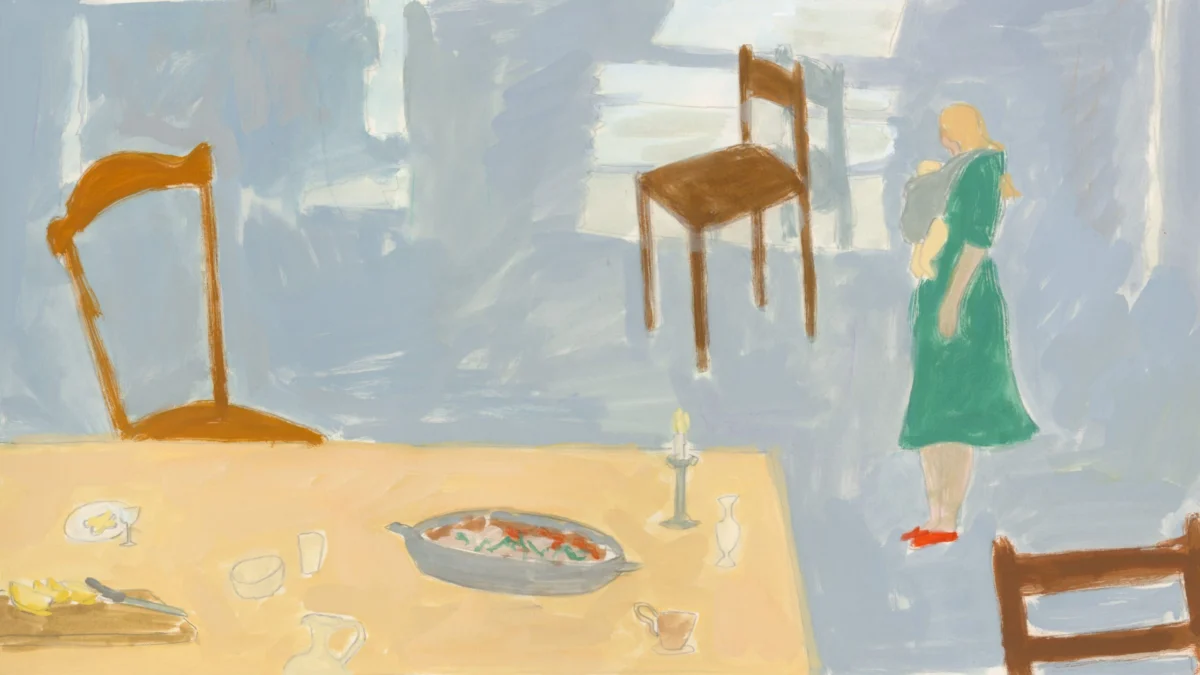
The period immediately following childbirth, often referred to as the "fourth trimester," is a critical and transformative phase for new mothers, yet it remains significantly under-discussed in its full complexity. While societal narratives frequently romanticize the initial weeks of motherhood as a time of unadulterated bliss, the reality for many women involves profound physical recovery, intense emotional fluctuations, and the challenging renegotiation of personal identity. The experience of author Caroline Chambers, whose journey back to personal equilibrium and a cherished passion for cooking after the birth of her first son, Mattis, offers a poignant illustration of these often-unseen struggles and the powerful role self-care can play in navigating them. Her story, culminating in a simple zucchini skillet dinner, highlights the spectrum of postpartum experiences and the importance of accessible, nourishing routines.
The Unforeseen Physical and Emotional Onset of Postpartum
For many expectant parents, preparations for a new baby focus predominantly on the pregnancy and birth itself, with less emphasis placed on the mother’s recovery in the weeks and months that follow. Caroline Chambers’ initial postpartum period was marked by an unexpected and distressing physical complication: the loss of bladder control for ten days. This experience, while described by her obstetrician as "not common, but not abnormal," was starkly contrasted by another hospital OB who termed her case "the worst she’d ever seen." Such conflicting medical assessments can exacerbate anxiety in an already vulnerable period.
Urinary incontinence is a prevalent issue following vaginal childbirth, affecting an estimated 20-30% of women in the immediate postpartum period, with rates varying depending on study methodology and definition. While often temporary, its impact on a new mother’s daily life, dignity, and emotional well-being can be profound. Chambers’ physical distress was compounded by the psychological toll, particularly when she involuntarily urinated while grappling with the pain of breastfeeding her five-day-old infant. This deeply personal and humiliating experience was a stark departure from the "cozy cocoon of smooshy newborn bliss" she had envisioned, thrusting her into a state where her own healing consumed her attention, overshadowing the expected joy of new motherhood.
The Silent Struggle: Beyond Postpartum Depression Stereotypes
Chambers’ narrative delves into a crucial aspect of maternal mental health: the spectrum of postpartum mood and anxiety disorders (PMADs) that extend far beyond the stereotypical image of "postpartum depression" (PPD). While PPD often conjures images of a "weeping mother spinning out of control," Chambers describes a pervasive anxiety that "needled its way into [her] body" even after her physical bladder issues resolved. This anxiety manifested not as outward despair, but as relentless, intrusive worries about her newborn’s safety.

Instead of resting when her baby napped, Chambers found herself fixated on the monitor, ensuring he was still breathing. She would wake at odd hours to check for improbable dangers, like curtains falling to suffocate him. When a friend offered to take her son for a walk, Chambers’ mind conjured terrifying scenarios of him plummeting into the sea, despite repeated reassurances and reminders to her friend. This form of anxiety, characterized by obsessive worry and fear for the baby’s well-being, is indicative of postpartum anxiety (PPA), which, alongside PPD, affects a significant portion of new mothers. Studies suggest that up to 20% of women experience some form of PMADs, with anxiety symptoms often co-occurring with or even dominating depressive symptoms. The lack of public awareness regarding the diverse presentations of PMADs means many mothers, like Chambers, may not recognize their symptoms as part of a treatable condition, leading to prolonged suffering in silence.
Loss of a Lifeline: Cooking and Identity in Early Motherhood
Prior to motherhood, cooking and feeding loved ones served as a primary source of unwinding, nourishment, and creative expression for Chambers. It was integral to her sense of self, a "lifeline" and an "alchemy" that transformed simple ingredients into a feast. However, in the initial months following Mattis’s birth, this vital part of her identity became inaccessible. The practicalities of a newborn – the constant demands for milk, the lack of free hands, the perpetual state of worry – rendered her beloved kitchen a challenging, almost impossible, space.
The familiar rhythm of cooking gave way to survival meals: takeout, rotisserie chicken, or hastily assembled spaghetti with jarred marinara. This relinquishing of a core passion is a common thread for many new parents, who find their pre-baby routines, hobbies, and even aspects of their professional identity sidelined by the all-consuming demands of infant care. The question "How do you find the time to cook?" which Chambers had previously dismissed, suddenly resonated with profound clarity. The loss of cooking was not merely the loss of a task; it was the loss of a piece of herself, a foundational element of her self-care and connection to her loved ones. This period underscores the broader challenge new mothers face in maintaining their individual identities while adapting to the profound responsibilities of parenthood, a struggle often compounded by sleep deprivation and hormonal shifts.
A Gradual Return to Self: The Zucchini Skillet Catalyst
Around five months postpartum, a subtle shift began for Chambers. Her hormones, which play a significant role in maternal mood and energy levels, started to "un-wonky themselves." This physiological change coincided with a reawakening of her desire to return to the kitchen. This return was not a sudden leap but a gradual, deliberate step, symbolized by a trip to the Carmel farmers market with baby Mattis strapped to her chest. This act itself was significant – venturing out, engaging with the community, and reconnecting with the tactile experience of selecting fresh produce.
The farmers market, brimming with the bounty of Northern California’s May harvest—plums, strawberries, apricots, and early summer squash—provided the inspiration. The simple act of slicing zucchini with her baby cooing on her chest, adapting her movements to avoid "tiny baby toes" getting "toasted on the skillet," marked a symbolic reclaiming of her space and her craft. What began as a plan for sautéed zucchini with meatballs quickly simplified into a more achievable, yet equally satisfying, "quickie lasagna-esque situation" with ground turkey, leftover marinara, and cheese. This adaptation highlights a crucial aspect of postpartum self-care: adjusting expectations and embracing imperfection.

That evening, Chambers and her husband, George, shared the meal straight from the skillet on their tiny deck, a simple act of communal dining they hadn’t enjoyed in months. It wasn’t gourmet, but it was "delicious" and, more importantly, she had cooked it, with the baby in tow. This meal was more than sustenance; it was a tangible victory, a proof point that she could integrate her new role as a mother with her cherished identity as a cook.
Redefining Culinary Practice in Motherhood
The zucchini skillet represented a turning point, not just in Chambers’ mental state, but in her approach to cooking. She realized that the "kitchen choreography had grown more complex," but the "triumph of pulling it off had grown sweeter too." Motherhood necessitated a new kind of cooking—one that was flexible, occurring "in stops and spurts," and accepting of imperfections, like sacrificing half a zucchini or banana to a baby’s exploratory smashing. Her cooking became "less perfect, less cheffy," often prioritizing efficiency and nourishment, but never sacrificing flavor, creativity, or fulfillment.
This adaptation speaks to a broader truth about navigating major life transitions: the need to re-evaluate and redefine personal passions within new constraints. For Chambers, this meant embracing a more pragmatic yet equally soulful approach to food preparation. The act of cooking, even in its simplified form, continued to serve as her anchor, a method for "taking care of myself and my people." This evolution showcases resilience and the capacity for growth, transforming challenges into opportunities for innovation.
Broader Implications and the Call for Comprehensive Postpartum Support
Caroline Chambers’ deeply personal account resonates with countless mothers globally and carries significant implications for how society, healthcare systems, and communities approach postpartum care. Her experience underscores several critical areas:
- The Need for Holistic Postpartum Education: The lack of comprehensive information about both physical and mental postpartum recovery leaves many women feeling isolated and unprepared. Education should extend beyond basic infant care to include the full spectrum of maternal physical healing, hormonal shifts, and the diverse manifestations of PMADs.
- Destigmatizing PMADs: By openly sharing her experience with anxiety and intrusive thoughts, Chambers helps to dismantle the stigma surrounding maternal mental health. It reinforces that PMADs exist on a spectrum and do not always present as severe depression, urging a more nuanced understanding and encouraging mothers to seek help without shame.
- Prioritizing Maternal Self-Care and Identity: Chambers’ journey highlights that maternal well-being is not solely about the baby; it is fundamentally linked to the mother’s own physical and mental health, including her ability to maintain aspects of her pre-baby identity and engage in self-nourishing activities. Policies and support systems should recognize and facilitate opportunities for mothers to engage in self-care.
- The Role of Community and Practical Support: The initial months of survival cooking and limited social interaction underscore the critical need for practical support from partners, family, friends, and community. Whether it’s taking the baby for a walk or simply offering a prepared meal, these acts can provide essential breathing room for new mothers.
- Healthcare Provider Training: Chambers’ encounter with conflicting medical opinions about her bladder issues points to a need for more consistent and empathetic training for healthcare providers regarding the physical and emotional complexities of postpartum recovery. Acknowledging and validating a mother’s concerns is paramount.
Chambers has since welcomed three more children, each time finding her way back to the kitchen, a baby strapped to her chest, as a "lifeline back to normality." This recurring pattern reinforces the therapeutic power of routine, creativity, and the simple act of preparing nourishing food. Her story serves as a powerful reminder that the fourth trimester is not merely an extension of pregnancy but a distinct and demanding phase of recovery, adaptation, and profound personal growth. By sharing her vulnerabilities and triumphs, Chambers contributes to a more honest and supportive dialogue around maternal well-being, advocating for a world where mothers feel seen, supported, and empowered to reclaim themselves, one nourishing meal at a time. Her work, including her cookbook What to Cook When You Don’t Feel Like Cooking: Make It Fast, stands as a testament to finding practicality and joy in the kitchen even amidst life’s most demanding chapters.
