

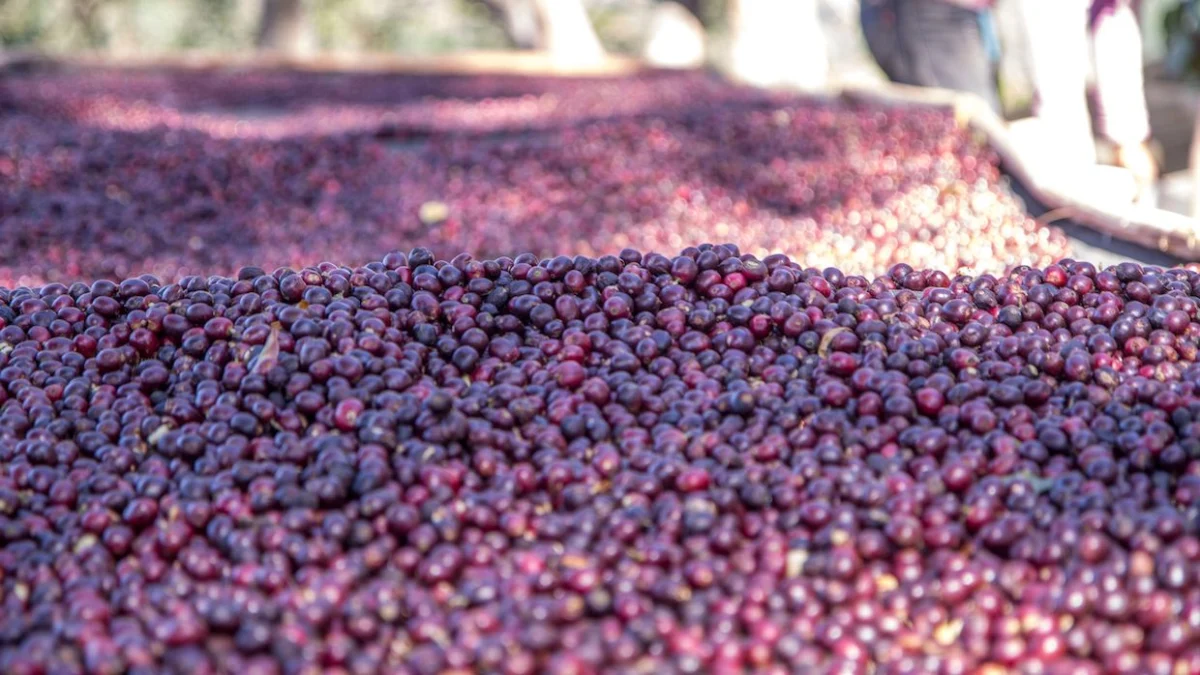
A groundbreaking study originating from China is significantly advancing the scientific understanding of how post-harvest processing techniques can profoundly influence the chemical composition and, consequently, the sensory quality of coffee. The research specifically zeroes in on the impact of anaerobic fermentation when combined with natural processing, revealing a dramatic alteration in the chemical makeup of green coffee beans from Yunnan province. More importantly for the practical applications within the coffee industry, these anaerobically fermented beans demonstrated superior scores across multiple sensory attributes when compared to conventionally processed coffees.
This pivotal research, published on July 7th in the esteemed open-access journal Beverage Plant Research, meticulously investigated the Catimor arabica variety, a significant contributor to China’s coffee output, sourced from Baoshan, Yunnan. Yunnan province stands as the undisputed heart of China’s coffee production, accounting for nearly its entirety. The study, spearheaded by a consortium of researchers affiliated with the Yunnan Academy of Agricultural Sciences and the Chinese Academy of Tropical Agricultural Sciences, carries the comprehensive title, "Metabolome Analysis of Processing Methods Regulating Flavor Precursors in Arabica Coffee Beans and Correlation with Sensory Attributes." This title itself signals the study’s ambition to bridge the gap between the molecular intricacies of coffee bean chemistry and the nuanced experience of tasting coffee.
Unpacking the Four Processing Pathways
The experimental design of the study was rigorous, involving four distinct processing methods applied to identical batches of freshly harvested Catimor coffee cherries. Each processing group comprised 10 kilograms of fruit. The first group underwent a traditional wet processing method. This involved depulping the cherries to remove the outer fruit layer, followed by a 12-hour fermentation period in water to break down the mucilage, and finally, drying. The second group was subjected to a conventional dry (natural) processing method, where the intact coffee cherries were dried whole on raised beds, allowing the fruit to dehydrate around the bean.
The critical innovation came with the introduction of anaerobic fermentation. Two additional groups were established, wherein the coffee cherries first underwent a seven-day sealed fermentation in a low-oxygen environment. This anaerobic phase was then followed by either the wet processing step (depulping, mucilage fermentation, and drying) or the dry processing step (drying of the whole cherry). This comparative approach allowed researchers to isolate the specific impact of anaerobic fermentation in conjunction with both prevalent processing techniques.
Following the processing, the researchers employed sophisticated chemical profiling techniques to meticulously examine the non-volatile compounds present in the resulting green coffee beans. The focus was on identifying and quantifying key chemical constituents known to influence the final cup profile, including various sugars, organic acids, amino acids, lipids, and phenolic acids. These compounds are the fundamental building blocks that, upon roasting and brewing, translate into the complex aromas, perceived sweetness, acidity, body, and lingering aftertaste that define a coffee’s quality.
The comprehensive laboratory analysis revealed an astonishing level of chemical diversity. Over 1,600 distinct compounds were identified across 12 major chemical classes. Crucially, the study found that 843 of these compounds differed significantly among the four processing methods. This finding underscores a fundamental principle in coffee science: even coffee from the same plant, grown in the same region, can exhibit vastly different chemical profiles based solely on how it is processed after harvest. This variability directly impacts its potential for flavor development.
The Rise of Anaerobic Natural: Superior Sensory Scores
The most pronounced chemical shifts and the most compelling sensory outcomes emerged from the group that underwent anaerobic fermentation followed by natural processing. This particular treatment group exhibited a significantly higher abundance of compounds directly linked to desirable flavor characteristics. These included various amino acid derivatives, nucleotides, a broader spectrum of organic acids, and increased levels of flavonoids and tannins. These compounds are often associated with enhanced sweetness, complexity, and a richer mouthfeel.
To translate these chemical findings into tangible sensory experiences, five certified Q Graders, recognized experts in coffee evaluation, were enlisted. These professionals assessed brewed coffee samples from all four processing treatments according to the stringent standards set by the Specialty Coffee Association (SCA). The results were unequivocal: the coffees processed using anaerobic fermentation followed by the natural method consistently outperformed the conventional wet- and dry-processed coffees. They received higher scores across a range of critical sensory attributes, including dry and wet aroma, overall flavor, aftertaste, acidity, body, and balance. Interestingly, while wet-processed coffee scored higher for perceived cleanliness, it was noted to be lower in sweetness compared to its dry-processed counterpart, highlighting the distinct trade-offs inherent in different processing methods.
Implications for Quality Enhancement and Market Access
This research adds substantial scientific weight to a growing body of evidence suggesting that more controlled and innovative post-harvest processing methods, particularly those involving controlled fermentation, can serve as powerful tools for influencing sensory quality. This, in turn, has significant implications for coffee producers aiming to elevate their product and access higher-value markets. The ability to manipulate chemical precursors through processing opens up new avenues for differentiation and premiumization.
The study from Yunnan is not an isolated finding but rather part of a broader global trend in coffee research. In recent years, several other studies have pointed towards the efficacy of novel processing techniques. For instance, another recent Chinese study revealed that the application of a native fungus could elevate conventionally grown Yunnan coffees into the specialty coffee range, demonstrating the potential of biological interventions. Similarly, a trial conducted in Colombia found that CO2-assisted fermentation consistently boosted the scores of natural-process coffees, indicating the benefits of manipulating the atmospheric conditions during fermentation. Furthermore, research conducted in Brazil last year highlighted that controlled anaerobic fermentation could significantly improve the quality of unripe coffee cherries, even bringing them up to specialty coffee standards.
These collective findings suggest a paradigm shift in coffee production, moving beyond traditional methods to embrace scientific innovation. By understanding and harnessing the biochemical processes that occur during fermentation and drying, producers can unlock new levels of quality and create coffees with unique and desirable flavor profiles. This can lead to increased profitability and greater recognition for coffee-growing regions.
Limitations and Future Directions
While this study offers invaluable insights, it is essential to acknowledge its limitations. As with many scientific investigations, the results are specific to the conditions under which the research was conducted. The study focused on a single coffee variety (Catimor) from a singular region (Baoshan, Yunnan), utilizing a specific harvest and a defined fermentation duration. Therefore, direct extrapolation of these findings to other coffee varieties, different geographical locations with unique microclimates, or varying processing protocols may not be entirely accurate. Further research across a wider range of parameters is necessary to fully understand the universal applicability of these findings.
The research was generously funded by a multitude of Chinese research and agricultural institutions, reflecting a strong national commitment to advancing coffee science and production. The authors have declared no conflicts of interest, underscoring the integrity and impartiality of their findings. The collaborative effort between agricultural science academies signifies a concerted push towards integrating cutting-edge research with practical agricultural development in China’s burgeoning coffee industry.
The implications of this study extend beyond mere academic interest. For the global coffee industry, it underscores the critical importance of post-harvest processing as a key determinant of quality. As consumer demand for unique and high-quality coffee experiences continues to grow, producers who can effectively leverage these advanced processing techniques will likely find themselves at a competitive advantage. The scientific validation of anaerobic natural processing as a method for enhancing sensory attributes provides a clear roadmap for innovation, potentially leading to new premium coffee offerings and a richer, more diverse coffee landscape for consumers worldwide. The ongoing research in this area promises to further refine our understanding of coffee chemistry and its intricate relationship with the final cup, solidifying the role of science in shaping the future of coffee.
