

The global culinary landscape is currently a dynamic tableau of audacious criminal acts, technological disruption, and evolving consumer health trends. From the rolling hills of Tuscany, where a daring wine heist captivated local conversations, to the bustling tech hubs where artificial intelligence is poised to redefine restaurant operations, and the health aisles grappling with the ethical implications of "GLP-1 boosting" supplements, the food and beverage industry finds itself at a pivotal juncture. This week’s developments underscore significant shifts in how we produce, consume, critique, and even remember food.
The Audacious Tuscan Wine Heist: A Case of High-Stakes Oenological Crime
Reports emerging from Italy detail a sophisticated and audacious theft that has left the Tuscan wine industry reeling. A group of organized criminals successfully orchestrated the pilfering of approximately 30,000 bottles of premium wine from a warehouse in Tuscany, with the stolen inventory estimated to be worth a staggering $5.5 million. The incident, which has become a prominent topic of discussion across Italy, highlights the lucrative, albeit illicit, market for fine wines.
Background and Context: Tuscany is renowned globally for its exquisite wines, particularly its Sangiovese-based reds such as Chianti Classico, Brunello di Montalcino, and Vino Nobile di Montepulciano. Wineries in this region, many with centuries of heritage, produce some of the most sought-after vintages, making them attractive targets for sophisticated criminal enterprises. The specific winery involved, Marchesi Antinori, is one of Italy’s oldest and most prestigious wine producers, with a history spanning over 600 years and a reputation for producing high-quality, collectible wines. The sheer volume and value of the stolen bottles suggest a meticulously planned operation, likely involving specialized logistics for transport and a pre-arranged distribution network for the black market. Such heists often target specific vintages or limited editions that command high prices and are difficult to trace once they enter illicit channels.
Chronology and Modus Operandi (Inferred): While specific details of the heist’s execution remain under investigation, such large-scale operations typically involve extensive reconnaissance, bypassing advanced security systems, and deploying a fleet of trucks capable of transporting tens of thousands of bottles. The timing is often carefully chosen, sometimes during off-hours or holidays, to minimize detection. The perpetrators likely had a clear understanding of the warehouse layout, security protocols, and the specific high-value wines stored within. The New York Times, in its coverage, playfully questioned if the thieves were "passionate oenophiles" planning to consume the bounty themselves, a notion quickly dismissed by the sheer scale of the theft, pointing instead to a professional criminal enterprise.
Implications: The incident carries significant implications for the Italian wine industry, potentially leading to increased security measures across vineyards and storage facilities. It also raises concerns about the integrity of the fine wine market, as stolen goods can eventually resurface, often at discounted prices, impacting legitimate sales and brand reputation. Authorities have initiated a comprehensive investigation, likely involving international cooperation, given the potential for these high-value wines to be trafficked across borders. The event serves as a stark reminder of the vulnerabilities faced by luxury goods industries in an increasingly interconnected and complex criminal landscape.
Recipes from Beyond: The Enduring Legacy of Tombstone Cookbooks
In a more reflective turn, the practice of inscribing beloved recipes onto tombstones has garnered renewed attention, revealing a profound connection between food, memory, and legacy. Archivist Rosie Grant has meticulously documented this unique phenomenon, transforming her research into an online chronicle and the aptly named cookbook, To Die For. This exploration into culinary epitaphs uncovers not just instructions for a dish, but deeper narratives about human connection and remembrance.
Background and Context: The tradition of unique grave markers is ancient, but the specific trend of carving recipes offers a modern, deeply personal twist. It speaks to a universal truth: food is intrinsically linked to comfort, celebration, and the fabric of family life. A cherished recipe, passed down through generations, often embodies more than just ingredients and steps; it carries memories of shared meals, family gatherings, and the love poured into its creation. For those who choose to immortalize a recipe on their gravestone, it’s a way to leave a tangible piece of their life, their passions, and their nurture for posterity, inviting strangers and loved ones alike to connect with their essence through the act of cooking.
The "Profound Discovery": Grant’s work, in compiling To Die For, transcends mere collection. She discovered that these recipes are not just quirky anecdotes but poignant expressions of grief, love, and a desire to continue giving. They often represent the deceased’s signature dish, a comfort food, or a recipe that brought immense joy to their family. This act of culinary remembrance provides a unique form of solace and a lasting, interactive memorial, allowing descendants or even curious visitors to literally partake in a piece of the person’s legacy. It highlights how food acts as a powerful mnemonic, capable of evoking strong emotions and preserving personal history in a tangible, edible form.
Implications: This trend challenges conventional notions of memorialization, demonstrating a desire for more personalized and engaging ways to remember the departed. It underscores the enduring power of food as a cultural touchstone and a medium for expressing love and legacy, bridging the gap between life and memory through shared sensory experiences. The recipes etched in stone become more than just instructions; they become artifacts of human connection, inviting continuous engagement and storytelling.
The GLP-1 Conundrum: When Fiber Powders Mimic Breakthrough Drugs
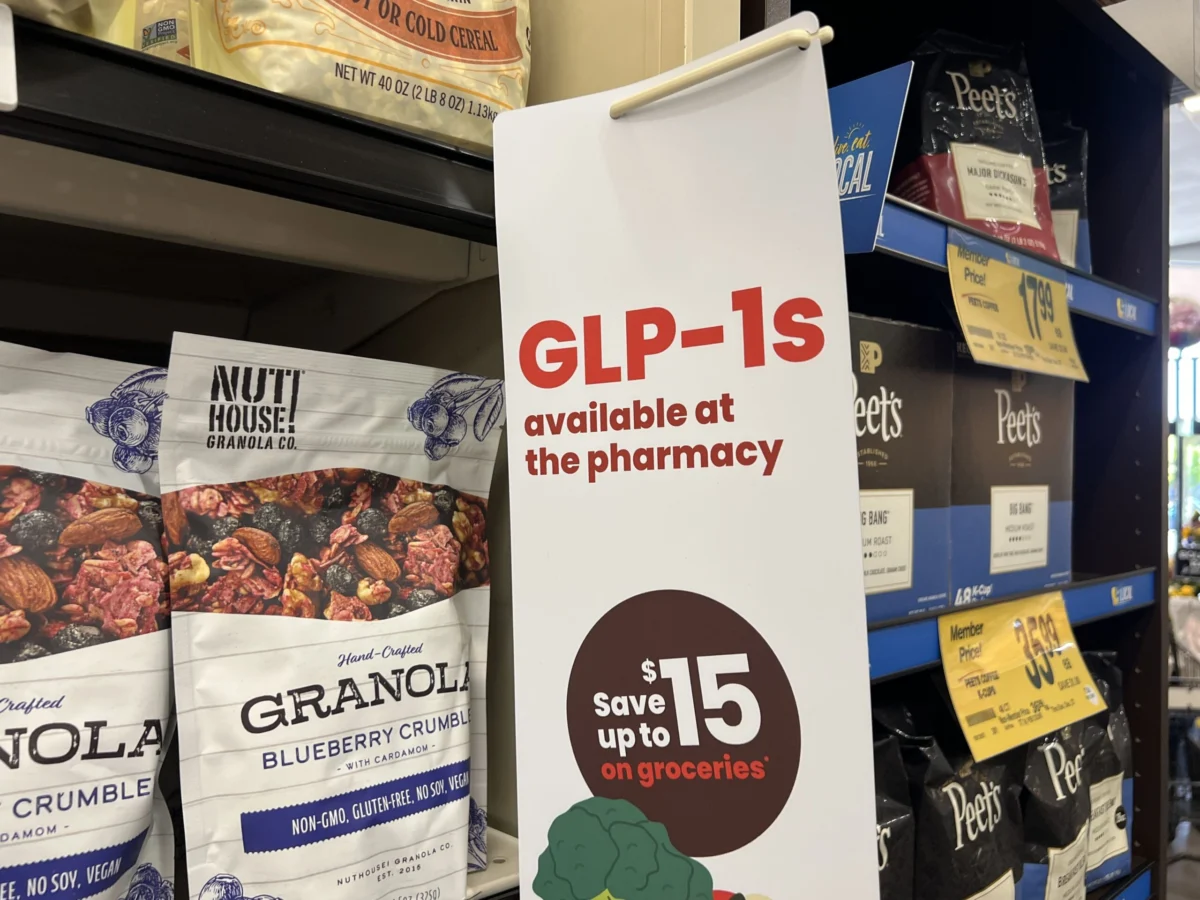
A growing concern in the wellness industry revolves around the proliferation of "GLP-1 supplements" that promise to replicate the effects of revolutionary weight-loss medications, yet primarily deliver little more than fiber. This deceptive marketing strategy capitalizes on the widespread interest in GLP-1 (Glucagon-Like Peptide-1) agonists, such as Ozempic and Wegovy, which have transformed the weight-loss and diabetes management landscape into a multi-billion-dollar industry.
Background and Context: GLP-1 medications are a class of drugs that mimic a natural hormone in the body, helping to regulate blood sugar, slow gastric emptying, and promote feelings of fullness. These prescription drugs have demonstrated significant efficacy in managing Type 2 diabetes and achieving substantial weight loss, leading to a projected market value of $79 billion. Their success has, however, created an opportunistic environment for companies to market "GLP-1-adjacent" products, often without scientific backing or regulatory oversight, preying on consumer desire for quick health solutions.
The Deceptive Marketing: A recent observation highlighted by a colleague involved a smoothie shop offering a "$30 GLP-1 Fiber Booster" – a product that, upon investigation, was found to be a fiber supplement from a company called Supergut. While Supergut’s website states the powder "supports GLP-1 levels" with an asterisk noting the claim hasn’t been evaluated by the FDA, the implication for consumers is often far more direct: that they are consuming something akin to the powerful prescription drugs. Dr. Babak Orandi, an obesity specialist at NYU Langone, unequivocally states that there is "no evidence these powders can boost the effects or the levels of GLP-1s" to a meaningful degree. He emphasizes that pharmaceutical GLP-1s act at concentrations "hundreds to thousands of times higher than the body’s own GLP-1" and are designed for prolonged action, unlike naturally occurring GLP-1 which is rapidly broken down.
Official Responses and Nuance: Supergut, in an email statement, clarified that their powder is "not a GLP-1 medication" but is "designed as companion nutrition for people on GLP-1 medications and anyone supporting their gut health." They claim it "may support feelings of fullness and beneficial gut bacteria associated with natural GLP-1 production." While fiber is undoubtedly beneficial for gut health and can contribute to feelings of fullness, labeling it as "GLP-1 Daily Support" or a "GLP-1 Fiber Booster" is considered by many, including Dr. Orandi, to "oversell it" and mislead consumers. The disconnect between a product’s actual composition (fiber) and its advertised potential (mimicking GLP-1 drugs) creates significant consumer confusion, exemplified by conflicting information provided by smoothie shop cashiers—one claiming it’s "the same stuff that goes into Ozempic," another clarifying it’s an "appetite suppressant" but "not the same thing."
Implications: This trend underscores a broader issue of misleading marketing in the wellness industry, where scientific buzzwords are leveraged to sell products that lack equivalent therapeutic benefits. It highlights the urgent need for clearer regulatory guidelines and increased consumer education to distinguish between evidence-based medical interventions and dietary supplements. For consumers, the risk is not just financial expenditure on ineffective products, but also the potential for delayed or inadequate treatment if they rely on these supplements instead of consulting healthcare professionals for genuine health concerns. The personal anecdote of consuming "GLP-1 boosters" for a week with "exactly no difference" and no sustained fullness serves as a microcosm of the widespread inefficacy of these mislabeled products.
The Michelin Guide Under Scrutiny: AI Accusations Rock Dallas Reviews
The esteemed Michelin Guide, long held as the global authority on culinary excellence, is facing an unprecedented challenge to its credibility following accusations that its Dallas restaurant reviews were at least partially generated by artificial intelligence. This controversy, first brought to light by D Magazine‘s dining critic Brian Reinhart, threatens to undermine the guide’s century-old reputation for rigorous, human-led assessment.
Background and Context: For over a hundred years, the Michelin Guide has been synonymous with discerning culinary judgment, its anonymous inspectors traveling the world to meticulously evaluate restaurants. Its "stars" are the most coveted awards in the restaurant industry, representing the pinnacle of gastronomic achievement. The guide’s strict code of secrecy, combined with its long history, has fostered an image of unparalleled integrity and expertise. However, recent years have seen a gradual erosion of trust, with previous accusations of the guide accepting payment for coverage, raising questions about its impartiality and traditional values. The expansion into new markets, such as Texas, has also intensified scrutiny.
Reinhart’s Findings and Methodology: Brian Reinhart, a seasoned dining critic, meticulously analyzed the language used in the Michelin Guide’s new Dallas entries. He noted distinct stylistic anomalies, including the "overuse of grammatical structures and specific words, such as serene or careful," which are often characteristic of Large Language Models (LLMs) like ChatGPT. By running the text through an AI detector, Reinhart gathered evidence suggesting that a significant portion of the new reviews exhibited patterns consistent with AI-generated content. This methodology, while not infallible, points to strong indicators of automated authorship.
Official Responses and Broader Implications: In response to Reinhart’s detailed reporting, Michelin issued a denial, asserting that AI was not used to write the restaurant reviews. Crucially, however, the guide refused to grant an interview or to review Reinhart’s findings directly, fueling further speculation and criticism. This stonewalling approach, coupled with past accusations of compromised impartiality, significantly compounds the damage to Michelin’s standing.
The controversy ignites a broader debate about the role of AI in creative and critical fields, particularly in areas where subjective human experience and nuanced judgment are paramount. If a revered institution like Michelin is perceived to be using AI for its core function—the evaluation of culinary artistry—it risks devaluing the very concept of expert criticism. For restaurateurs, achieving a Michelin star represents years of dedication and passion; the idea that their efforts might be judged by an algorithm rather than a seasoned human palate is deeply concerning. The incident underscores the fragility of trust in an era of rapidly advancing AI and the increasing demand for transparency from established authorities.
Square Kiosk: The Future of Restaurant Service or a Step Towards Dehumanization?
The latest innovation from Square, a dominant player in point-of-sale (POS) systems, is the "Kiosk"—an AI-enabled tablet designed to automate many front-of-house restaurant functions. While heralded by some as a solution to operational efficiencies and labor challenges, this technology raises significant questions about the future of dining and the value of human interaction in the restaurant experience.
Background and Context: The ubiquity of tablet-based POS systems, largely supplied by companies like Square and Toast, has already transformed transaction processes in coffee shops and bakeries. These systems streamlined ordering, payment, and tipping, but still required human interaction for core service. The restaurant industry, particularly after the pandemic, has faced escalating labor costs, staffing shortages, and demands for increased efficiency. This environment creates fertile ground for automation solutions. Square Kiosk represents the next evolution, integrating advanced AI capabilities into a self-service model.
Features and Capabilities: The Square Kiosk is an AI-powered tablet equipped with microphones and speakers, enabling it to perform tasks traditionally handled by human staff. It can take orders, process payments, recommend dishes, explain menu items, and engage in upselling techniques. This comprehensive functionality aims to reduce the need for human cashiers and order-takers, promising cost savings and consistent service for independent restaurants. The technology optimists argue that such devices can empower small businesses, allowing them to allocate human staff to more complex or high-value tasks, thereby enhancing overall service quality.
Implications and Debate: The introduction of Square Kiosk immediately sparks a debate between proponents of technological efficiency and advocates for human-centric service. From an economic perspective, the Kiosk could indeed help restaurants cut labor costs, potentially increasing profitability and helping struggling establishments stay afloat. However, critics argue that such automation fundamentally misunderstands the essence of the dining experience. Restaurants are more than just places to satisfy hunger; they are social spaces, venues for human connection, and environments where the "hum of servers and conversations and disagreements and sly jokes" contributes to a unique ambiance.
The concern is that optimizing out this "friction" – the spontaneous interactions and personal touches provided by human staff – could lead to a more sterile, less engaging experience. The analogy to self-checkout machines in grocery stores, which have been criticized for making the shopping experience more lonely, is often invoked. While self-service kiosks offer convenience, they often come at the expense of job displacement and a perceived dehumanization of the service industry. The widespread adoption of AI-enabled kiosks could significantly alter the social fabric of dining, shifting the focus from hospitality and interaction to pure transactional efficiency, potentially alienating a segment of customers who value the human element above all else.
Daniel Humm’s Ode to Obsession: Opening "Humm" and the Art of Restaurant Creation
Celebrated chef Daniel Humm, known for his groundbreaking work at Eleven Madison Park, offers a deeply personal insight into the arduous yet exhilarating journey of opening a new restaurant in his essay for Bon Appétit. His latest venture, simply named "Humm," marks a significant milestone, being the first establishment to bear his own name, and his reflections underscore the immense passion and meticulous dedication required to bring a culinary vision to life.
Background and Context: Daniel Humm has established himself as one of the world’s most influential chefs, particularly after transitioning Eleven Madison Park to a fully plant-based menu, a bold move that redefined fine dining for many. Opening a new restaurant, especially one bearing his own name, carries immense personal and professional stakes. It represents not just a business venture but a profound artistic statement, an embodiment of his evolving culinary philosophy and aesthetic. The process is notoriously demanding, requiring not only creative genius in the kitchen but also an intricate understanding of design, logistics, and human psychology to craft a truly immersive experience.
The Frenzy of Creation: Humm candidly describes the opening process as an "insane thing to do," a testament to the all-consuming nature of the endeavor. His essay details months spent obsessing over every minute detail, from the precise light fixtures that set the mood to the exact shade of red paint that adorns the walls. This relentless pursuit of perfection, extending beyond the plate to every sensory element of the dining room, is characteristic of haute cuisine. It highlights the chef’s role not just as a cook, but as a curator, an artist, and an orchestrator of an entire experience. The pressure to achieve perfection, especially for a chef of Humm’s caliber, is immense, as every element must align to create a cohesive and memorable impression.
Implications: Humm’s "love letter" to his new restaurant offers a rare glimpse into the psyche of a master chef at the height of his craft. It underscores that fine dining is an art form that demands total immersion, unwavering commitment, and a willingness to confront immense challenges. His story is a powerful reminder of the human element behind the culinary world’s most acclaimed establishments—the relentless drive, the creative vision, and the personal sacrifices involved in transforming a dream into a tangible, sensory reality. The opening of "Humm" is not just another restaurant launch; it is a declaration of personal and artistic evolution, contributing to the ongoing narrative of innovation and passion within the global culinary scene.
