

The legal definition of London Dry Gin remains one of the most misunderstood designations in the global spirits industry, functioning primarily as a rigorous process-based quality standard rather than a geographic indicator or a specific flavor profile. Despite its name, London Dry Gin does not need to be produced in London, nor does the term "Dry" refer to a complete absence of sweetness, but rather to a strictly regulated limit on additives. In 2019, the European Union moved to modernize these standards through Regulation 2019/787, which was further refined under 2021/1465. These updates sought to clarify ambiguities for both distillers and consumers, yet the core requirements—centered on the purity of the base spirit and the timing of botanical infusion—have remained fundamentally consistent with historical precedents established during the 19th century.
Historical Evolution of Gin Production and Quality Control
To understand the modern legalities surrounding London Dry Gin, one must look back to the 18th and 19th centuries, an era characterized by erratic and often dangerous spirit production. During the infamous "Gin Craze" in England, spirits were frequently distilled from low-quality grain waste, resulting in a harsh, unpalatable product. To mask the presence of impurities and toxic congeners, distillers often added heavy amounts of sugar, turpentine, or sulfuric acid. The term "London Dry" eventually emerged as a badge of quality, signaling that the spirit was clean enough to be consumed without heavy sweetening or adulteration.
The technological catalyst for this shift was the invention of the continuous column still, patented by Aeneas Coffey in 1830. Unlike the traditional pot still, which produces a lower-proof spirit with more residual flavors from the wash, the column still allows for the production of highly rectified spirits. While a pot still might yield a distillate of 50% to 70% alcohol by volume (ABV), the column still can reach 96% ABV, the theoretical limit of distillation. This breakthrough allowed distillers to create a "neutral" base spirit, free from the off-flavors of poor-quality grain, providing a blank canvas for the infusion of botanicals.
The Technical Hierarchy of Gin Designations
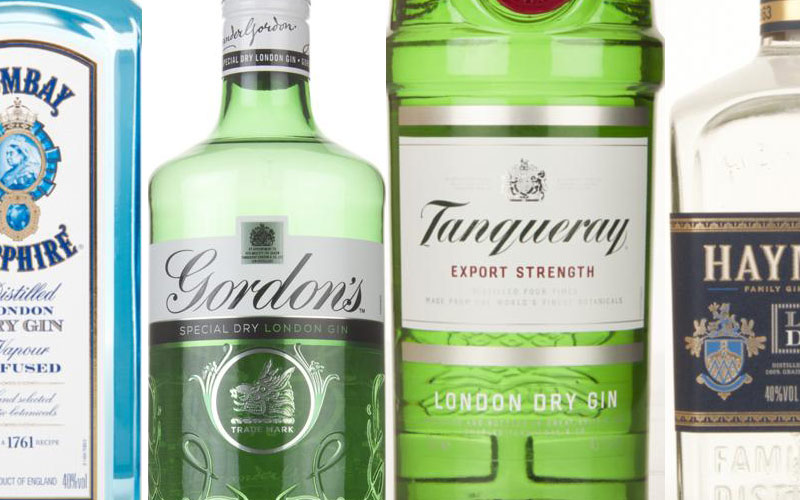
Under current EU and UK legislation, there is a clear hierarchy of definitions: Gin, Distilled Gin, and London Gin. Every London Gin is a Distilled Gin, and every Distilled Gin is a Gin, but the reverse is not true.
The Foundation: Distilled Gin
According to Section 21.a of Regulation 2019/787, a Distilled Gin must be produced using a base spirit of agricultural origin, such as grain, grapes, or sugar beets. This base must be distilled to an initial alcoholic strength of at least 96% ABV. This requirement ensures that the starting material is a true neutral spirit, stripped of its original character. This neutral spirit is then redistilled in the presence of Juniperus communis L. and other natural botanicals.
Crucially, the regulation for "Distilled Gin" allows for the addition of further flavoring substances or preparations after the second distillation. This is why popular brands such as Hendrick’s or Martin Miller’s fall under the "Distilled Gin" category but cannot be called "London Dry." Hendrick’s, for instance, adds essences of cucumber and Bulgarian rose after the distillation process is complete.
The Pinnacle: London Gin
The "London Gin" designation adds several layers of restrictive criteria to the Distilled Gin standard. First, the resulting distillate after the botanicals are added must come off the still at no less than 70% ABV. Second, all flavoring must be imparted exclusively through the distillation of the neutral spirit in the presence of natural plant materials. No flavorings can be added after the distillation process.
Furthermore, London Gin must be "dry." While a standard Distilled Gin can be sweetened to various levels (such as Old Tom styles), a London Gin must not contain more than 0.1 grams of sweetening products per liter of the final product. This tiny allowance is generally not for flavor but to accommodate "sugar dyes" or tracer molecules used by major manufacturers to deter counterfeiting.
Purity Standards and the Methanol Safeguard
A significant portion of the London Gin regulation is dedicated to chemical purity, specifically regarding methanol content. Methanol, often called "wood alcohol," is a toxic byproduct of fermentation. In the 18th century, unscrupulous distillers might retain the "heads" (the first part of the distillation run containing methanol) to increase their volume, leading to blindness or death among consumers.
Modern London Gin specifications mandate that the spirit contains fewer than five grams of methanol per hectoliter of 100% alcohol. While modern distillation technology makes it easy for almost all professional distillers to meet this standard, the inclusion of this limit in the law serves as a historical guarantee of safety. It ensures that any bottle labeled "London Gin" adheres to the highest possible standard of rectification and purity.
The Subjectivity of Botanical Predominance
One of the most contentious aspects of the 2019/787 legislation is the "predominant flavor" clause. The law states that for a product to be labeled as gin, the taste must be "predominantly that of juniper." This requirement is carried over into the London Gin category. However, the legislation provides no numerical or chemical metric for what constitutes "predominant."
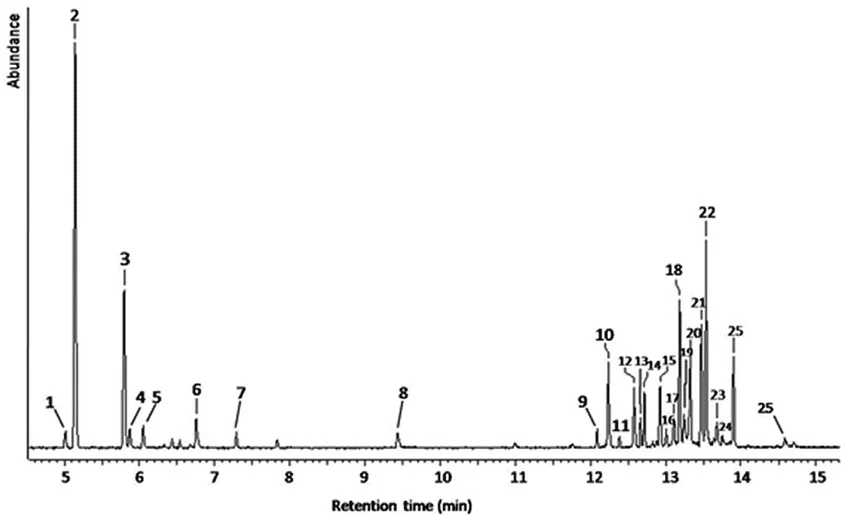
In the modern "Contemporary" or "New Western" gin movement, many distillers have pushed the boundaries of flavor, emphasizing citrus, floral, or spicy notes over the traditional piney punch of juniper. Because "predominant" is a subjective sensory term, enforcement is difficult. Some industry experts have called for the use of Gas Chromatography-Mass Spectrometry (GC-MS) to create a "chemical fingerprint" of juniper volatiles (such as Alpha-Pinene and Limonene). By comparing a gin’s chromatogram against a standard-bearer, regulators could theoretically determine if juniper is chemically dominant. However, the cost of such testing and the lack of a standardized "juniper baseline" have prevented this from becoming a legal requirement.
Geographical and Cultural Implications
Despite the name, London Gin is not a Protected Geographical Indication (PGI) in the same way that Champagne or Scotch Whisky are. In 2015, there were significant discussions within the European distilling community regarding the pursuit of GI status for London Dry Gin. However, this was ultimately abandoned.
To achieve GI status, a product must have a specific technical file that dictates an exact, uniform process. Because the "London Dry" method is used by thousands of distillers globally—from boutique craft operations in Kyoto to massive industrial plants in the United States—there was no consensus on a single technical file. Furthermore, many distillers were unwilling to disclose the proprietary details of their maceration times and temperatures required for GI certification. Consequently, "London Gin" remains a "process designation" that can be produced anywhere in the world, provided the method is followed.
International Variations: The US TTB Perspective
While the EU and UK have highly specific tiers for gin, the United States takes a broader approach. The Alcohol and Tobacco Tax and Trade Bureau (TTB) defines gin as a spirit with a "main characteristic flavor derived from juniper berries." The U.S. regulations allow for gin to be produced either by distillation or by the simple mixing of neutral spirits with juniper extracts (a method often called "cold compounding," which would never qualify as "Distilled Gin" in the EU).
In the U.S. market, the term "London Dry" is frequently used on labels, but the TTB does not enforce the same 0.1g/L sugar limit or the "no-additives-after-distillation" rule as strictly as European authorities. This creates a landscape where a product labeled "London Dry" in a New York liquor store might not legally qualify for that same label if exported to London or Paris.
Prohibitions on Color and Non-Plant Materials
The 2019/787 regulations also clarified rules regarding color and unconventional ingredients. A London Gin must be colorless. This has direct implications for the "Pink Gin" trend and the use of Butterfly Pea Flower, which turns gin a deep blue or purple. While these products are popular, they must be labeled as "Distilled Gin" or "Spirit Drink" because the coloring agents are added after distillation, violating the London Gin purity code.
Additionally, the law specifies that flavor must come from "natural plant materials." This excludes experimental gins that use animal-derived products in the still. A notable example is "Pechuga-style" gin, where a turkey or chicken breast is suspended in the still during distillation. While this is a traditional method for certain Mezcals and has been adopted by some gin distillers (like Portobello Road), the resulting spirit cannot be called London Gin because meat is not a plant. Interestingly, the base spirit itself can be derived from animal products, such as milk or whey, as seen in brands like Bertha’s Revenge, because the agricultural origin of the ethanol is distinct from the botanical flavoring process.
Summary of Implications for the Industry
The current legal framework for London Dry Gin serves as a double-edged sword for the industry. On one hand, it protects a prestigious category from being diluted by low-quality, artificially flavored products. It ensures that when a consumer sees "London Dry" on a label, they are purchasing a spirit made to the highest technical standards of purity and traditional distillation.
On the other hand, the subjectivity of the "juniper predominance" rule and the lack of geographical protection mean that the category remains vulnerable to consumer confusion. As the gin market continues to diversify into flavored and colored variations, the London Dry designation stands as a conservative pillar of the spirits world—a "process-first" standard that values the chemistry of the still over the trends of the marketing department.
Looking forward, the future of gin regulation may involve more concrete analytical measures. As GC-MS technology becomes more affordable, regulatory bodies may eventually introduce numerical thresholds for terpene content to give the "predominant juniper" rule some teeth. Until then, London Dry Gin remains a testament to 19th-century industrial innovation, codified into 21st-century law, serving as the gold standard for transparency and distillation excellence in a crowded global market.
