

The Transformative Process: A Culinary Alchemy
The transformation of an onion from its raw, pungent state to a sweet, umami-rich delicacy is a fascinating interplay of chemical reactions, primarily the Maillard reaction and true caramelization. While often used interchangeably, these two processes are distinct yet frequently occur simultaneously in foods containing both sugars and amino acids, as is the case with onions. True caramelization involves the pyrolysis of sugars at high temperatures, leading to the breakdown of sucrose, fructose, and glucose into a complex array of compounds like furanones, maltol, and cyclotene, which contribute characteristic nutty, buttery, and burnt-sugar notes. Onions, particularly yellow and white varieties, are rich in natural sugars (around 5-10% by weight), making them prime candidates for this sugar-driven browning.
Simultaneously, the Maillard reaction, a non-enzymatic browning reaction between amino acids and reducing sugars, contributes significantly to the savory complexity. Although onions have lower protein content compared to meats, the presence of sulfur-containing amino acids and various sugars ensures that the Maillard reaction plays a supporting role, adding layers of roasted, savory, and meaty notes. The initial stages of cooking involve significant moisture evaporation. Onions are approximately 89% water, and this water must cook off before significant browning can commence. This is why a wide pan, offering ample surface area, is crucial; it facilitates efficient moisture release, preventing the onions from steaming rather than browning.
As water evaporates, the sugars concentrate, and the heat, maintained at a moderate level, begins to break them down. The initial sharp, sulfuric compounds responsible for the pungency of raw onions, such as syn-propanethial-S-oxide, are thermally degraded into milder, sweeter, and more aromatic compounds, further contributing to the desired flavor profile. This gradual process, often spanning 45 minutes to an hour for deep caramelization, is not merely about achieving a color change but about developing a profound shift in molecular structure and flavor compounds. Food scientists emphasize that precise temperature control is paramount. Too high heat will burn the sugars before the full spectrum of desired compounds can develop, leading to bitterness. Too low heat, conversely, extends the process unnecessarily without achieving the desired depth of flavor or texture.
A Historical Palate: The Onion’s Journey Through Cuisine
The onion (Allium cepa) boasts a venerable history, with archaeological evidence suggesting its cultivation dates back over 7,000 years. Originating in Central Asia, onions quickly became a global staple, prized for their portability, long shelf life, and distinct flavor. Ancient Egyptians revered onions, depicting them in tombs and using them in religious ceremonies, believing their concentric rings symbolized eternal life. Roman gladiators consumed them to strengthen muscles, and Roman cuisine frequently incorporated onions into various dishes.
The concept of slow-cooking vegetables to enhance their sweetness and mellow their pungency likely evolved organically over centuries as cooking techniques advanced. While the term "caramelized onions" might be a more modern culinary descriptor, the practice of slowly sautéing onions to a deep golden-brown has roots in medieval European cooking, where onions were a fundamental ingredient in pottages, stews, and savory pies. The advent of more refined culinary practices, particularly in French cuisine from the 17th century onwards, solidified the technique. Dishes like French onion soup (Soupe à l’oignon gratinée), which relies entirely on a rich, deeply caramelized onion base, underscore the technique’s historical significance and its elevation to an indispensable culinary art form. Culinary historians note that the emphasis on patience and meticulous heat management in classical French cooking provided the ideal environment for perfecting such time-intensive preparations. This slow-food philosophy, valuing depth of flavor over speed, allowed cooks to fully explore the potential of humble ingredients like the onion.
Varieties and Their Roles: Choosing the Right Foundation
The choice of onion variety is a critical preliminary step in achieving optimal caramelization. While a wide array of onions exists, yellow and white onions are overwhelmingly favored for this particular technique. Yellow onions, the most common type, possess a robust flavor profile and a high sugar content, making them ideal for developing deep, complex caramelization. Their sulfur compounds are potent when raw but mellow beautifully with heat, contributing to the savory-sweet balance. White onions share similar characteristics but tend to have a slightly milder flavor and a thinner skin.
Other varieties, while delicious in their own right, are generally less suitable. Red onions, with their vibrant color and often higher anthocyanin content, can turn an unappealing grayish hue when extensively cooked, and their flavor profile, while sweet, can sometimes retain a slight bitterness that doesn’t fully dissipate. Sweet onions, such as Vidalia or Walla Walla, have a significantly higher sugar content and lower sulfur levels, which means they caramelize more quickly but can also burn more easily due to their delicate nature. While they can be caramelized, their nuanced sweetness might be lost in a very deep caramelization, and they may not offer the same robust backbone of flavor as yellow onions.
Globally, onions are a major agricultural commodity. According to recent agricultural data, global onion production exceeds 100 million metric tons annually, with countries like India, China, and the United States being among the top producers. The widespread availability and economic accessibility of yellow and white onions further cement their status as the preferred choice for this versatile cooking technique, allowing home cooks and professional chefs alike to consistently achieve excellent results.
Mastering the Technique: A Step-by-Step Guide with Expert Insights
Mastering the art of caramelizing onions hinges on a few non-negotiable principles: patience, proper equipment, and judicious heat management. The process typically begins with slicing the onions uniformly. While julienned slices are common, a fine dice or thicker rings can also be used, depending on the desired texture and application. Uniformity is key to ensuring even cooking and browning.
The choice of fat is also significant. Butter imparts a rich, nutty flavor that complements the sweetness of the onions, while olive oil offers a slightly fruitier note and a higher smoke point, which can be advantageous. A combination of both is often recommended by professional chefs to leverage the flavor of butter with the stability of oil.
Once the fat is melted in a wide, heavy-bottomed pan—such as a large sauté pan or a Dutch oven—over medium-low heat, the sliced onions are added. The wide pan is crucial; overcrowding prevents efficient moisture evaporation, causing the onions to steam rather than sauté and brown. Initially, the onions will release a significant amount of water, becoming translucent and soft. During this phase, occasional stirring is sufficient.
As the water evaporates, typically after 15-20 minutes, the onions will begin to shrink considerably, and their color will shift to a pale golden. This is the critical juncture where the browning truly begins. The heat must be maintained at a moderate-to-low level to allow for gradual caramelization. This is where patience becomes paramount. Frequent stirring, every 5-10 minutes, is necessary to prevent sticking and ensure even browning. If the onions begin to brown too quickly or stick excessively to the bottom of the pan, a splash of water, vegetable broth, or even wine can be added to deglaze the pan, scraping up any browned bits (fond) that contribute immense flavor. This technique also helps to regulate the pan’s temperature.
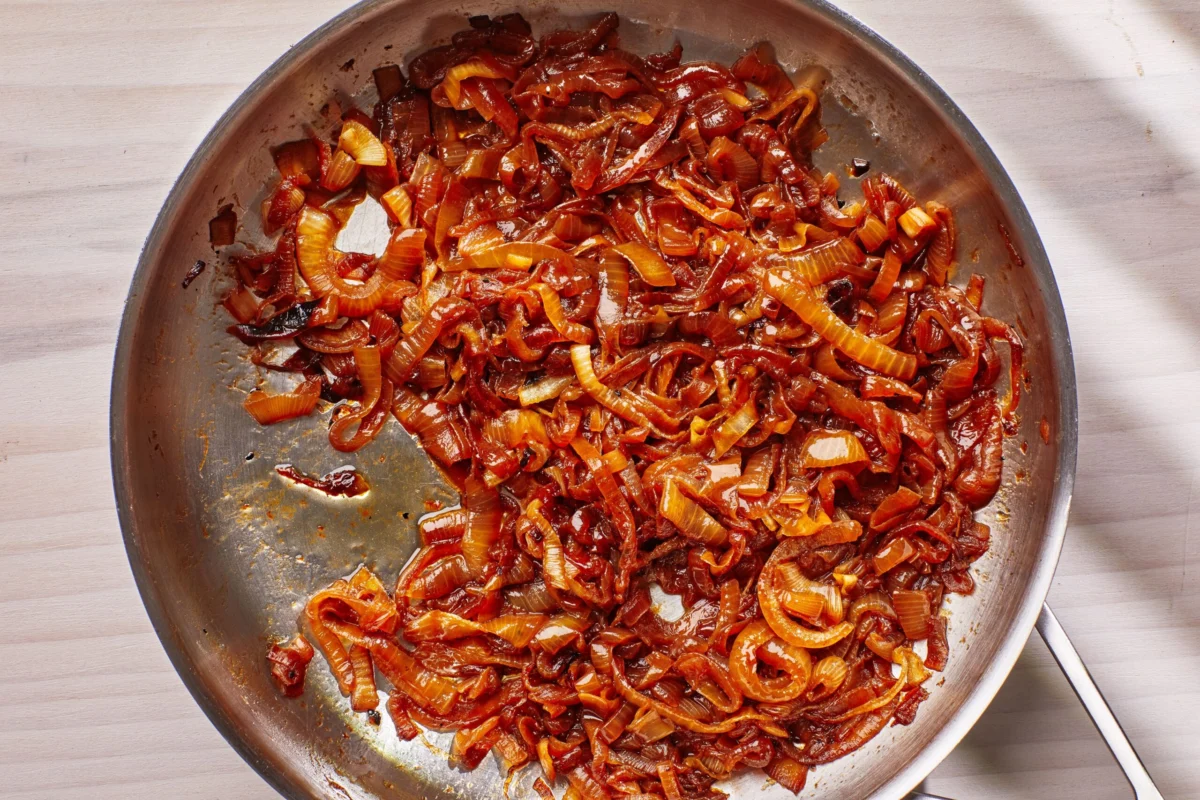
Food technologists often explain that this controlled application of moisture and heat allows the complex chemical reactions to proceed without prematurely burning the surface sugars. For deeply caramelized onions, the process can take anywhere from 45 minutes to a full hour, sometimes even longer, depending on the volume and desired depth of color. The final product should be substantially reduced in volume, very soft but not mushy, and possess a rich, uniform deep brown color. Any blackened bits indicate burning and will introduce an undesirable bitter flavor. For those seeking a more hands-off approach, oven caramelization offers an alternative, typically involving a longer cooking time at a lower temperature, with less frequent stirring. While effective, many culinary experts argue that the direct, even heat distribution of stovetop cooking provides a superior texture and flavor development.
The Versatility Paradigm: Beyond the Burger Topping
The utility of caramelized onions extends far beyond a simple burger topping, demonstrating an unparalleled versatility in the culinary landscape. Their profound savory-sweetness acts as a natural flavor enhancer, contributing a deep umami character to a vast array of dishes.
One of their most iconic applications is as the foundational element of classic French onion soup, where their rich flavor forms the very soul of the broth, harmonizing with beef stock, wine, and a gratinéed cheese topping. But their use doesn’t stop there. They can be stirred into creamy dips, adding a layer of sophisticated flavor to an otherwise simple appetizer. Incorporated into scrambled eggs or omelets, they elevate a breakfast staple into a gourmet experience.
In the realm of main courses, caramelized onions shine. They are an essential component in many savory tarts and quiches, providing a moist, flavorful base. They can be folded into pasta dishes, enriching sauces and adding textural contrast. In Indian cuisine, they form the aromatic base for many curries and biryanis, slow-cooked to a deep brown to create a complex flavor foundation. In Middle Eastern cooking, they are often layered into rice dishes or served alongside roasted meats. For American comfort food, they are indispensable in gravies, pot roasts, and meatloaf, imparting a natural sweetness and depth. Even in simpler preparations, such as gourmet grilled cheese sandwiches or as a topping for bruschetta, their presence transforms the ordinary into the extraordinary. Their ability to balance rich, savory notes with a mellow sweetness makes them an invaluable ingredient for any chef looking to add complexity without resorting to a multitude of other components.
Storage, Preservation, and Efficiency: The Batch Cooking Advantage
Given the time investment required, batch cooking and proper storage of caramelized onions offer significant advantages for efficiency in both home and professional kitchens. Once prepared, caramelized onions can be stored in an airtight container in the refrigerator for up to a week. This allows cooks to have a ready supply for various meals throughout the week, significantly cutting down on prep time for subsequent dishes.
For longer preservation, caramelized onions freeze exceptionally well. To freeze, it is crucial to allow them to cool completely to room temperature first. Then, portion them into small, manageable amounts, perhaps in ice cube trays or small freezer-safe bags. Freezing in smaller portions allows for convenient thawing of only the quantity needed for a specific recipe, minimizing waste and maintaining quality. When frozen, caramelized onions can last for several months, typically up to three to six months, without significant degradation in flavor or texture. They can be added directly from the freezer to hot dishes like soups, stews, or sauces, where they will thaw and integrate seamlessly. For dishes requiring a softer texture, such as eggs or sandwiches, thawing them in the refrigerator overnight or gently reheating them on the stovetop is recommended. This practice underscores the value of caramelized onions as a fundamental "mise en place" component, enabling quicker assembly of complex dishes and promoting a more organized and efficient cooking environment.
Nutritional Profile and Health Considerations
Beyond their remarkable flavor, onions, including their caramelized form, offer a modest but notable contribution to a balanced diet. Raw onions are a good source of Vitamin C, B vitamins (including folate and B6), and dietary fiber. They also contain prebiotics, particularly fructans, which can promote gut health by feeding beneficial bacteria. Furthermore, onions are rich in antioxidant compounds, especially flavonoids like quercetin, which have been studied for their potential anti-inflammatory and cardiovascular benefits.
The caramelization process, while transforming the flavor and texture, does alter the nutritional profile. Heat can degrade some heat-sensitive vitamins, such as Vitamin C. However, the concentration of sugars and other compounds through water evaporation can also intensify certain flavors and make some nutrients more bioavailable. The beneficial prebiotics generally withstand the cooking process well. While caramelized onions should be consumed in moderation due to their concentrated sugars and often butter content, they remain a valuable source of flavor and contribute beneficial compounds that are part of a healthy diet. The emphasis shifts from their raw vitamin content to their role in enhancing overall dietary enjoyment and encouraging the consumption of more vegetables.
The Enduring Appeal: A Culinary Legacy
The enduring appeal of caramelized onions lies in their unique blend of simplicity and profound complexity. What begins as a humble, often overlooked vegetable, through the application of time, moderate heat, and a little fat, transforms into a rich, sweet, and deeply savory ingredient that elevates countless dishes. This transformation is a testament to the power of traditional cooking techniques and the scientific principles that underpin them.
The widespread adoption of caramelized onions across diverse culinary traditions speaks to their universal appeal and fundamental role as a flavor builder. From the meticulous kitchens of Michelin-starred restaurants to the bustling home kitchens around the globe, the technique remains a vital skill. Its implications are broad: it highlights the value of patience in an increasingly fast-paced world, demonstrates how foundational ingredients can create extraordinary flavors, and celebrates the timeless intersection of culinary art and scientific understanding. In an era where food trends come and go, the caramelized onion stands as a steadfast reminder of classic techniques that continue to define deliciousness, proving that sometimes, the simplest ingredients, given the right treatment, yield the most profound culinary rewards.
