

Researchers from the University of New South Wales (UNSW) in Australia, in collaboration with Okayama University in Japan and supported by the ARC Centre of Excellence for Carbon Science and Innovation, have developed an innovative graphene oxide membrane capable of removing a significant portion of caffeine from brewed coffee. This breakthrough, detailed in the September issue of the Journal of Membrane Science, represents an early-stage but potentially transformative approach to decaffeination, shifting the process from a pre-roast treatment to a post-brew refinement. The experimental filter achieved a nearly 47% reduction in caffeine content in liquid coffee, while retaining measurable levels of other key compounds, opening new avenues for customization and consumer choice in the global coffee market.
The research, led by Yihan Tian at UNSW, marks a significant departure from conventional decaffeination methods. Historically, the removal of caffeine from coffee beans has been undertaken prior to roasting. These established techniques typically employ methods such as hot water extraction, supercritical carbon dioxide, or solvent-based processes to strip caffeine from the green coffee beans. While effective, these methods can sometimes impact the delicate flavor profile of the coffee, a concern for roasters and consumers alike. The new graphene oxide membrane technology, however, targets caffeine once it has already been dissolved in liquid coffee, offering a potentially gentler and more targeted approach to caffeine reduction. This fundamental shift in methodology could pave the way for a new generation of decaffeinated coffee products that better preserve the inherent characteristics of the original brew.
Genesis of the Graphene Oxide Membrane Technology
The development of this novel decaffeination membrane stems from ongoing advancements in materials science, particularly in the field of two-dimensional carbon materials. Graphene oxide, a derivative of graphene, is known for its exceptional mechanical strength, electrical conductivity, and unique membrane-forming properties. Its atomically thin structure allows for the creation of membranes with precisely controlled pore sizes, a critical factor for selective filtration. The Australian and Japanese research team leveraged these characteristics to engineer a membrane specifically designed to interact with and separate caffeine molecules from other components in brewed coffee.
The research project, initiated with the goal of exploring advanced filtration techniques for beverage processing, began its focused investigation into decaffeination around late 2024. Initial theoretical modeling and small-scale experiments were conducted at UNSW’s laboratories, with the ARC Centre of Excellence for Carbon Science and Innovation providing crucial funding and access to state-of-the-art graphene synthesis facilities. Collaborations with Okayama University were instrumental in refining the membrane fabrication process and understanding the complex interactions between the membrane material and various coffee compounds. The iterative process involved numerous trials, adjusting material composition, pore structure, and filtration parameters to achieve optimal results. The findings published in the Journal of Membrane Science in September 2026 represent a culmination of several years of dedicated research and development.
The Science Behind the Selective Filtration
The core of this groundbreaking technology lies in the meticulous engineering of the graphene oxide membrane. The researchers constructed a series of ultra-thin graphene oxide layers, creating a stacked structure with an intricate network of microscopic channels. The critical innovation involved the precise control of these channels’ dimensions and chemical properties. This was achieved through the strategic incorporation of calcium ions and sodium alginate, a natural polymer derived from seaweed.
These additives played a dual role. Firstly, they helped to stabilize the graphene oxide layers and form a robust membrane structure. Secondly, and more importantly, they influenced the pore size distribution within the membrane. By carefully adjusting the concentration and interaction of calcium ions and sodium alginate, the researchers were able to create pores that were sufficiently small to impede the passage of larger caffeine molecules while allowing smaller water molecules and other desirable coffee constituents to permeate through. This selective sieving mechanism is the key to the membrane’s ability to reduce caffeine concentration without completely stripping the coffee of its other valuable components.
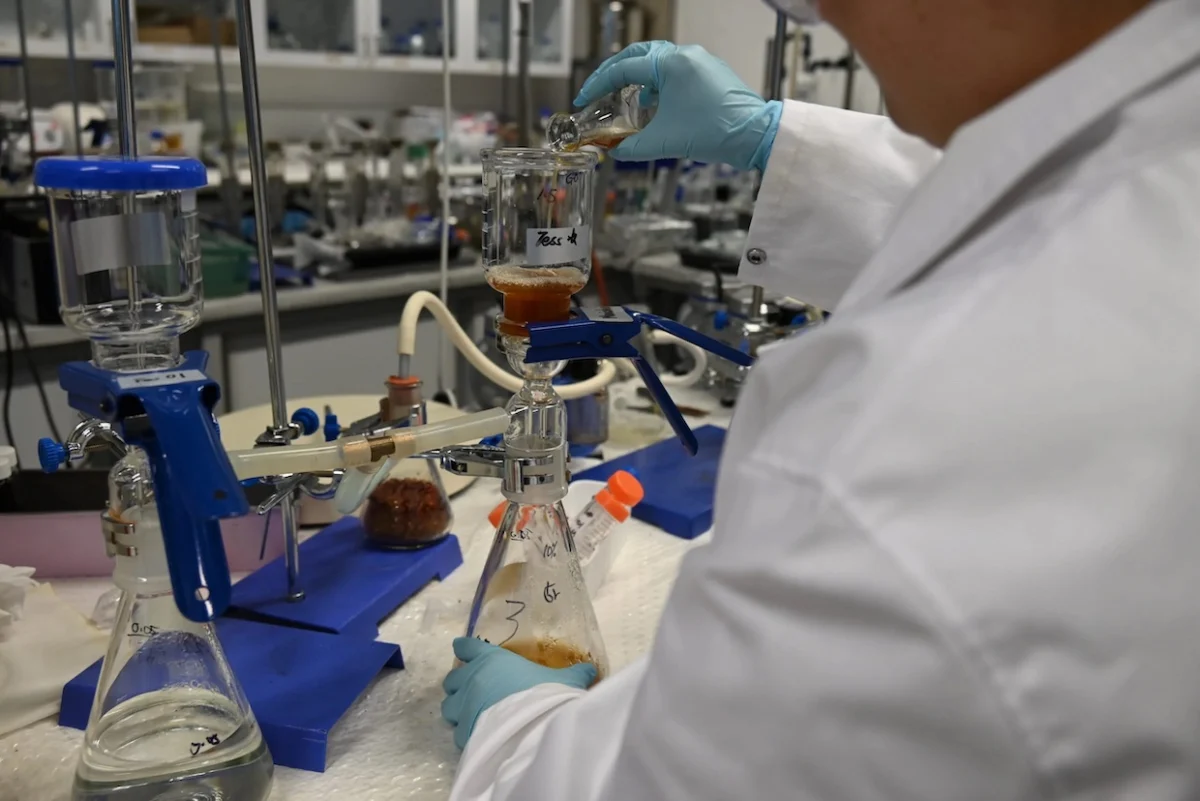
The experimental setup for testing involved a controlled laboratory environment. Diluted coffee, prepared from a commercial freeze-dried instant coffee product, was used to ensure consistency in the base beverage. Each filtration experiment utilized 100 milliliters of this coffee solution. The process was conducted over a 24-hour period at room temperature, under vacuum pressure. This extended filtration time and controlled environment were necessary for the initial demonstration phase to accurately measure the membrane’s performance and understand the kinetics of caffeine removal. The vacuum pressure facilitated the flow of the liquid through the membrane, accelerating the filtration process under laboratory conditions.
Quantifying the Decaffeination Efficacy
The results of the filtration experiments were compelling. The most effective graphene oxide membrane developed by the team demonstrated a significant reduction in caffeine concentration. Starting with an initial caffeine level of 24.64 micrograms per milligram of dried coffee solids, the filtration process reduced this to 12.95 micrograms per milligram. This translates to a substantial caffeine reduction of 47.4%. This level of reduction, achieved in a single pass through the experimental membrane, positions this technology as a promising candidate for future commercial applications.
Crucially, the filtration process did not exclusively remove caffeine. Analysis of the treated coffee revealed the presence of measurable amounts of several other important coffee compounds. These included trigonelline, N-methylpyridinium, choline, and hydroxymethylfurfural. These compounds are known contributors to coffee’s complex chemical profile, influencing its aroma, flavor, and even its potential health benefits. The retention of these compounds is a vital indicator that the graphene oxide membrane offers a degree of selectivity, preserving some of the desirable qualities of the original coffee.
However, the study also noted that the concentrations of some of these retained compounds did decline during the filtration process. This highlights a key area for further research and optimization. The researchers themselves acknowledged this nuance, stating in their paper that "the performance of the membranes cannot be assessed by a single indicator." The complex interplay between caffeine removal and the retention of other flavor and aroma compounds is a critical factor that will need to be carefully balanced in any future industrial application. The current study did not include sensory analysis, meaning the direct impact of this filtration process on the taste and aroma of the coffee remains to be determined through organoleptic testing.
The Landscape of Post-Extraction Decaffeination
The concept of decaffeinating coffee after it has already been brewed or extracted is not entirely new, but it has faced significant hurdles in achieving widespread commercial adoption. The traditional pre-roast methods are deeply entrenched in the industry due to their established efficiency and cost-effectiveness.
One notable attempt in this space was made by Decafino, a Seattle-based startup that introduced a "teabag-like" decaffeination pouch in 2022. This product claimed to remove up to 80% of caffeine from prepared coffee within an eight-minute timeframe. However, the commercial viability and current operational status of Decafino remain uncertain, with their website no longer active and their business activities unconfirmed. This precedent underscores the challenges inherent in developing and scaling post-extraction decaffeination technologies, including consumer acceptance, processing time, cost, and the ability to consistently deliver a high-quality decaffeinated product.
The UNSW-led research team candidly acknowledges the early-stage nature of their work. They explicitly describe their findings as an "early-stage demonstration" rather than an "industrially optimized process." The authors point out that "the present permeance remains modest under real-coffee filtration conditions." Permeance refers to the rate at which a fluid can pass through a membrane. Modest permeance suggests that the current filtration speed is relatively slow, which would be a significant limitation for large-scale commercial operations.
Future Directions and Potential Implications
The path from laboratory breakthrough to commercial product is often long and complex. The researchers have identified several critical areas that require further investigation and development to advance their graphene oxide membrane technology. These include:
- Improving Filtration Speed: Enhancing the permeance of the membranes is paramount to making the process commercially viable for high-volume coffee production. This could involve optimizing membrane architecture, material properties, or exploring alternative membrane configurations.
- Preventing Clogging: Coffee is a complex beverage containing oils, fine particles, and other solids that can clog filtration membranes over time. Developing strategies to mitigate fouling and maintain membrane efficiency is essential for continuous operation.
- Cleaning and Reuse Procedures: For economic and environmental sustainability, the membranes must be effectively cleaned and reused multiple times. Research into robust cleaning protocols and assessing the long-term durability of the membranes under repeated use cycles is crucial.
- Establishing Operating Costs: A thorough economic analysis will be required to determine the cost-effectiveness of this new decaffeination method compared to existing technologies. This includes the cost of membrane production, energy consumption, and operational overhead.
- Energy and Environmental Advantages: The study did not yet demonstrate a clear energy-saving or environmental advantage over established decaffeination methods. Future research will need to quantify these aspects to highlight the potential sustainability benefits.
Despite these challenges, the implications of a successful post-brew decaffeination technology are far-reaching. It could empower coffee shops and consumers to customize the caffeine content of their coffee on demand, offering greater flexibility and catering to a wider range of preferences. For the specialty coffee industry, this could mean the ability to produce decaffeinated versions of high-quality single-origin coffees without the compromises often associated with pre-roast decaffeination. Furthermore, it opens possibilities for innovative product development, such as creating customizable coffee blends with precisely controlled caffeine levels for specific markets or applications, such as performance beverages or products for sensitive individuals. The ongoing research by Tian and his team represents a significant step forward in the pursuit of more nuanced and consumer-centric approaches to coffee processing.
