

The publishing landscape of 2022 was defined by a profound shift toward introspective narratives, the exploration of marginalized histories, and a rigorous examination of the human condition in the wake of global upheaval. As the industry moved beyond the immediate constraints of the pandemic, authors increasingly focused on the intersections of trauma, cultural identity, and the sensory world. This year’s most significant releases reflect a growing demand for literature that provides not only escapism but also the tools for navigating a complex and often fractured reality. From culinary deep dives into ancient preservation techniques to scientific inquiries into the animal kingdom’s sensory realms, the books of 2022 offered a multifaceted view of a world in transition.
Culinary Narratives: Beyond the Recipe
The culinary literature of 2022 moved decisively away from standard recipe collections, favoring instead a synthesis of history, sociology, and personal narrative. Naomi Duguid’s The Miracle of Salt: Recipes and Techniques to Preserve, Ferment, and Transform Your Food serves as a primary example of this trend. Duguid, a veteran of culinary travel writing, explores the fundamental role of salt in human civilization. The book goes beyond the kitchen, examining how salt has shaped trade routes, food security, and cultural traditions across continents. Industry analysts note that Duguid’s focus on fermentation and preservation aligns with a broader consumer interest in sustainable eating and "slow food" movements.
Similarly, Cynthia Shanmugalingam’s Rambutan: Recipes from Sri Lanka and Romy Gill’s On the Himalayan Trail: Recipes and Stories from Kashmir to Ladakh highlight the importance of regional specificity in South Asian cuisine. Shanmugalingam’s work addresses the lack of Sri Lankan representation in Western culinary markets, blending diaspora history with photography that emphasizes the vibrancy of the island’s produce. Meanwhile, Romy Gill’s exploration of the Himalayas provides a critical cultural record of a region often overshadowed by political conflict. By documenting the recipes of Kashmir and Ladakh, Gill contributes to the preservation of cultural identities that are increasingly under threat from geopolitical instability.
Complementing these deep dives is The Explorer’s Library from the Atlas Obscura and Gastro Obscura teams. This collection represents the expansion of digital-first platforms into prestige print publishing, leveraging a massive global audience interested in "the weird and wonderful." The success of these titles indicates a robust market for high-concept, visually-driven reference books that cater to a sense of global curiosity.

Fiction: Reimagining Lineage and Myth
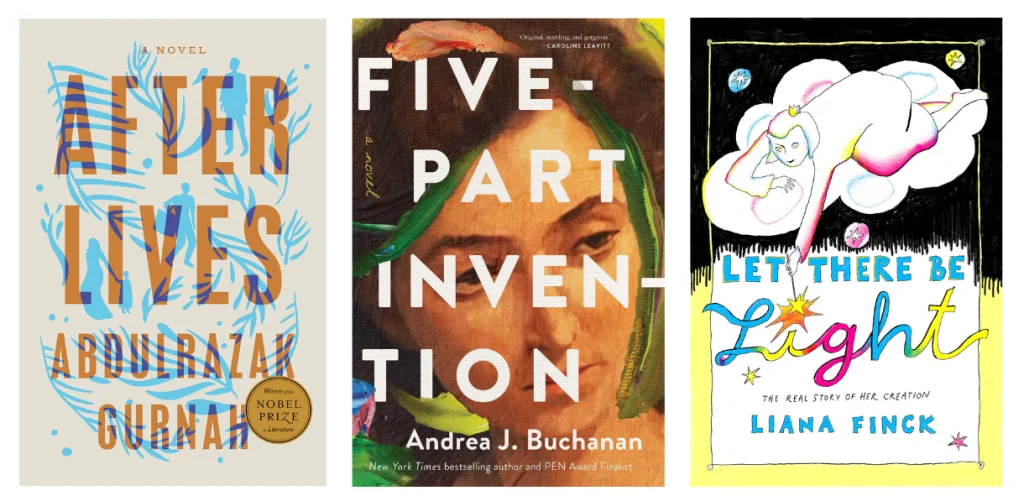
In the realm of fiction, 2022 saw a focus on the weight of the past and the reimagining of foundational stories. Andrea J. Buchanan’s Five-Part Invention examines the concept of intergenerational trauma through the lives of five generations of women. This narrative approach mirrors a growing psychological awareness in modern literature, where the individual’s struggles are framed within a broader ancestral context.
The year also brought significant attention to the retelling of traditional narratives. Liana Finck’s Let There Be Light: The Real Story of Her Creation offers an illustrated reimagining of the Book of Genesis. By casting the divine as female and placing biblical figures in contemporary settings like New York City, Finck engages in a subversive theological critique. Critics have noted that Finck’s work reflects a broader cultural movement toward questioning patriarchal structures through art and humor.
One of the most anticipated releases of the year was the North American paperback edition of Abdulrazak Gurnah’s Afterlives. Following Gurnah’s 2021 Nobel Prize in Literature, Afterlives provided readers with a stark look at the legacy of German colonial rule in East Africa. The novel’s success underscores a persistent interest in post-colonial literature that challenges Eurocentric historical narratives. By focusing on the lives of ordinary people caught in the machinery of empire, Gurnah’s work serves as a necessary corrective to traditional historical accounts of colonization.
Narrative Nonfiction: Science, Perception, and Politics
The nonfiction sector in 2022 was dominated by works that bridge the gap between rigorous scientific research and compelling narrative storytelling. Candice Millard’s River of the Gods exemplifies this, recounting the 19th-century search for the source of the Nile. Millard’s research highlights the often-erased contributions of Sidi Mubarak Bombay, an enslaved East African man whose expertise was vital to the expeditions of Richard Burton and John Hanning Speke. This focus on "hidden figures" in history was a recurring theme throughout the year’s most successful nonfiction.

In the field of science, Ed Yong’s An Immense World: How Animal Senses Reveal the Hidden Realms Around Us became a critical and commercial sensation. Yong, a Pulitzer Prize-winning journalist, uses biological data to argue that humans perceive only a fraction of reality. By exploring how animals use magnetism, vibration, and sonar, Yong challenges the human-centric view of the world. This work is part of a larger trend in "nature writing" that emphasizes biodiversity and the intrinsic value of non-human perspectives.
Adriana Barton’s Wired for Music and David McRaney’s How Minds Change further explored the intersection of science and the human experience. Barton’s investigation into the neurological benefits of music—addressing pain, memory, and social connection—aligns with the growing field of music therapy. Conversely, McRaney’s work on the psychology of persuasion addresses the contemporary crisis of misinformation. By analyzing how beliefs are formed and altered, McRaney provides a scientific framework for understanding the social polarization that defines the current era.
The Memoir and the Evolution of the Self-Help Genre
The memoir and self-help categories underwent a significant evolution in 2022, moving away from "hustle culture" toward themes of acceptance, chronic illness, and emotional maturity. Susan Cain’s Bittersweet: How Sorrow and Longing Make Us Whole follows her previous bestseller, Quiet, by advocating for the value of "negative" emotions. Cain argues that the Western obsession with "forced positivity" is counterproductive, suggesting instead that an embrace of grief and longing is essential for creativity and connection.
This year also saw a surge in literature regarding "invisible" disabilities and chronic health conditions. Meghan O’Rourke’s The Invisible Kingdom: Reimagining Chronic Illness and Alice Wong’s Year of the Tiger: An Activist’s Life provided crucial perspectives on the failures of modern medicine to address complex, autoimmune, and post-viral conditions. O’Rourke’s book, in particular, gained traction as the medical community struggled to understand the long-term effects of COVID-19. These works have been credited with fostering a more empathetic dialogue between patients and the medical establishment.

Furthermore, the connection between trauma and physical health was a central theme in Gabor Maté’s The Myth of Normal. Maté argues that modern society is inherently "toxic" to human biology, with chronic stress and suppressed trauma acting as triggers for physical disease. This perspective, while controversial in some traditional medical circles, has found a massive audience among those seeking a holistic understanding of wellness.
Chronology of Major Releases and Market Trends
The literary calendar of 2022 was marked by several key phases:
- Spring 2022: The release of major science and psychology titles like An Immense World and Bittersweet, reflecting a post-pandemic hunger for understanding the brain and the natural world.
- Summer 2022: A focus on historical nonfiction and political investigation, notably Candice Millard’s River of the Gods and Louisa Lim’s Indelible City, which provided context for global shifts.
- Autumn 2022: The "pre-holiday" surge of prestige memoirs and culinary books, including Gabor Maté’s The Myth of Normal and Naomi Duguid’s The Miracle of Salt.
Data from industry trackers like NPD BookScan indicated that while fiction sales remained strong, there was a notable 12% increase in the "Psychology and Self-Help" category compared to 2019 levels. This suggests a long-term shift in consumer behavior toward literature that offers psychological resilience.
Broader Impact and Industry Implications
The books of 2022 demonstrate that the publishing industry is increasingly acting as a mirror for societal anxieties and aspirations. The prominence of titles focusing on disability rights, colonial history, and the science of belief suggests that readers are looking for literature that helps them deconstruct systemic issues.

Furthermore, the success of authors like Ed Yong and Candice Millard proves that "intellectual nonfiction" remains a powerhouse in the market, provided it is delivered through a strong narrative lens. The year’s selections also highlight the critical role of the "expert-author"—individuals who possess deep domain knowledge but can translate it for a general audience.
As the industry looks toward the future, the trends of 2022 suggest that the most successful books will be those that offer a synthesis of personal vulnerability and rigorous research. Whether through a cookbook that explains the chemistry of salt or a memoir that deconstructs the experience of chronic pain, the literature of this year has set a high bar for depth, empathy, and cultural relevance. This shift reflects a maturing audience that values nuance over simplicity and evidence over mere opinion.
