

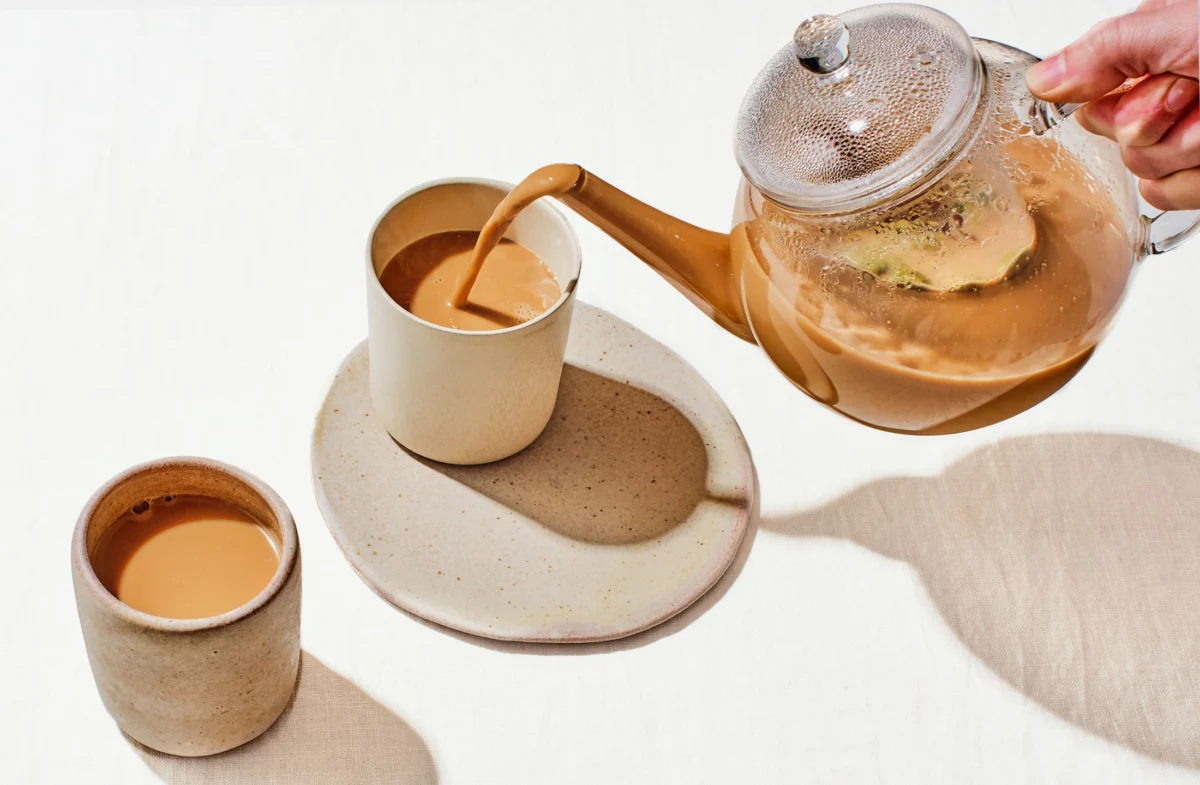
Karak chai, a robust and creamy variant of masala chai, is swiftly transitioning from a beloved regional staple to a global culinary phenomenon, celebrated for its distinctive flavor profile and comforting richness. This potent brew, whose name "Karak" translates to "strong" in Hindi, distinguishes itself through its reliance on evaporated milk, which imparts a unique depth and velvety texture, alongside a typically more restrained spice palette compared to its masala chai counterparts. While recipes for this aromatic beverage are inherently diverse, reflecting generations of family traditions, the version championed by acclaimed recipe developer and former Bon Appétit food editor Zaynab Issa offers a masterclass in elegant simplicity, featuring a harmonious blend of black tea, fragrant cardamom pods, warm cinnamon sticks, and a subtle hint of vanilla.
The Origins and Cultural Tapestry of Karak Chai
The journey of Karak chai begins in the vibrant culinary landscapes of the Indian subcontinent, where the art of tea brewing has been perfected over centuries. The term "chai" itself is derived from the Hindi word for tea, which in turn comes from "cha," the Chinese word for tea. As tea cultivation and consumption spread across Asia, so too did the myriad ways of preparing it. Masala chai, or "spiced tea," became a cornerstone of South Asian culture, with each household often boasting its unique blend of spices tailored to regional tastes and available ingredients. Karak chai emerged from this rich tradition, distinguishing itself by emphasizing strength and an unparalleled creaminess. Its distinct character, particularly its reliance on evaporated milk, suggests an evolution influenced by both the availability of ingredients and a specific preference for a richer, more concentrated brew that offers a powerful sensory experience.
The widespread popularity of Karak chai beyond its immediate South Asian origins can be largely attributed to the migration of South Asian communities to the Arabian Gulf region, particularly Qatar, the United Arab Emirates, and Saudi Arabia, starting in the mid-20th century. These communities brought with them their culinary traditions, and Karak chai quickly found a receptive audience among the local populations. Its strong, sweet, and milky profile resonated deeply with regional tastes, establishing it as an ubiquitous beverage integral to daily life, social gatherings, and a burgeoning cafe culture. Data from various market analyses indicate a significant increase in the number of dedicated Karak chai establishments in cities across the Gulf over the past two decades, with some major chains now operating hundreds of outlets. Today, it is not uncommon to find dedicated Karak chai stalls and drive-through cafes dotted across cities like Doha, Dubai, and Riyadh, where locals and expatriates alike gather at all hours to enjoy this comforting drink, often served in small, steaming cups. Its accessibility and affordability have cemented its status as a democratic beverage, enjoyed by all strata of society, fostering a sense of community around its consumption.
Zaynab Issa’s Recipe: A Homage to Heritage and Simplicity
Zaynab Issa’s interpretation of Karak chai, adapted from her acclaimed cookbook Let’s Eat, stands as a testament to the power of tradition and the beauty of culinary minimalism. Issa, a respected figure in the culinary world known for her thoughtful approach to food and storytelling, weaves her personal and family history into her recipes, and her Karak chai is no exception. For her, this creamy, golden tea is deeply rooted in her family’s cherished Ramadan traditions. During the holy month, a glass kettle of this inviting brew was an indispensable element of the iftar table, the evening meal that marks the breaking of the daily fast. This personal connection underscores the emotional and cultural significance that food holds within families and communities, transforming a simple beverage into a potent symbol of togetherness, devotion, and shared heritage during a sacred time. The act of preparing and sharing Karak chai during Ramadan becomes a ritual that transcends mere sustenance, offering warmth, comfort, and a moment of reflection after a day of fasting.
Issa’s recipe philosophy for Karak chai emphasizes clarity and concentration of flavor, a deliberate choice that differentiates it from more complex masala chai variations. While some traditional masala chai recipes might incorporate a broader spectrum of spices like fresh ginger, black peppercorns, cloves, or star anise, her version pares down the spice profile to the essentials: robust black tea, the aromatic warmth of green cardamom, the sweet notes of cinnamon, and the subtle, enriching undertone of vanilla. This deliberate choice allows the core components—the robust tea and the creamy evaporated milk—to shine, creating a harmonious and deeply satisfying experience. The careful selection of these specific spices ensures that the tea remains "karak" (strong) in flavor without becoming overwhelmingly complex, appealing to a broad palate while still retaining its distinctive, comforting character. Culinary critics have praised Issa’s approach for its ability to distill the essence of a beloved beverage while maintaining its authenticity and emotional resonance.
The Science and Art of the Long Simmer
A critical element in achieving the signature taste, texture, and color of Zaynab Issa’s Karak chai, and indeed many authentic Karak chai recipes, is the extended simmering process. The instruction to simmer the tea for approximately 30 minutes is not merely a suggestion but a fundamental technique that transforms the raw ingredients into a rich, concentrated elixir. This prolonged cooking time serves multiple crucial purposes, impacting both the chemical composition and the sensory attributes of the final product.
Firstly, the extended simmer facilitates the thorough extraction of flavors from the black tea leaves and the chosen spices. Heat and time allow the soluble compounds—tannins, catechins, and volatile aromatic oils—to dissolve fully into the liquid, intensifying the tea’s intrinsic notes. For spices like cardamom and cinnamon, the sustained heat helps to efficiently release their essential oils, infusing the brew with their characteristic warmth and fragrance. As clarified in the recipe’s frequently asked questions, crushing the cardamom pods lightly before adding them further aids this extraction by exposing the seeds and increasing their surface area, allowing for a more potent flavor release.
Secondly, the simmering process significantly concentrates the liquid through evaporation. As water slowly escapes as steam, the remaining milk and tea solids become denser, contributing significantly to the desired creamy texture and the deep, rich caramel color that is a hallmark of well-made Karak chai. This concentration also intensifies the sweetness and the overall flavor profile, creating a drink that is profoundly satisfying and full-bodied. The recipe insightfully notes that "the longer it goes, the stronger and creamier it gets," highlighting the direct correlation between simmering time and the final product’s intensity and mouthfeel. This process is similar to how reductions in savory cooking concentrate flavors, applied here to a sweet, milky beverage.
Furthermore, the interaction between the milk sugars (lactose) and amino acids at elevated temperatures over an extended period contributes to the Maillard reaction. This complex series of chemical reactions is responsible for the formation of hundreds of new flavor compounds and the characteristic browning that occurs in many cooked foods. In Karak chai, the Maillard reaction contributes to subtle toasted, slightly nutty, and caramelized notes, adding another layer of complexity to its flavor profile and deepening its golden-brown hue. This chemical transformation is crucial; it differentiates Karak chai made with evaporated milk and a long simmer from simply adding milk to freshly brewed tea, imbuing it with a depth of flavor that cannot be achieved through quicker methods.
Practical Considerations During Simmering
While the long simmer is vital, it demands attention. Milk-based teas are notoriously prone to boiling over quickly due to the proteins and fats forming a film on the surface, trapping steam beneath. Therefore, a watchful eye is essential to prevent spillage and ensure an even, gentle simmer. The use of a thick-bottomed pot can help distribute heat more evenly and reduce the risk of scorching the milk solids at the bottom, which could impart an undesirable burnt flavor. Stirring periodically can also help prevent a skin from forming and keep the tea from boiling over.
The Role of Evaporated Milk and Ingredient Nuances
The choice of evaporated milk is arguably the most defining characteristic of Karak chai, setting it apart from many other milk tea preparations globally. Evaporated milk is a shelf-stable canned milk product from which approximately 60% of the water has been removed through a vacuum evaporation process. This concentration not only makes it significantly thicker and creamier than regular milk but also imparts a slightly cooked, caramelized flavor due to the heat treatment during its production. When incorporated into Karak chai and subjected to further simmering, this unique flavor profile intensifies, contributing significantly to the tea’s rich and distinctive taste. The milk’s higher fat and protein content also contribute to the velvety mouthfeel and the stability of the brew, preventing curdling during prolonged heating, which can sometimes be an issue with fresh milk.
However, the FAQ section thoughtfully acknowledges that alternatives can be used, albeit with some compromise to the traditional profile. Substituting an equal amount of half-and-half or whole milk is possible. Half-and-half, a blend of whole milk and cream, possesses a higher fat content than whole milk and will thus yield a richer chai than whole milk, but it will still lack the concentrated, slightly cooked, and slightly caramelized notes that evaporated milk uniquely provides. Whole milk, being lighter in fat and solids, will result in a less creamy and less robust drink, diverging further from the authentic Karak profile. These substitutions, while functional, highlight the irreplaceable contribution of evaporated milk to the authentic Karak chai experience, particularly in achieving its signature depth, body, and creaminess.
Regarding spices, Zaynab Issa’s recipe’s deliberate simplicity is a key feature, showcasing a masterful understanding of flavor balance. While traditional masala chai often boasts a complex blend that might include green cardamom, black cardamom, cloves, ginger, star anise, fennel seeds, and nutmeg, her Karak chai focuses on the foundational warmth and aromatics of green cardamom and cinnamon. Green cardamom, with its floral, citrusy, and slightly spicy aroma, provides a bright, invigorating note, while cinnamon contributes a sweet, woody, and profoundly comforting essence. The addition of vanilla, though less common in traditional chai recipes, complements these spices by adding a layer of mellow sweetness and depth, enhancing the overall warmth and richness without overpowering the tea’s core strength. The FAQ clarifies the preparation of cardamom pods: a light crush to split them open is sufficient, allowing the aromatic seeds to release their flavor while the pods themselves are easily strained out before serving, ensuring a smooth drinking experience.
The Broader Impact and Global Appreciation
The rise of Karak chai, exemplified by recipes like Zaynab Issa’s, is reflective of a broader global trend in food and beverage consumption: the increasing appreciation for authentic, culturally rich, and comfort-driven dishes. Its journey from South Asian homes to Gulf cafes and now into the international culinary lexicon illustrates the powerful role of migration, cultural exchange, and digital media in shaping global tastes.
Economic and Social Resonance:
In the Middle East, Karak chai has fostered a vibrant cafe culture, becoming a daily ritual for millions. These cafes serve as essential social hubs, where people gather for conversation, business meetings, or simply a moment of respite. The relatively low cost of a cup of Karak chai makes it an accessible luxury, reinforcing community bonds across diverse demographics. Its economic impact is significant, supporting local businesses, tea suppliers, milk producers, and a growing workforce within the hospitality sector. The proliferation of specialized Karak chai outlets, from quaint street carts to modern food trucks and sophisticated cafes, also signifies a burgeoning market segment, demonstrating its sustained commercial viability and deep cultural entrenchment. Reports from regional business journals often highlight the robust growth of the Karak chai market, indicating its stable demand even amidst economic fluctuations.
Culinary Exploration and Food Trends:
Globally, as consumers become more adventurous and seek out unique culinary experiences, Karak chai finds itself positioned at the forefront of emerging beverage trends. Food bloggers, travel enthusiasts, and celebrity chefs often highlight its distinct qualities, further propelling its international recognition. The simplicity of its core ingredients, combined with the nuanced complexity of its flavor profile achieved through careful preparation, makes it an attractive subject for culinary experimentation and adaptation in different cultural contexts. It represents a delightful bridge between traditional practices and modern palates, demonstrating how age-old recipes can find new life and relevance in contemporary dining scenes. Its presence in high-end restaurants and fusion cafes in Western cities underscores its transition from a niche beverage to a globally recognized comfort drink.
Preservation of Heritage:
Through her cookbook Let’s Eat and her detailed recipe, Zaynab Issa plays a crucial role in documenting and preserving culinary heritage. By sharing her family’s Ramadan traditions surrounding Karak chai, she not only offers a delicious and accessible recipe but also provides a poignant window into the cultural significance of food. In an increasingly globalized and fast-paced world, such efforts are vital for ensuring that traditional recipes are not lost to time but are instead celebrated, understood, and passed down to future generations. Her work underscores the idea that food is more than mere sustenance; it is a profound repository of history, memory, and identity, capable of connecting individuals to their roots and to a wider community.
A Timeline of Tea and Karak Chai’s Evolution
- Ancient China (Pre-2737 BCE – 3rd Century CE): Earliest records of tea consumption, initially for medicinal purposes, then evolving into a popular beverage.
- 17th Century: Tea is first introduced to Europe by Dutch traders, gradually gaining popularity among the aristocracy.
- 18th-19th Century: The British East India Company establishes large-scale tea plantations in India (Assam, Darjeeling) to compete with China’s tea monopoly. This marks the widespread availability of black tea in the Indian subcontinent.
- Early 20th Century: The practice of adding milk and sugar to tea becomes common in India. The concept of "masala chai" (spiced tea) begins to evolve, incorporating various local spices tailored to regional preferences.
- Mid-20th Century: A significant wave of South Asian diaspora begins migrating to the Arabian Gulf for economic opportunities. They bring their rich culinary traditions, including various forms of chai, to the region.
- Late 20th Century: Karak chai, with its strong, creamy profile often achieved with evaporated milk, gains immense popularity in Gulf states like Qatar and UAE, becoming a staple beverage in homes and burgeoning street stalls and cafes. Its affordability and widespread availability solidify its status.
- 2000s-Present: Karak chai culture flourishes throughout the Gulf, with dedicated cafes and drive-throughs becoming ubiquitous. Social media platforms and global travel significantly contribute to its wider recognition beyond the Middle East.
- 2020: Zaynab Issa publishes Let’s Eat, featuring her family’s Ramadan Karak chai recipe. This publication introduces the recipe to a broader international audience, further highlighting its cultural significance and simple elegance.
- Current Day: Karak chai continues to gain traction globally, appearing on menus in diverse international cities, celebrated for its unique taste, comforting qualities, and deep cultural depth, becoming a symbol of culinary exchange.
Concluding Thoughts: A Brew Beyond Borders
The story of Karak chai is a
