

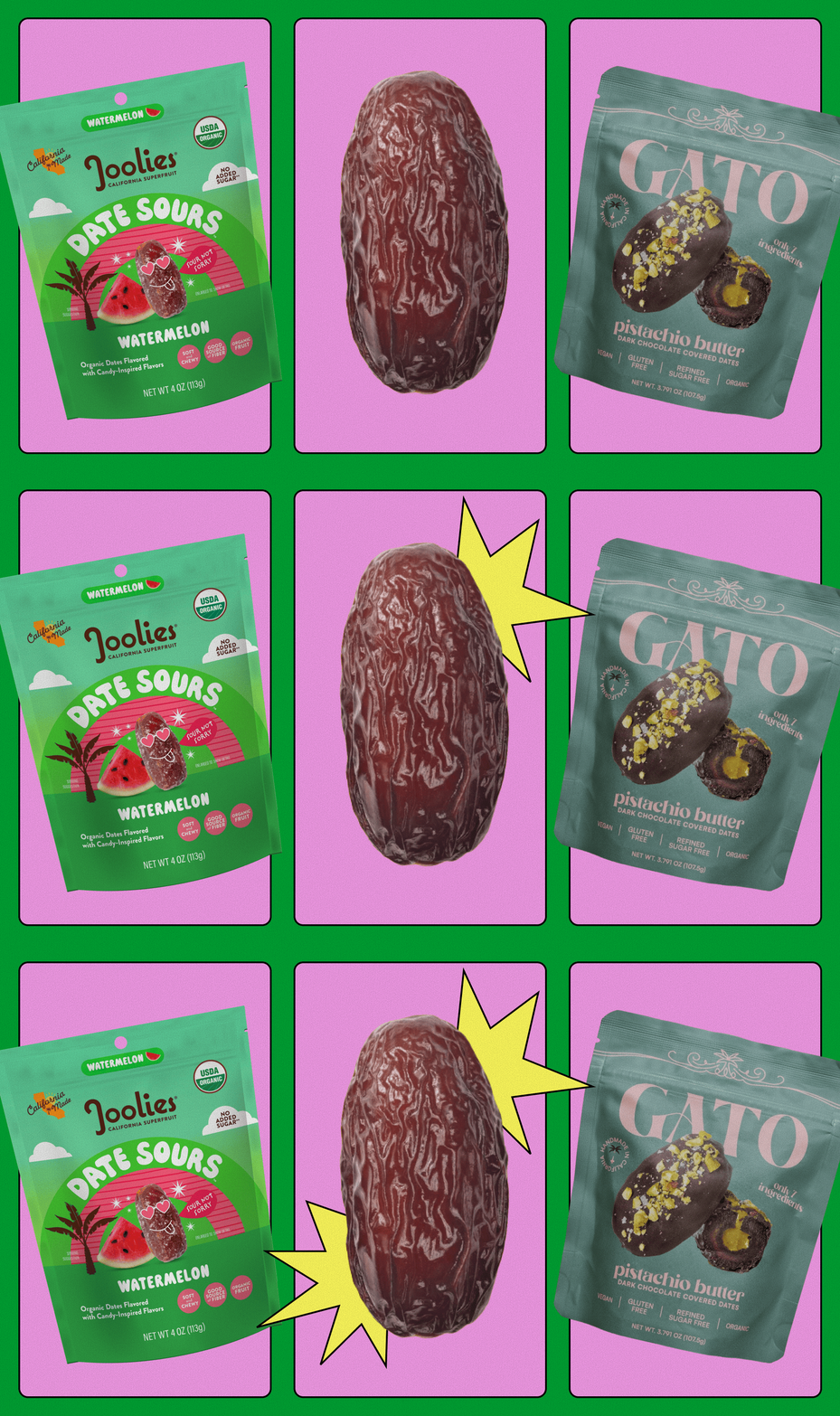
In the ever-evolving landscape of food trends, where ingredients rise and fall with the fickle currents of social media and consumer preference, an ancient fruit has quietly, yet decisively, ascended to become the internet’s newest darling: the date. Following in the footsteps of previous "it" ingredients like tinned fish and cottage cheese, dates are now dominating discussions, product development, and grocery shelves, signaling a significant shift in consumer demand for wholesome, versatile, and naturally sweet options. By mid-2026, the proliferation of date-based products across categories suggests that this isn’t merely a passing fad but a sustained culinary revolution.
The Ascent of an Ancient Fruit in a Modern World
The journey of an ingredient from niche to mainstream often follows a predictable trajectory, propelled by viral social media content, innovative chefs, and forward-thinking food manufacturers. A few years prior, tinned fish transformed from a pantry staple into a gourmet "seacuterie" centerpiece, lauded for its convenience, umami depth, and perceived sophistication. This was quickly followed by the unexpected resurgence of cottage cheese, which, thanks to a legion of TikTok and Reels creators, was reimagined as a versatile, protein-packed base for everything from whipped desserts to savory bakes and even frozen treats. As of 2026, the culinary world has seemingly reached "peak pickle," with its distinctive tangy flavor infusing a dizzying array of products, from snacks and condiments to surprisingly unconventional items like lip balms and personal lubricants.
However, the current culinary spotlight shines brightest on the humble date. Its emergence as the newest snack darling was distinctly observed during the annual Pantry Awards judging, where a remarkable surge in date-based product submissions underscored its growing prominence. "These fiber-filled fruits are having a moment, in new and unexpected ways," remarked one judge, highlighting the breadth of innovation. From sour date snacks and date-sweetened boxed cakes to sophisticated date-based candies, syrups, and even the world’s first soft drink made entirely from dates, this primordial fruit is being meticulously reimagined for contemporary palates, and the market response has been overwhelmingly positive.
Driving Forces Behind the Date Boom: Health, Versatility, and Authenticity
The rapid ascent of dates is not an accidental phenomenon but rather the culmination of several converging consumer trends and intrinsic qualities of the fruit itself. Amanda Sains-Harris, Vice President of Marketing for the prominent date-based snack brand Joolies, explains, "Consumers are starting to see dates as more than just a traditional dried fruit." She elaborates that this "date boom" has been brewing for years, gaining traction on social media platforms and at industry trade shows before finally translating into significant retail success. Citing point-of-sale data from the market-intelligence platform SPINS, Sains-Harris confirms that the date category experienced a robust 24.1 percent growth in conventional grocery channels through June 2026, underscoring its impressive market penetration.
At the heart of this surge is a fundamental shift in consumer priorities. Modern consumers, much like those who embraced cottage cheese ice cream and tinned-fish charcuterie, are actively seeking snacks that marry health benefits with genuine palatability. The era of unappetizing, cardboard-like protein bars and chemically flavored sodas is rapidly fading. "[Dates] check a lot of boxes without feeling overly engineered," Sains-Harris notes, articulating a key differentiator. "Consumers also don’t necessarily want to choose between better-for-you and indulgent anymore. They want both. Dates naturally live in that sweet spot." This desire for "better-for-you indulgence" signifies a mature consumer base that values natural ingredients over artificial compromises.
Grace Finerman, founder of Date Smarter!, a brand celebrated for its decadent chocolate-covered date caramels (a recipient of a 2026 Pantry Award), echoes this sentiment. She observes a distinct move away from zero-sugar alternatives. "Five years ago, people were really turning to stevia," Finerman recalls. "I think the pendulum has kind of switched to people now wanting not cane sugar, but something sweet that’s not processed." Despite their inherent stickiness and sweetness, dates possess a naturally low-glycemic index, offering a sustained energy release without the sharp sugar spikes associated with refined sugars.
Beyond their natural sweetness, dates boast an impressive nutritional profile, particularly their high fiber content, ranging from 6.7 to 8 grams per 100 grams. In an age increasingly focused on gut health, weight management, and the widespread discussion around GLP-1 medications, the concept of "fiber-maxxing" has become a significant draw. Dates provide a compelling, natural solution for consumers looking to increase their dietary fiber intake. Moreover, their unique composition of natural sugars, carbohydrates, and essential minerals makes them an excellent source of sustained energy, particularly when paired with protein-rich additions.
Sophia Karbowski, co-founder of Realsy, a brand specializing in date snacks stuffed with various nut butters, attests to this functional appeal. "We actually have a large customer base of endurance athletes, professional and collegiate athletes, and overall fitness enthusiasts," Karbowski states. She explains, "The natural combination of carbs, sugar, and fiber in dates—plus a bit of added protein and fat from the natural nut butter filling—is the perfect source of clean energy athletes are looking for." This positions dates as a powerful functional food, appealing to a demographic that prioritizes performance and natural fuel sources.
Innovation and Versatility: A Brand’s Dream Ingredient
The remarkable versatility of dates is another critical factor contributing to their market triumph, making them an attractive ingredient for food innovators and established brands alike. On their own, dried dates offer a deeply satisfying, naturally indulgent experience. Their rich, caramel-like flavor and chewy texture are inherently appealing. However, their culinary potential extends far beyond simple consumption. When reimagined, such as being wrapped in savory bacon or stuffed with creamy cheeses or sweet fillings, dates transform into gourmet delights, showcasing their adaptability across flavor profiles.
Their inherent stickiness makes dates an exceptional natural binder in various food applications. Mashed into a paste, as seen in the viral peanut butter date bark that has captivated TikTok audiences, or blended into a purée, dates effectively hold together diverse ingredients like nuts, other fruits, and grains without the need for artificial additives. This binding quality is particularly valuable in the development of snack bars, energy bites, and raw desserts, aligning perfectly with the clean label movement.
Furthermore, dates can be dried and powdered, creating a highly effective refined-sugar substitute in baking mixes, syrups, and other sweet applications. Grace Finerman elaborates on this, stating, "We [Date Smarter!] use date powder, which is when you take a date that’s dehydrated and run it through a processor. We make all our caramel with that." This natural sweetener alternative caters to the growing demand for less processed sugars and cleaner ingredient lists, offering a guilt-free way to add sweetness and depth of flavor.
Economic and Agricultural Implications
The surging demand for dates carries significant implications for the agricultural sector, particularly in major date-producing regions like the Middle East, North Africa, and parts of the United States (e.g., California’s Coachella Valley). Increased demand can stimulate investment in date farming, potentially leading to expanded cultivation, improved processing technologies, and economic growth in these areas. For farmers, the date boom represents an opportunity to capitalize on a high-value crop with expanding market applications beyond traditional dried fruit sales.
Moreover, the rise of dates as a natural sweetener challenges the dominance of conventional sugar and artificial sweeteners. As consumers increasingly opt for natural alternatives, this could prompt a broader shift in ingredient sourcing and product formulation across the food industry, influencing supply chains and agricultural practices globally. Brands are now looking to date producers as key partners in developing new product lines, fostering a symbiotic relationship between agriculture and food innovation.
The Future of Dates: A Sustainable Trend?
While food trends can be fleeting, the characteristics that underpin the date’s current popularity suggest a more enduring presence. Its ancient lineage, dating back to Mesopotamia, provides a historical gravitas that few other "trendy" ingredients possess, reinforcing the notion that this fruit is more than just a momentary sensation. Industry leaders are optimistic about its long-term potential. Sophia Karbowski of Realsy anticipates seeing dates on labels across the entire grocery store, from diverse beverages to baking mixes, signifying a deep and broad market integration.
Amanda Sains-Harris of Joolies is dedicated to pushing the boundaries of where dates can go. In May 2026, Joolies launched "Date Sours," an innovative product line that replaces traditional buttery fillings with unexpected, vibrant flavors like sour blue raspberry and cherry cola. This bold move demonstrates the industry’s confidence in the date’s adaptability and its potential to capture a wider, younger demographic. "We always say dates are ‘the original palm tree candy,’" Sains-Harris concludes, "And I think they’re finally getting the spotlight they deserve."
The current trajectory of the date market, fueled by robust consumer demand for healthier indulgence, natural ingredients, and functional foods, suggests that this ancient fruit is poised for sustained growth. Its unparalleled versatility, combined with its nutritional benefits and natural sweetness, makes it an ideal ingredient for a health-conscious and innovation-driven food industry. As brands continue to explore new applications and consumers embrace its multifaceted appeal, dates are cementing their status not merely as a trend, but as a fundamental and increasingly indispensable component of the modern pantry. The great date boom is not just here; it appears to be a permanent fixture in our culinary future.
