

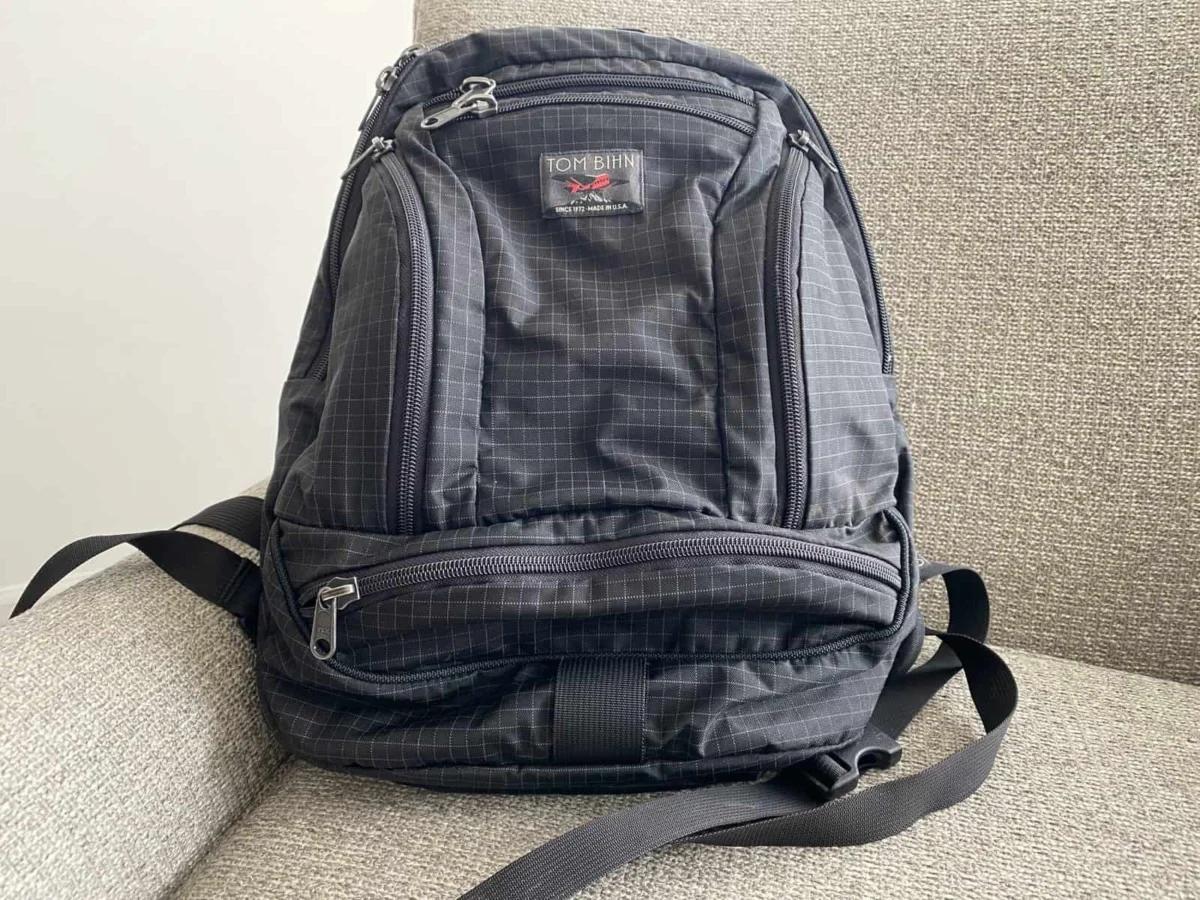
The intersection of a life-altering medical emergency and a criminal act has reached a symbolic conclusion following the unexpected recovery of a stolen backpack in Park Slope, Brooklyn. Jodi Ettenberg, a former corporate attorney and well-known travel author behind the "Legal Nomads" platform, was recently reunited with a piece of her past that had been missing since August 2017. The recovery, facilitated by a random discovery during a routine chimney cleaning, serves as a rare postscript to a burglary that occurred simultaneously with a medical procedure that left Ettenberg with a permanent disability.
The items recovered—including prescription eyewear, credit cards, and personal effects—had been exposed to the elements for over three years on a residential rooftop. While high-value electronics and jewelry remain missing, the return of the bag has provided a unique opportunity for analysis regarding the psychological impact of recovered property and the persistence of urban crime artifacts.
The August 2017 Confluence: A Chronology of Loss
The history of the recovered items begins in late summer 2017, a period Ettenberg describes as the most harrowing of her life. While staying in a Park Slope apartment as a house-sitter, she sought medical attention for what was intended to be a standard lumbar puncture (spinal tap). According to time-stamped security footage from the residence, a burglar entered the apartment at the exact moment the medical professional began the spinal procedure.
The burglary resulted in the loss of a laptop, jewelry belonging to the primary tenants, and Ettenberg’s Tom Bihn Synapse daybag. In a peculiar display of selective theft, the perpetrator used the backpack to transport stolen goods but left Ettenberg’s Canadian passport and a small amount of currency on a couch before fleeing.
Simultaneously, the medical procedure at the hospital resulted in an iatrogenic injury. The spinal tap led to a cerebrospinal fluid (CSF) leak, a condition where the macro-environment of the brain and spinal cord is compromised. For Ettenberg, this meant a transition from a highly mobile lifestyle as a global travel writer to a state of chronic disability. The backpack, therefore, became a symbol of her "old life"—the mobile, independent existence she led prior to the injury.
Discovery and the "Facebook Purgatory" Recovery
The recovery process began in December 2020, though it remained unknown to the owner for several weeks. A resident of Park Slope, living only a few doors down from the original crime scene, contacted a chimney sweep for routine maintenance. During the inspection of the roof’s chimney vent, the technician discovered the Tom Bihn backpack tucked into a crevice.
The homeowner, identifying the owner through expired credit cards and business cards found within the bag, attempted to reach out via social media. However, due to Facebook’s filtering algorithms, the message was relegated to the "Message Requests" folder, a secondary inbox often overlooked by users. It was not until January 2021 that Ettenberg discovered the correspondence.

The message detailed the contents: "Hi, you don’t know me, but we found a backpack with your credit cards in it on my roof in Park Slope Brooklyn. Did you by any chance lose or have a backpack stolen in the last few years?" This discovery confirms that the thief likely discarded the bag shortly after the burglary, opting to hide it on a nearby roof after extracting the most liquid assets, such as the laptop and cash.
Inventory of Recovered Assets and Condition Report
Upon the bag’s retrieval by a proxy—Cheryl, a former legal colleague of Ettenberg—an inventory was conducted to assess the damage from three years of exposure to New York City’s variable climate.
The items found within included:
- Prescription Eyewear: Two pairs of glasses were recovered. While the frames suffered warping due to extreme temperature fluctuations (from sub-zero winters to humid summers exceeding 90°F), they remained structurally intact enough for potential adjustment by an optometrist.
- Financial Instruments: Several credit cards were found, all of which had long since expired.
- Personal Ephemera: Business cards from travel industry events, a blue die of unknown origin, hand lotion, and over-the-counter analgesics (Tylenol).
- The Vessel: The Tom Bihn Synapse backpack itself, noted for its high-denier nylon construction, survived the exposure with minimal structural degradation, though it required extensive cleaning.
Notably absent were the high-value items: the laptop and the jewelry belonging to the apartment owners. The recovery of the glasses, however, represents a significant emotional and practical find, as replacing specialized prescription lenses is often one of the more tedious tasks following a theft.
Statistical Context: Burglary in Brooklyn’s 78th Precinct
The 2017 theft occurred within the jurisdiction of the NYPD’s 78th Precinct, which covers Park Slope and Prospect Heights. While New York City has seen a general downward trend in violent crime over the last two decades, property crime remains a persistent issue in affluent residential neighborhoods.
According to CompStat data from the period, Park Slope experienced a relative plateau in "Grand Larceny" and "Burglary" cases compared to more volatile neighborhoods. However, the "chimney-top" disposal method highlights a common pattern in urban theft: perpetrators often seek to offload "traceable" or bulky containers (like backpacks) as quickly as possible once the valuable contents are secured. By placing the bag in a high, obscured location like a chimney vent, the thief ensured it would not be found during a standard street-level canvas by police, thereby delaying the discovery of evidence for years.
The Medical Backdrop: Understanding the Impact of CSF Leaks
To understand the weight of this recovery, one must consider the medical context of Ettenberg’s disability. A spinal tap complication, specifically a post-dural puncture headache (PDPH) that fails to resolve, can lead to a chronic CSF leak.
Data from the Spinal CSF Leak Foundation suggests that these injuries are often underdiagnosed or mismanaged. For Ettenberg, the leak resulted in orthostatic intolerance—the inability to remain upright without severe neurological symptoms. This medical reality stands in stark contrast to the contents of the backpack, which were designed for "Legal Nomads"—a life defined by movement. The return of the bag serves as a physical bridge between her pre-injury state and her current advocacy for CSF leak awareness.

Psychological Implications of Property Restitution
Psychologists often note that the return of stolen property can trigger a "resurfacing" of the original trauma. Ettenberg noted that receiving the message felt like "kicking up a lot of sediment from the bottom of a lake that appeared to be clear."
This phenomenon, often referred to as a "trauma trigger," can be both a burden and a tool for closure. In this instance, the return of the bag allowed for a "transmutation" of the event. Through the intervention of a long-time friend who cleaned the bag and filled it with supportive gifts (specifically llama-themed items, a nod to Ettenberg’s personal interests), the object was stripped of its "criminal" associations and rebranded as a symbol of community support.
Brand Resilience and the Circular Economy
The survival of the backpack itself offers a minor case study in textile durability. Tom Bihn, a Seattle-based luggage manufacturer, is known in the travel community for using high-quality materials like 1000 denier Cordura or 400d Halcyon. The fact that the bag remained functional after three years of exposure to UV radiation, rain, and snow speaks to the engineering of high-end travel gear.
In a gesture of corporate social responsibility, the company had previously replaced Ettenberg’s bag when they learned of the initial burglary. With the original bag now recovered and restored, Ettenberg chose to gift it to another friend, effectively moving the object from a place of "liminal weight" to one of utility. This act of "paying it forward" serves as a definitive conclusion to the object’s journey.
Conclusion: The Outlier of Possibilities
The case of the Park Slope backpack is what statisticians might call an "outlier." The probability of recovering a soft-sided bag three years after a theft, in a major metropolis, in a condition that allows for restoration, is statistically negligible.
For the broader community, the story underscores two realities: the unexpected ways in which social media can facilitate the return of lost property, and the enduring nature of objects that carry our "liminal weight." As Ettenberg continues her recovery from the medical complications that began the same night the bag was taken, the return of the Synapse daybag marks the closing of a traumatic chapter and the beginning of a more stable, albeit different, narrative. The bag, once a vessel for stolen goods on a Brooklyn rooftop, has been repurposed as a testament to human persistence and the strength of social bonds.
