

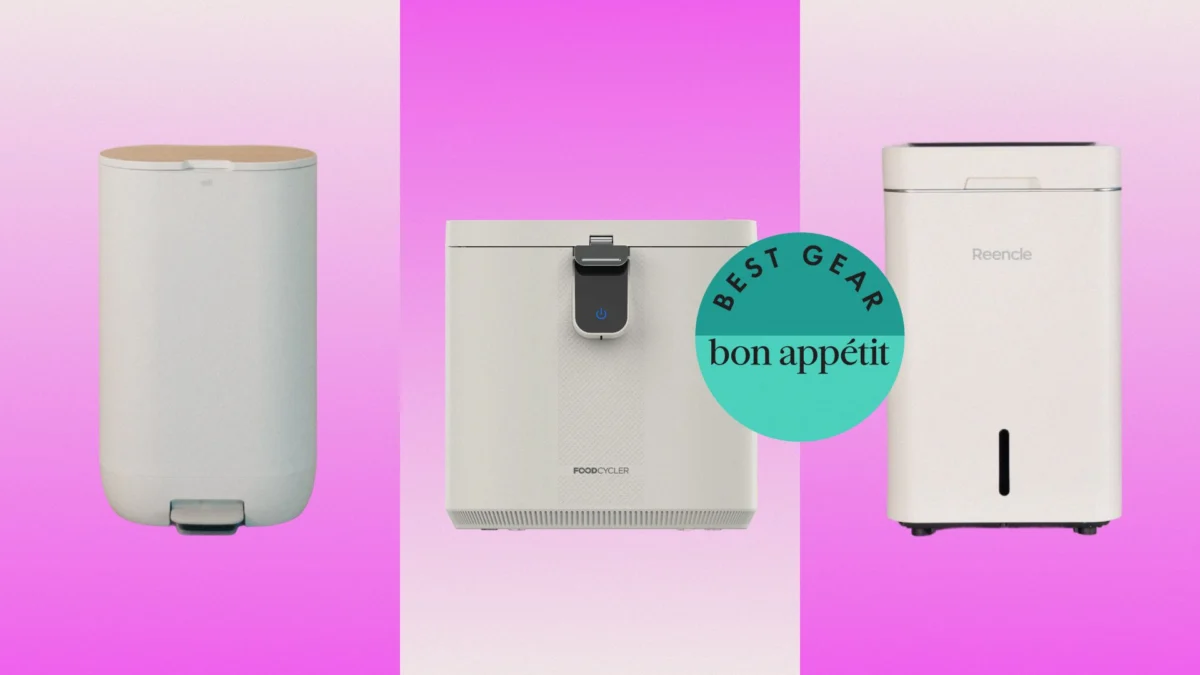
The enactment of New York City’s mandatory composting law in 2025 has catalyzed a significant shift in urban household waste management, compelling residents to reconsider their approach to food scraps. This legislative imperative has, in turn, fueled a burgeoning market for innovative kitchen appliances designed to streamline the composting process, particularly electric kitchen composters and food recyclers. While traditional composting methods often presented challenges of odor, mess, and inconvenience, these new devices promise a more efficient and hygienic solution, transforming organic waste into dried grounds or usable compost within hours. However, their often substantial price tags raise questions about their practical value and widespread accessibility.
The Imperative for Change: NYC’s 2025 Composting Mandate
New York City’s decision to make composting mandatory starting in 2025 was a direct response to escalating environmental concerns, primarily the immense volume of organic waste contributing to landfills and generating potent greenhouse gases. Food waste constitutes a significant portion of municipal solid waste, with estimates suggesting that organic materials make up roughly one-third of the waste stream in many major cities. When food scraps decompose in anaerobic landfill environments, they release methane, a greenhouse gas significantly more potent than carbon dioxide in the short term. The city’s Department of Sanitation projects that mandatory composting could divert millions of tons of organic waste from landfills annually, drastically reducing methane emissions and extending the lifespan of existing waste disposal sites.
Prior to the mandate, composting in New York City was largely voluntary, often relying on community drop-off sites or limited curbside collection programs. While many eco-conscious individuals attempted to participate, traditional countertop bins frequently presented challenges of mess, odor, and the cumbersome task of transporting dripping bags of rotting food to communal bins or distant drop-off points. This logistical friction proved to be a significant barrier to widespread adoption, even among those committed to sustainable practices. The 2025 law aims to overcome these hurdles by integrating composting into the fabric of daily life, placing a new emphasis on accessible and convenient solutions for residents. This legislative push mirrors similar initiatives in other progressive cities globally, all striving to achieve ambitious waste diversion goals and foster a circular economy.
Technological Response: The Rise of Electric Kitchen Composters
In anticipation of and response to such mandates, the appliance industry has rapidly expanded its offerings of electric kitchen composters and food recyclers. These devices are engineered to address the primary pain points of traditional composting: smell, mess, and volume. By employing various technologies—primarily dehydration, grinding, and in some cases, microbial digestion—they drastically reduce the bulk of food waste, often by up to 90%. This volumetric reduction means less frequent emptying, transforming a daily chore into a weekly or even monthly task. The resulting material, whether dried grounds or nascent compost, is typically odorless and far easier to handle and dispose of, either into municipal compost streams, home gardens, or specialized collection services.
The market for these appliances has seen considerable growth, with manufacturers highlighting features like compact designs suitable for urban kitchens, advanced filtration systems to eliminate odors, and user-friendly interfaces. However, the advanced technology and convenience come at a cost, with many models priced in the mid-to-high hundreds, and some exceeding a thousand dollars. This financial barrier poses a challenge for universal adoption, particularly for lower-income households. To ascertain whether these appliances deliver on their promise and justify their investment, a team of editors from Bon Appétit undertook a comprehensive, long-term evaluation of four prominent models in their own kitchens over a period of nine months. Their findings provide valuable insights into the efficacy and practicalities of these emerging technologies.
Field Testing and Key Findings: Evaluating Four Leading Models
The rigorous testing conducted by Bon Appétit editors involved acquiring and utilizing four distinct electric kitchen composters in real-world household settings for at least six months. The evaluation criteria focused on ease of use, design and footprint, capacity, noise level, and overall value. The aim was to determine which models effectively integrated into daily routines and genuinely simplified food waste management.
Reencle Gravity: The Bio-Composting Innovator
The Reencle Gravity emerged as a top performer, particularly noted for its unique approach to composting. Unlike many competitors that primarily dehydrate and grind food waste, the Reencle Gravity utilizes living microorganisms to actively break down organic material, producing genuine compost ready for garden application.
Observed Efficacy: Initial setup was surprisingly straightforward, requiring the introduction of a compost starter (soy and cheese-derived pellets) and water. Once activated, the device operates continuously, allowing users to add food scraps at any time without interrupting a cycle—a significant convenience compared to batch-processing machines. This "always-on" functionality meant that for a two-person household, the unit required emptying only twice over a nine-month period, demonstrating exceptional capacity management. The resulting output was authentic compost, a key differentiator.
Design and Operational Notes: The Reencle Gravity features a motion sensor for automatic lid opening, accompanied by an audible beep and electric whirring sound. While innovative, this sensor proved highly sensitive in testing, often triggering inadvertently from nearby movements. Testers found themselves covering the sensor with painter’s tape and relying on a manual button to mitigate this minor annoyance. Additionally, the lid’s nine-second open duration, while typically sufficient for small additions, was observed to be too brief for larger tasks like clearing multiple dishes or scooping out finished compost, prompting users to manually prop the lid open (which the device registered with persistent beeping). Despite these minor design quirks, the overall convenience and the quality of the compost produced largely outweighed these operational considerations.
Cost and Value: Positioned at nearly $700, the Reencle Gravity is a substantial investment, though it is comparatively less expensive than some other high-end models. Its long-term operational efficiency, particularly the infrequent emptying and the production of genuine compost, contributed significantly to its perceived value.
Mill Food Recycler: Large-Scale Dehydration for Urban Dwellers
The Mill Food Recycler, a recipient of the 2025 Gear of the Year award, offers a robust solution for food waste reduction through dehydration and grinding. It stands out for its capacity to process a wide variety of solid food items, including challenging materials like chicken bones and avocado pits.
Observed Efficacy: Testing confirmed the Mill’s ability to transform almost any solid food into a dry, soil-like mixture, reducing volume by approximately 80%. A key benefit noted by testers was the complete elimination of food waste-related odors within days of consistent use, significantly improving kitchen hygiene. For a two-person household, the unit typically required emptying just over once a month, highlighting its efficient volume reduction capabilities. The overnight cycle, controllable via an app, operates quietly, minimizing disruption. The option to keep the lid unlocked during processing allowed for continuous feeding, further enhancing convenience during cooking sessions.
Design and Operational Notes: The Mill’s "trash-can-sized" footprint was a notable consideration, occupying significant floor space in urban kitchens where real estate is at a premium. The internal capacity, however, was observed to be less than the exterior dimensions might suggest, leading to occasional overflow on high-volume cooking days, necessitating temporary counter storage for scraps. A recurring operational observation was the lid’s inability to lock in an open position, requiring manual pressure (e.g., a foot pedal) during prolonged loading, which some testers found tedious.

Output and Implications: It is crucial to note that the Mill’s output, while significantly reduced in volume and odorless, is not finished compost. It is a concentrated, dried material that functions as a soil enhancer when mixed with existing soil or can be added to municipal compost bins. For those seeking true garden-ready compost, further processing or integration into a traditional composting system is required. At approximately $999 (with promotional pricing sometimes available), the Mill represents a premium investment.
Airthereal Revive V500: The Accessible Entry Point
The Airthereal Revive V500 offers a compelling, more affordable entry point into the electric composting market, demonstrating that effective food waste reduction doesn’t necessarily demand the highest price tag.
Observed Efficacy: Priced under $200 at the time of testing, the Airthereal Revive V500 provides a cost-effective solution for households exploring electric composting. Its compact 2.5-liter capacity made it highly suitable for countertop placement without consuming excessive prep space. Testers particularly enjoyed the clear viewing window in the lid, which provided a novel visual of the transformation of food scraps into dry, soil-like material.
Design and Operational Notes: Due to its smaller capacity, the Airthereal Revive V500 required more frequent operation. For a family of four, cycles were typically needed every 2 to 3 days, though a two-adult household might extend this to weekly use. After approximately seven months of use, testers observed that the coating on the inner bucket began to chip, and cycle lengths increased from four hours to closer to eight. While the inner bucket is dishwasher-safe, regular cleaning eventually led to wear. Manufacturers offer replacement buckets, suggesting a potential annual replacement for optimal performance.
Value Proposition: The Airthereal Revive V500 represents strong value for its price point, particularly for individuals or smaller households seeking to comply with composting mandates without a significant financial outlay. Its primary trade-off is the need for more frequent cycling and potential annual bucket replacement.
FoodCycler Eco 5: Balancing Capacity and Convenience
The FoodCycler Eco 5 emerged as a robust mid-sized option, particularly well-suited for larger families or those requiring more capacity than compact countertop units but without the floor space for a full-sized appliance like the Mill.
Observed Efficacy: With a 5-liter capacity, the FoodCycler Eco 5 proved capable of handling the organic waste of a family of four (including two small children) with cycles required only every 4 to 6 days. The integrated charcoal filter system effectively eliminated odors in the vicinity of the composter. Cycle times were consistently efficient, often completing on the faster end of the advertised 4-9 hour range.
Design and Operational Notes: While its sleek, matte finish is aesthetically pleasing, its 10- by 13.5- by 14-inch footprint was considered somewhat bulky for continuous countertop placement by some testers. A practical solution involved storing the main unit in a basement and utilizing a smaller, lidded collection bucket in the kitchen, which effectively contained odors between cycles. A significant advantage highlighted by testers was the availability of a specially designed cleaning brush (sold separately) that perfectly fits the bucket’s shape, greatly simplifying the cleaning process—a frequent deterrent in traditional composting. The brand also offers a smaller 3.5-liter model, costing approximately $100 less, for those with even more constrained countertop space.
Suitability: The FoodCycler Eco 5 strikes a balance between capacity and countertop presence, offering a practical solution for medium-to-large households seeking a convenient and odor-free food waste reduction system.
Broader Market Trends and Consumer Adoption
The findings from these long-term tests underscore a pivotal moment in urban waste management. The mandatory composting law in New York City is not merely a regulatory measure but a catalyst for behavioral change and technological innovation. The market for electric kitchen composters is expected to continue its upward trajectory, driven by increasing environmental awareness, stringent municipal regulations, and a growing consumer demand for convenient, in-home solutions.
Manufacturers are responding by offering a diverse range of products, from microbial digestors like the Reencle Gravity that produce true compost, to dehydrators like the Mill and Airthereal that significantly reduce waste volume. Pricing remains a significant factor influencing adoption. While high-end models offer superior capacity and features, more affordable options are crucial for broader market penetration, especially in diverse urban demographics. Education and public awareness campaigns will also play a critical role in demonstrating the long-term environmental and personal benefits, helping consumers overcome the initial investment cost and integrate these new habits into their daily lives.
The long-term testing indicates a strong user satisfaction once these appliances are adopted. The elimination of foul odors, reduction in trips to communal bins, and the overall cleanliness of the process are frequently cited as transformative benefits. This convenience is particularly valuable in high-density urban environments where space is limited and waste management logistics can be complex.
Challenges and Future Outlook
Despite the promising advancements, challenges persist. The upfront cost of many electric composters remains a barrier for universal adoption. Municipalities or utility companies could potentially explore rebate programs or subsidies to make these appliances more accessible, mirroring initiatives for energy-efficient appliances. Furthermore, while these machines reduce the volume of food waste, the disposal of the processed material still requires infrastructure, whether it’s municipal collection or proper utilization in home gardens. The distinction between "dried grounds" and "finished compost" needs clear communication to consumers to ensure proper end-use and maximize environmental benefits.
Looking ahead, the market is likely to see further innovation. Miniaturization of technology, increased energy efficiency, and potentially smart features integrated with home ecosystems could become standard. As more cities implement mandatory composting laws, the demand will continue to drive down prices and improve functionality, making electric kitchen composters a more ubiquitous and indispensable part of the modern urban kitchen. The shift is not just about adopting a new gadget; it’s about fundamentally rethinking our relationship with waste and embracing a more sustainable future, one kitchen at a time. The initial experiences in New York City suggest that while the transition requires adaptation, the benefits in terms of environmental impact and household convenience are substantial and long-lasting.
