

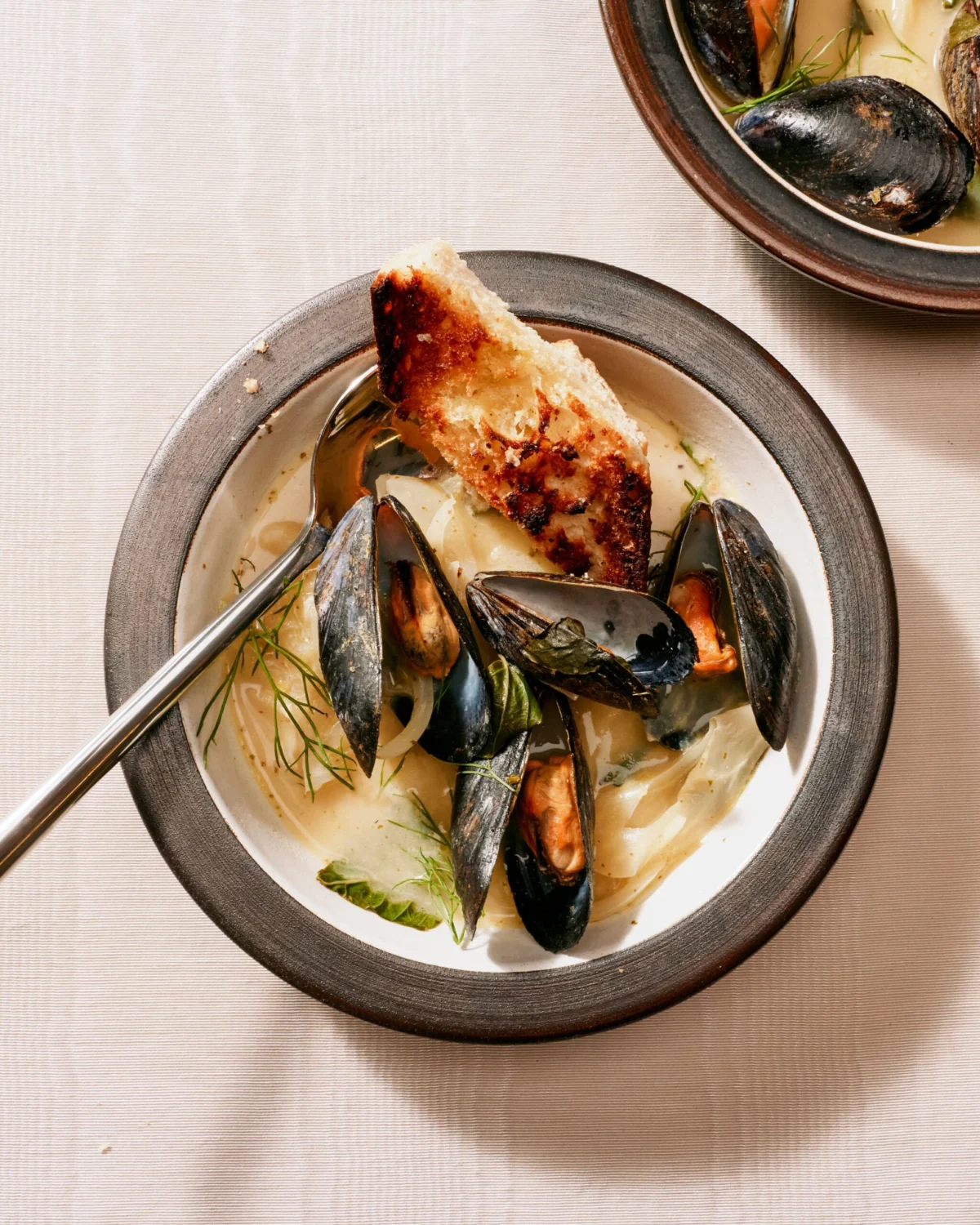
The acclaimed mussel dish from La Copine, a celebrated restaurant known for its unique culinary identity, stands as a testament to the power of simple ingredients elevated by expert technique and heartfelt intention. This particular rendition of classic steamed mussels has earned a reputation for its romantic allure, inviting diners to engage with their meal in a tactile, communal manner that transcends mere sustenance. The act of eating with one’s hands, coupled with the irresistible ritual of soaking crusty, charred baguette in the rich, intoxicating broth, creates an experience that chefs Claire Wadsworth and Nikki Hill have intentionally crafted to be enchanting. Indeed, for the chefs themselves, this dish, paired with a beet salad and sparkling wine, formed the basis of their impromptu "date nights" at the restaurant’s bar, squeezed in during the fleeting moments before the end of service. This culinary creation offers a brief but potent escape, a transportive quality that evokes the sophisticated charm of Belle Époque Paris, a period synonymous with artistic flourishing and refined gastronomy.
A Culinary Journey to Belle Époque Paris: The Inspiration
The evocative power of La Copine’s mussels is deeply rooted in its intentional homage to French culinary traditions, specifically drawing inspiration from the Belle Époque era. This "Beautiful Era," spanning from the late 19th century to the outbreak of World War I, was a golden age for French cuisine, characterized by elaborate banquets, the rise of haute cuisine, and the establishment of iconic restaurants that set global standards. Dishes like moules marinières, a classic French preparation of mussels steamed in white wine, shallots, and herbs, became staples in bistros and brasseries, embodying a blend of rustic charm and elegant simplicity.
La Copine’s interpretation refines this classic, adding layers of flavor that speak to a profound understanding of French culinary principles. The use of Pernod, a distinctive anise-flavored liqueur, is a direct and affectionate nod to France, as is the inclusion of robust Dijon mustard. These ingredients are not merely additions but integral components that define the dish’s character, elevating it beyond a simple seafood preparation to a nuanced gastronomic experience. The broth, which the chefs rightly identify as the "true star," is a masterclass in flavor layering, delivering a profound anise character derived from the Pernod, fennel, and dried tarragon. This sweetness is expertly balanced by the pungent bite of Dijon and the bright acidity of white wine, culminating in a broth so complex and satisfying that it demands full saturation of every piece of bread.
The Genesis of La Copine: A Desert Oasis of Gastronomy
La Copine, located in the remote high desert of Flamingo Heights, California, is itself a testament to unconventional vision and dedication. Founded by chefs Claire Wadsworth and Nikki Hill, the restaurant quickly transcended its off-the-beaten-path location to become a culinary destination. Its establishment represented a conscious decision to create a unique dining experience, far removed from urban centers, focusing on seasonal ingredients and a menu that blends rustic elegance with sophisticated flavors. The restaurant’s design, an intimate and stylish space, complements its culinary offerings, fostering an atmosphere that encourages connection and savoring.
The genesis of their mussel recipe, as described by Wadsworth and Hill, reflects the restaurant’s ethos of transforming simple, high-quality ingredients into memorable dishes. Their personal tradition of enjoying mussels as a "date" at their own bar before closing service underscores the dish’s intrinsic appeal and the personal connection the chefs have with their creations. This anecdote humanizes the culinary process, revealing that even acclaimed chefs find joy and romance in the very dishes they meticulously craft for others. The subsequent publication of their cookbook, La Copine, by Abrams in 2026, further solidifies their place in the culinary landscape, allowing their distinctive recipes, including this celebrated mussel dish, to reach a wider audience of home cooks and aspiring gastronomes.
Deconstructing the Broth: A Symphony of Anise and Spice
The exceptional quality of La Copine’s mussel broth is a direct result of a carefully selected palette of ingredients, each contributing a distinct note to the overall symphony of flavors. Understanding these components is key to appreciating the dish’s depth.
Pernod and the Anise Legacy
Pernod, a French anise-flavored liqueur, is the cornerstone of the broth’s unique character. Its history traces back to the early 19th century and the popularity of absinthe. When absinthe was banned in many countries in the early 20th century, due to concerns over its thujone content, distilleries like Pernod Fils pivoted to producing less alcoholic, thujone-free anise-based spirits known as pastis. Pernod, launched in 1926, became one of the most famous examples, characterized by its complex blend of star anise, fennel, mint, and other aromatic herbs.
In culinary applications, Pernod offers a distinctive licorice-like flavor that can dramatically enhance seafood dishes, particularly those involving shellfish. Its inherent aromatic qualities provide a warmth and depth that complement the brininess of mussels without overpowering them. The essential oils in Pernod, primarily anethole from star anise, are responsible for its potent flavor and aroma, which undergo a subtle transformation when heated, mellowing slightly while still retaining their aromatic integrity. This provides the "super anise-y" foundation noted by the chefs, creating an exotic yet comforting flavor profile that harks back to Mediterranean and French coastal cuisines.
Dijon: The Quintessential French Mustard
Dijon mustard, originating from Dijon, France, is another critical element, providing a "punchy bite" that cuts through the richness of the broth and balances the sweetness of the anise. Unlike many yellow mustards, traditional Dijon is made with brown or black mustard seeds, white wine (or verjuice), and salt, giving it a sharper, more complex flavor profile with a distinct tang and sometimes a subtle spiciness. The use of white wine in its production creates a harmonious link with the white wine used in the broth itself, contributing to a cohesive flavor structure.
Historically, Dijon has been a Protected Geographical Indication (PGI) product, though the name "Dijon mustard" now refers more to a style of preparation rather than a strict geographical origin. Its culinary versatility makes it a staple in French kitchens, used in vinaigrettes, sauces, and as a condiment. In La Copine’s mussel broth, Dijon mustard acts as an emulsifier and a flavor enhancer, adding a layer of sophisticated piquancy that prevents the broth from becoming one-dimensional.
Fennel, Tarragon, and the Herbaceous Heart
The inclusion of fresh fennel, dried tarragon, and a generous handful of basil fronds further enriches the broth’s aromatic complexity. Fennel, with its bulb, stalks, and fronds, offers a delicate anise flavor that naturally harmonizes with Pernod, while also contributing a crisp texture if used raw or a tender sweetness when cooked. Its subtle vegetal notes provide a freshness that brightens the dish.
Tarragon, often referred to as "the king of herbs" in French cuisine, is characterized by its distinct bittersweet, slightly licorice-like flavor, with hints of pine and pepper. Dried tarragon, while different in intensity from fresh, still imparts its unique character, which pairs exceptionally well with seafood and chicken. Its presence reinforces the French influence and adds an herbaceous depth that fresh basil, with its sweet, peppery, and slightly minty notes, rounds out beautifully. Basil, added at the finish, provides a vibrant, fresh lift, its aromatic oils contributing a fragrant counterpoint to the cooked flavors. This combination of herbs ensures a multi-layered aromatic experience, from the earthy depth of dried tarragon to the bright freshness of basil.
The Crucial Role of White Wine
Balanced acidity is vital in any rich broth, and white wine plays this role perfectly. A dry, crisp white wine, such as a Sauvignon Blanc or a Pinot Grigio, not only deglazes the pan, capturing all the flavorful fond, but also contributes its own fruity and acidic notes. The acidity cuts through the richness of the mussels and butter, preventing the dish from feeling heavy and enhancing the overall brightness of the flavors. Alcohol acts as a solvent for fat-soluble flavor compounds, meaning the wine helps to extract and distribute the complex aromas and tastes from the other ingredients, creating a more cohesive and deeply flavored broth. The alcohol itself mostly evaporates during cooking, leaving behind the concentrated essence of the wine.
The Art of Compound Butter: Beyond the Broth
The mention of compound butter in the La Copine recipe highlights a classic culinary technique that speaks to both efficiency and flavor enhancement. Compound butter, or beurre composé, is essentially softened butter mixed with various aromatics and seasonings. In this context, the butter infused with Pernod, Dijon, and other elements not only enriches the mussel broth but also offers remarkable versatility.
The practice of making compound butter dates back centuries in European kitchens, prized for its ability to quickly add complex flavors to simple dishes. For the mussels, this butter melts into the broth, adding a luxurious mouthfeel and distributing the key flavor components evenly. The suggestion to use excess compound butter for garlic bread, to season roast chicken or steak, or to finish warm potatoes, underscores its value as a culinary workhorse. This practice aligns with a zero-waste philosophy and empowers home cooks to maximize flavor with minimal effort, transforming everyday ingredients into gourmet experiences. This versatility also speaks to the restaurant’s practical approach to flavor creation, ensuring that every element of the recipe serves multiple purposes and contributes to a broader culinary toolkit.
Mussels: From Ancient Staple to Modern Delicacy
Mussels have a long and storied history as a food source, predating many other forms of aquaculture. Evidence suggests humans have consumed mussels for tens of thousands of years, with archaeological sites revealing extensive shell middens along coastlines worldwide. Their abundance, ease of harvesting, and nutritional value made them a vital staple for coastal communities.
Historical Consumption and Nutritional Value
In ancient Rome and Greece, mussels were considered a delicacy and were cultivated in rudimentary forms. Throughout the Middle Ages and Renaissance, they remained a common and accessible food in Europe, particularly in coastal regions. The development of more sophisticated aquaculture techniques in the 13th century, pioneered by Irishman Patrick Walton, allowed for more consistent and larger-scale production, cementing their place in European diets.
From a nutritional standpoint, mussels are remarkably beneficial. They are an excellent source of lean protein, low in fat, and rich in essential vitamins and minerals, including Vitamin B12, selenium, manganese, iron, and omega-3 fatty acids. These nutrients contribute to heart health, cognitive function, and overall well-being, making mussels a superfood in their own right. Their mild, briny flavor and tender texture make them appealing to a wide range of palates.
Sustainable Aquaculture and Environmental Benefits
In the modern era, mussels are primarily sourced through aquaculture, which is widely regarded as one of the most sustainable forms of seafood farming. Mussels are filter feeders, meaning they obtain their nutrients by filtering plankton and other microscopic organisms from the water. This process not only requires no external feed but also helps to clean the surrounding marine environment by removing excess nutrients and pollutants, thus improving water quality.
Unlike some other forms of aquaculture that can have negative environmental impacts, mussel farming is generally low-impact. It requires minimal land use, does not involve antibiotics or pesticides, and contributes positively to marine ecosystems. This makes mussels an environmentally conscious choice for diners, aligning with growing consumer demand for sustainable and ethically sourced food. The ability to keep mussels fresh for two to three days with proper care, as outlined in the recipe, further underscores their practicality and accessibility for home cooking.
Ensuring Perfection: The Meticulous Cleaning Process
The quality of any mussel dish hinges significantly on the meticulous preparation of the shellfish. The detailed instructions provided for cleaning mussels are not merely suggestions but essential steps to ensure both food safety and optimal flavor. Mussels, being filter feeders, can accumulate grit, sand, and other marine debris within their shells. Proper cleaning is paramount to avoid a gritty texture or off-flavors that could otherwise mar the dining experience.
The process begins with "de-bearding," which involves plucking off any prominent byssal threads—the fibrous attachments mussels use to anchor themselves. While some farmed mussels may have very small or no beards, wild mussels or those from certain regions will require this step. The subsequent cold water bath with ice serves multiple purposes: the cold temperature helps to keep the mussels dormant and alive, while the tumbling action encourages them to expel any sand or impurities from within their shells. Discarding any open or cracked mussels is a crucial safety measure; an open mussel that doesn’t close when tapped is likely dead and could harbor bacteria. Likewise, cracked shells compromise the integrity of the mussel and can lead to contamination. Transferring cleaned mussels to a fresh container covered with wet towels and ice, then refrigerating, creates an ideal environment that mimics their natural habitat, preserving their freshness for up to three days, provided they receive a fresh rinse daily. This diligent approach to preparation ensures that only the highest quality, safest mussels make it into the cooking pot.
The Chefs’ Vision: Crafting an Experience
Claire Wadsworth and Nikki Hill, through their restaurant La Copine and their cookbook, convey a clear culinary philosophy that emphasizes quality, intention, and the creation of memorable experiences. Their dedication to a dish like the mussels goes beyond mere recipe development; it reflects a desire to evoke emotion and connection. The "romantic dish" descriptor is not arbitrary; it speaks to their understanding of how food interacts with human sentiment and social rituals.
The chefs have often spoken about their commitment to sourcing the best ingredients, whether from local purveyors or through careful selection of global components like Pernod. Their philosophy, as articulated in various interviews and within the pages of their cookbook, centers on elevating seemingly simple dishes through thoughtful technique and balanced flavors. They are not chasing trends but rather perfecting timeless classics, imbuing them with their unique perspective. The mussels, with their blend of French tradition and La Copine’s distinctive touch, exemplify this approach, offering both familiarity and delightful surprise. This careful curation of flavor and experience is what has cemented La Copine’s reputation as a culinary gem.
Critical Acclaim and Culinary Impact
La Copine’s mussel dish, and the restaurant as a whole, has garnered significant critical acclaim from food writers, critics, and a devoted clientele. Reviewers consistently laud the restaurant’s ability to deliver sophisticated flavors in an unpretentious setting, often singling out the mussels for their depth of flavor and transportive qualities. Food critics have consistently praised the broth as particularly outstanding, recognizing the intricate balance of anise, acidity, and umami that defines it.
The impact of such a dish extends beyond the restaurant’s immediate vicinity. It serves as an inspiration for other chefs and home cooks, demonstrating how traditional techniques can be reinterpreted with fresh perspectives. The dish reinforces the enduring appeal of French culinary foundations while showcasing how these can be adapted to contemporary tastes and ingredient availability. Its success contributes to a broader conversation about casual fine dining, where the focus is on exceptional food and atmosphere rather than rigid formality. The La Copine mussel recipe has become a benchmark for what a well-executed, flavor-driven seafood dish can achieve.
The Legacy of "La Copine" Cookbook and Beyond
The publication of La Copine by Claire Wadsworth and Nikki Hill, copyrighted 2026, marks a significant milestone in their culinary journey. Cookbooks serve as crucial vehicles for disseminating culinary knowledge, preserving recipes, and inspiring a new generation of cooks. By sharing their recipes, including the celebrated mussels, Wadsworth and Hill extend the reach of their unique culinary vision far beyond the physical confines of their desert restaurant.
The cookbook’s influence is multifaceted. It encourages home cooks to experiment with sophisticated flavors and techniques, demystifying ingredients like Pernod and compound butter. It also contributes to the broader narrative of modern American cuisine, which increasingly draws upon global influences while maintaining a strong emphasis on quality ingredients and thoughtful preparation. The inclusion of recipes for other delicious seafood dishes—such as Avgolemono Seafood Stew, Mussels With Spicy Tomato Oil and Grilled Bread, and Gorgeous Green Shrimp—further highlights the versatility and expertise of the chefs in handling aquatic ingredients, cementing their status as authorities in seafood preparation. The legacy of La Copine and its signature mussel dish is therefore not just about a single recipe, but about a philosophy of cooking that celebrates flavor, romance, and the enduring power of a well-crafted meal.
Conclusion: An Enduring Invitation to Romance and Flavor
La Copine’s mussels represent more than just a recipe; they embody a philosophy of dining that marries tradition with innovation, simplicity with sophistication, and personal connection with culinary excellence. From the intentional nod to Belle Époque Paris to the meticulous layering of flavors from Pernod, Dijon, and fresh herbs, every element is designed to create an immersive and memorable experience. The dish’s romantic appeal lies not only in its exquisite taste but also in the communal ritual of eating with one’s hands and savoring every drop of the intoxicating broth. As documented in their cookbook, Claire Wadsworth and Nikki Hill have crafted a dish that transcends its ingredients, offering an enduring invitation to culinary exploration and the timeless pleasure of shared, delicious moments.
