

The fifth episode of Food Network’s high-stakes culinary competition, Pitmasters, introduced a significant shift in format, moving away from thematic challenges to focus on the technical foundations of American barbecue. Competitors Susie Bulloch, founder of Hey Grill Hey, and Christie Vanover, creator of Girls Can Grill, navigated a rigorous "Core Four" challenge that tested their mastery of chicken, pork ribs, pork shoulder, and beef brisket. This episode was characterized by a rolling turn-in schedule, a high-pressure environment, and a sudden hailstorm that threatened the thermal stability of the competitors’ smokers.
The Structural Shift: From Themes to BBQ Fundamentals
In previous episodes of the season, the competition frequently utilized "Flash Burn" and "Big Burn" segments, often incorporating specific themes, whole-animal cooks, or unconventional ingredients like meatless dishes and scratch-made sausages. Episode 5 stripped away these conceptual layers, presenting what the judges termed the "Core Four." This format required teams to produce the four traditional competition proteins on a rolling deadline, effectively simulating the intense environment of a professional Sanctioned Barbecue contest, such as those governed by the Kansas City Barbeque Society (KCBS).
The financial stakes were heightened for this round, with $1,000 awarded to the winner of each individual protein category. Furthermore, the team achieving the highest cumulative score across all four rounds would secure an additional $3,000, bringing the total potential winnings for the episode to $7,000. The judging panel—comprising veteran pitmaster Big Moe Cason, meat scientist Jess Pryles, and Andrew—emphasized that their evaluations would rest solely on the "Three Ts": Time, Temperature, and Texture.

Round 1: Strategic Breakdown of Poultry
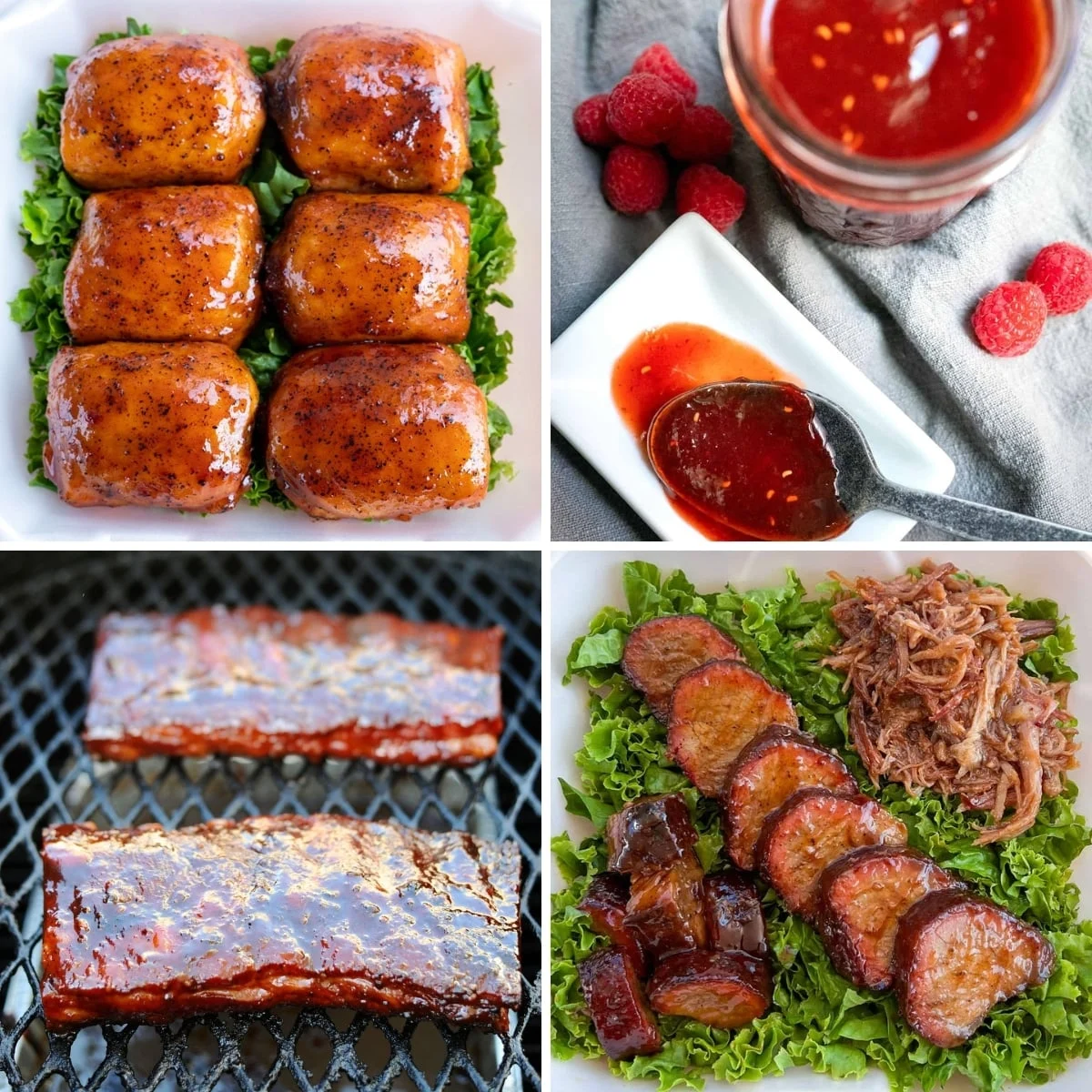
For the opening round, Bulloch and Vanover elected to prepare a Smoked Raspberry Chipotle Chicken. The strategic decision-making process for this round focused on heat management and consistency. Rather than smoking a whole bird, which often results in uneven cooking between the lean breast meat and the fat-heavy thighs, the duo broke the chicken down into its constituent parts: thighs, wings, and legs.
By separating the protein, the team could monitor internal temperatures with greater precision, ensuring each cut reached its optimal pull-off point without overcooking the more delicate sections. The flavor profile utilized a sweet-and-smoky raspberry chipotle sauce, designed to provide a subtle "back-end" heat. To enhance the texture, they served crispy fried chicken skin as a garnish, addressing the judges’ focus on rendered fat and skin elasticity.
During the judging phase, Big Moe Cason praised the rendering of the chicken skin, a notoriously difficult feat in a time-constrained smoking environment. While the team did not secure the $1,000 prize for this round, the positive feedback regarding the texture of the poultry established a strong baseline for the subsequent challenges.
Environmental Adversity: The Mid-Challenge Hailstorm
Barbecue is an outdoor discipline subject to the volatility of the elements, and Episode 5 provided a stark example of environmental interference. With approximately 27 minutes remaining on the chicken deadline, a sudden hailstorm descended upon the competition site.

The drop in ambient temperature and the physical impact of ice on the smoker lids presented a dual threat: a loss of internal heat (thermal mass) and the potential for moisture to interfere with the bark formation on the ribs and pork shoulders already in the pits. Vanover’s professional background as a former park ranger at Lake Mead proved instrumental during this phase. Her experience working in extreme outdoor conditions allowed the team to maintain operational continuity while other competitors struggled to adapt to the plummeting temperatures. The team successfully navigated the weather event without compromising the "hot and fast" cooking strategy they had committed to at the start of the day.
Round 2: Innovation in Pork Rib Preparation
The second round focused on pork ribs, where Bulloch and Vanover utilized a "hot and fast" methodology. Traditional barbecue often relies on a "low and slow" approach (225°F to 250°F), but the rolling deadlines of the Core Four challenge necessitated higher temperatures (often 275°F to 300°F) to ensure the connective tissues in the ribs broke down within the allotted time frame.
The team’s flavor profile centered on a yuzu-infused sauce. Yuzu, a Japanese citrus fruit, offers a complex acidity that sits between a lemon and a grapefruit. This was a calculated risk, as traditional competition ribs usually lean toward heavy brown sugar and cherry or apple wood profiles. Judge Jess Pryles noted that the texture was a "competition-style bite," meaning the meat pulled cleanly away from the bone without falling off entirely—a key metric in professional grading. However, the judging panel was divided on the sauce; while Bulloch defended the brightness of the citrus, Judge Andrew suggested the acidity could have been more pronounced to further cut through the richness of the pork fat.
Round 3: The Technicalities of the Money Muscle
The pork shoulder round highlighted the "money muscle," a specific anatomical section of the pork butt (the upper part of the pig’s shoulder). In the world of competitive barbecue, the money muscle is the most highly prized cut due to its intense marbling and tenderness. Bulloch and Vanover prepared medallions of this muscle, glazed with an extra-peachy iteration of Bulloch’s signature Whiskey Peach BBQ Sauce.

The medallions were designed to showcase the marbling and provide the judges with a uniform, tender sample. While the judges agreed that the internal temperature and the resulting texture were technically perfect, the dish fell short on seasoning. The feedback indicated a lack of salt, a critical component in balancing the sweetness of the peach and whiskey glaze. In high-level competitions, where judges may only take one or two bites of a sample, a lack of salt can lead to a perceived "flatness" in the flavor profile. This omission ultimately cost the team the top spot for the pork shoulder round.
Chronology of Episode 5 Events
- 0:00 – 1:00: Introduction of the "Core Four" challenge and the rolling turn-in schedule.
- 1:00 – 3:00: Round 1 (Chicken) preparation. Bulloch and Vanover opt for a breakdown method and raspberry chipotle glaze.
- 2:33: Hailstorm begins, forcing teams to adjust air intake and fuel levels on their smokers.
- 3:00: Chicken turn-in. Judges provide feedback on skin rendering and texture.
- 3:00 – 5:00: Round 2 (Pork Ribs) focus. Implementation of the "hot and fast" method and yuzu citrus glaze.
- 5:00: Pork Ribs turn-in. Discussion regarding the unconventional citrus profile.
- 5:00 – 7:30: Round 3 (Pork Shoulder). Focus on money muscle medallions and Whiskey Peach sauce.
- 7:30: Pork Shoulder turn-in. Judges critique the lack of salt despite perfect texture.
- 7:30 – End: Preparation for the final round (Beef Brisket). The episode concludes with a cliffhanger regarding the brisket results and the overall $3,000 prize winner.
Supporting Data: The Science of "Hot and Fast" Barbecue
The decision by Bulloch and Vanover to cook "hot and fast" is supported by modern barbecue thermodynamics. While traditionalists argue for lower temperatures, "hot and fast" cooking at 300°F allows for the rapid transition through the "stall"—a period where evaporative cooling on the surface of the meat causes internal temperatures to plateau.
By pushing through the stall with higher heat and utilizing foil or butcher paper wraps (the "Texas Crutch"), pitmasters can render intramuscular fat and collagen more quickly. In a rolling deadline format like that of Pitmasters Episode 5, this method is often the only way to ensure that large primals like pork shoulder and beef brisket reach the necessary 200°F+ internal temperature required for tenderness within a 6-to-8-hour window.
Broader Impact and Industry Implications
The appearance of Bulloch and Vanover on Pitmasters represents a significant moment for female representation in the barbecue industry, which has historically been male-dominated. According to industry data from the National Barbecue & Grilling Association (NBBQA), female participation in both professional competition and backyard grilling has seen a steady increase over the last decade.

Furthermore, the episode highlighted the practical utility of specialized equipment, such as the Pitmaster Gloves developed by Bulloch. The adoption of these tools by other competitors (including Matt and Christie) underscores the transition of barbecue from a folk art to a highly technical culinary discipline where safety and precision are paramount.
Conclusion and Outlook
Episode 5 of Pitmasters served as a rigorous examination of the fundamental skills required for professional barbecue. While Bulloch and Vanover faced challenges regarding seasoning and extreme weather, their technical execution in terms of meat texture and temperature management remained consistent. The episode’s conclusion leaves the final standings in question, as the beef brisket—the most difficult of the four proteins to master—remains to be judged. The outcome of the brisket round will determine which team claims the $3,000 overall prize and advances in the competition.
Viewers can monitor the conclusion of this challenge on Food Network, with streaming available on Discovery+ and HBO Max. The results will provide further insight into whether the "hot and fast" strategy and bold flavor profiles of Bulloch and Vanover were enough to overcome the veteran field of pitmasters.
