

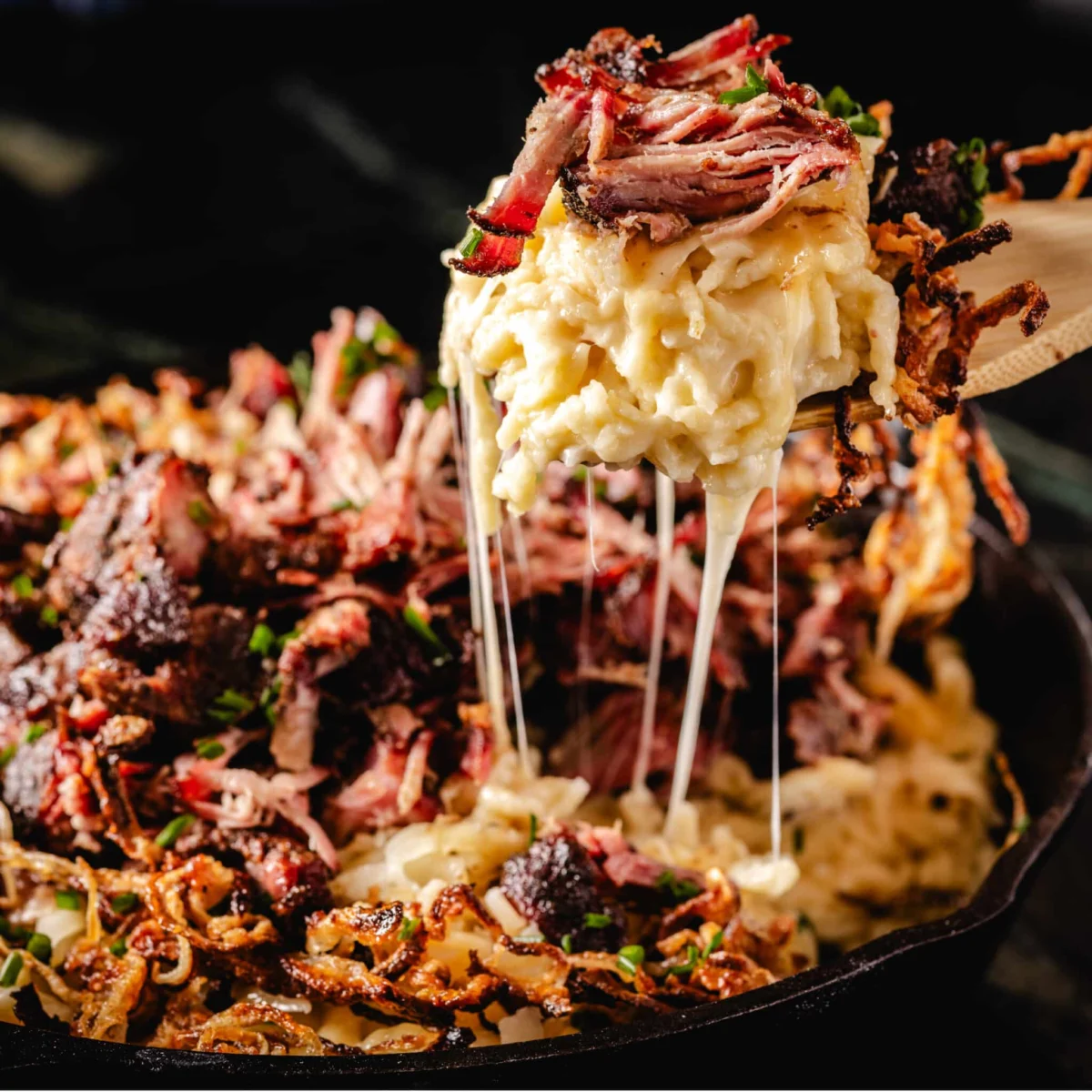
The culinary landscape of American barbecue continues to evolve through the integration of international flavors, as evidenced by the rising popularity of Smoked Pulled Pork Käsespätzle. This dish, which combines the traditional South German staple of egg noodles and cheese with the slow-smoked techniques of American pitmasters, represents a growing trend in "fusion BBQ." Developed by culinary expert Susie Bulloch of Hey Grill Hey, the recipe gained national attention following its feature on the Food Network’s competitive series, Pitmasters. The dish serves as a bridge between European heritage and contemporary outdoor cooking, utilizing specific smoking methods to elevate a rustic comfort food into a complex, multi-layered entree.
The Cultural Significance of Käsespätzle
Käsespätzle, often referred to as the Swabian response to macaroni and cheese, has its roots in the southern regions of Germany, Austria, and Switzerland. Unlike American pasta dishes that typically rely on a roux-based Béchamel sauce, authentic Käsespätzle utilizes the residual heat of freshly boiled noodles to melt layers of shredded cheese. The traditional preparation involves "Spätzle," a unique type of egg noodle made from a simple batter of flour, eggs, and salt.

While casual observers frequently categorize the dish as "German mac and cheese," culinary historians note significant structural differences. The absence of a thickened sauce results in a more elastic, "stretchy" texture that emphasizes the quality of the cheese and the freshness of the dough. Traditionally, the dish is topped with caramelized or fried onions to provide a textural contrast to the soft noodles. The introduction of smoked pulled pork into this framework represents a modern adaptation designed to incorporate the savory, umami-rich profiles characteristic of the American South.
The Food Network Pitmasters Context and Development
The specific iteration of Smoked Pulled Pork Käsespätzle rose to prominence during a high-stakes competition on Food Network’s Pitmasters. Susie Bulloch, collaborating with Christie Vanover of Girls Can Grill, presented a comprehensive German feast as part of a whole-hog challenge. The menu was designed to showcase the versatility of pork when paired with traditional European sides, including sauerbraten (pot roast) and rotkohl (braised red cabbage).
During the televised competition, the team utilized pork cheek—a delicacy known for its high fat content and tenderness—to top the Käsespätzle. The judges’ positive reception of the smoky, tangy, and cheesy combination prompted a surge in consumer interest. Following the broadcast, Bulloch adapted the recipe for home cooks, substituting the specialized pork cheek with more accessible "country-style" pork ribs to ensure the dish could be replicated in a standard backyard setting without sacrificing the essential flavor profile established during the competition.

Technical Analysis of Ingredients and Preparation
The success of the Smoked Pulled Pork Käsespätzle depends on three distinct components: the handmade noodles, the crispy onion garnish, and the precision-smoked pork.
The Spätzle Dough and Noodle Formation
The foundation of the dish is the Spätzle, which requires a specific ratio of all-purpose flour to eggs and milk. The goal is a "shaggy" dough that is thicker than pancake batter but more fluid than traditional pasta dough. When dropped into boiling water—often using a specialized Spätzle maker or a perforated press—the dough solidifies into irregular, soft dumplings.
The Cheese Selection
Traditional German recipes frequently employ Emmental or Gruyère. However, to align the dish with barbecue flavor profiles, Bulloch’s version introduces a 50/50 blend of traditional melting cheese and smoked gouda. This substitution reinforces the smoky notes of the pork and provides a deeper color and more robust aroma to the finished product.

The Smoking Process: Country-Style Ribs
A critical technical aspect of this recipe is the use of country-style pork ribs. Despite the nomenclature, these are not true ribs but are harvested from the shoulder (blade) end of the loin or the pork butt. This cut is favored for its significant marbling and connective tissue, which breaks down during a low-and-slow cook to produce "pulled" meat.
The smoking chronology for the pork follows a rigorous six-hour timeline:
- Initial Smoke: The pork is seasoned with a savory dry rub and smoked at 225°F to 250°F for approximately three to four hours until an internal temperature of 165°F is reached.
- The Wrap: To bypass the "stall" (a plateau in internal temperature caused by evaporative cooling), the meat is wrapped in aluminum foil with butter and additional seasoning.
- Final Tenderness: The pork remains on the smoker until it reaches an internal temperature of 200°F to 205°F, at which point the collagen has fully converted to gelatin, allowing the meat to be easily shredded.
Chronology of Assembly
The assembly of Smoked Pulled Pork Käsespätzle is a time-sensitive process designed to maximize the melting properties of the cheese. Once the pork is shredded and the onions are fried to a golden brown in a cast-iron skillet, the noodles are boiled.

The layering occurs immediately after the noodles are drained:
- A base layer of hot noodles is placed in a pre-warmed dish.
- A generous portion of the cheese blend is applied.
- The process is repeated, creating a stratified tower of noodles and cheese.
- The dish is crowned with the warm smoked pork and the crispy fried onions.
The residual heat from the boiling water and the hot pork ensures the cheese reaches a state of optimal elasticity without the need for additional baking, which can sometimes dry out the delicate egg noodles.
Supporting Data and Market Trends
The emergence of recipes like Smoked Pulled Pork Käsespätzle reflects broader shifts in the outdoor cooking industry. According to the Hearth, Patio & Barbecue Association (HPBA), nearly 70% of U.S. households own a grill or smoker, and there has been a documented increase in "experimental" barbecuing. Consumers are increasingly moving away from traditional burgers and hot dogs toward complex, multi-step recipes that require specialized equipment and longer cooking times.

Furthermore, the "fusion" category in barbecue has seen a 15% growth in digital search interest over the last 24 months. This trend is driven by a desire to combine high-protein smoked meats with high-carbohydrate comfort foods from global cuisines. The integration of Spätzle—a dish relatively unfamiliar to the average American consumer a decade ago—into the barbecue lexicon suggests a more sophisticated and globally curious demographic of home cooks.
Expert Insights and Implications
Culinary professionals note that the success of this dish lies in its balance of heavy fats and contrasting textures. The richness of the pork and the buttery noodles is offset by the crunch of the onions. In a professional setting, such as the Pitmasters competition, chefs often add a vinegary element, like a side of pickled cabbage, to provide acidity.
"The goal of this recipe is to take an already indulgent comfort food and give it a healthy dose of backyard flavor," Bulloch stated regarding the development of the dish. This philosophy highlights the objective of modern BBQ: to enhance traditional textures with the unique chemical properties of wood smoke (such as the formation of a smoke ring and the infusion of guaiacol and syringol compounds).

The broader implication of the Smoked Pulled Pork Käsespätzle trend is the democratization of "competition-style" food. By providing accessible versions of television-winning recipes, pitmasters are enabling hobbyists to achieve professional-grade results. This cycle of innovation, broadcast, and adaptation continues to push the boundaries of what is considered "standard" barbecue fare.
Nutritional Profile and Serving Considerations
A standard serving of Smoked Pulled Pork Käsespätzle is nutritionally dense, reflecting its status as a celebratory or "indulgent" meal. According to automated nutritional calculations, an eight-ounce serving contains approximately 439 calories, with a significant protein contribution of 26 grams primarily derived from the pork and eggs. The fat content (28 grams) and sodium levels (2053 mg) are characteristic of smoked meats and aged cheeses, suggesting that the dish is best served as a primary entree accompanied by lighter, vegetable-based sides.
For optimal presentation and flavor retention, culinary experts recommend serving the dish in cast iron, which maintains heat longer than ceramic or glass. This ensures the "stretchy" quality of the Käsespätzle remains intact throughout the duration of the meal. As barbecue culture continues to integrate with global traditions, the Smoked Pulled Pork Käsespätzle stands as a premier example of how regional heritage can be successfully reimagined through the lens of the American smoker.
