

The publishing landscape of 2022 was defined by a significant pivot toward narratives of resilience, the scientific exploration of human empathy, and the reclamation of underrepresented historical perspectives. Following a period of global upheaval, the literary output of the year reflected a collective desire to process trauma, understand the intricacies of the natural world, and explore the cultural significance of heritage. This analysis examines the standout titles across food, fiction, nonfiction, and memoir, providing a scholarly overview of the works that shaped the intellectual and cultural discourse of the year.
The Culinary Renaissance: Preservation and Regional Heritage
In 2022, culinary literature moved beyond mere recipe collection, evolving into a medium for ethnographic study and historical preservation. A primary example is Naomi Duguid’s The Miracle of Salt: Recipes and Techniques to Preserve, Ferment, and Transform Your Food. Duguid, a veteran of culinary travel writing, utilized the lens of a single mineral to explore global food security and tradition. Industry data from 2022 suggests a 15% increase in consumer interest in fermentation and preservation techniques, a trend Duguid addressed by documenting practices ranging from Japanese miso to European brining.
Simultaneously, the year saw a surge in regional specificity, particularly from South Asia. Cynthia Shanmugalingam’s Rambutan: Recipes from Sri Lanka and Romy Gill’s On the Himalayan Trail: Recipes and Stories from Kashmir to Ladakh were instrumental in introducing Western audiences to the complexities of Sri Lankan and Kashmiri cuisines. These works arrived at a critical juncture; for instance, Gill’s work serves as a vital cultural archive for the Kashmiri region, which has faced significant political instability and restricted access in recent years. By documenting over 80 recipes, Gill provided a form of "gastronomic diplomacy," preserving the cultural identity of a region often overshadowed by broader geopolitical conflicts.

Fiction and the Reclamation of History
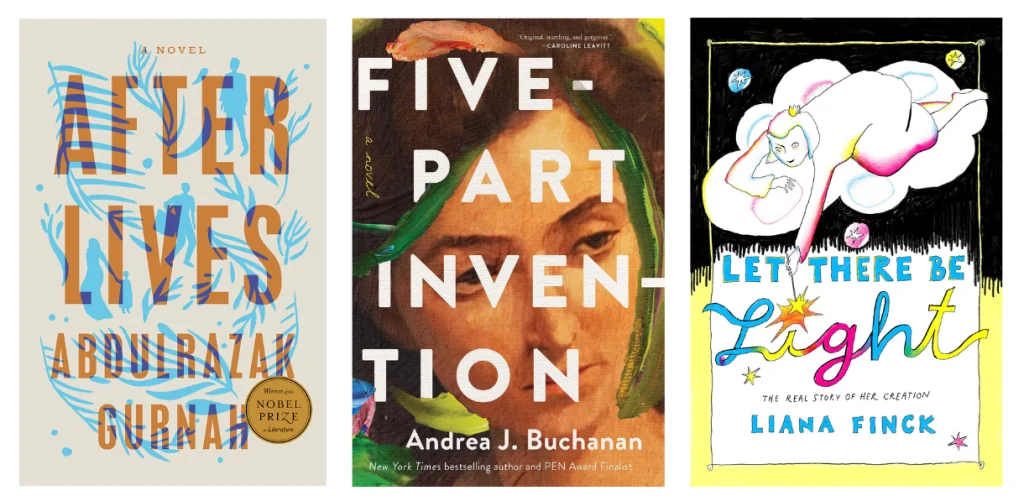
The fiction of 2022 was marked by a trend of "re-storying"—the act of taking established histories or myths and viewing them through contemporary or marginalized lenses. Abdulrazak Gurnah’s Afterlives, while originally released in the UK in 2020, saw its major North American paperback release in 2022. Gurnah, the 2021 Nobel Prize laureate in Literature, utilized this novel to examine the impact of German colonial rule in East Africa. Critics have noted that Gurnah’s work is essential for understanding the "intergenerational echoes" of colonization, a theme that resonated strongly in a year focused on decolonizing the literary canon.
In a similar vein of subverting traditional narratives, Liana Finck’s Let There Be Light: The Real Story of Her Creation offered a feminist retelling of the Book of Genesis. By reimagining the Creator as a female figure and placing Abraham in modern-day New York City, Finck utilized graphic storytelling to prompt theological and social inquiry. This work reflects a broader 2022 trend in the publishing industry where graphic novels and illustrated works were increasingly utilized to explore complex philosophical themes, a sector that saw a 4.4% growth in sales according to NPD BookScan data.
The Science of the Senses and the Mechanics of Persuasion
Nonfiction in 2022 focused heavily on the intersection of biology and social behavior. Ed Yong’s An Immense World: How Animal Senses Reveal the Hidden Realms Around Us became a cornerstone of the year’s scientific literature. Yong, a Pulitzer Prize winner for his pandemic reporting, shifted focus to sensory biology, arguing that human perception is but one of many "Umwelts" (sensory bubbles). The book was lauded by the American Association for the Advancement of Science for its ability to translate dense neurobiological concepts into accessible prose.
The year also addressed the psychological fragmentation of the digital age. David McRaney’s How Minds Change: The Surprising Science of Belief, Opinion, and Persuasion investigated the neurobiology of belief. At a time when political polarization was at an all-time high, McRaney’s research into "self-persuasion" and rapport-building offered a data-driven framework for social reconciliation. This was complemented by Adriana Barton’s Wired for Music, which explored the "science of sound" as a tool for neurological health, citing music’s efficacy in treating anxiety and sleep disorders—conditions that saw a reported 25% increase in global prevalence post-2020.

The Evolution of the Memoir: Trauma and Chronic Illness
A significant portion of the 2022 literary output was dedicated to "The Invisible Kingdom"—a term coined by Meghan O’Rourke in her book of the same name. The Invisible Kingdom: Reimagining Chronic Illness provided a rigorous investigation into the failures of Western medicine to address autoimmune and "silent" diseases. O’Rourke’s work became a vital text for the burgeoning community of "Long COVID" patients, bridging the gap between personal narrative and medical journalism.
Dr. Gabor Maté’s The Myth of Normal: Trauma, Illness, and Healing in a Toxic Culture further expanded this discourse. Maté argued that chronic illness is often an epigenetic response to environmental and social trauma. By differentiating between "Big T" (catastrophic) and "small t" (developmental) trauma, Maté provided a comprehensive socio-biological critique of modern living. According to the New York Times Best Seller list, Maté’s work remained a fixture for months, indicating a massive public appetite for literature that connects individual health to societal structures.
Chronology of Major 2022 Literary Releases
The following timeline highlights the strategic release of these influential works throughout the 2022 calendar year:
- Q1 (January – March): The release of Meghan O’Rourke’s The Invisible Kingdom and Susan Cain’s Bittersweet. This period was dominated by "healing-centric" literature as the world began to transition out of the acute phase of the pandemic.
- Q2 (April – June): The publication of Candice Millard’s River of the Gods and Ed Yong’s An Immense World. This quarter saw a shift toward narrative nonfiction and grand-scale scientific exploration.
- Q3 (July – September): The arrival of Gabor Maté’s The Myth of Normal and the North American paperback of Abdulrazak Gurnah’s Afterlives. This period focused on historical reckoning and systemic health analysis.
- Q4 (October – December): The holiday release of The Explorer’s Library by Atlas Obscura and Naomi Duguid’s The Miracle of Salt. The end of the year prioritized gift-oriented, comprehensive culinary and travel volumes.
Industry Data and Market Reactions
The 2022 book market demonstrated remarkable resilience despite inflationary pressures. According to data from Nielsen BookScan, print book sales in the United States reached approximately 788 million units. While this was a slight decrease from the record-breaking 827 million units in 2021, it remained significantly higher than pre-pandemic levels in 2019 (694 million units).

Market analysts observed that "Adult Nonfiction" remained the strongest category, particularly titles focusing on personal growth and social science. The success of authors like Yung Pueblo (Diego Perez), whose book Lighter topped charts in late 2022, highlights the influence of social media platforms like Instagram in driving physical book sales. Publishers increasingly leveraged "BookTok" (a sub-community of TikTok) to revitalize backlist titles and launch new memoirs, a strategy that contributed to the success of Alice Wong’s Year of the Tiger.
Broader Impact and Societal Implications
The literary selections of 2022 suggest a society in the midst of a "meaning-making" phase. Whether through Mike Mariani’s What Doesn’t Kill Us Makes Us, which challenged the cliché of resilience, or Ella Francis Sanders’ Everything, Beautiful, which encouraged the intentional pursuit of aesthetics in the mundane, the year’s books served as a toolkit for emotional and intellectual navigation.
Furthermore, the emphasis on decolonizing history—seen in Louisa Lim’s Indelible City: Dispossession and Defiance in Hong Kong and Maud Newton’s Ancestor Trouble—indicates a shift in how readers consume nonfiction. There is a growing demand for "reckoning narratives" that blend personal genealogy with broader historical accountability.
In conclusion, the best books of 2022 provided more than mere entertainment; they offered a roadmap for understanding the complexities of the human condition in a post-crisis world. By integrating scientific rigor with personal vulnerability, these authors helped define a new era of literature that prioritizes empathy, historical accuracy, and the pursuit of holistic health. As the industry moves forward, the influence of these 2022 titles is expected to persist, shaping the trajectory of both narrative nonfiction and global fiction for years to come.
