

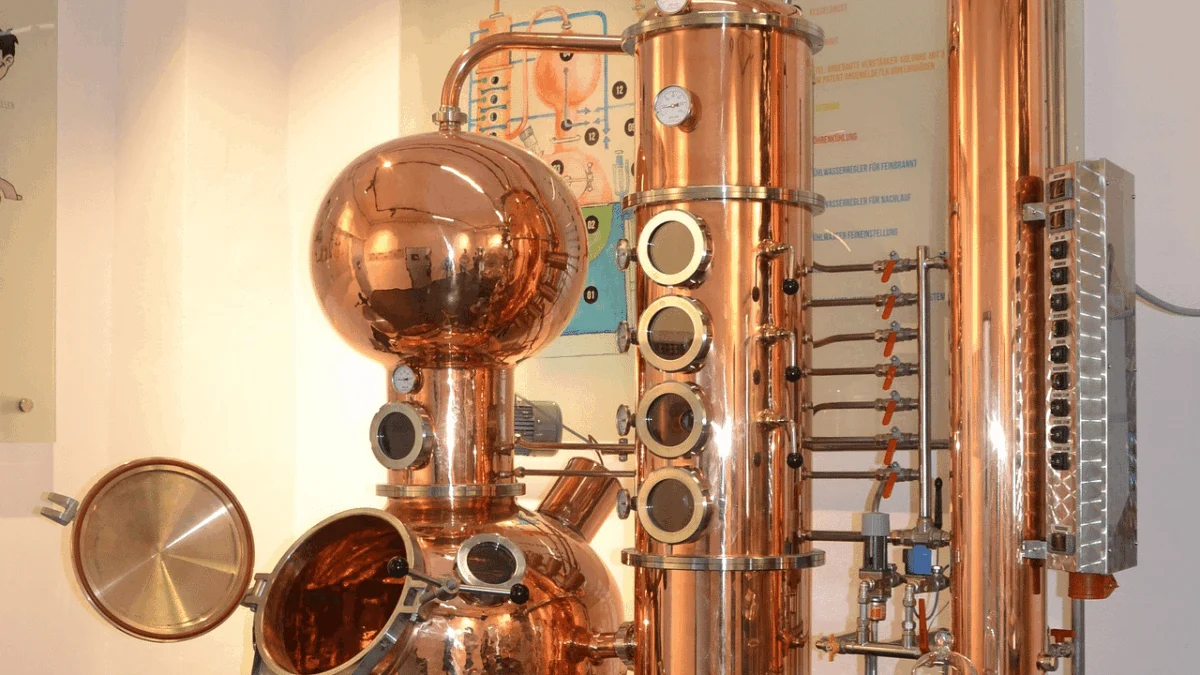
The production of gin is a sophisticated intersection of chemistry, sensory evaluation, and engineering, where the final flavor profile is dictated by a series of critical decisions made by the distiller long after the selection of botanicals has occurred. While the choice of ingredients—ranging from citrus peels to exotic spices—provides the raw aromatic potential, it is the manipulation of temperature, time, and concentration that determines whether a spirit achieves a balanced complexity or a muddled inconsistency. Industry experts note that two distillers using identical botanical recipes can produce vastly different spirits based on their approach to maceration, distillation speed, and the precision of their cuts.
To understand the mechanics of gin production, one must first look at the foundational substrate: Neutral Grain Spirit (NGS). Most commercial gins begin as a high-proof, highly rectified spirit, typically distilled to 96% alcohol by volume (ABV). This "clean canvas" is essential because it lacks the heavy congeners and secondary flavors found in whiskey or brandy bases, allowing the delicate volatile oils of the botanicals to remain the focal point. In the European Union and the United States, regulations stipulate that gin must have a predominant flavor of juniper, yet the methods used to achieve this flavor vary significantly across the global spirits industry.
The Mathematics of Botanical Ratios and Composition
The first major technical hurdle for a distiller is establishing the botanical ratio. While recipes are often guarded as trade secrets, a standard industry benchmark for botanical quantity is between 20 and 35 grams of total botanical material per liter of spirit. Within this framework, the dominance of juniper is not merely a stylistic choice but a regulatory requirement. Most traditional recipes allocate approximately 60% of the total botanical volume to juniper berries (Juniperus communis), which provide the characteristic piney, resinous backbone of the spirit.
Distillers often calculate their secondary and tertiary botanicals relative to the juniper weight. For instance, coriander seeds—the second most common botanical in gin—are frequently utilized at a ratio of 50% of the juniper weight. Earthy "fixative" botanicals like angelica root, or pungent spices like cassia and cinnamon, may be scaled down to 10% or even 1% of the juniper volume. In the case of highly potent ingredients, such as dried citrus zest or floral elements like lavender, the ratio may drop as low as 0.01%.
This precision is necessary because the solubility of botanical compounds varies. Terpenes, such as alpha-pinene from juniper and linalool from coriander, extract at different rates and temperatures. A distiller’s ability to manage these ratios determines the "structural integrity" of the gin’s flavor, ensuring that no single ingredient overwhelms the palate unless intended by the brand’s identity.
Chronology of Extraction: Maceration and Vapor Infusion
The history of gin production has seen a transition from rudimentary pot still infusions to highly controlled vapor extraction. The choice between maceration and vapor infusion represents one of the most significant forks in the production process.
In the maceration method, botanicals are steeped directly in the neutral spirit. This "long soak" can occur at room temperature for periods ranging from 12 to 48 hours. Beefeater, one of the world’s most recognizable London Dry gins, famously employs a 24-hour maceration period. This process allows the ethanol to act as a solvent, breaking down the cell walls of the botanicals and extracting heavier, oilier compounds. When the still is eventually fired, these heavy oils are carried over into the distillate, often resulting in a gin with a "weighty" mouthfeel and robust flavor profile.
Conversely, vapor infusion—pioneered and popularized by brands such as Bombay Sapphire—utilizes a different physical principle. Rather than soaking in the liquid, the botanicals are placed in "Carter-Head" baskets suspended within the neck of the still. As the ethanol boils and turns to vapor, it passes through the botanical baskets, gently stripping away the more volatile, delicate aromatic compounds. This method typically produces a lighter, more floral, and "elegant" spirit.
The placement of the basket is a variable of extreme importance. Baskets placed higher in the still are exposed to cooler vapors, leading to a more selective extraction of light aromatics. Lower placements subject the botanicals to higher temperatures, resulting in a more aggressive extraction of bitter or spicy notes. Some modern distillers utilize a hybrid approach, macerating hardy roots and seeds while vapor-infusing delicate citrus and florals to achieve a multi-dimensional profile.
The Physics of Distillation: Understanding the Cuts
The core of the distillation process is the management of "the run." Distillation is fundamentally a function of time and temperature, where the distiller must decide which portions of the emerging liquid to keep and which to discard. These decisions are known as "the cuts."
As the still heats up, the first liquid to emerge is the "foreshots" and "heads." These contain highly volatile compounds, including low-boiling-point alcohols and esters that can smell of nail polish remover or overly aggressive citrus. While some distillers keep a small portion of the heads for brightness, most is discarded or recycled.
The "heart" of the run is the desired product. This is where the most balanced and pleasant flavors of the juniper and spices reside. The transition from heads to heart requires a keen sensory palate; a distiller must monitor the distillate constantly, tasting and smelling for the moment the harshness subsides and the true botanical character emerges.
The final portion of the run is the "tails." As the alcohol concentration in the still drops, heavier, less volatile compounds begin to emerge. These often carry "cooked" vegetable notes, bitterness, or an oily, "cardboard" aroma. In high-quality gin production, the cut from heart to tails is made early to ensure the spirit remains crisp. The tails are often set aside to be re-distilled in future batches, a process that maximizes efficiency without compromising the quality of the current run.
Scaling and Practicality: Single-Shot vs. Multi-Shot Methods
Beyond the extraction and the cuts, distillers must choose between two primary production philosophies: the single-shot and multi-shot methods. This decision has significant implications for both the flavor of the gin and the economic viability of the distillery.
In the single-shot method, the botanical ratio is calculated precisely for the amount of spirit in the still. Once distillation is complete, the resulting high-proof gin is diluted only with water to reach the bottling strength (typically 40% to 47% ABV). This is often viewed as the traditional, "artisanal" approach, favored by many craft distillers who believe it preserves the nuance of the botanicals.
The multi-shot method is a more concentrated approach used by many large-scale producers. In this scenario, a significantly higher concentration of botanicals is used—sometimes several times the amount used in a single-shot run—to create a "gin concentrate." After distillation, this intense spirit is diluted not only with water but also with additional Neutral Grain Spirit.
From a technical standpoint, there is no definitive evidence that one method is inherently superior in quality. The multi-shot method allows a distillery to produce a much larger volume of gin using smaller equipment, significantly reducing energy costs and time. However, proponents of the single-shot method argue that the relationship between the spirit and the botanicals during distillation is more harmonious when not forced into a concentrated state.
Industry Analysis and Broader Implications
The global gin market, valued at approximately $14 billion in 2023, is currently undergoing a period of intense diversification. The "Ginaissance" of the last decade has been driven by consumer interest in transparency and craft techniques. As a result, the technical decisions made by distillers have become marketing points. Terms like "cold-distilled," "vacuum-distilled," and "hand-cut" are now used to signal quality to an increasingly educated consumer base.
Regulatory bodies have also reacted to these technical variations. The "London Dry" designation, for instance, remains one of the most stringent categories in the spirits world. To be labeled London Dry, a gin must have all its botanicals introduced during the distillation process, and no flavors or colorings can be added after distillation—only water and a minute amount of sugar. This regulation forces distillers to be masters of the "one-shot" or "multi-shot" distillation process, as they cannot correct errors in flavor through post-distillation additives.
In contrast, the rise of "Contemporary" or "New Western" gins has allowed for post-distillation infusions, leading to the popularization of pink gins and flavored variants. While these products have expanded the market, they have also sparked debate within the industry regarding the definition of gin.
The future of gin distillation is likely to be defined by further technological integration. Vacuum distillation, which lowers the boiling point of ethanol, allows distillers to extract flavors from fresh botanicals like cucumber or mint without the "cooked" taste associated with traditional heat. As sustainability becomes a corporate priority, the energy-intensive nature of traditional pot stills is being challenged by more efficient column still designs and heat-recovery systems.
Ultimately, the flavor of a gin is a testament to a distiller’s ability to navigate these variables. From the initial grain spirit to the final dilution, the process is a rigorous exercise in consistency and creative problem-solving. While the botanicals provide the inspiration, it is the technical mastery of ratios, extraction, and cuts that transforms a simple neutral spirit into a complex, world-class gin.
