

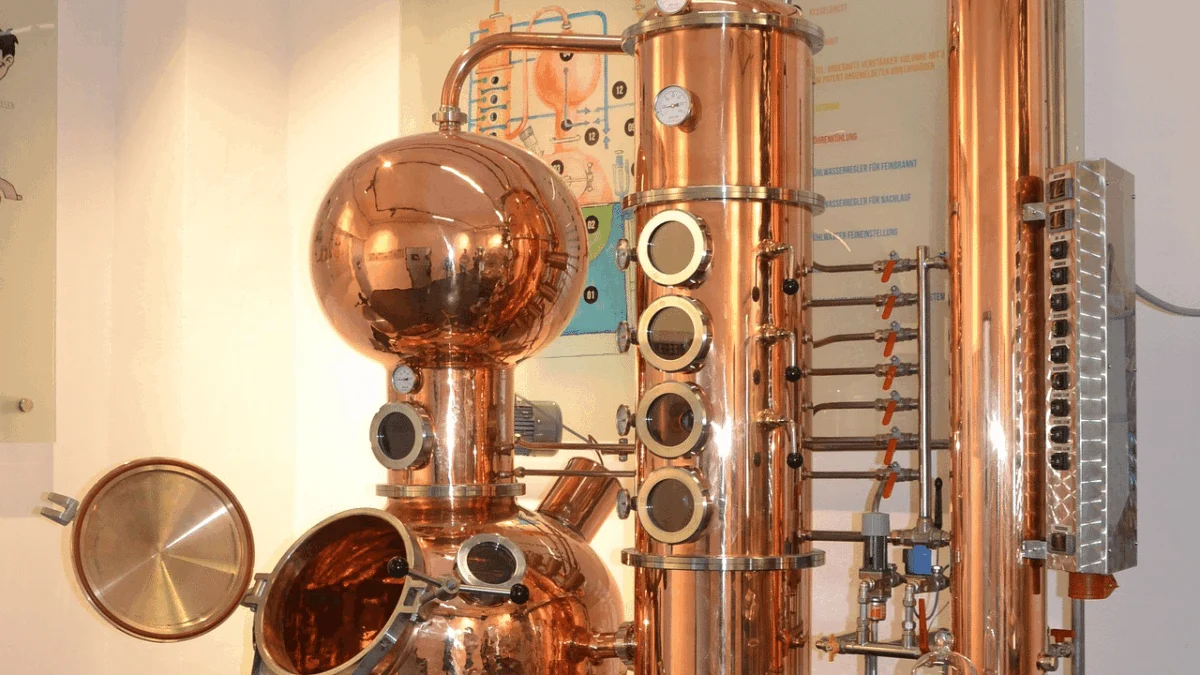
The global spirits industry has witnessed a significant transformation in the production and perception of gin over the last decade, transitioning from a commoditized spirit to a highly nuanced craft product. While the selection of botanicals is often the most marketed aspect of a gin’s identity, industry experts and master distillers emphasize that the flavor profile of the final liquid is the result of a sophisticated series of technical decisions made during the distillation process. These choices, ranging from the method of botanical extraction to the precise timing of "cuts" during distillation, define the difference between a standard spirit and a premium London Dry or contemporary gin. To understand the complexity of modern gin production, one must look past the ingredients and into the mechanics of the distillery itself.
The Foundation of Neutral Grain Spirit
The production of gin almost universally begins with Neutral Grain Spirit (NGS), a high-proof ethanol typically distilled to approximately 96% alcohol by volume (ABV). This base is essentially a clean, high-purity vodka, stripped of the characteristics of its original source material, which is usually corn, wheat, rye, or barley. By starting with a blank canvas, the distiller ensures that the volatile aromatic compounds of the botanicals are the primary focus of the spirit.
However, the choice of the base spirit is not without consequence. While NGS is the industry standard, some craft distillers are increasingly experimenting with base spirits derived from grapes, apples, or honey. These alternative bases introduce subtle textures and mouthfeel variations that interact differently with the essential oils of juniper and other botanicals. Regardless of the base, the first critical step for a distiller is the hydration of this spirit to a lower ABV—often between 40% and 60%—to prepare it for the botanical infusion process.
The Mathematical Precision of Botanical Ratios
The defining characteristic of gin is the presence of juniper berries (Juniperus communis). Legally, in both the European Union and the United States, juniper must be the "predominant" flavor for a spirit to be labeled as gin. Beyond this requirement, the artistry of gin making lies in the ratio of secondary and tertiary botanicals.
A widely recognized industry benchmark for botanical quantity is between 20 and 35 grams of total botanicals per liter of spirit. Within this framework, juniper typically accounts for approximately 60% of the total botanical weight. The remaining 40% is where a distiller builds complexity. Common "core" botanicals include coriander seeds, which provide citrus and spicy notes; angelica root, which acts as a fixative to hold more volatile aromas; and citrus peels, which provide bright top notes.
Distillers often express their recipes in relative ratios. If a recipe calls for 20 grams of juniper, a distiller might use 10 grams of coriander (a 2:1 ratio). More potent botanicals, such as cassia bark, cinnamon, or dried liquorice root, are often used in much smaller increments, sometimes as little as one-tenth or one-hundredth of the juniper’s weight. The precision required at this stage is immense; a variation of just a few grams in a large-scale distillation can significantly alter the balance of the final product, potentially masking the delicate floral notes or allowing bitter tannins to dominate.
Extraction Methods: Maceration versus Vapor Infusion
Once the ratio is established, the distiller must decide how to extract the essential oils and aromatic compounds from the botanicals. There are two primary schools of thought: maceration and vapor infusion.
Maceration involves soaking the botanicals directly in the neutral spirit. This "steeping" process allows the ethanol to act as a solvent, breaking down the organic matter and absorbing the flavors. The duration of maceration is a closely guarded secret for many brands. Beefeater, for instance, famously employs a 24-hour maceration period for its core botanicals before beginning the distillation. This method generally results in a "weightier" gin with a more robust, earthy flavor profile, as the direct contact with the spirit extracts heavier molecular compounds.
Conversely, vapor infusion—a technique pioneered and popularized by brands like Bombay Sapphire—takes a more delicate approach. In this method, the botanicals are placed in a specialized basket within the neck of the still. As the ethanol is heated and turns into vapor, it passes through the botanical basket, picking up the lighter, more volatile aromatic compounds without the "cooked" notes sometimes associated with maceration. Vapor-infused gins are typically noted for their brightness, floral clarity, and lighter mouthfeel.
Modern craft distillers often utilize a hybrid approach, macerating hardy botanicals like juniper and roots while vapor-infusing delicate ingredients like fresh citrus or flower petals. The placement of the botanical basket also plays a role; a basket placed higher in the still’s neck encounters slightly cooler vapors than one placed lower, further influencing which chemical compounds are successfully volatilized.
The Chronology of the Distillation Process
Distillation is fundamentally a process of separation based on boiling points. As the still is heated, different chemical compounds evaporate at different times. The distiller’s primary job during a run is to manage the "cuts"—the transitions between the different stages of the distillate.
- The Foreshots and Heads: The first liquid to emerge from the still contains high concentrations of methanol and other low-boiling-point compounds. These are often harsh, smelling of nail polish remover or solvent. In gin production, the heads are discarded or recycled because they lack the desired flavor profile and can be toxic if consumed in high quantities.
- The Heart: This is the "sweet spot" of the distillation. The heart contains the most desirable ethanol and the balanced aromatic compounds of the botanicals. The distiller must monitor the spirit constantly, using sensory evaluation (smell and taste) alongside alcohol-by-volume measurements to determine when the heart begins and ends.
- The Tails: As the distillation nears its end, the ABV drops and heavier, oilier compounds begin to emerge. These "tails" often carry bitter, cabbage-like, or excessively earthy notes. While some distillers include a small portion of the early tails to add "fixation" and depth to the gin, the majority are cut off to ensure the spirit remains clean and crisp.
This process is often compared to cooking. Just as a chef must decide when garlic has reached its peak aroma before it turns bitter and burnt, a distiller must decide the exact second to stop collecting the heart of the gin.
Operational Strategy: Single-Shot versus Multi-Shot
In the scaling of gin production, distillers must choose between the "single-shot" and "multi-shot" methods. The single-shot method is the traditional approach: a distiller adds the exact amount of botanicals required for a single batch of gin, distills it, and then dilutes the resulting high-proof spirit with water to reach the bottling strength (typically 40% to 47% ABV).
The multi-shot method is a more concentrated approach used by many large-scale producers to increase efficiency. In this scenario, the distiller uses a significantly higher concentration of botanicals—sometimes double or triple the standard amount—relative to the spirit in the still. The resulting distillate is an "ultra-concentrated" gin base. This concentrate is then blended with additional neutral grain spirit and water before bottling.
While purists often argue that single-shot distillation produces a more integrated flavor profile, the multi-shot method is a practical solution for meeting high global demand without sacrificing the fundamental botanical ratios. From a regulatory standpoint, both methods are acceptable for the "Distilled Gin" and "London Dry Gin" designations.
Regulatory Standards and Global Implications
The definition of gin is governed by strict regulations that vary by region. In the European Union, "London Dry Gin" is the most stringent category. It requires that all flavors be introduced through the distillation of natural botanicals in the presence of NGS. No flavors or colorings can be added after distillation, and only a minute amount of sweetener is permitted.
The "Distilled Gin" category is more flexible, allowing distillers to add flavorings or essences after the distillation process is complete. This has led to the rise of the "Pink Gin" and flavored gin categories, which have dominated market growth in recent years. According to data from the Wine and Spirit Trade Association (WSTA), the flavored gin segment was responsible for a significant portion of the "Gin-naissance" in the late 2010s, though recent trends show a return to consumer interest in classic, juniper-forward dry styles.
The Economic and Cultural Impact of Distillation Choices
The decisions made in the distillery have direct economic implications. The cost of premium botanicals, the energy-intensive nature of long macerations, and the lower yields associated with tight "heart" cuts all contribute to the price point of craft spirits. However, these choices also serve as a point of differentiation in a crowded market.
As the industry moves forward, the focus is shifting toward sustainability and "terroir." Distillers are increasingly looking to source local botanicals and optimize their stills for energy efficiency. The "cuts" are being analyzed through gas chromatography to ensure consistency, yet the final decision remains a human one, based on the palate of the master distiller.
In conclusion, the flavor of a gin is far more than a list of ingredients on a label. It is the result of a complex interplay between chemistry, physics, and artisanal intuition. From the initial purity of the neutral grain spirit to the final dilution, every step in the process offers a lever for the distiller to pull, shaping the aromatic landscape of one of the world’s most versatile spirits. Understanding these technical nuances allows consumers and industry professionals alike to appreciate the true craftsmanship behind every bottle of gin.
