

The global publishing industry in 2022 was characterized by a profound shift toward narratives that explore resilience, the complexities of human health, and the reclamation of overlooked histories. Following a period of global upheaval, the literary market saw a heightened demand for works that synthesize rigorous research with narrative accessibility. This trend is evident across several genres, including culinary history, investigative nonfiction, and psychological studies, as authors sought to provide clarity in an increasingly fragmented social landscape. According to data from the Association of American Publishers, while total book sales saw a slight stabilization following the pandemic-era surge, nonfiction categories—particularly those focusing on health, science, and social issues—maintained a significant trajectory of growth.
Culinary Literature and the Preservation of Global Traditions
The culinary releases of 2022 moved beyond simple recipe collections, increasingly functioning as ethnographic studies and historical records. Naomi Duguid’s The Miracle of Salt: Recipes and Techniques to Preserve, Ferment, and Transform Your Food serves as a primary example of this evolution. Duguid, an established authority on regional cuisines, explores the foundational role of salt in human civilization. The work documents techniques such as the production of miso, sauerkraut, and brined eggs, framing salt not merely as a seasoning but as a technological catalyst for survival and cultural identity.
Simultaneously, a surge in literature documenting South Asian regionality challenged the homogenization of the subcontinent’s cuisine in Western media. Cynthia Shanmugalingam’s Rambutan: Recipes from Sri Lanka and Romy Gill’s On the Himalayan Trail: Recipes and Stories from Kashmir to Ladakh provide critical cultural context to regions often overshadowed by broader geopolitical narratives. Gill’s work is particularly significant as it documents the foodways of Kashmir and Ladakh, areas where political instability threatens the continuity of oral traditions and culinary heritage. These publications reflect a broader industry trend toward "gastronomic decolonization," where authors prioritize the specificities of local ingredients and histories over adapted "fusion" narratives.
Narrative Nonfiction and the Reconstruction of Historical Truth
In the realm of narrative nonfiction, 2022 saw a focus on correcting the historical record and exploring the intersection of exploration and exploitation. Candice Millard’s River of the Gods: Genius, Courage, and Betrayal in the Search for the Source of the Nile exemplifies the modern biographical approach to the Victorian era. While focusing on the well-documented rivalry between Richard Burton and John Hanning Speke, Millard elevates the role of Sidi Mubarak Bombay, a formerly enslaved man whose navigational and diplomatic expertise was essential to the mission’s success. This shift toward acknowledging indigenous and non-Western contributions is a hallmark of contemporary historical scholarship.

Investigative journalism also turned its lens toward the erosion of civil liberties and the struggle for identity in urban centers. Louisa Lim’s Indelible City: Dispossession and Defiance in Hong Kong provides a comprehensive analysis of the city’s trajectory from British colonial rule to its current status under Chinese sovereignty. Lim’s work is noted for its synthesis of memoir and reportage, dispelling myths regarding Hong Kong’s "docile" past and highlighting the persistent spirit of defiance among its residents.
The Science of Perception and Communication
The intersection of science and social psychology provided some of the year’s most influential texts. Ed Yong, a Pulitzer Prize-winning journalist, released An Immense World: How Animal Senses Reveal the Hidden Realms Around Us, which challenges human-centric views of reality. By exploring the "Umwelt"—the unique sensory world of different species—Yong provides a scientific basis for understanding that human perception is merely one of many ways to experience the planet. The book’s success aligns with a growing public interest in biodiversity and sensory ecology.
Communication and the mechanics of belief were addressed by David McRaney in How Minds Change: The Surprising Science of Belief, Opinion, and Persuasion. In an era defined by political polarization and the proliferation of conspiracy theories, McRaney’s research into the neuroscience of persuasion offers a framework for constructive dialogue. The book argues that factual bombardment is often ineffective compared to the cultivation of rapport and empathy, a finding supported by contemporary social psychology.
Psychology Trauma and the Socio-Medical Landscape
A significant portion of 2022’s literary output focused on the long-term effects of trauma and the limitations of modern medicine in treating chronic illness. Dr. Gabor Maté, alongside Daniel Maté, published The Myth of Normal: Trauma, Illness, and Healing in a Toxic Culture. The text posits that many modern ailments are not merely biological malfunctions but are rooted in the "biopsychosocial" impact of trauma. Maté distinguishes between "Big T" trauma (catastrophic events) and "small t" trauma (developmental disruptions), arguing that the stresses of modern society act as epigenetic triggers for disease.

This theme is echoed in Meghan O’Rourke’s The Invisible Kingdom: Reimagining Chronic Illness, which provides a critical examination of how Western medical systems often fail patients with autoimmune and poorly understood conditions. O’Rourke’s work became particularly relevant in the context of "Long COVID," as millions of individuals entered the "invisible kingdom" of chronic, post-viral illness. The book advocates for a more holistic, patient-centered approach to diagnostics and treatment.
Furthermore, Susan Cain’s Bittersweet: How Sorrow and Longing Make Us Whole explores the psychological necessity of embracing grief and melancholy. Following the success of her previous work, Quiet, Cain argues that the American "tyranny of positivity" can be detrimental to emotional health. Her analysis suggests that acknowledging the "bittersweet" nature of existence is a prerequisite for creativity and deep human connection.
Memoir as a Tool for Social Activism and Self-Evolution
The year was also notable for memoirs that utilized personal history to address systemic issues. Alice Wong’s Year of the Tiger: An Activist’s Life uses a non-linear, multimedia approach to document the experience of living with progressive muscular dystrophy. Wong’s work is a sharp critique of ableism and the institutional barriers faced by the disabled community, yet it remains rooted in themes of joy and artistic purpose.
In the sphere of personal evolution, Yung Pueblo (Diego Perez) released Lighter: Let Go of the Past, Connect with the Present, and Expand the Future. Transitioning from the poetic aphorisms that made him a social media sensation, Perez provides a prose-based roadmap for emotional maturity through the lens of Vipassana meditation. His work reflects a broader societal movement toward mindfulness and the intentional processing of internal narratives.

Chronology of Publishing Trends in 2022
The 2022 literary cycle began with a focus on recovery and "returning to normal," but as the year progressed, the titles that resonated most were those that questioned what "normal" actually meant.
- Q1-Q2: Releases focused heavily on the "Great Resignation" and the re-evaluation of work-life balance, as seen in the early success of self-help and productivity-adjacent titles.
- Q3: A surge in narrative science and historical reclamation occurred, with titles like River of the Gods and An Immense World dominating critical discussions.
- Q4: The holiday season saw a peak in "prestige" nonfiction and gift-ready culinary sets, such as the Explorer’s Library from Atlas Obscura, alongside deeply personal accounts of health and trauma.
Industry Impact and Broader Implications
The critical and commercial success of these titles suggests a shift in reader behavior. There is a diminishing appetite for "shallow" self-help or purely escapist fiction; instead, readers are gravitating toward works that offer a synthesis of expertise and empathy. The popularity of books by Maté, O’Rourke, and Cain indicates a collective effort to process the psychological fallout of the early 2020s.
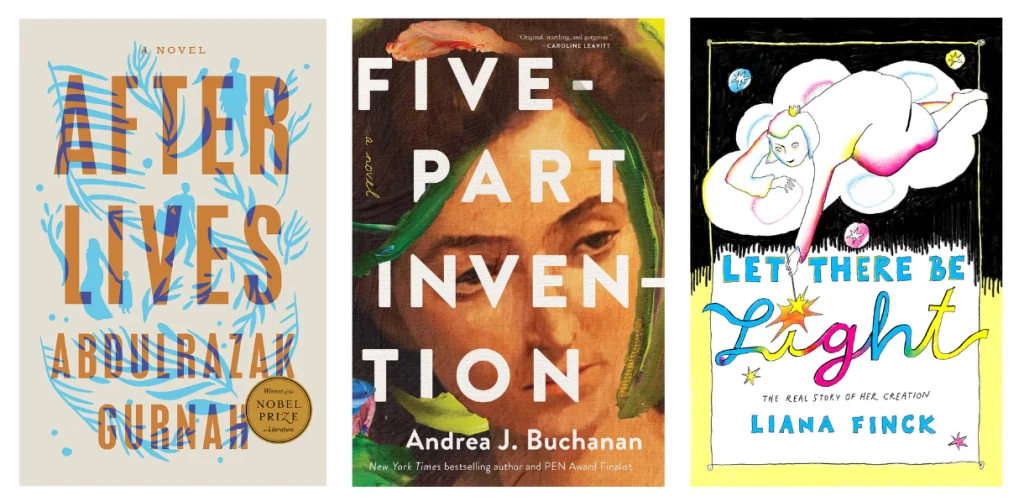
Furthermore, the rise of "BookTok" and other digital literary communities has altered how these books reach the public. While traditional reviews remain important, viral "word-of-mouth" in digital spaces has allowed niche titles—such as Liana Finck’s Let There Be Light or Andrea J. Buchanan’s Five-Part Invention—to find dedicated audiences.
In conclusion, the 2022 literary landscape was a reflection of a society in transition. From the preservation of ancient salt-curing techniques to the cutting-edge science of animal perception, the year’s best books provided a map for navigating a world that is increasingly complex, sensory, and interconnected. These works do not merely occupy shelf space; they contribute to an ongoing dialogue about who we are, how we heal, and how we might better understand the "immense world" we inhabit.
