

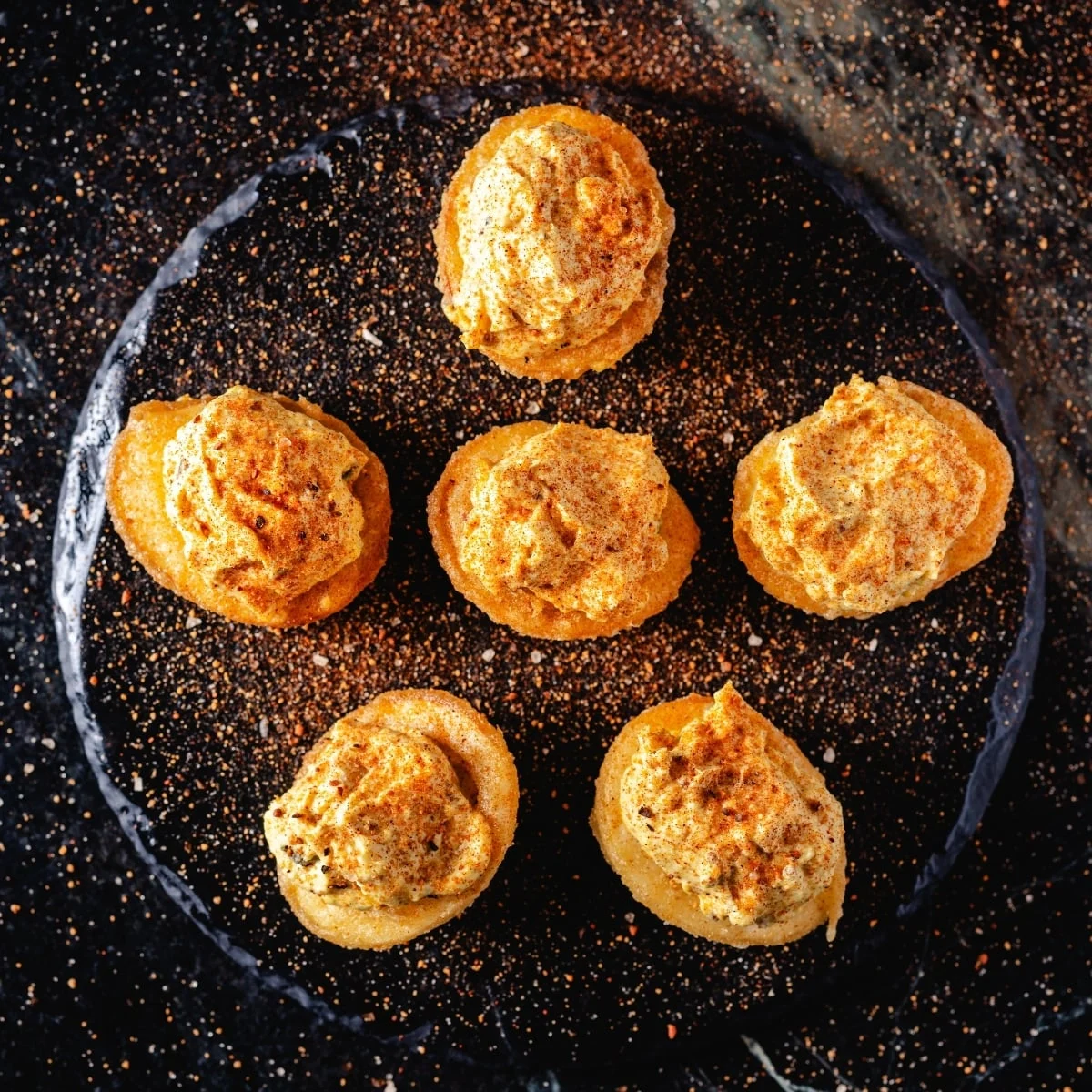
The landscape of American outdoor cooking continues to evolve as culinary innovators merge traditional preservation techniques with modern deep-frying methods to create complex, multi-textured appetizers. A prominent example of this trend is the Smoke-Fried Deviled Egg, a dish that elevates the standard hard-boiled egg through a three-stage process involving low-temperature smoking, batter-dipping, and flash-frying. This preparation represents a significant departure from the 13th-century origins of the deviled egg, incorporating elements of Southern barbecue culture and contemporary gastropub aesthetics. By layering the deep, woody notes of hardwood smoke with the tactile crunch of a golden batter and the zesty acidity of a mustard-based barbecue filling, this recipe provides a blueprint for what enthusiasts term the "Backyard BBQ Hero" experience.
The Technical Methodology of Smoke-Frying
The production of Smoke-Fried Deviled Eggs requires a precise chronological sequence to ensure the structural integrity of the egg white while maximizing flavor absorption. The process begins with the preparation of hard-boiled eggs, which are peeled and subjected to a "low-and-slow" smoke bath. Unlike raw proteins, the coagulated proteins of a hard-boiled egg white act as a semi-permeable membrane, allowing smoke particles to adhere to the surface and penetrate slightly into the outer layers.

Following the smoking phase, the eggs are bisected, and the yolks are removed to create a base for the filling. The whites are then processed through a dry-wet-dry dredging station, typically utilizing a seasoned chicken wing batter. This specific type of batter is engineered for high-heat stability and maximum surface area, creating a "nubbly" texture that contrasts with the internal creaminess of the egg. The frying stage is brief—conducted at temperatures between 350°F and 375°F—to achieve a golden-brown exterior without overcooking the already-set egg white, which can otherwise become rubbery or sulfurous.
Historical Context and the Evolution of the Deviled Egg
To understand the significance of the smoke-fried variant, one must examine the long trajectory of the deviled egg. The roots of stuffed eggs can be traced back to ancient Rome, where boiled eggs were seasoned with spicy sauces and served as the "gustatio," or first course, of a meal. By the 13th century, records from Andalusia (modern-day Spain) describe a process of mashing boiled yolks with cilantro, onion juice, pepper, and "murri" (a fermented sauce) before re-stuffing them into the whites.
The term "deviled" did not enter the English lexicon until 1786, originally used to describe foods prepared with a high heat or heavy seasoning, often including mustard, pepper, or cayenne. Throughout the 19th and 20th centuries, the deviled egg became a staple of American picnics and church socials, primarily due to the affordability of eggs and the portability of the dish. The introduction of smoke and deep-frying in the 21st century represents the "Third Wave" of deviled egg evolution, moving the dish from a simple side to a centerpiece of culinary craft.

Chronology of Preparation and Flavor Layering
The assembly of Smoke-Fried Deviled Eggs follows a strict five-step protocol designed to balance fat, acidity, and heat:
- Hard-Boiling and Peeling: Eggs are boiled to a firm set, then immediately shocked in an ice bath. This prevents the formation of a green ferrous sulfate ring around the yolk and ensures the shell separates cleanly from the membrane.
- The Smoke Infusion: The peeled eggs are placed on a pellet grill or traditional smoker. Culinary experts recommend fruitwoods like apple or cherry for a subtle sweetness, or hickory for a more robust, traditional barbecue profile.
- The Batter and Flash-Fry: The halved egg whites are coated in a crispy batter mix. This stage adds a savory, salty crust that mimics the skin of fried chicken, providing a structural counterpoint to the soft egg.
- The Emulsion Filling: The smoked yolks are combined with mayonnaise, apple cider vinegar, and diced jalapeños. A critical component in this specific iteration is the inclusion of a "Zesty Gold" BBQ sauce—a mustard-based sauce typical of South Carolina barbecue traditions—which provides a sharp, vinegar-forward bite.
- The Final Seasoning: The assembled eggs are dusted with a "Sweet Rub," a mixture usually containing brown sugar, paprika, and garlic powder. This final layer bridges the gap between the spicy filling and the smoky exterior.
Supporting Data: Nutritional and Economic Analysis
From a nutritional standpoint, the Smoke-Fried Deviled Egg is a calorie-dense appetizer, reflecting its status as an indulgent holiday or event food. Based on standardized recipe calculations, a single serving (one egg half) contains approximately 131 calories. The macronutrient breakdown is as follows:
- Total Fat: 7 grams (with 2 grams of saturated fat)
- Carbohydrates: 11 grams (largely derived from the flour-based batter)
- Protein: 5 grams
- Cholesterol: 132 milligrams
Despite the deep-frying process, the sodium content remains relatively moderate at 129 milligrams, provided the seasoning rubs are applied judiciously.

Economically, the dish leverages the high-value perception of "smoked meats" while utilizing one of the most cost-effective proteins available. In the United States, egg consumption peaks during the Easter season, with estimates from the United Egg Producers suggesting that nearly 3 billion eggs are sold in the weeks surrounding the holiday. Transforming a standard dozen eggs (averaging $2.00–$3.50 depending on market fluctuations) into a smoke-fried delicacy allows home cooks and restaurateurs to create a high-impact dish with minimal capital expenditure on raw ingredients.
Market Trends in Outdoor Cooking and BBQ Innovation
The rise of the smoke-fried technique coincides with the burgeoning "Pellet Grill Revolution." Data from the Hearth, Patio & Barbecue Association (HPBA) indicates that nearly 70% of U.S. households own a grill or smoker, with a significant shift toward versatile wood-fired pellet grills. These machines allow for precise temperature control, making delicate tasks like smoking eggs more accessible to the average backyard cook.
Furthermore, the popularity of "fusion barbecue"—which blends traditional low-and-slow techniques with other global cooking styles—has created a market for specialty rubs and sauces. Brands like Hey Grill Hey, founded by Susie Bulloch, have capitalized on this by providing the specific components (such as Zesty Gold BBQ Sauce and Sweet Rub) that facilitate these complex flavor profiles. This vertical integration of content (recipes) and commerce (products) has streamlined the ability of consumers to replicate professional-grade results at home.

Expert Analysis: The Science of Texture and Flavor
Culinary scientists point to the "contrast principle" as the reason for the Smoke-Fried Deviled Egg’s appeal. Human palates are biologically wired to respond positively to foods that offer multiple textures in a single bite. The smoke-fried egg achieves a "quad-texture" profile:
- Crispy: The fried outer batter.
- Elastic: The smoked egg white.
- Creamy: The whipped yolk filling.
- Crunchy: The inclusion of diced jalapeños or a final sprinkle of dry rub.
Additionally, the "smoke-kissed" yolk provides a deeper umami base than a standard boiled yolk. When combined with the acidity of apple cider vinegar and the heat of the peppers, it creates a balanced "flavor triangle" of salt, fat, and acid.
Broader Implications and Culinary Reception
The reception of smoke-fried appetizers in the broader culinary community suggests a move toward "maximalist" cooking in the outdoor space. Professional chefs have noted that dishes like these serve as an entry point for hobbyists to experiment with advanced techniques. By mastering the smoking and frying of a simple egg, cooks develop the skills necessary for more complex proteins.

The social media impact cannot be understated. Platforms like Instagram and TikTok have seen a surge in "food porn" content featuring cross-sections of fried deviled eggs, where the visual contrast between the golden crust and the bright yellow filling drives high engagement. This digital visibility has propelled the dish from niche barbecue circles into the mainstream, making it a frequent request for Easter gatherings, tailgate parties, and summer picnics.
In conclusion, the Smoke-Fried Deviled Egg is more than a seasonal novelty; it is a sophisticated intersection of historical tradition and modern culinary technology. As outdoor cooking continues to professionalize at the consumer level, such multi-stage recipes will likely become the new standard for the American backyard repertoire, proving that even the most humble ingredients can be transformed through the strategic application of smoke, fire, and oil.
