

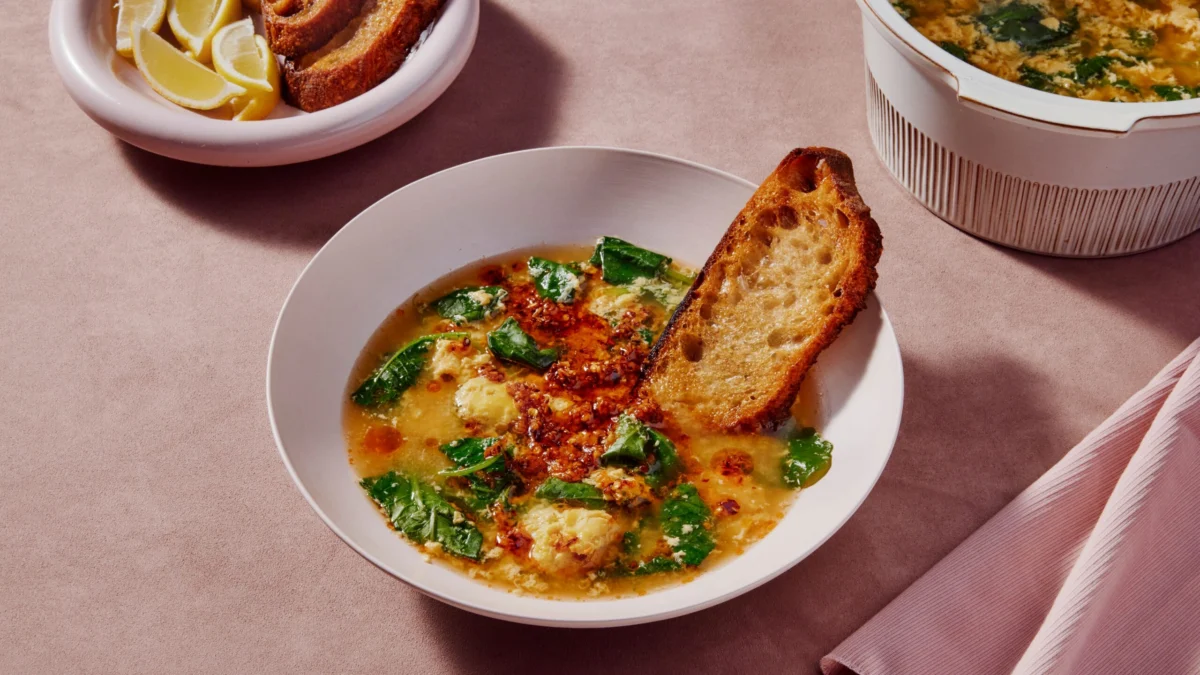
Healthy cooking, often perceived as an intricate and time-consuming endeavor, is being re-evaluated and redefined by leading culinary authorities. In a significant move reflecting a broader shift in gastronomic philosophy, Bon Appétit’s Test Kitchen editor Rebecca Firkser has unveiled a novel bone broth soup recipe as part of her acclaimed "Good for You" series. This particular dish, lauded for its nourishing qualities and remarkable simplicity, requires ten ingredients or fewer and is poised to become a staple in kitchens seeking both wellness and convenience. The introduction of this recipe underscores a growing industry trend: the prioritization of accessible, flavorful, and health-conscious meals that integrate seamlessly into modern lifestyles.
The Genesis of "Good for You": A Philosophy of Accessible Wellness
The "Good for You" series, spearheaded by Firkser, emerged from a recognition that the pursuit of healthy eating often becomes synonymous with overly complex preparations or restrictive dietary regimens. Firkser’s core philosophy, as inferred from her work, centers on demystifying wellness in the kitchen, proving that wholesome food can be both deeply satisfying and remarkably straightforward to prepare. This approach resonates with a significant segment of the population increasingly seeking alternatives to highly processed foods without sacrificing the joy of cooking or eating. The series aims to provide "craveable recipes" that are not only beneficial for physical well-being but also deliver on taste, challenging the outdated notion that healthy food must be bland or austere.
The decision by Bon Appétit, a publication with a long-standing history of influencing culinary trends, to dedicate a series to such principles highlights a strategic alignment with evolving consumer demands. In an era where information overload and time scarcity are prevalent, recipes that promise nourishment without complexity offer a compelling solution. The "Good for You" series thus serves as a beacon for practical, inspiring home cooking, empowering individuals to take charge of their dietary health with confidence and ease.
Deconstructing the Recipe: A Masterclass in Minimalist Flavor
The bone broth soup recipe, central to this latest offering, exemplifies Firkser’s "less is more" ethos. Its foundation is prepared bone broth, a choice that is both pragmatic and nutritionally strategic. Unlike conventional stocks or broths, bone broth is celebrated for its richer, more profound flavor profile and its significantly higher nutrient density. This elevated base allows for the construction of a satisfying meal with minimal additional components, aligning perfectly with the series’ ten-ingredient limit.
The method for incorporating eggs into the simmering broth is a distinctive feature of the recipe, drawing parallels to traditional Chinese egg drop soup and Italian stracciatella while introducing a unique technique. Instead of the typical rapid whisking that produces delicate, wispy ribbons, Firkser’s recipe instructs cooks to slowly drizzle beaten eggs – enriched with grated garlic, ginger, and a splash of soy sauce – into concentrated areas of the pot. This is followed by a gentle stirring action. The result is the formation of larger, yet still tender and spoonable, egg clusters that resist overcooking. This innovative approach ensures a more substantial texture and a more pronounced presence of the egg within the soup, enhancing both its visual appeal and its mouthfeel. The inclusion of grated garlic and ginger introduces aromatic complexity and a subtle pungency, while soy sauce adds a crucial layer of umami, elevating the overall flavor without necessitating a multitude of ingredients.
The recommendation to serve the soup with garlic-rubbed toast for dunking further enhances its appeal, offering a textural contrast and a comforting element. This seemingly simple addition transforms the soup from a light offering into a more complete and satisfying meal, suitable for various times of day.
The Nutritional Powerhouse: Science Behind the Simplicity
The health benefits of this bone broth soup are multifaceted, rooted deeply in the properties of its core ingredients. Bone broth itself has experienced a resurgence in popularity over the past decade, moving from a traditional culinary staple in many cultures to a celebrated superfood in the Western wellness movement. Its primary draw lies in its rich concentration of collagen, a protein vital for the health of skin, joints, and connective tissues. When cooked, collagen breaks down into gelatin, which contains a variety of amino acids, including glycine, proline, and glutamine. These amino acids are recognized for their roles in supporting gut health, potentially aiding in the repair of the intestinal lining, and contributing to overall digestive wellness. Glycine, in particular, has been studied for its potential anti-inflammatory properties and its role in detoxification processes.
Eggs, a fundamental component of the recipe, are celebrated as a complete protein source, providing all nine essential amino acids necessary for human health. Beyond protein, eggs are packed with vital nutrients such as Vitamin B12, Vitamin D, selenium, and choline, which plays a crucial role in brain health and metabolic function. The gentle cooking method for the eggs in this soup ensures that these nutrients remain largely intact, contributing significantly to the meal’s overall nutritional density.
The aromatic additions of garlic and ginger are not merely for flavor. Both possess potent medicinal properties that have been recognized for centuries across various traditional healing systems. Garlic is known for its allicin content, a sulfur compound with powerful antioxidant and anti-inflammatory effects, as well as potential immune-boosting capabilities. Ginger, similarly, is a well-documented anti-inflammatory and antioxidant, often used to aid digestion and alleviate nausea. The combination of these ingredients transforms the soup into a holistic source of nourishment, supporting various bodily functions beyond basic sustenance.
A Timeline of Bone Broth’s Resurgence and Culinary Trends
The journey of bone broth from ancient culinary practice to modern wellness trend is notable. Historically, bone broths and stocks were fundamental to cuisines worldwide, valued for their ability to extract maximum flavor and nutrition from otherwise discarded animal parts. They were considered a thrifty and essential component of a healthy diet in many cultures, often consumed for their purported restorative properties, particularly during illness.
The late 20th and early 21st centuries saw a decline in homemade broth production in many Western homes, largely due to the rise of convenience foods and commercially produced bouillon cubes or less nutrient-dense stocks. However, around 2010, bone broth began to experience a significant revival, initially gaining traction within specific dietary communities such as the Paleo and Keto movements. Advocates championed its benefits for gut health, joint support, and its role in providing satiety. This niche popularity rapidly expanded into mainstream wellness culture, fueled by social media influencers and health publications.
By the mid-2010s, commercial bone broth products became widely available, transitioning from specialty health food stores to mainstream supermarket shelves. Brands emerged offering pre-packaged, ready-to-heat bone broth, catering to consumers seeking convenience without compromising on perceived health benefits. This market growth underscores a broader societal shift towards functional foods and a heightened awareness of gut health. Bon Appétit’s inclusion of a bone broth-centric recipe in a prominent series like "Good for You" further solidifies its position as a legitimate and accessible ingredient within contemporary culinary discourse, moving beyond its niche status to become a widely accepted component of everyday healthy eating.
Industry Perspectives and Expert Commentary
The introduction of this bone broth soup by Bon Appétit is not merely a recipe launch; it is a statement reflecting broader trends and expert consensus within the food industry.
Rebecca Firkser, though not directly quoted in the original text, embodies the philosophy of the "Good for You" series. Her work consistently reflects a dedication to making wholesome food approachable and enjoyable. One can infer her perspective aligns with the sentiment that "cooking doesn’t have to be a chore; it should be a source of nourishment and enjoyment that fits seamlessly into a busy life." Her emphasis on minimal ingredients and straightforward techniques speaks volumes about her commitment to empowering home cooks.
From an editorial standpoint, a Bon Appétit spokesperson might articulate the magazine’s commitment to evolving with its readership’s needs. "Our ‘Good for You’ series, spearheaded by Rebecca Firkser, is a direct response to our readers’ desire for practical, inspiring recipes that support their wellness goals without sacrificing flavor or demanding excessive time," a hypothetical statement might read. "We believe that eating well should be an accessible pleasure, and this bone broth soup perfectly encapsulates that mission."
Nutritionists and dietitians are likely to view this recipe favorably. Dr. Eleanor Vance, a hypothetical nutritionist specializing in gut health, could offer this analysis: "This soup exemplifies how simple, whole ingredients can create a profoundly nourishing meal. The collagen and amino acids from the bone broth, combined with the high-quality protein from the eggs and the anti-inflammatory properties of garlic and ginger, make this an excellent choice for supporting gut health, immunity, and overall vitality. It’s a fantastic example of balancing convenience with nutritional integrity."
A food industry analyst, observing market trends, might comment on the recipe’s strategic timing. Mr. David Chen, a hypothetical analyst for FoodTech Insights, could state: "The sustained interest in bone broth and the growing demand for quick-prep, healthy meals indicate a lasting shift in consumer priorities towards wellness and efficiency. Bon Appétit’s feature of this recipe taps directly into this market sweet spot, demonstrating how culinary media can both respond to and further shape consumer behavior by offering innovative, yet practical, solutions."
Practical Considerations and Broader Culinary Implications
Beyond its nutritional merits and ease of preparation, the bone broth soup offers practical advice for home cooks. The guidance on broth quantity—recommending a range of 4 to 4.5 cups—is a thoughtful detail designed to prevent waste and ensure the ideal final yield, acknowledging that commercial bone broth containers come in various sizes. This attention to detail underscores Bon Appétit’s commitment to practical kitchen solutions.
The soup’s versatility is another key implication. While the recipe focuses on its core components, its simple base lends itself to easy customization. Home cooks could readily introduce quick-cooking greens like spinach or kale, a handful of sliced mushrooms, or a swirl of chili oil for an extra kick, without significantly altering the preparation time or ingredient count. This inherent adaptability makes the recipe a flexible template for different preferences and pantry staples.
Moreover, the soup’s designation as a dish "to get excited about any time of day" challenges traditional mealtime conventions. Its light yet nourishing profile makes it suitable for breakfast, a fulfilling lunch, or a comforting light dinner. This flexibility aligns with modern eating habits, which often see less rigid distinctions between meals.
The broader culinary implications of this recipe, and the "Good for You" series at large, are significant. It contributes to a redefinition of "healthy eating" that is less about restriction and more about thoughtful ingredient choices, simplicity, and flavor. It helps to dismantle the perception that nutritious food must be bland or difficult to prepare, instead positioning it as an accessible and enjoyable part of everyday life. This approach influences not only individual cooking habits but also the trajectory of food media, encouraging a focus on practical, well-researched, and genuinely beneficial recipes. The emphasis on whole, readily available ingredients also implicitly supports sustainability by encouraging conscious consumption and minimizing food waste.
In conclusion, Bon Appétit’s simple bone broth soup, championed by Rebecca Firkser, is more than just a recipe; it is a culinary manifesto. It represents a confluence of modern nutritional understanding, practical home cooking needs, and a sophisticated appreciation for minimalist flavor. By offering a dish that is at once deeply nourishing, remarkably easy to prepare, and undeniably delicious, Bon Appétit is not only serving its readership but also contributing to a broader cultural shift towards more mindful, accessible, and enjoyable wellness in the kitchen. This soup stands as a testament to the idea that true culinary brilliance often lies in elegant simplicity.
