

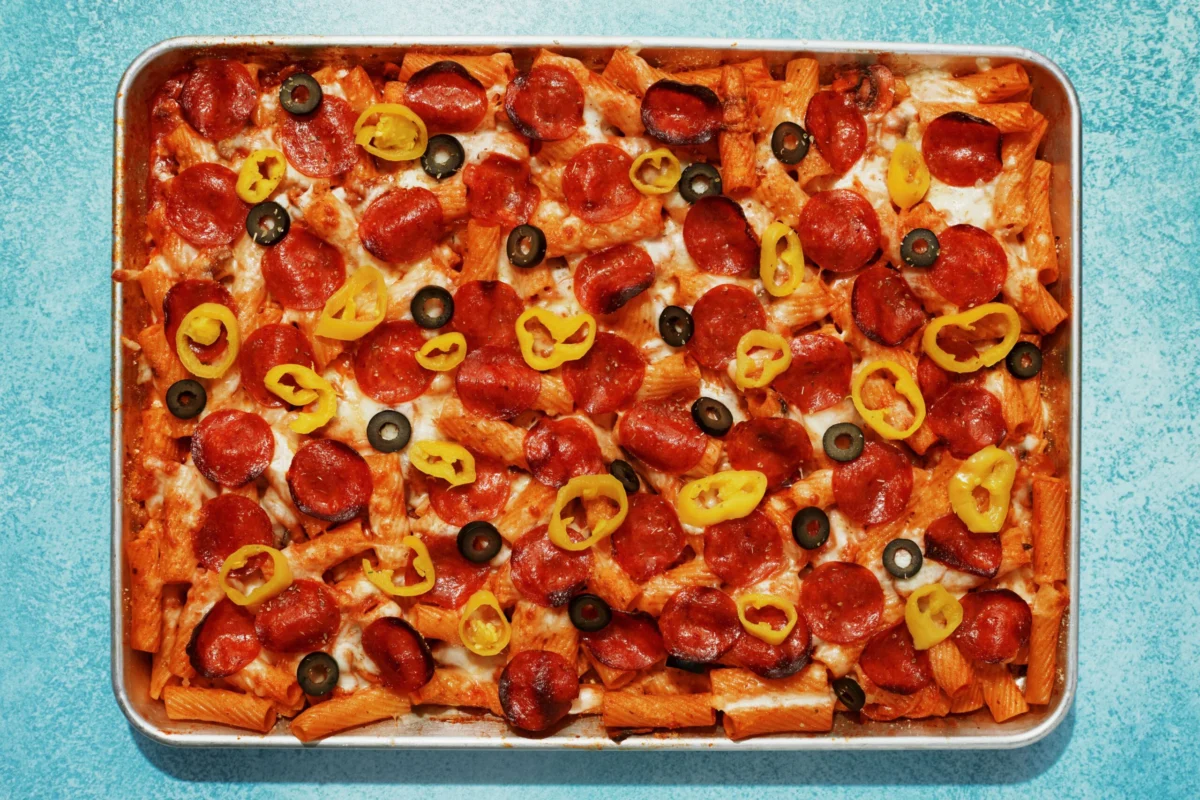
For generations, baked pasta dishes have stood as quintessential comfort food, beloved for their hearty portions, rich flavors, and ability to feed a crowd. From bubbling casseroles of lasagna and baked ziti to creamy macaroni and cheese, these dishes traditionally rely on deep baking vessels to achieve their characteristic layers and molten interiors. However, a significant culinary shift is underway, challenging this long-held convention: the strategic adoption of the sheet pan for baked pasta preparation. This innovative approach promises a superior textural experience, greater efficiency, and a more uniform dining experience, addressing common shortcomings of its deep-dish predecessors.
The Enduring Appeal of Baked Pasta and Its Traditional Challenges
Baked pasta dishes boast a storied history, deeply rooted in various global cuisines, particularly Italian-American cooking. They emerged as practical, economical meals designed to maximize flavor and yield, making them ideal for large family gatherings, community events, and everyday sustenance. Ingredients are typically affordable and readily available—pasta, canned tomatoes, cheese, and a selection of meats or vegetables—contributing to their widespread appeal. The traditional method involves assembling ingredients in a deep baking dish, allowing them to meld and cook together in the oven, often resulting in a golden, crisp top layer and a soft, saucy interior.
Despite their popularity, traditional baked pasta recipes prepared in deep vessels often present a culinary dilemma. The uneven distribution of heat and moisture within a deep casserole can lead to inconsistent textures. While the top and corners might achieve a desirable crispness and caramelization, the pasta in the deeper, central portions frequently suffers from over-steaming, becoming soft, mushy, or even gooey. This disparity in texture means that for a typical baked pasta dish, only a fraction of servings—often the coveted corner pieces—deliver the optimal experience, leaving the majority of diners with a less satisfying, texturally compromised meal. This inconsistency has long been a quiet "qualm" among home cooks and culinary professionals alike, prompting a search for methods that could democratize the "perfect bite."
The Sheet Pan Revolution: A New Paradigm for Baked Pasta
The solution gaining increasing traction among culinary innovators is deceptively simple: reconfiguring baked pasta from a deep-dish endeavor to a shallow, spread-out sheet pan preparation. By distributing the pasta, sauce, and cheese in a thin, even layer across a standard half sheet pan, cooks can dramatically alter the cooking dynamics. This method maximizes surface area exposure to the oven’s radiant heat, promoting uniform cooking and enhanced textural development across every portion.
The advantages are multifaceted. Each piece of pasta, such as rigatoni in a Sheet-Pan Pepperoni Pasta recipe, becomes thoroughly cloaked in sauce and melting cheese, yet emerges from the oven perfectly al dente. The increased exposure to dry heat fosters the Maillard reaction, leading to delightfully crisp edges and caramelized bits that are virtually impossible to achieve in a deep casserole where steam often predominates. This eliminates the issue of "lost" noodles in the depths of a dish, preventing them from steaming into an undesirable mushy mass. The innovation transforms what was once a textural lottery into a consistent guarantee of quality.
Culinary Science and Efficiency: Why Sheet Pans Excel
The efficacy of the sheet pan method for baked pasta is rooted in fundamental culinary science and practical kitchen efficiency. Sheet pans facilitate superior heat distribution and moisture management. When ingredients are spread thinly, hot air circulates more freely around them, ensuring even cooking and promoting quicker evaporation of excess moisture. This controlled moisture reduction is critical for achieving crisp textures and concentrated flavors, preventing the steam-induced sogginess often associated with deep-dish preparations.
Furthermore, the sheet pan approach often streamlines the cooking process. For instance, in recipes like the Sheet-Pan Pepperoni Pasta, the sauce itself can be largely prepared in situ in the oven. Instead of traditional stove-top sauce preparation, a highly concentrated tomato-vegetable mixture is created by roasting sliced mushrooms and onions coated in oily tomato paste, garlic, and oregano directly on the sheet pan. This roasting process caramelizes the vegetables and deepens the umami notes of the tomato paste, developing a profoundly rich flavor profile that would typically require more active, stove-top tending. This concentrated mixture is then tossed with pre-cooked pasta and a measure of starchy pasta cooking water, which helps bind the sauce and maintain moisture, before returning to the oven for final baking. This multi-stage sheet pan utilization reduces cleanup and leverages the oven’s consistent heat for both flavor development and final assembly.
Broader Trends in Sheet Pan Cooking and Its Economic Implications
The adoption of sheet pan baked pasta is not an isolated culinary quirk but rather a natural evolution within a broader, accelerating trend towards sheet pan cooking. Over the past decade, "sheet pan meals" have surged in popularity, driven by consumer demand for convenient, healthy, and easy-cleanup dinner solutions. Data from culinary publications and recipe platforms indicates a significant increase in searches and engagement for "one-pan" or "sheet pan" recipes, reflecting a desire among home cooks to simplify meal preparation without sacrificing quality or flavor. This trend is particularly appealing to busy families and individuals seeking efficient ways to cook nutritious meals during weekdays.

From an economic standpoint, sheet pan baked pasta aligns perfectly with current consumer preferences for affordability. As noted, the core ingredients for pasta dishes—pasta, tomatoes, cheese, and basic vegetables—remain relatively inexpensive compared to many protein-heavy meals. The sheet pan method enhances this value proposition by ensuring a higher quality outcome for these affordable ingredients. By mitigating the risk of poorly cooked pasta, it helps reduce potential food waste, as diners are more likely to enjoy and consume every portion. This makes sheet pan baked pasta an attractive option for budget-conscious consumers and an excellent strategy for feeding larger groups economically. Culinary experts and food industry analysts project that the demand for such cost-effective and high-quality meal solutions will continue to grow, solidifying the sheet pan’s role as a staple in modern kitchens.
Expanding the Sheet Pan Repertoire: Beyond Pepperoni Pasta
The versatility of the sheet pan method extends far beyond a single recipe. Many classic baked pasta dishes, and even newer creations, are proving to be exceptionally well-suited to this re-imagined preparation. The concept of sheet pan mac and cheese, for instance, has already been widely lauded for delivering uniform crispness and a superior cheese crust that is often elusive in a deep casserole. This makes it a guaranteed win for those who cherish the crunchy top layer of their macaroni and cheese.
Other cheesy, saucy pasta recipes also thrive on the sheet pan, including:
- Spicy Broccoli Rabe Pasta: A dish where the slight char on the broccoli rabe and pasta edges adds depth.
- Cauliflower and Provolone Pasta: Here, the cauliflower can achieve a lovely roasted texture while the provolone melts evenly.
- Baked Ziti: An old faithful, transformed by uniform crispness and sauce distribution.
- Tuna Noodle Casserole: Elevated from its sometimes-mushy reputation by the enhanced textural contrast.
- Creamy Feta Pasta: A more recent viral sensation, which can achieve even greater caramelization of the feta and tomatoes on a sheet pan.
The adaptation of these recipes to a sheet pan often requires minimal adjustments to the core ingredient list. The primary consideration becomes bake time, which is typically shorter due to the increased surface area and more efficient heat transfer. Cooks are advised to monitor the dish closely, allowing for visual cues of golden-brown edges and bubbling cheese to indicate doneness, rather than strictly adhering to traditional deep-dish timings.
The Lasagna Conundrum: A Nuanced Exception
While the sheet pan proves remarkably adaptable for most baked pasta, there remains one prominent exception where the deep-dish format traditionally shines: lasagna. The inherent structure of lasagna, with its multiple layers of pasta, ricotta, sauce, and cheese, is intrinsically designed to build height and density. The deep vessel allows for the slow cooking of these layers, enabling flavors to meld and the pasta to soften perfectly without excessive drying. For those who appreciate the towering, structurally intricate nature of classic lasagna, the deep dish remains the preferred method.
However, even within this bastion of deep-dish tradition, innovative chefs are exploring sheet pan adaptations. Inspired by dishes like the extra-crispy two-sheet lasagna from New York’s Rolo’s, sheet pan lasagna can offer a distinctly different, yet equally appealing, experience. Versions like a sheet-pan spinach and sausage lasagna prioritize maximum crispness and a higher ratio of caramelized edges to soft interior. This adaptation caters to a specific textural preference, demonstrating that even traditional deep-dish champions can find new life on a sheet pan when the culinary goal shifts. These exceptions highlight the ongoing experimentation and flexibility within modern cooking, where traditional boundaries are continually being tested and redefined.
Looking Ahead: Continued Innovation and Culinary Exploration
The embrace of the sheet pan for baked pasta represents more than just a passing trend; it signifies a thoughtful evolution in how comfort food can be prepared to achieve optimal results and cater to contemporary lifestyles. The initial success of recipes like Sheet-Pan Pepperoni Pasta, which has been rigorously tested and refined in professional test kitchens, serves as a testament to the method’s efficacy and broad appeal.
Culinary exploration continues, with chefs and home cooks alike envisioning further applications. For example, adapting a pasta alla Norma-inspired spaghetti pie to a sheet pan promises an intriguing textural transformation. By potentially doubling the recipe to retain some of the original dish’s height while leveraging the sheet pan for increased surface area, one could imagine slicing elegant, crispy-edged squares of pasta pie, perhaps adorned with seasoned ricotta dollops. These kinds of innovative adaptations are not merely about convenience; they are about reimagining classic dishes to unlock new dimensions of flavor and texture, making them even more inviting and shareable.
The sheet pan method for baked pasta is poised to become a standard technique in home kitchens, recognized for its ability to deliver consistently superior results, simplify meal preparation, and maximize the enjoyment of beloved comfort foods. It underscores a broader movement in contemporary cooking towards efficiency, quality, and a commitment to making every bite count. As culinary practices continue to evolve, the humble sheet pan stands as a powerful tool, revolutionizing the way we think about and prepare one of the world’s most cherished dishes.
