

Historical Evolution of the Ranch-Style Breakfast
The foundational dish, Huevos Rancheros, traces its origins to the rural farms and ranches of 19th-century Mexico. Originally designed as a mid-morning meal for field workers, the dish was engineered for high caloric density and sustained energy release. Traditional iterations centered on lightly fried corn tortillas, fried eggs, and a spicy tomato-chili sauce, often supplemented by beans and rice.
As the dish migrated across the border into the Southwestern United States, it underwent various regional adaptations. In New Mexico, the addition of green or red chiles became a defining characteristic, while in Texas, the "Tex-Mex" influence introduced heavier use of cheeses and flour tortillas. The integration of pulled pork—a staple of the American South and Midwest—into this framework marks a third wave of evolution. This hybridity reflects a broader trend in the American gastronomic industry where regional boundaries are increasingly blurred, and the "smokehouse" aesthetic is applied to international breakfast formats.
The Technical Dynamics of Ingredient Synergy
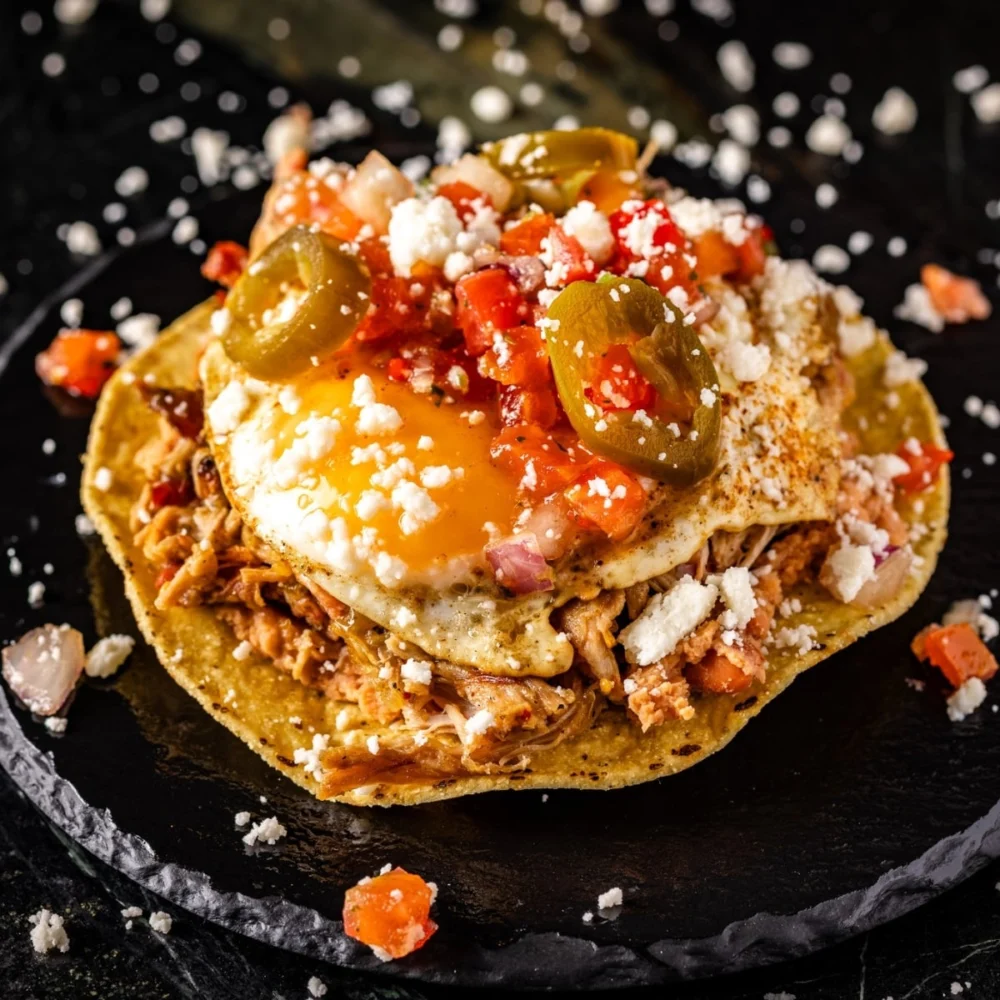
The success of Pulled Pork Huevos Rancheros relies on a specific hierarchy of textures and flavors. The base of the dish, the corn tostada, provides a structural foundation and a mechanical crunch that contrasts with the softer elements above it. The tostada is typically a corn tortilla that has been fried or baked until all moisture is removed, resulting in a shelf-stable, rigid disc.
Layered upon this base is a spread of refried beans (frijoles refritos), which acts as a culinary adhesive. From a nutritional and technical standpoint, the beans provide essential fiber and a creamy mouthfeel. The centerpiece of the modification—the pulled pork—is not merely added as a cold topping but is subjected to a secondary cooking process. By searing the shredded pork in a skillet, the Maillard reaction is triggered on the surface of the meat fibers. This process creates "carnitas-style" crispy edges, which enhance the textural complexity of the dish and reactivate the fat-soluble smoke compounds locked within the protein from its initial smoking phase.

The dish is capped with a sunny-side-up egg. The selection of this specific egg preparation is critical; the liquid yolk serves as a natural sauce that emulsifies with the pico de gallo and salsa, binding the disparate ingredients together. The inclusion of Cotija cheese—a dry, firm, and salty cow’s milk cheese—provides a sharp finish that cuts through the richness of the pork and egg yolk.
Chronological Methodology of Preparation
The assembly of Pulled Pork Huevos Rancheros is a multi-stage process that requires approximately 30 minutes of active preparation, assuming the primary protein has been previously smoked.
- Protein Preparation: The process begins with the reheating of the pulled pork. The meat is placed in a cast-iron or heavy-bottomed skillet over medium-high heat. A "beef rub" or a mixture of salt and pepper is applied to enhance the savory profile. The goal is to render out a small amount of residual fat, allowing the pork to fry in its own juices until the edges reach a state of crispation.
- Vegetable and Salsa Integration: Fresh pico de gallo—consisting of diced tomatoes, onions, cilantro, and lime juice—is prepared to provide a raw, acidic counterpoint to the cooked elements. Simultaneously, a roasted tomatillo salsa is readied, offering a tangy, slightly charred depth.
- The Egg Component: While the pork is finishing, eggs are fried. The "sunny-side-up" method is preferred to maintain a liquid yolk. The timing is essential to ensure the egg is hot when the assembly begins.
- Structural Assembly: Tostadas are laid out as the base. A layer of warmed refried beans is applied, followed by a generous portion of the crisped pulled pork. The egg is placed atop the pork, and the dish is finished with salsa, pico de gallo, and a crumbling of Cotija cheese.
Quantitative Analysis and Nutritional Data
A single serving of Pulled Pork Huevos Rancheros is a high-energy meal, reflecting its origins as labor-intensive fuel. According to nutritional calculations, a standard serving contains approximately 902 kilocalories.
The macronutrient breakdown is as follows:
- Total Fat: 54 grams, including 25 grams of saturated fat. This high fat content is primarily derived from the pork shoulder and the egg yolk.
- Proteins: 47 grams. This high protein density makes the dish highly satiating and suitable for post-exertion recovery.
- Carbohydrates: 59 grams, with 4 grams of dietary fiber provided by the corn and beans.
- Sodium: 3,087 milligrams. This figure is significantly higher than the daily recommended intake for an average adult, largely due to the salt content in the barbecue rub, the beans, and the Cotija cheese.
From a micronutrient perspective, the dish is a potent source of Vitamin A (1600 IU) and Calcium (714 mg), the latter being contributed by the cheese and fortified corn products.

Economic Implications of Leftover Utilization
The emergence of recipes like Pulled Pork Huevos Rancheros is part of a larger economic strategy within the domestic and professional kitchen known as "cross-utilization." Food waste is a significant global issue, with estimates suggesting that nearly one-third of all food produced is lost or wasted. In the context of American barbecue, where large cuts like pork butt (weighing 8 to 10 pounds) are the standard, the production of leftovers is almost inevitable.
By transforming these leftovers into a premium breakfast offering, the "cost per meal" of the initial meat purchase is significantly reduced. In a restaurant setting, this increases the margin on breakfast menus, where ingredients like eggs and tortillas are relatively inexpensive. For the home cook, it represents a sustainable approach to consumption, reducing the need for additional protein purchases throughout the week.
Industry Perspectives and Culinary Trends
Culinary analysts have noted that the "breakfastification" of dinner proteins is a growing trend in the hospitality sector. Statements from industry experts suggest that consumers are increasingly seeking "bold" and "adventurous" flavors during the morning hours, moving away from traditional cereals and sweet pastries.
"The integration of smoked meats into breakfast isn’t just about using what’s left in the fridge," notes one culinary consultant. "It’s about the technical application of smoke as a seasoning. When you put pulled pork in a Huevos Rancheros, you’re adding a layer of wood-fire flavor that you simply cannot get from standard breakfast sausage or bacon."
Furthermore, the rise of the "Hey Grill Hey" platform and similar BBQ-centric media indicates a democratization of pitmaster techniques. Susie Bulloch, the founder of the platform and a recognized figure in the barbecue community, has advocated for the expansion of barbecue beyond the traditional dinner plate. Her approach emphasizes that barbecue is a "versatile ingredient" rather than a standalone meal, a philosophy that is clearly reflected in the construction of this dish.

Broader Impact and Global Implications
The popularity of Pulled Pork Huevos Rancheros is indicative of the "Global Kitchen" phenomenon, where digital connectivity allows for the rapid sharing and hybridization of regional recipes. What was once a niche meal in the borderlands of the American Southwest is now accessible to a global audience via digital applications and social media platforms.
As the culinary world continues to lean into fusion, the distinction between "authentic" and "innovative" becomes increasingly fluid. While a traditionalist might argue that pulled pork has no place in a Mexican classic, the market response suggests otherwise. The dish fulfills a modern consumer demand for high-protein, flavor-dense meals that provide a sensory experience beyond the utilitarian.
In conclusion, Pulled Pork Huevos Rancheros is more than a simple breakfast recipe; it is a manifestation of historical migration, economic necessity, and the ongoing evolution of flavor profiles in the 21st century. It stands as a testament to the versatility of barbecue and the enduring appeal of the ranch-style breakfast, proving that when disparate culinary traditions are brought together with technical skill, the result is a dish that is greater than the sum of its parts.
