

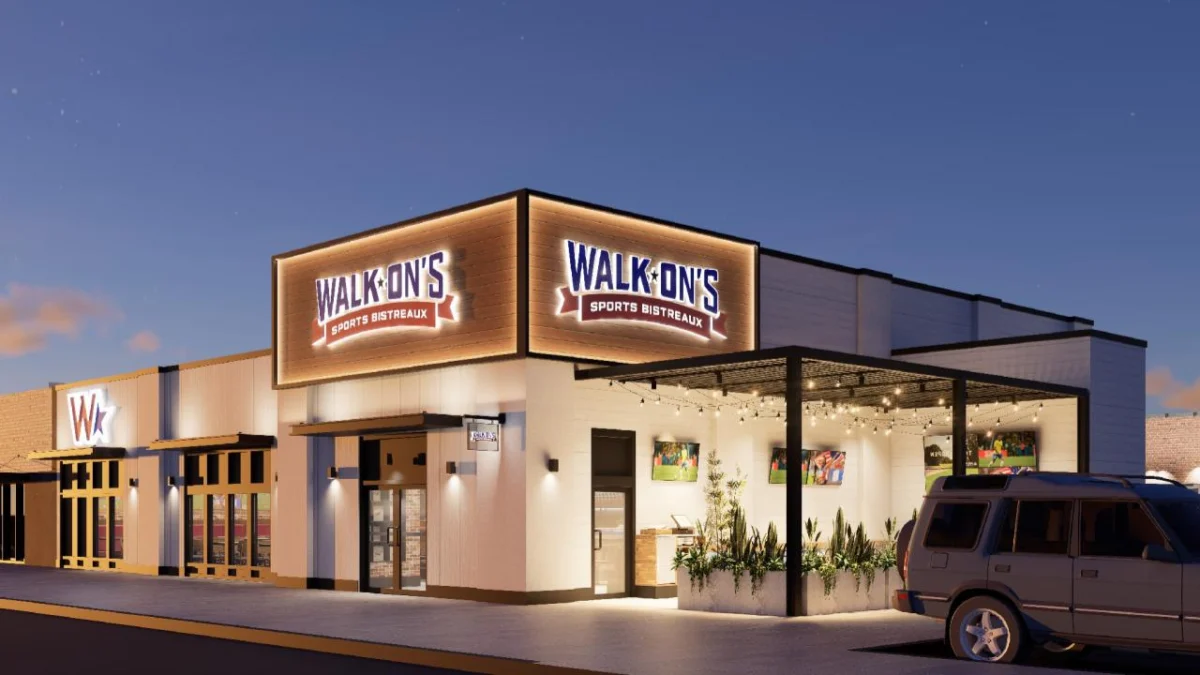
Walk-On’s Sports Bistreaux, a prominent name in the sports bar and casual dining sector, is charting a bold new course for growth by embracing a significantly scaled-down restaurant model. This strategic pivot, unveiled with the upcoming opening of a prototype location in Baton Rouge, Louisiana, next year, is designed to democratize franchise ownership and unlock expansion into a wider array of markets. By reducing the physical footprint and associated development costs, Walk-On’s aims to supercharge its growth trajectory and solidify its position as a leading destination for sports enthusiasts and diners alike.
The new prototype represents a dramatic reimagining of the Walk-On’s experience. Traditionally, the brand’s restaurants have spanned 7,000 to 8,000 square feet, requiring substantial capital investment. The revamped design halves this footprint, with new locations measuring between 3,500 and 4,500 square feet. This reduction is not merely cosmetic; it involves a fundamental redesign of operational efficiency. Fewer seats will accommodate a more intimate dining experience, while a streamlined kitchen layout and an intensified focus on takeout and delivery services are central to the new model. Crucially, this smaller footprint allows the prototype to fit into more diverse real estate opportunities, including in-line retail spaces and end-cap locations, which were often inaccessible to the larger, more traditional builds.
This strategic recalibration is directly addressing a key barrier to entry for potential franchisees. Brandon Landry, founder and chairman of Walk-On’s, articulated this rationale, noting that in the past, the significant development cost of a full-sized Walk-On’s was a deterrent for many. "In years past, people would peek under our hood and go, ‘Oh, yeah, that’s probably a little bit too rich for our britches,’" Landry stated. The new prototype, with a targeted development cost of less than $2 million, is designed to be far more accessible. Landry highlighted the competitive landscape, remarking, "With the lower price tag, people are like, ‘Man, I can’t get in QSR for that.’" This positions Walk-On’s as an attractive investment opportunity, even when compared to quick-service restaurant concepts that typically have lower build-out costs.
Despite the significant reduction in size, the core identity of Walk-On’s remains intact. The prototype is engineered to retain the brand’s signature elements that have cultivated its loyal customer base. Patrons can expect the same vibrant atmosphere, characterized by an abundance of televisions broadcasting live sports, a central, engaging bar area, and the celebrated made-from-scratch menu that has become a hallmark of the Walk-On’s dining experience. The commitment to quality and the lively sports-centric ambiance are non-negotiable aspects of the brand’s appeal, and the new prototype is meticulously designed to deliver these elements effectively within a more compact setting.
The financial implications of the smaller footprint are carefully considered. While the larger, existing Walk-On’s locations typically generate annual revenues ranging from $4 million to $4.5 million, Landry emphasized that the prototype is designed to be "smarter" – achieving optimal results with fewer resources. This efficiency is driven by operational innovations, such as the integration of new Taylor clamshell grills. These advanced pieces of kitchen equipment have demonstrably improved cooking speed and efficiency without compromising the quality of the food.
The impact of these technological upgrades on operational costs and staff management is significant. Landry shared an anecdote from a franchisee who implemented the new grills, noting a reduction in kitchen staff from 12 to just seven or eight on a busy Friday night. This optimization was achieved while simultaneously improving ticket times and maintaining, if not enhancing, food quality and consistency. "For a franchisee, it was a no-brainer for them," Landry commented, underscoring the tangible benefits for operators seeking to maximize profitability and operational fluidity.
The strategic emphasis on takeout and delivery is another critical component of the new prototype’s growth strategy. Currently, approximately 20% of the chain’s sales are generated from off-premises orders. The new design is explicitly geared to capitalize on this trend, incorporating features such as dedicated pickup cubbies to streamline the order fulfillment process. This focus acknowledges the evolving dining habits of consumers and positions Walk-On’s to capture a larger share of the growing off-premises market.
Furthermore, the reduced seating capacity of 125 to 140 seats, compared to the 270 to 300 seats in larger restaurants, is expected to foster a more energetic and engaging atmosphere. Landry believes that a more concentrated number of patrons in a smaller space will naturally amplify the sense of energy and excitement. "People want energy," Landry stated. "It’s going to create energy most, if not all, of the time." This creates a more dynamic environment that is appealing to the target demographic seeking a lively sports bar experience.
The rollout of this innovative prototype is set to commence in Walk-On’s hometown of Baton Rouge, Louisiana, with the first company-operated location scheduled to open early next year. This choice of location signifies a homecoming for the brand and provides a crucial testing ground for the new model in a familiar market. Following this initial launch, Walk-On’s has a robust pipeline of franchisees ready to deploy the prototype across the nation. The company has reported significant interest from both established franchisees looking to expand their portfolios and new operators eager to enter the market with a more accessible investment. "They’re calling, man," Landry remarked, indicating strong market demand for the new concept.
The accessibility of the smaller footprint also opens doors to markets that were previously considered too small for a traditional Walk-On’s. This strategic advantage allows the brand to cast a wider net, tapping into a broader base of potential franchisees and customers. For example, a franchisee group operating in Mississippi is now exploring opportunities in the smaller town of Granada, an area that might not have been viable with the larger restaurant model. Landry emphasized this broader reach: "It shouldn’t have to just be cities that have a couple million people. But let’s make sure that we can be that community sports bar." This focus on community integration is a key differentiator, allowing Walk-On’s to establish itself as a local hub in a wider range of locales.
As of the latest reports, Walk-On’s operates nearly 80 locations. The brand anticipates opening just under 10 restaurants this year under its existing development model, with another nine to ten planned for 2027. The introduction of the prototype is expected to accelerate this pace significantly. Landry noted that the company has not set a specific target for its ultimate size but highlighted the efficiency of the new model. Smaller locations can be constructed much faster, with build-out times reduced to three to four months, a stark contrast to the year or more required for the larger restaurants. This accelerated development cycle will be crucial in achieving rapid expansion.
"If we do it right, we’ll grow right," Landry stated, emphasizing a commitment to controlled and sustainable growth. "We want to make sure that we don’t get over our skis and make sure that we can open them the right way." This cautious optimism underscores a strategic approach focused on maintaining brand integrity and operational excellence as the company enters a new phase of expansion.
The strategy of adapting restaurant formats to market dynamics is not unique to Walk-On’s. Many national chains have explored smaller footprints, drive-thru-only concepts, and hybrid models to optimize real estate costs, improve operational efficiency, and cater to evolving consumer preferences for convenience and accessibility. This trend has been particularly pronounced in the fast-casual and casual-dining sectors, where brands are seeking to balance the full-service experience with the economic realities of real estate and labor costs.
The implications of Walk-On’s prototype extend beyond its own growth. By demonstrating the viability of a smaller, more affordable sports bar model, the company may inspire other brands within the industry to re-evaluate their own expansion strategies. The success of this initiative could lead to increased competition in smaller markets and a broader diversification of dining options for consumers in these areas. Furthermore, the emphasis on operational efficiency through technology, such as advanced kitchen equipment, highlights a broader industry trend towards leveraging innovation to drive profitability and enhance the customer experience.
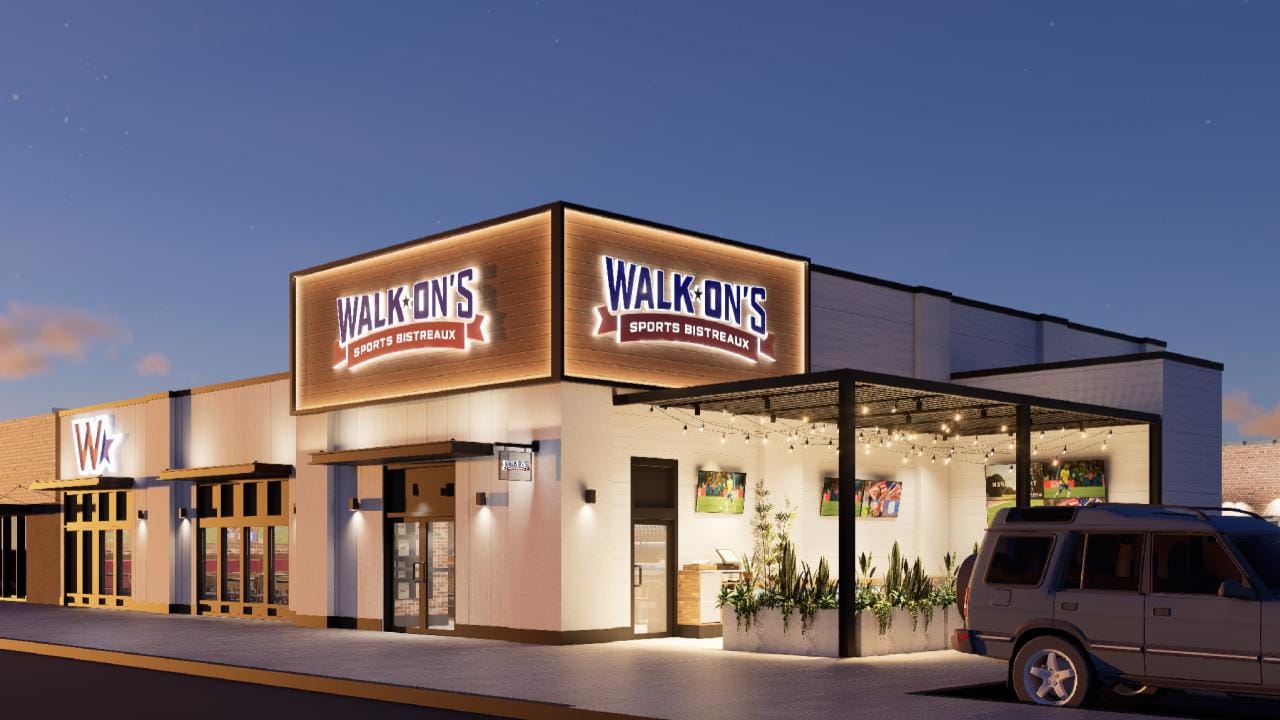
The first Walk-On’s with the new prototype will open in Baton Rouge next year. Photo courtesy of Walk-On’s Sports Bistreaux
The development of the Walk-On’s prototype can be traced back to an understanding of the macroeconomic pressures and evolving consumer behaviors that have reshaped the restaurant industry in recent years. Factors such as rising construction costs, increased competition for prime real estate, and the persistent demand for off-premises dining have necessitated adaptive strategies. Walk-On’s response, through its compact prototype, is a proactive measure designed to address these challenges head-on.
The brand’s origin story also provides context for its current strategic direction. Founded by Brandon Landry, a former walk-on quarterback for the LSU football team, Walk-On’s was conceived as a place that celebrated the spirit of perseverance and camaraderie. This ethos is deeply embedded in the brand’s culture and is reflected in its commitment to creating welcoming, high-energy environments. The new prototype, while smaller, is intended to retain this core essence, ensuring that the fan-favorite atmosphere and commitment to quality are not compromised.
The timeline for this strategic shift has been meticulously planned. While the exact date of the Baton Rouge opening is anticipated for early next year, the development and testing of the prototype have likely been ongoing for a considerable period. The subsequent rollout with numerous franchisees suggests a robust franchise support system is in place to guide new operators through the establishment of these smaller units. The projection of 9-10 openings in 2027 under the old model, coupled with the anticipated acceleration from the prototype, indicates a significant increase in the brand’s overall expansion rate in the coming years.
The financial implications for franchisees are substantial. A development cost of under $2 million represents a significant reduction compared to the investment required for an 8,000-square-foot restaurant, which could easily exceed $3 million or more, depending on location and build-out specifics. This lower entry barrier not only attracts more potential franchisees but also potentially reduces the financial risk for individual operators. Moreover, the improved operational efficiency, with a leaner kitchen staff and faster ticket times, directly translates to lower labor costs and higher profit margins, a critical consideration for any business owner.
The competitive landscape in the sports bar and casual dining segment is intense. Brands like Buffalo Wild Wings, Twin Peaks, and Hooters all vie for the attention of sports fans. Walk-On’s differentiation lies in its Louisiana roots, its commitment to a scratch-made menu, and its strong community focus. The new prototype allows the brand to amplify these strengths by expanding its reach and becoming more accessible to a broader consumer base, while simultaneously maintaining the high standards that have defined its success to date.
Looking ahead, the success of the Walk-On’s prototype will likely be measured not only by the number of new locations opened but also by the financial performance and operational efficiency of these smaller units. If the prototype proves to be as effective as projected in terms of profitability and customer satisfaction, it could set a new standard for sports bar development and accelerate the brand’s journey towards becoming a dominant national player in the casual dining market. The strategic decision to "get smaller to go big" appears to be a well-calculated move that positions Walk-On’s for a future of dynamic and sustainable growth.
