

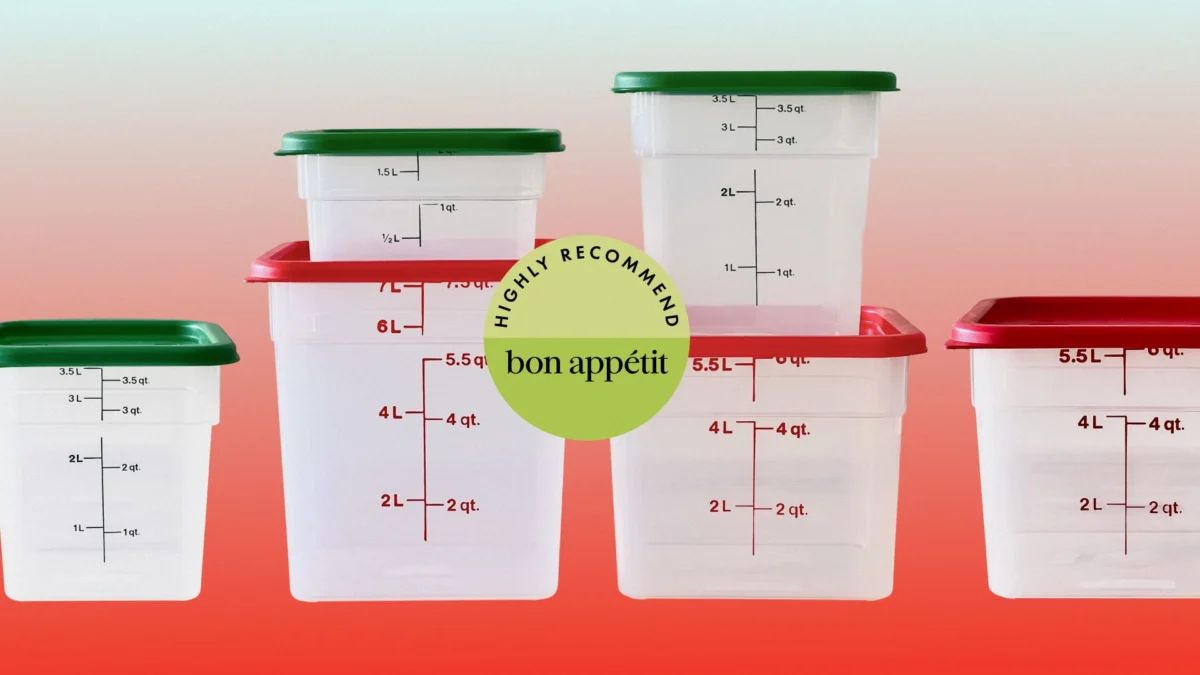
The distinctive clear, robust Cambro container, once an exclusive staple of bustling professional kitchens, has steadily transitioned into the domestic realm, fundamentally reshaping how home cooks approach food preparation, storage, and organization. These industrial-grade receptacles, revered for their durability and versatility within the culinary industry, are now increasingly recognized by home enthusiasts seeking to elevate their kitchen efficiency and food safety standards. Their journey from commercial workhorses to essential home kitchen tools reflects a broader trend of professional culinary practices influencing everyday cooking.
A Legacy of Efficiency: Cambro’s Role in Commercial Culinary Operations
For decades, Cambro containers have been an indispensable component of commercial food service. The initial encounter for many entering the professional culinary world often involves these containers, a testament to their ubiquity. Aspiring chefs and prep cooks quickly learn that these translucent, stackable vessels are foundational to the smooth operation of any restaurant, bakery, or catering facility. Their presence is so pervasive that they are often simply referred to as "Cambros," much like "Tupperware" has become a generic term for home food storage.
These containers, manufactured from high-grade polycarbonate or polypropylene, are available in a comprehensive range of sizes, typically from two to 22 quarts, though larger and smaller specialized versions exist. This spectrum of capacity ensures that every imaginable ingredient, from a handful of spices to large cuts of meat or vast quantities of dough, can be accommodated. In a professional setting, their applications are boundless: proofing artisanal bread doughs, brining substantial protein portions, meticulously organizing mise en place, or safely storing perishable ingredients to extend shelf life. The consistent use across various tasks underscores their adaptability and the critical role they play in maintaining kitchen flow and hygiene. The sheer efficiency and organizational logic they introduce are often cited by professionals as key reasons for their widespread adoption.
Engineering for Endurance: The Science Behind Cambro’s Durability
The transition of Cambro containers from professional to home kitchens is largely attributable to their exceptional engineering and material science. Primarily constructed from high-quality polycarbonate, these containers boast superior impact resistance, making them far more resilient than standard household plasticware. This material is designed to withstand the rigorous demands of a commercial kitchen, including frequent washing, stacking, and temperature fluctuations, without succumbing to cracks, chips, or warping. Their robust construction is a significant upgrade from the flimsy takeout containers or less durable home storage options that often degrade after repeated use or exposure to extreme temperatures.
Beyond physical resilience, Cambro containers meet stringent food safety standards, often certified by organizations like NSF International. This certification ensures that the materials are safe for food contact and that the containers are designed for easy cleaning, minimizing the risk of bacterial growth and cross-contamination. Key design features contribute to this safety and efficiency: exceptionally tight-fitting lids create an effective seal, crucial for preserving freshness and preventing spills, which is paramount in both professional and home environments. The containers are also engineered to be stain and odor-resistant, a significant advantage over many plastics that absorb food odors and colors over time, becoming unsightly and potentially unhygienic. Furthermore, their dishwasher-safe property simplifies cleanup, a vital consideration for busy kitchens. The integrated measurement markings on the side of many Cambro containers eliminate the need for additional measuring cups, streamlining prep processes and ensuring accurate portioning, a feature equally beneficial for precise recipe execution in the home.
Beyond the Bistro: The Home Cook’s Embrace of Professional Standards
The rising interest in serious home cooking, fueled by culinary media, baking trends like sourdough, and a general desire for greater self-sufficiency, has driven many home cooks to seek out tools that offer professional-grade performance. The Cambro container perfectly embodies this shift. What was once a specialized piece of equipment is now becoming a staple for discerning home chefs who prioritize organization, food quality, and efficiency.
For the home kitchen, Cambros offer multifaceted utility. Smaller half-quart and quart sizes are ideal for neatly storing prepped vegetables, herbs, or small batches of leftovers, bringing a new level of order to the refrigerator. Larger bins, such as two- or four-quart options, are excellent for bulk storage of dry goods like grains, pasta, flour, or coffee, allowing home cooks to take advantage of cost savings from purchasing in larger quantities. The durability of the polycarbonate ensures these valuable ingredients remain fresh and protected from pests or moisture, a significant improvement over flimsy bags or less secure containers. For those engaged in ambitious cooking projects, such as making large batches of cold brew coffee or brewing kombucha, the six-quart and larger containers offer the perfect volume and reliability. This professional-grade organization not only enhances the aesthetic appeal of a pantry or refrigerator but also contributes directly to faster, more logical cooking processes.
Versatility in Action: Diverse Applications for Home and Commercial Use
The inherent versatility of Cambro containers is a primary driver of their widespread adoption. In commercial kitchens, they are the backbone of daily operations, supporting everything from the initial ingredient breakdown to the final dish assembly. This adaptability translates seamlessly to the home environment, offering solutions for a myriad of culinary tasks.
For liquid-based preparations, large Cambros are invaluable. They are perfectly suited for marinating sizable cuts of meat, ensuring even flavor distribution and easy rotation. Their robust construction and temperature resistance make them ideal for holding water baths for sous vide cooking, providing a stable and safe environment for precision cooking. Home cooks who regularly prepare large batches of chicken stock, vegetable broth, or iced tea find the larger containers indispensable for straining, cooling, and storing these liquids efficiently.
The burgeoning popularity of artisanal baking, particularly sourdough, has highlighted another key application: dough proofing. The clear sides and integrated measurement markings of Cambro containers allow bakers to accurately monitor the rise of their dough, a crucial aspect of successful bread making. This visual tracking, combined with the containers’ ability to maintain a consistent environment, makes them superior to many improvised proofing vessels.
Beyond daily meal preparation, Cambros are a boon for avid hosts and those who engage in large-scale event cooking. Whether preparing a significant volume of chili for a community gathering or a variety of salads for a party, the eight- and twelve-quart containers offer ample storage capacity, allowing for efficient batch cooking and refrigerated holding until the event. This capability enables hosts to spread out their preparation work, reducing stress on the day of the event and ensuring food safety.
Even for everyday refrigeration, Cambros enhance organization and extend food freshness. While home cooks may not manage walk-in refrigerators filled with dozens of onions, the principles of organized storage apply. Medium-sized containers can be used to keep washed vegetables separate, store pre-portioned ingredients for meal prepping, or maintain the freshness of delicate produce like lettuce and citrus for longer periods. This structured approach to refrigeration not only minimizes food waste but also makes ingredient retrieval faster and cooking more enjoyable.
The Economic and Environmental Case for Investment
Investing in Cambro containers, despite a higher initial cost compared to disposable or less durable options, presents compelling economic and environmental benefits over the long term. Their exceptional durability means they rarely need replacing, offering a superior cost-per-use value. Unlike many cheaper plastics that crack, warp, or stain, Cambros are designed to endure years of heavy use, making them a sustainable choice.
Economically, the ability to store ingredients in bulk is a significant advantage. Home cooks can purchase larger quantities of staples like coffee, rice, flour, or seasonal produce when prices are favorable, realizing substantial savings over time. Effective storage prevents spoilage, which directly translates to reduced food waste—a critical factor in household budgeting and a growing concern for sustainability. By keeping ingredients fresher for longer, Cambros help maximize the value of every grocery purchase.
Environmentally, the shift from single-use plastics (such as disposable takeout containers or plastic bags) to reusable, long-lasting Cambro containers contributes to a reduction in plastic waste. This aligns with broader consumer trends towards more sustainable kitchen practices and a decreased reliance on disposable items. A well-organized kitchen equipped with durable, reusable storage solutions is inherently more eco-conscious.
Industry Perspective and Food Safety Implications
While direct "statements" from specific industry figures are not typically gathered for such product reviews, the widespread adoption of Cambro containers across the professional culinary landscape serves as a de facto endorsement. Industry professionals consistently value these containers for their contribution to operational consistency, adherence to stringent food safety regulations, and enhancement of overall kitchen workflow.
From a food safety standpoint, Cambros are integral to Hazard Analysis and Critical Control Points (HACCP) compliance. Their clear construction allows for easy visual inspection of contents, while tight-fitting lids prevent airborne contaminants and cross-contamination. The ability to stack them efficiently, combined with material properties that withstand commercial dishwashers, ensures proper sanitation. Furthermore, the standardized sizing facilitates portion control and inventory management, critical elements in minimizing waste and ensuring product freshness, both paramount in preventing foodborne illnesses. Culinary schools and food safety organizations implicitly endorse the characteristics of such equipment by integrating best practices for food storage and handling into their curricula, which Cambro containers are designed to meet.
The Future of Kitchen Storage: Professionalism Meets Domesticity
The trajectory of Cambro containers from indispensable professional tools to coveted home kitchen essentials is indicative of a broader cultural shift. As home cooking continues to evolve, driven by a desire for improved technique, healthier eating, and greater efficiency, the demand for professional-grade equipment will likely grow. The Cambro container stands as a prime example of how industrial innovation can democratize culinary excellence, empowering home cooks to achieve results previously reserved for restaurant professionals.
This trend is not merely about owning specific products; it reflects a deeper integration of professional methodologies into domestic life. It influences kitchen design, where efficient and accessible storage solutions are becoming more prioritized. The Cambro container, in its simplicity and effectiveness, symbolizes this evolving modern kitchen – a space where robust functionality, uncompromising food safety, and intelligent organization converge to elevate the everyday act of cooking. The distinction between professional and home kitchens, once stark, continues to blur, with products like Cambro leading the charge in bringing restaurant-level precision and efficiency into every household.
