

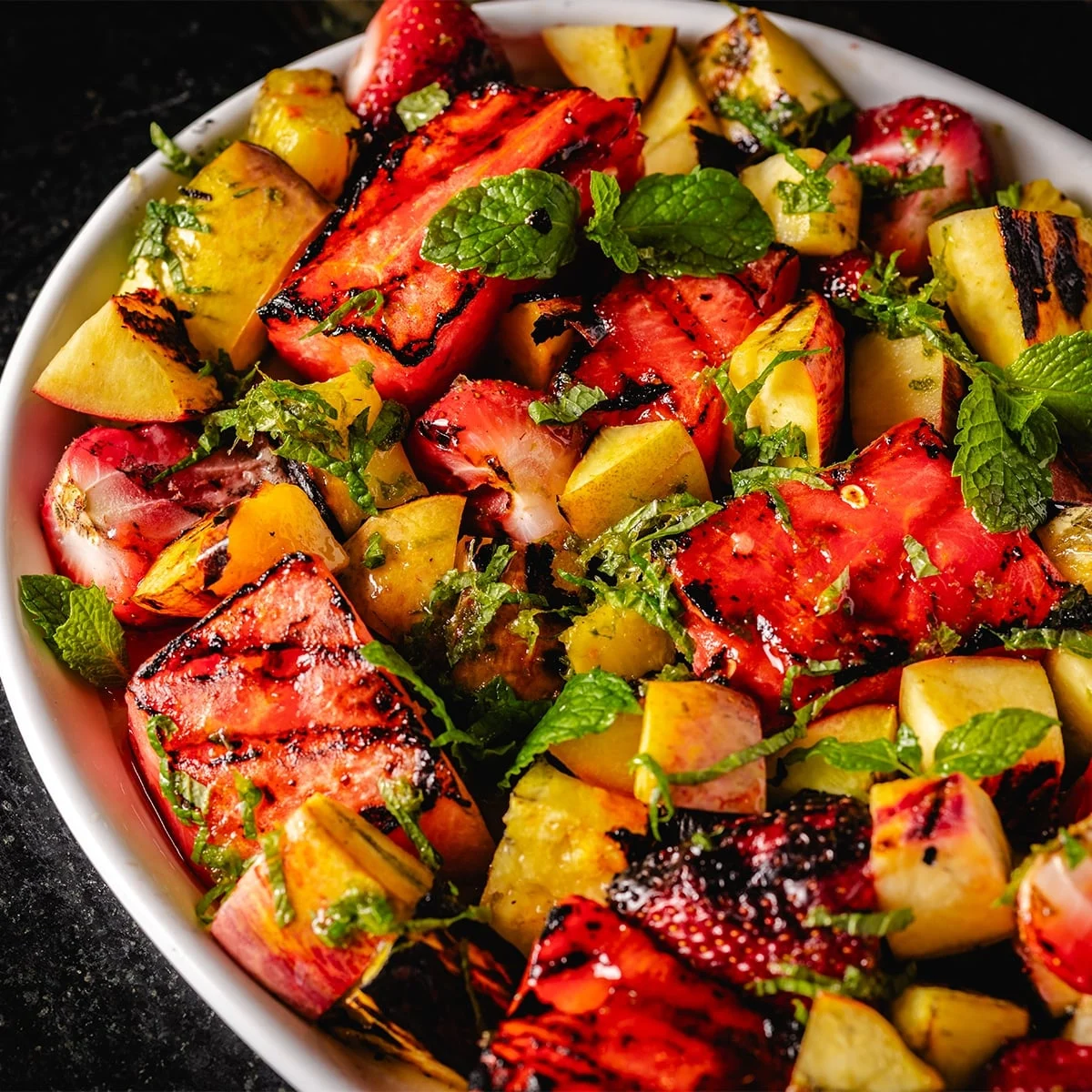
The landscape of modern outdoor dining is currently undergoing a significant shift as culinary enthusiasts and professional chefs alike move beyond traditional meat-centric menus to embrace the sophisticated potential of charred produce. Central to this movement is the Grilled Fruit Salad, a dish that utilizes a medley of seasonal stone fruits, tropical varieties, and berries to redefine the role of side dishes in the American barbecue tradition. By subjecting fresh peaches, pineapple, strawberries, and watermelon to direct heat, cooks are able to transform familiar flavors into complex, smoky, and deeply sweet components that bridge the gap between savory main courses and refreshing appetizers. This culinary technique, which takes approximately 30 minutes from preparation to service, represents a growing trend in "plant-forward" grilling, where the natural sugars of the fruit are leveraged through the Maillard reaction to create a unique gastronomic experience.
The Science of Fruit Caramelization and the Maillard Reaction
The primary appeal of the Grilled Fruit Salad lies in the chemical transformation that occurs when fruit meets a high-heat surface. Unlike raw fruit salads, which rely on crisp textures and acidic brightness, the grilled version utilizes thermal energy to alter the fruit’s molecular structure. Most fruits are rich in fructose and sucrose; when exposed to temperatures exceeding 320°F (160°C), these sugars undergo caramelization. This process involves the oxidation of sugar, resulting in the release of volatile chemicals that produce a nutty, toasted flavor and a deep brown color.

Simultaneously, the Maillard reaction—a chemical reaction between amino acids and reducing sugars—adds a layer of savory complexity that is rarely associated with fruit. In watermelon, for instance, the high water content typically dictates a crunchy, refreshing mouthfeel. However, when grilled, the exterior surface dehydrates slightly, concentrating the sugars and creating a "steak-like" texture that is increasingly popular in modern vegan and vegetarian cooking. This dual process of caramelization and the Maillard reaction ensures that the fruit salad provides a smoky depth that complements the charred profiles of traditional barbecue meats such as brisket, ribs, and pulled pork.
Botanical Profiles and Ingredient Selection
The efficacy of a grilled fruit salad depends heavily on the selection of produce that can withstand direct heat without losing structural integrity. The standard assembly for this contemporary side dish includes a strategic mix of four primary fruits, each contributing a specific texture and flavor profile.
Peaches serve as the cornerstone of the late-summer flavor palette. As stone fruits, they possess a dense flesh that softens under heat while maintaining enough firmness to be flipped on the grill grates. Their natural acidity is tempered by the heat, bringing their floral notes to the forefront. Pineapple, a tropical staple, is perhaps the most resilient to grilling. Its high fiber content and robust sugar levels make it ideal for creating distinct grill marks, which serve both an aesthetic and a flavor-enhancing purpose.

Watermelon and strawberries represent more delicate additions to the grill. Watermelon, consisting of approximately 92% water, requires a brief, high-heat "kiss" of the flame to char the surface without turning the interior to mush. Strawberries, when grilled, release their juices and take on a jam-like consistency that acts as a natural glaze for the other components. Culinary experts suggest that while these four fruits are standard, the recipe is adaptable to other seasonal varieties such as honeydew, cantaloupe, and mango, provided they are sliced into large enough segments to avoid falling through the grill grates.
The Role of Herbaceous Balancing: Lime and Mint Dressing
To prevent the grilled fruit from becoming overly sweet or veering into dessert territory, the dish requires an acidic and herbaceous counterpoint. This is achieved through a three-ingredient dressing consisting of honey, lime juice, and fresh mint. The lime juice provides the necessary citric acid to cut through the richness of the caramelized sugars, acting as a palate cleanser. Honey serves as a binding agent, ensuring the dressing adheres to the grilled surfaces, while also adding a floral sweetness that bridges the gap between the charred fruit and the fresh herbs.
Fresh mint is the final, crucial component. Botanically known for its cooling properties due to the presence of menthol, mint provides a sensory contrast to the warmth of the grilled fruit. This combination of heat and "cool" flavor creates a multi-dimensional eating experience. The dressing is typically applied after the fruit has been removed from the heat, ensuring that the volatile oils in the mint are not destroyed by high temperatures and that the lime juice retains its bright, zesty profile.

Procedural Chronology: From Prep to Plating
The assembly of a professional-grade Grilled Fruit Salad follows a strict timeline to ensure optimal texture and temperature. The process begins with the preparation of the grill, which must be cleaned and oiled to prevent the delicate fruit skins from sticking. A medium-high heat setting is generally recommended to achieve rapid charring without overcooking the fruit’s core.
- Preparation (Minutes 0–15): The fruit is sliced into large, uniform chunks or wedges. This uniformity is essential for even cooking. During this phase, the dressing is whisked together, allowing the mint to infuse into the honey and lime mixture.
- The Grilling Phase (Minutes 15–25): The fruit is placed directly onto the grates. Pineapple and peaches are typically grilled first due to their density, requiring 3–4 minutes per side. Watermelon and strawberries follow, requiring only 1–2 minutes of contact with the heat.
- Resting and Slicing (Minutes 25–28): Once removed from the grill, the fruit is allowed to rest briefly. This prevents the loss of internal juices. If necessary, the larger grilled wedges are sliced into bite-sized pieces for easier consumption.
- Integration and Service (Minutes 28–30): The warm fruit is tossed in a large bowl with the lime and mint dressing. Immediate service is recommended to maintain the contrast between the warm fruit and the cold, refreshing dressing.
Nutritional Analysis and Health Implications
From a nutritional perspective, the Grilled Fruit Salad offers a nutrient-dense alternative to traditional barbecue sides like potato salad or coleslaw, which are often high in saturated fats and mayonnaise-based binders. According to standardized nutritional data, a single serving of this fruit salad (approximately one-eighth of a standard recipe) contains roughly 80 calories.
The macronutrient profile is dominated by carbohydrates (21g), with a significant portion coming from dietary fiber (3g) and natural sugars (15g). The dish is virtually fat-free (0.4g) and provides a substantial dose of essential vitamins. Specifically, the inclusion of strawberries and lime juice contributes to a high Vitamin C content (63mg), while the watermelon and peaches provide Vitamin A (434 IU) and potassium (247mg). These antioxidants are vital for combating oxidative stress, which can be particularly beneficial during outdoor summer activities. Furthermore, the high water content of the fruit aids in hydration, a critical factor in heat-intensive environments.

Culinary Expert Perspectives and Market Trends
Susie Bulloch, a prominent culinary developer and founder of the BBQ-centric platform "Hey Grill Hey," has been a vocal advocate for the integration of fruit into the grilling repertoire. Bulloch emphasizes that the Grilled Fruit Salad is designed to complement "rich BBQ meats" and "heavy breakfast foods," providing a necessary acid-trip to balance the palate. Her approach reflects a broader industry trend where barbecue is no longer defined solely by meat, but by the technique of live-fire cooking applied to all food groups.
The rise of such recipes coincides with a 15% increase in "plant-forward" outdoor cooking mentions in culinary media over the last three years. Consumers are increasingly seeking ways to incorporate fresh, seasonal produce into their social gatherings without sacrificing the smoky flavors associated with traditional grilling. This shift has also impacted the retail sector, with grocery chains reporting higher demand for "grill-ready" fruit packs during the peak summer months of July and August.
Broader Impact and Gastronomic Implications
The Grilled Fruit Salad represents more than just a seasonal recipe; it is an evolution of the American cookout. By applying sophisticated heat-management techniques to produce, home cooks are elevating the status of the side dish to a level of complexity previously reserved for the main course. The implications for the culinary industry are twofold: first, it encourages a more sustainable, produce-heavy approach to outdoor dining, and second, it challenges the traditional boundaries between sweet and savory flavor profiles.

As the "Backyard BBQ Hero" culture continues to grow, fueled by digital platforms and social media tutorials, the Grilled Fruit Salad stands as a testament to the versatility of the grill. It proves that with 30 minutes and a basic understanding of caramelization, the humble fruit bowl can be transformed into a centerpiece of summer gastronomy. The combination of charred sweetness, citrus acidity, and herbaceous freshness ensures that this dish will remain a staple of the modern culinary landscape for years to come.
