

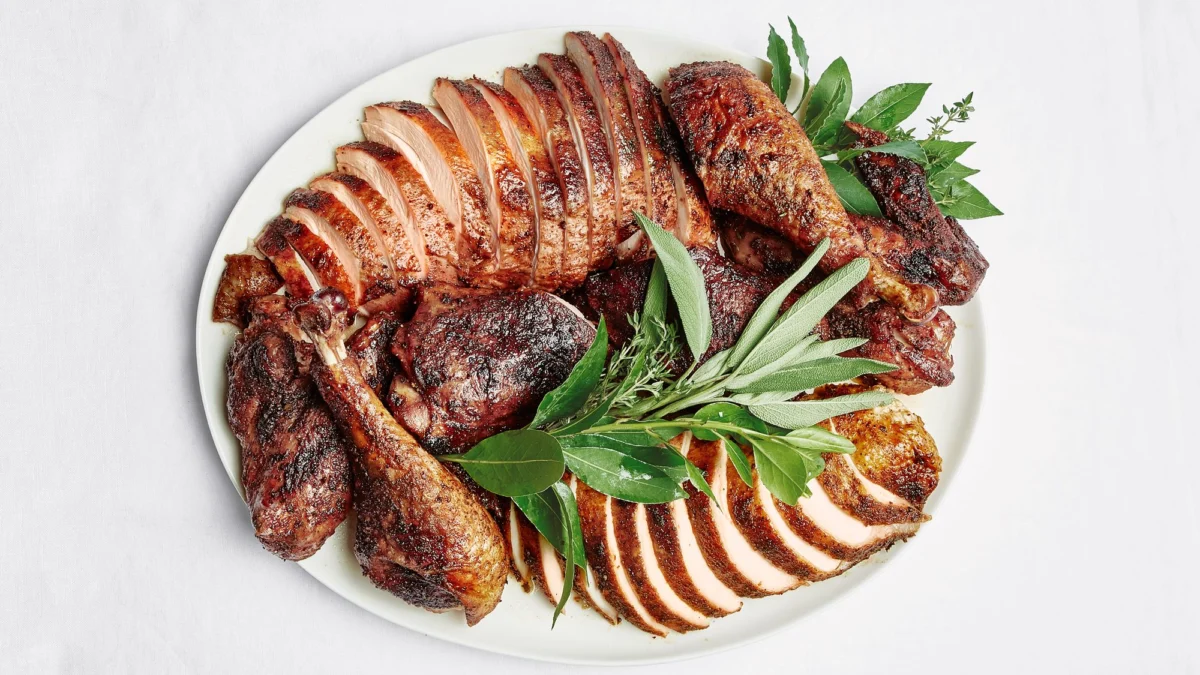
For generations, the roast turkey has stood as the undisputed centerpiece of holiday feasts, a symbol of abundance and culinary tradition. Yet, for just as many generations, it has also been a source of culinary apprehension, with home cooks and professional chefs alike grappling with the inherent challenges of roasting an entire bird to perfection. The quest for a turkey that boasts succulent breast meat, tender dark meat, and deeply burnished, flavorful skin simultaneously has often felt like an elusive ideal. Addressing this long-standing culinary dilemma, Bon Appétit, a leading authority in food media, has unveiled a meticulously developed method championed by culinary figures Andy Baraghani and Brad Leone that promises to redefine the art of turkey roasting. Their innovative approach centers on deconstructing the bird into five distinct pieces—two wings, two legs (with thighs attached), and one whole breast—a strategic fragmentation designed to offer unprecedented control over the cooking process and ensure optimal doneness across all parts.
The Enduring Challenge of Whole-Bird Roasting
The traditional method of roasting a whole turkey presents a fundamental gastronomic paradox. White meat, particularly the breast, is lean and cooks relatively quickly, reaching its ideal temperature (typically 165°F or 74°C) before the fattier, more connective-tissue-rich dark meat (legs and thighs), which benefits from longer cooking times and often higher internal temperatures (up to 175-180°F or 79-82°C) to become truly tender. This discrepancy often leads to a disappointing compromise: a perfectly cooked dark meat section achieved at the expense of an overcooked, dry, and fibrous breast, or vice versa. Attempts to mitigate this issue—such as basting, covering the breast with foil, or rotating the bird—have offered limited success, often adding complexity without consistently delivering the desired outcome of uniform perfection. Culinary history is replete with anecdotes of stressed holiday cooks and less-than-stellar turkey experiences, underscoring the need for a more reliable methodology.
Bon Appétit’s Deconstructed Solution: A Precision Approach
The Bon Appétit method directly confronts the core challenge of differential cooking rates by advocating for the butchering of the turkey into its primary components. By separating the bird into two wings, two leg-thigh quarters, and a single, whole breast, each piece can be monitored and cooked to its specific ideal temperature and texture. This precise control eliminates the guesswork inherent in whole-bird roasting, allowing for the dark meat to achieve its desirable tenderness while safeguarding the breast from becoming desiccated.
The rationale behind this fragmentation is rooted in culinary thermodynamics. Each section, when separated, has a more uniform thickness and surface area, allowing for more even heat penetration. Furthermore, the varying fat content and muscle structure of white versus dark meat dictate different cooking requirements. By isolating these parts, cooks can pull the breast from the oven as soon as it reaches 165°F, while allowing the legs and thighs to continue roasting until they are fork-tender, ensuring maximum juiciness and flavor throughout the entire meal. This shift from a holistic, often problematic, cooking strategy to a modular, controlled approach represents a significant advancement in home cooking techniques for poultry.
A Symphony of Flavor: The Dry Brine and Glaze
Beyond the structural innovation, the Bon Appétit recipe places a strong emphasis on a multi-layered flavor profile, moving beyond simple salt and pepper. The process begins with a robust dry brine, applied 24 to 48 hours before roasting. This crucial pre-treatment consists of a carefully balanced blend of seasonings: pungent garlic powder, aromatic onion powder, and smoky paprika, all combined with salt and pepper.
The science behind dry brining is multifaceted and critical to the turkey’s final quality. Salt, the primary agent in any brine, works through osmosis to draw moisture out of the turkey’s cells. However, over time, the salt solution then re-enters the meat, carrying with it the dissolved spices and seasoning, thereby flavoring the turkey from within. More importantly, salt denatures the proteins in the muscle fibers, causing them to unravel. When cooked, these denatured proteins coagulate and trap moisture more effectively, leading to a significantly juicier final product. Unlike wet brining, dry brining also crisps the skin more effectively, as there is no excess surface moisture to evaporate. The inclusion of garlic and onion powders infuses the meat with foundational savory notes, while smoked paprika adds a subtle depth and a hint of warmth, creating a complex base flavor that permeates every bite.
Following the brining, the turkey pieces are treated to a dynamic glaze, applied during the roasting process. This savory-tangy concoction is a masterful blend of umami-rich soy sauce, bright vinegar, balancing brown sugar, fragrant orange zest, and a selection of fresh herbs. As the glaze is brushed onto the turkey pieces at intervals throughout roasting, it undergoes a transformative process. The sugars in the glaze caramelize, contributing to a deeply burnished, glossy finish, while the soy sauce and vinegar create a savory depth and a subtle tang. The orange zest adds a bright, aromatic counterpoint, preventing the glaze from becoming overly heavy, and the herbs contribute fresh, earthy undertones. This layered application not only enhances the visual appeal of the turkey but also builds a complex, irresistible crust, ensuring that every piece is not just perfectly cooked but also bursting with flavor.
Optimized Cooking Environment: The Wire Rack Advantage
Another critical element of the Bon Appétit method is the recommendation to roast the turkey pieces on a wire rack set inside a baking sheet. This seemingly minor detail has a profound impact on the cooking outcome. By elevating the turkey pieces, the wire rack allows for unimpeded air circulation around all surfaces of the meat. This ensures more even heat distribution, preventing the bottom of the turkey from steaming and promoting consistent browning and crisping of the skin on all sides. The direct exposure to radiant heat from the oven, unblocked by a solid pan surface, facilitates the Maillard reaction—the complex chemical process responsible for the delectable browning and flavor development in cooked foods. The baking sheet below catches any drippings, which, as the recipe notes, can be used for gravy, albeit with careful tasting due to the intensity of the brine and glaze.
Practical Implementation for the Home Cook: From Butcher to Table
Recognizing that the prospect of disassembling a raw turkey can be daunting for some home cooks, the Bon Appétit recipe thoughtfully provides practical solutions. For those who prefer to avoid the "surgery," the article suggests enlisting the help of a butcher. A simple request for a 12-14 lb. turkey, cut into five pieces—specifically, two wings, two leg-thigh quarters (with thighs attached to drumsticks), a whole breast, and the backbone removed—is all that’s needed. The lighthearted suggestion to inform the butcher that one is attempting "that ridiculous Bon Appétit recipe" injects a touch of humor and acknowledges the method’s growing notoriety. For the more adventurous or those without access to a butcher, the article provides a link to a comprehensive guide on breaking down a whole turkey, empowering cooks to undertake the task themselves. This accessibility ensures that the innovative method is within reach for a wide range of culinary skill levels.
Addressing Common Queries and Enhancing the Gravy Experience
The recipe anticipates several common questions from home cooks, integrating practical advice that enhances the overall experience:
- Pre-Brined Turkeys: A crucial warning is issued against using pre-brined or "self-basting" turkeys, which are often treated with a salt solution. Adding the recipe’s dry brine on top of an already treated bird would result in an unpleasantly salty product. This highlights the importance of checking packaging labels for terms like "enhanced" or "contains a solution."
- Rinsing the Brine: Cooks are advised not to rinse off the dry brine before roasting. The seasoning is meant to stay on the turkey, and any rub-off is inconsequential. More importantly, rinsing raw poultry is discouraged due to the risk of spreading bacteria around the kitchen, a critical food safety guideline often overlooked.
- Gravy from Drippings: While the pan drippings are indeed rich in flavor, the recipe cautions that they can be intensely salty and complex due to the dry brine and soy-based glaze. Cooks are encouraged to taste the drippings before incorporating them into gravy and to add salt sparingly. For a simpler alternative, a link to a make-ahead gravy recipe is provided, offering flexibility and reducing last-minute stress. This comprehensive guidance ensures cooks can navigate the nuances of the recipe with confidence.
The Broader Implications: Redefining Holiday Culinary Traditions
The Bon Appétit deconstructed turkey method is more than just a recipe; it represents a significant shift in culinary philosophy, particularly concerning traditional holiday meals. It challenges the long-held notion that a whole, untouched bird is the only acceptable centerpiece, instead prioritizing optimal flavor and texture. This innovation empowers home cooks, alleviating the pervasive stress associated with preparing a perfect holiday turkey. By offering a reliable path to a consistently juicy and flavorful result, it transforms what was once a daunting task into an enjoyable and successful culinary endeavor.
From a broader perspective, this method reflects a growing trend in modern cooking: a move towards scientific precision, ingredient-driven flavor, and practical solutions that enhance the home cooking experience. Publications like Bon Appétit play a crucial role in disseminating such innovations, making complex culinary techniques accessible and inspiring a new generation of cooks to experiment and refine their skills. As culinary preferences evolve and home cooks seek both convenience and quality, methods like this are likely to gain further traction, potentially reshaping how future generations approach holiday turkey preparation. The "ridiculous Bon Appétit recipe" might just become the new standard, proving that sometimes, breaking things down is the best way to build something truly exceptional.
