

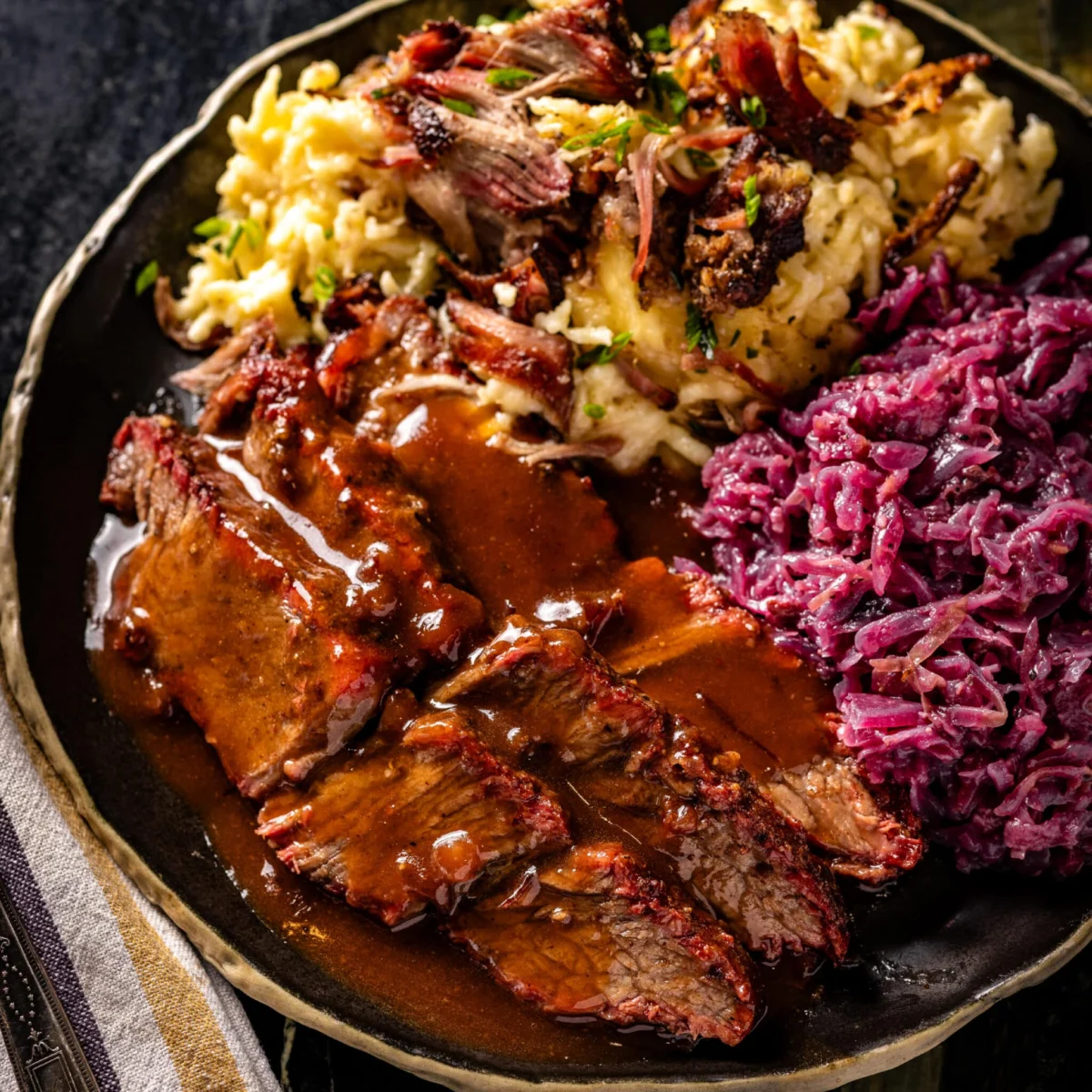
The culinary landscape of contemporary American barbecue is increasingly defined by the integration of international heritage dishes with low-and-slow wood-fire cooking techniques. A prominent example of this synthesis is the Smoked Sauerbraten, a dish that adapts the German national pot roast for the pellet grill and offset smoker. By combining a multi-day acidic marinade with the chemical complexities of hardwood smoke, this preparation offers a significant evolution of a dish that has remained a staple of Central European cuisine for centuries. The process, championed by culinary experts such as Susie Bulloch of Hey Grill Hey and Sophie Sadler of Dirndl Kitchen, represents a growing trend in "fusion BBQ," where the goal is to enhance traditional textures through modern temperature control and smoke application.
The Historical and Cultural Context of Sauerbraten
To understand the significance of the smoked variant, one must first examine the origins of Sauerbraten. Historically regarded as one of Germany’s national dishes, Sauerbraten—which translates literally to "sour roast"—was born out of necessity. Before the advent of modern refrigeration, meat was preserved in a marinade of vinegar, wine, and aromatic spices. While legend frequently attributes the dish’s creation to Julius Caesar or Charlemagne, its practical roots lie in the tenderization of tougher cuts of meat, traditionally including horse meat in regions like the Rhineland, though modern iterations almost exclusively utilize beef.

The transition of this dish from a stovetop braise to a smokehouse specialty reflects the broader migration of German culinary traditions to the United States. In the mid-19th century, German immigrants settled heavily in the Midwest and Texas, bringing with them techniques for curing, smoking, and pickling. The Smoked Sauerbraten is a modern bookend to this cultural exchange, utilizing the high-acid profile of the German marinade to complement the alkaline nature of wood smoke.
The Technical Chronology of Preparation
The preparation of Smoked Sauerbraten is a multi-stage process that requires a rigorous timeline, often spanning several days to achieve the desired flavor penetration and enzymatic breakdown of the muscle fibers.
Phase I: The Acidic Marination
The process begins with a marinade composed of red wine, red wine vinegar, and a bouquet of aromatics including onions, carrots, celery, bay leaves, and peppercorns. The primary function of this stage is twofold: flavor infusion and tenderization. The acetic acid in the vinegar and the tartaric acid in the wine work to denature the proteins in the beef roast—typically a chuck roast or eye of round—making it more receptive to smoke and eventual braising. Industry standards suggest a marination period of three to five days, during which the meat must be kept at a consistent internal temperature of 38°F (3.3°C) to ensure safety and optimal chemical reaction.

Phase II: The Smoking Process
Unlike traditional Sauerbraten, which moves directly from the marinade to a sear and a braise, the smoked version introduces a critical intermediary step. After being removed from the marinade and patted dry, the beef is seasoned with a high-salt, high-pepper rub. The roast is then placed in a smoker at a temperature of 225°F (107°C).
During this phase, the meat undergoes the Maillard reaction more intensely than it would in a liquid braise. The smoke particles—specifically phenols and carbonyls—adhere to the moist surface of the meat, creating a "smoke ring" and a complex crust known as bark. This stage typically lasts until the internal temperature of the beef reaches approximately 150°F to 160°F, a point where the meat has absorbed sufficient smoke flavor but remains firm enough for the subsequent braise.
Phase III: The Braising and Finishing
The final stage involves returning the meat to a liquid environment. The roast is placed in a high-walled pan with a portion of the original marinade and additional beef stock. It is covered tightly and returned to the heat until it reaches "probe tenderness," usually around 205°F (96°C). This dual-cook method—smoking for flavor and braising for texture—ensures that the final product possesses the fall-apart tenderness of a traditional pot roast with the added depth of a Texas-style brisket.

Scientific Analysis of Flavor Profiles
The unique appeal of Smoked Sauerbraten lies in the balance of four distinct flavor pillars: acidity, sweetness, salt, and smoke.
- Acidity: The vinegar-forward marinade provides a sharp counterpoint to the richness of the beef fat.
- Sweetness: Traditional recipes often incorporate gingersnaps or sugar into the gravy. This serves to neutralize excess acidity and provide a thick, velvety mouthfeel.
- Smoke: Hardwoods such as oak or hickory provide an earthy, bitter backbone that grounds the brighter notes of the wine and vinegar.
- Umami: The long braising process breaks down collagen into gelatin, which, when combined with the concentrated beef rub, creates a deep savory profile.
Nutritional Data and Dietary Implications
For institutional kitchens and health-conscious consumers, the nutritional profile of Smoked Sauerbraten is an essential consideration. Based on standardized serving sizes of approximately six ounces of cooked beef with gravy, the nutritional breakdown is as follows:
- Calories: 619 kcal
- Protein: 47g
- Total Fat: 28g (Saturated Fat: 12g)
- Carbohydrates: 29g
- Sodium: 4368mg
- Cholesterol: 156mg
- Potassium: 1257mg
The high sodium content is primarily a result of the long-term marination and the application of signature beef rubs, which often prioritize salt to facilitate the formation of the bark during the smoking phase. However, the dish is also a significant source of Iron (7mg) and Vitamin A (3549 IU), largely due to the inclusion of carrots and other aromatics in the braising liquid.

Industry Perspectives and Expert Recommendations
Susie Bulloch, a prominent figure in the barbecue industry and a regular contributor to the Food Network, emphasizes the importance of the "rest" period. "The meat needs time to reabsorb the juices after the braise," Bulloch notes in her technical guidance. This sentiment is echoed by many in the professional BBQ circuit, who argue that the transition from a 205°F braise to a carving board can result in significant moisture loss if not managed with a 30-to-60-minute resting window.
Furthermore, Sophie Sadler of Dirndl Kitchen highlights the necessity of the gravy. In the German tradition, the braising liquid is not merely a byproduct but the centerpiece of the meal. By straining the solids and thickening the liquid with crushed gingersnaps, the cook creates a sauce that is uniquely German—balancing the spicy notes of ginger and cloves with the savory drippings of the smoked beef.
Broader Impact on the Culinary Market
The rise of recipes like Smoked Sauerbraten signals a shift in consumer behavior within the outdoor cooking market. As pellet grills and high-tech smokers become more accessible, the "weekend warrior" cook is looking beyond standard ribs and briskets. There is a documented increase in interest for "project recipes"—dishes that require multiple days of preparation and yield a high-complexity result.

This trend has significant implications for the retail sector. Specialty spice blends, high-quality wine vinegars, and specific cuts of beef like the chuck roast have seen a corollary rise in demand. Moreover, the popularity of these dishes during traditional festivals such as Oktoberfest provides a seasonal boost to the meat industry, as consumers look to recreate the "Biergarten" experience in a domestic setting.
Conclusion
Smoked Sauerbraten is more than a mere variation of a classic recipe; it is a technical achievement that respects the chemistry of traditional preservation while embracing the flavor enhancements of modern barbecue. By adhering to a strict chronology of marinating, smoking, and braising, cooks can produce a dish that bridges the gap between the Old World and the New. As the barbecue industry continues to evolve, the integration of such culturally rich and technically demanding dishes will likely remain a cornerstone of culinary innovation, offering a sophisticated alternative to standard smokehouse fare. Through the efforts of experts like Susie Bulloch and the continued interest of the global BBQ community, the Smoked Sauerbraten has secured its place as a premier example of functional fusion in the modern kitchen.
