

The publishing landscape of 2022 was defined by a profound shift toward narratives of resilience, historical reclamation, and the intersection of science and human emotion. Following two years of pandemic-related disruptions, the literary market saw a resurgence in both traditional print sales and the emergence of "trauma-informed" literature. This analysis examines the most significant contributions to the 2022 canon, ranging from culinary explorations of global traditions to scientific inquiries into the sensory worlds of animals and the psychological frameworks of human belief.
The Evolution of the 2022 Publishing Market
According to data from NPD BookScan, while total print book sales in 2022 saw a slight decline of approximately 6.5% compared to the record-breaking heights of 2021, the market remained significantly higher than 2019 pre-pandemic levels. A notable trend within this data was the sustained interest in "Adult Non-Fiction," particularly in categories related to cooking and personal development. This period was characterized by a move away from "distraction reading" toward "instructional and empathetic reading," as audiences sought to understand the complexities of a changing world.
The chronological release of major titles in 2022 followed a strategic pattern, with high-concept science and narrative histories dominating the spring and summer quarters, followed by a surge in "gift-worthy" culinary and illustrated editions during the fourth-quarter holiday season.

Culinary Arts: Preservation of Tradition and Regional Identity
The culinary literature of 2022 moved beyond simple recipe collections, functioning instead as ethnographic studies of culture and chemistry. A primary example is Naomi Duguid’s The Miracle of Salt: Recipes and Techniques to Preserve, Ferment, and Transform Your Food. Duguid, an award-winning author known for her deep-dive explorations of regional cuisines, focuses on salt not merely as a seasoning but as a fundamental pillar of human civilization. The work details global techniques for fermentation—such as miso and sauerkraut—and brining, illustrating how salt has served as a bridge between survival and culinary artistry across continents.
Simultaneously, the year saw a necessary expansion in the representation of South Asian cuisines. Cynthia Shanmugalingam’s Rambutan: Recipes from Sri Lanka and Romy Gill’s On the Himalayan Trail: Recipes and Stories from Kashmir to Ladakh provided critical exposure to regions often overshadowed by broader Indian culinary narratives. Gill’s work, in particular, serves as a preservation effort for the cultures of Kashmir and Ladakh, regions where political instability threatens the continuity of oral and culinary traditions. Industry analysts note that the success of these titles reflects a growing consumer demand for "authentic" and "hyper-local" narratives that provide historical context alongside gastronomic instruction.
Fiction: Historical Reckoning and the Female Perspective
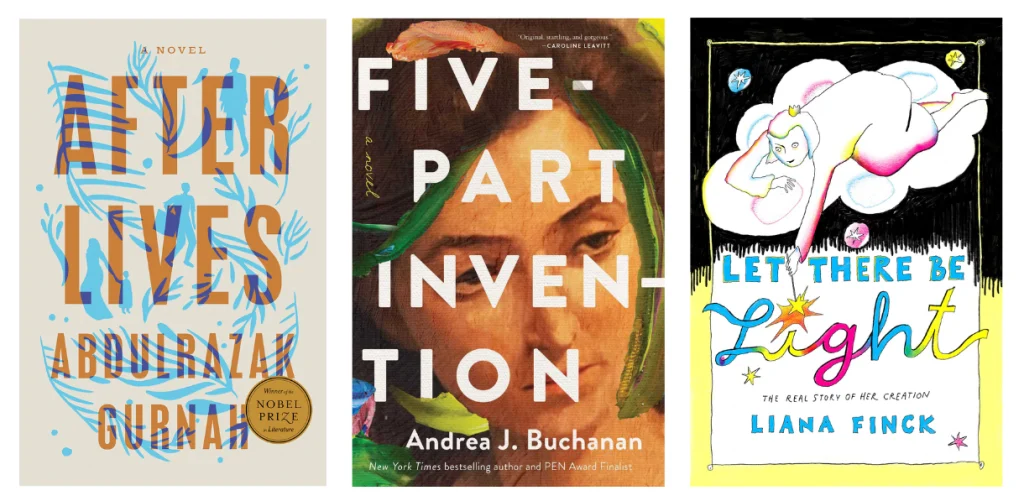
In the realm of fiction, 2022 was marked by the North American release of Abdulrazak Gurnah’s Afterlives. Following Gurnah’s 2021 Nobel Prize in Literature, the 2022 paperback release brought his exploration of German colonial rule in East Africa to a wider audience. The novel tracks the intergenerational impact of colonization in what is now Tanzania, focusing on the displacement of individuals and the lingering trauma of forced military service.
The year also saw a bold reimagining of foundational myths. Liana Finck’s Let There Be Light: The Real Story of Her Creation utilized the graphic novel format to retell the Book of Genesis through a feminist and irreverent lens. By depicting God as a female figure and placing biblical patriarchs in modern urban settings like New York City, Finck’s work sparked discussions on the malleability of religious narratives and the role of humor in addressing existential questions.

In a more intimate vein, Andrea J. Buchanan’s Five-Part Invention explored the concept of "inherited trauma" through the lives of five generations of women. This work aligns with a broader 2022 literary trend: the exploration of "epigenetics" in fiction, where the psychological wounds of ancestors manifest in the lives of their descendants.
Nonfiction: Narrative History and the Science of Perception
The nonfiction category in 2022 was dominated by works that challenged human-centric views of the world and re-examined the history of exploration. Candice Millard’s River of the Gods: Genius, Courage, and Betrayal in the Search for the Source of the Nile exemplifies the modern trend of "inclusive history." While documenting the well-known rivalry between British explorers Richard Burton and John Hanning Speke, Millard elevates the role of Sidi Mubarak Bombay. Bombay, a formerly enslaved man from East Africa, was instrumental to the success of the expeditions, yet his contributions were largely erased from Victorian-era accounts. Millard’s use of primary sources, including diaries and letters, provides a more accurate, albeit more complicated, view of colonial "discovery."
In the scientific community, Ed Yong’s An Immense World: How Animal Senses Reveal the Hidden Realms Around Us became a critical and commercial phenomenon. Yong, a Pulitzer Prize-winning journalist, explores "Umwelt"—the unique sensory bubble in which every organism lives. By detailing how animals perceive magnetic fields, ultrasonic vibrations, and heat, Yong encourages readers to look beyond human perception. Reviewers from The New York Times and The Guardian praised the work for its ability to foster "sensory empathy," a theme that resonated strongly in a year focused on global interconnectedness.
Psychology and Social Science: The Mechanics of Change
The social climate of 2022, characterized by political polarization and the rise of misinformation, provided the backdrop for David McRaney’s How Minds Change: The Surprising Science of Belief, Opinion, and Persuasion. McRaney’s research into the "backfire effect" and the psychology of conspiracy theories suggests that persuasion is not achieved through logic alone, but through the creation of rapport and empathy.

Complementing this was Louisa Lim’s Indelible City: Dispossession and Defiance in Hong Kong. Part memoir and part investigative report, Lim’s work examines the identity of Hong Kong as it navigates the transition from British colonial rule to Chinese sovereignty. The book challenges the "official" histories presented by both powers, instead centering the voices of Hong Kong’s residents. This focus on "cultural identity under pressure" was a recurring motif across many of the year’s most successful nonfiction titles.
Health and Wellness: Addressing the "Invisible" Crisis
A significant portion of the 2022 literary output was dedicated to chronic illness and the long-term effects of trauma. Gabor Maté’s The Myth of Normal: Trauma, Illness, and Healing in a Toxic Culture argued that modern Western medicine often fails by treating the body and mind as separate entities. Maté posits that "small t" traumas—daily stressors and attachment dysfunctions—can act as epigenetic triggers for physical disease.
This theme was echoed in Meghan O’Rourke’s The Invisible Kingdom: Reimagining Chronic Illness. O’Rourke’s book, a finalist for the National Book Award, highlights the "gauntlet of marginalization" faced by patients with autoimmune and poorly understood conditions. Given the rise of "Long COVID" in 2022, O’Rourke’s analysis of the systemic failures in diagnosing "invisible" diseases was particularly timely.
Further contributions to this field included:

- Susan Cain’s Bittersweet: An exploration of how embracing sorrow and longing can lead to a more profound sense of connection and creativity.
- Mike Mariani’s What Doesn’t Kill Us Makes Us: A journalistic inquiry into "catastrophic experiences" and the concept of amor fati—the love of one’s fate—as a path to meaning-making after tragedy.
- Adriana Barton’s Wired for Music: A study on the neurobiological benefits of sound, suggesting that music is a fundamental tool for processing anxiety and physical pain.
Broader Implications and Cultural Impact
The collective impact of these works suggests that 2022 was a year of "active empathy." Whether through the medium of a cookbook, a historical biography, or a scientific treatise, the most successful authors of the year sought to bridge the gap between "the self" and "the other."
The rise of "inclusive histories" (Millard, Lim, Gurnah) indicates a permanent shift in the publishing industry toward decolonizing the narrative record. Meanwhile, the focus on trauma and chronic illness (Maté, O’Rourke, Cain) reflects a society that is increasingly willing to discuss the long-term psychological impacts of modern life.
As the industry moved into 2023, the foundations laid in 2022—specifically the emphasis on sensory science, intergenerational healing, and regional culinary preservation—continued to influence acquisition trends. The success of these titles proves that even in an era of digital distraction, there remains a robust market for dense, challenging, and deeply humanistic literature that demands a reconsidered view of the world.
