

The 2022 publishing landscape was defined by a significant shift toward works that address the intersection of personal trauma, scientific inquiry, and global cultural preservation. As the world transitioned out of the acute phase of the COVID-19 pandemic, readers and critics alike pivoted toward literature that offered both a "meaning-making" framework for recent global upheaval and a rigorous examination of historical narratives. This trend is exemplified in a curated selection of titles that emerged throughout the year, spanning culinary anthropology, narrative nonfiction, and the burgeoning field of trauma-informed social science.
The 2022 Literary Market and Chronology of Publication
The year 2022 served as a pivotal moment for the book industry. According to data from NPD BookScan, while overall print book sales saw a slight decline of 6.5% compared to the record-breaking heights of 2021, specific categories such as "Adult Nonfiction" and "Personal Growth" remained robust. The chronological release of these influential titles followed a pattern of intellectual re-emergence.
In the first half of the year, major releases like Susan Cain’s Bittersweet (April 2022) and Candice Millard’s River of the Gods (May 2022) set a tone of introspection and historical reckoning. By the third and fourth quarters, the focus shifted toward scientific exploration and social critique, with Ed Yong’s An Immense World (June 2022) and Gabor Maté’s The Myth of Normal (September 2022) dominating the discourse. This timeline reflects a collective societal appetite for deep-dive research and nuanced storytelling over the rapid-fire digital consumption that characterized the previous two years.

Culinary Anthropology and the Preservation of Regional Identity
One of the most significant developments in 2022 was the rise of "culinary anthropology"—cookbooks that serve as historical records and cultural manifestos. Naomi Duguid’s The Miracle of Salt: Recipes and Techniques to Preserve, Ferment, and Transform Your Food represents a cornerstone of this movement. Duguid, a multi-time James Beard Award winner, utilizes salt as a lens to explore human ingenuity across continents.
Simultaneously, regional specificity gained traction with the release of Cynthia Shanmugalingam’s Rambutan: Recipes from Sri Lanka and Romy Gill’s On the Himalayan Trail. These works are notable not only for their gastronomic value but for their role in cultural preservation. Gill’s work, in particular, documents the cuisines of Kashmir and Ladakh, regions where political instability threatens the continuity of oral traditions and local heritage. Market analysts suggest that the success of these titles indicates a "post-fusion" era in culinary literature, where authenticity and historical context are prioritized by consumers over simplified "global" recipes.
Fiction and the Evolution of Historical Narratives
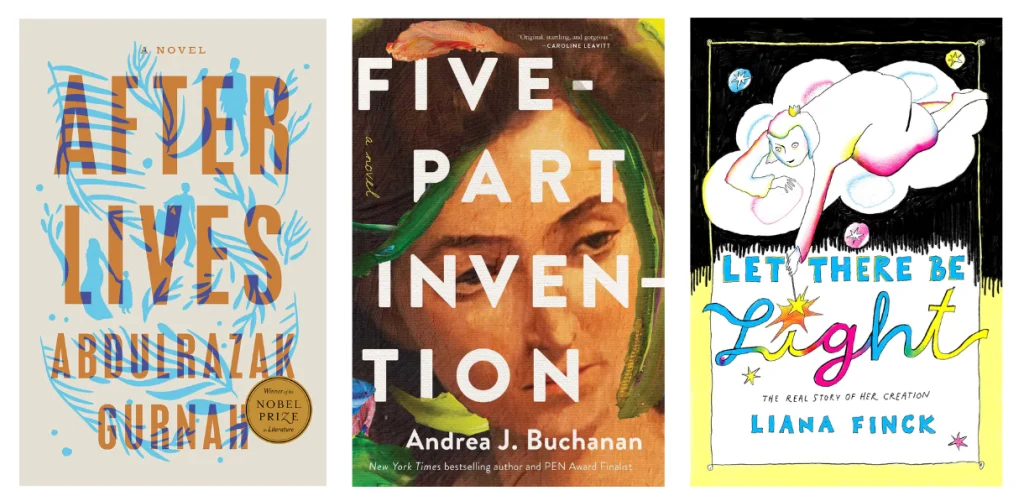
In the realm of fiction, 2022 was a year for the North American expansion of international voices. Abdulrazak Gurnah, the 2021 Nobel Prize laureate in Literature, saw the North American paperback release of Afterlives in late 2022. The novel provides a critical examination of German colonial rule in East Africa, a period often overshadowed by British and French colonial histories in Western curricula.
The year also saw innovative approaches to structural storytelling. Andrea J. Buchanan’s Five-Part Invention utilized a multi-generational framework to explore the transmission of trauma, while Liana Finck’s Let There Be Light: The Real Story of Her Creation challenged traditional theological perspectives through graphic narrative. Finck, a regular contributor to The New Yorker, received critical acclaim for her "irreverent yet profound" reimagining of Genesis, which reviewers noted successfully bridged the gap between contemporary satire and ancient mythology.

Scientific Inquiry and the Sensory Experience
Science writing in 2022 moved beyond the clinical to embrace the "immersion" style of narrative. Ed Yong, a Pulitzer Prize-winning journalist for The Atlantic, released An Immense World, which became an immediate bestseller. The book explores "Umwelt"—the unique sensory bubble that every animal inhabits. Yong’s work is cited by environmental scientists as a vital tool for fostering ecological empathy, as it encourages humans to perceive the world through vibrations, magnetic fields, and ultraviolet light.
Parallel to Yong’s biological exploration, David McRaney’s How Minds Change tackled the psychological and neurological basis of belief and persuasion. In an era defined by political polarization, McRaney’s analysis of "self-persuasion" and rapport-building offered a science-based alternative to traditional debate. Supporting data from social psychology journals in 2022 corroborated McRaney’s findings, suggesting that factual "correction" is often less effective than empathetic engagement in altering deeply held convictions.
The Rise of Trauma-Informed Literature and Chronic Illness Advocacy
Perhaps the most culturally impactful category of 2022 was the literature of health and healing. Gabor Maté’s The Myth of Normal: Trauma, Illness, and Healing in a Toxic Culture became a global phenomenon, spending weeks on the New York Times bestseller list. Maté’s thesis—that chronic illness is often an "epigenetic trigger" resulting from environmental and emotional trauma—resonated deeply in a post-pandemic society grappling with the long-term effects of isolation and stress.
Meghan O’Rourke’s The Invisible Kingdom: Reimagining Chronic Illness provided a necessary companion piece, focusing on the systemic failures of Western medicine to diagnose and treat autoimmune and "invisible" conditions. O’Rourke, a finalist for the National Book Award, interviewed dozens of doctors and patients, concluding that the medical establishment is ill-equipped for the rise of post-viral syndromes. This book was particularly timely given the increasing prevalence of "Long COVID," which the CDC estimated affected nearly 1 in 13 U.S. adults by mid-2022.

Other notable entries in this category included:
- Susan Cain’s Bittersweet: An exploration of how melancholy and longing are essential for human creativity and connection.
- Alice Wong’s Year of the Tiger: A memoir-manifesto by a prominent disability rights activist that utilized a non-linear format to mirror the complexities of disabled life.
- Mike Mariani’s What Doesn’t Kill Us Makes Us: A journalistic investigation into "catastrophic life events" and the concept of amor fati (love of fate).
Critical Reception and Official Responses
The critical response to the 2022 literary cohort was overwhelmingly positive, with many of these titles appearing on "Best of the Year" lists from The New York Times, The Guardian, and NPR. Literary critics noted a "maturation of the memoir," where personal stories were increasingly used as vehicles for broader sociological or scientific critiques.
In response to the popularity of Gabor Maté and Meghan O’Rourke’s work, several medical institutions held symposiums in late 2022 to discuss the "patient-centric" model of care. Dr. Gabor Maté, in various press statements, emphasized that the success of his book was not merely a commercial achievement but a "symptom of a society realizing it is in pain." Similarly, Ed Yong’s work was lauded by the American Association for the Advancement of Science for making "dense sensory biology accessible to the layperson without sacrificing scientific integrity."
Broader Impact and Future Implications
The legacy of 2022’s literary output is expected to influence several fields for years to come. In the publishing industry, the success of "genre-bending" nonfiction—books that combine memoir with rigorous reporting—has led to an increase in commissions for similar titles for the 2024–2025 cycle.

Furthermore, the emphasis on "critical thinking" and "ancestral reckoning," as seen in Julie Bogart’s Raising Critical Thinkers and Maud Newton’s Ancestor Trouble, suggests a growing movement toward intellectual autonomy. Educators are increasingly looking to these texts to help navigate the challenges of the digital age, where misinformation and "black-and-white thinking" are prevalent.
As the literary world moves forward, the titles of 2022 stand as a testament to a year of profound intellectual curiosity. They reflect a global community that is no longer content with surface-level explanations, seeking instead to understand the "hidden realms" of animal senses, the "miracles" of ancient food preservation, and the "invisible kingdoms" of the human body. These works do not merely provide information; they offer a roadmap for navigating a complex, often traumatic, but ultimately beautiful world.
