

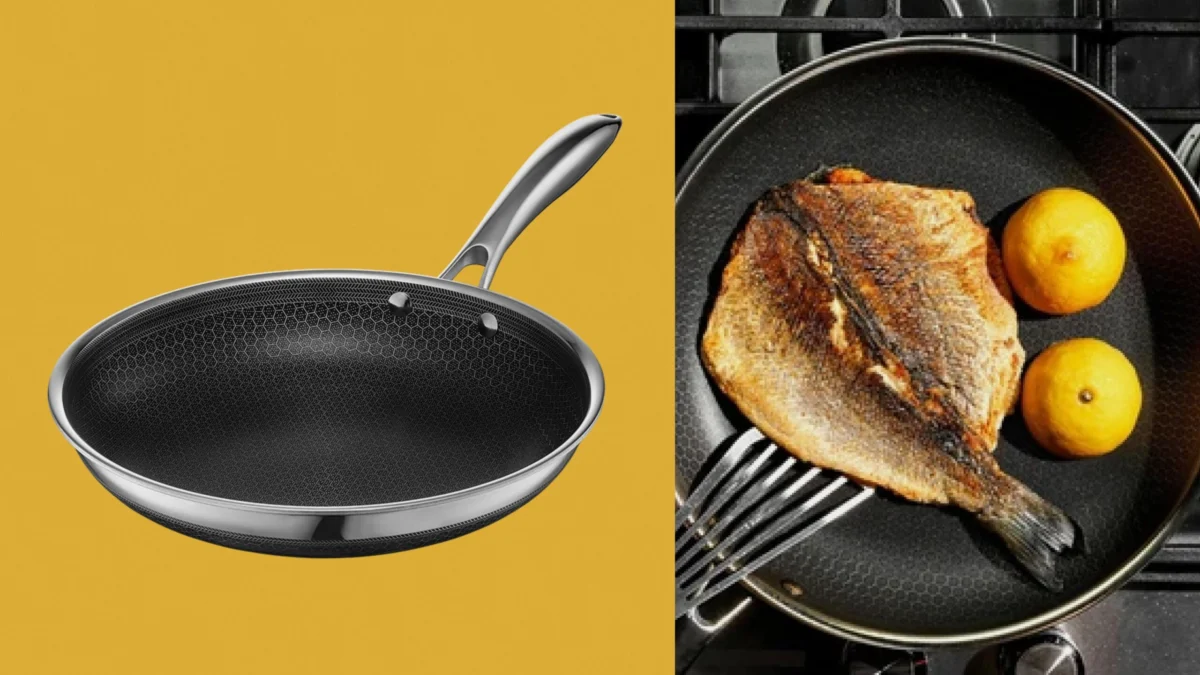
HexClad cookware has achieved significant market visibility, propelled by a substantial $100 million strategic investment from Gordon Ramsay’s Studio Ramsay Global in 2024 and an aggressive marketing campaign that has plastered its products across digital platforms. From targeted online advertisements and promotional partnerships with prominent food influencers to high-profile product placements in popular culture, such as the Love Island villa, HexClad has become a household name, frequently sparking inquiries among consumers to cookware experts. This widespread interest necessitates a thorough, objective review of HexClad’s claims against its actual performance and the underlying material science.
The Ascent of HexClad: A Marketing Phenomenon
HexClad’s journey to prominence is a testament to modern marketing efficacy. Prior to the substantial capital injection from Gordon Ramsay, a figure synonymous with culinary excellence, the company had already established a formidable digital footprint. Its strategy leveraged the burgeoning ecosystem of food influencers, who, through sponsored content and product demonstrations, introduced HexClad’s hybrid pans to a vast and engaged audience. This digital saturation, often described as "wheatpasting" across the internet, ensured that HexClad became virtually unavoidable for anyone with an interest in cooking. The brand’s presence on popular television shows further solidified its mainstream appeal, transforming it from a niche product into a widely recognized culinary tool.
The 2024 investment by Gordon Ramsay, a globally recognized chef and media personality, marked a significant inflection point. Valued at $100 million, this cash infusion from Studio Ramsay Global not only provided HexClad with considerable financial backing but also bestowed upon it an unparalleled endorsement from a culinary authority. This partnership transcended mere celebrity promotion, positioning Ramsay as a strategic investor deeply involved in the brand’s future. Such an endorsement is a powerful signal in the competitive cookware market, suggesting a stamp of approval that resonates deeply with consumers seeking quality and professional-grade tools.
Understanding Hybrid Cookware: Design and Material Evolution
HexClad positions itself within an increasingly popular segment of the cookware market known as "hybrid cookware." This category distinguishes itself from conventional nonstick pans through a unique surface design. HexClad pans feature a textured cooking surface characterized by raised stainless steel "peaks" and recessed nonstick-coated "valleys." According to HexClad, this patented pattern is engineered to provide a durable surface that protects the nonstick coating from wear and tear, particularly from metal utensils—a common cause of damage to traditional nonstick pans. The raised steel peaks are intended to prevent spatulas and other tools from directly scraping the nonstick layer in the valleys.
Initially, HexClad pans utilized Polytetrafluoroethylene (PTFE) for their nonstick coating, a material widely recognized for its excellent nonstick properties but also associated with public concern over per- and polyfluoroalkyl substances (PFAS). In response to evolving consumer preferences and regulatory pressures, HexClad transitioned to ceramic nonstick coatings. This shift aligns with a broader industry trend towards "PFOA-free" and "PTFE-free" alternatives, aiming to address health and environmental concerns. While companies often highlight proprietary ceramic nonstick formulas, the vast majority of these coatings are manufactured using the sol-gel process, a chemical method that creates a silica-based ceramic layer. This technological evolution underscores the industry’s continuous effort to balance performance with perceived safety and environmental responsibility.
The Science of Ceramic Nonstick Durability: A Critical Examination
Despite HexClad’s marketing claims of superior durability and a "lifetime" product, the fundamental scientific realities of ceramic nonstick coatings present a significant challenge to these assertions. Ceramic nonstick surfaces, regardless of brand, are inherently prone to degradation over time due to the very nature of their material composition and the stresses of regular cooking.
Rob Macfarlane, a professor of metallurgy and materials science at MIT, offers critical insights into the limitations of ceramic nonstick. He explains that these coatings are typically silica-based sol-gels—solutions of microscopic silica particles that fill the microscopic irregularities of a metal pan’s surface, creating a smooth, slick finish. While effective initially, these coatings are brittle. The repeated cycles of heating and cooling that occur during cooking induce thermal expansion and contraction, which inevitably lead to the development of micro-fractures within the ceramic layer. As these fractures accumulate over time, the surface friction of the pan increases, progressively diminishing its nonstick properties. This scientific reality dictates that even with careful use, consistently utilized ceramic nonstick pans typically have a functional lifespan of merely 1-2 years before their performance significantly declines. Although they may remain usable, the ongoing deterioration leads to reduced efficacy and potential chipping.
This scientific explanation directly contradicts HexClad’s claim that its cookware is "made to last a lifetime" and that it brings together "the durability of cast iron." Cast iron, through proper seasoning and care, can indeed last for generations, its cooking surface improving with age. Ceramic nonstick, by its chemical and physical nature, cannot replicate this longevity. The lifetime warranty offered by HexClad, which explicitly covers only factory defects, further reinforces this distinction, as it does not extend to the natural wear and tear inherent to the material’s degradation.
Consumer Experiences and Longevity Concerns
The scientific limitations of ceramic nonstick coatings are echoed in widespread consumer feedback regarding HexClad products. Online forums, particularly on platforms like Reddit, are replete with complaints from dissatisfied HexClad owners. Numerous users report a rapid decline in the pans’ nonstick performance, with foods like eggs beginning to stick after only a few months, and in some cases, even weeks, of regular use. These anecdotal accounts align with the scientific understanding of ceramic nonstick degradation, suggesting that HexClad pans are not exempt from the inherent fragility of this material. The experiences reported by consumers, coupled with direct testing of HexClad sets that are approximately a year old, confirm a notable decrease in nonstick efficacy over time, manifesting as increased food adhesion.
Initially, fresh out of the box, HexClad pans, like most nonstick cookware, deliver on their slippery promises. During standard testing procedures involving skillets and saucepans, the pans performed adequately. Their design, characterized by a moderate weight and comfortable handles, contributes to a pleasant initial user experience. However, the presence of a nonstick coating on the exterior bottom of the pan, where it directly contacts the heat source, raises practical questions about its purpose and potential for degradation in that area, particularly for gas stoves. The overarching concern remains the discrepancy between initial performance and long-term durability.
The "Seasoning" Paradox: A Contradiction to Nonstick Appeal
One of the most perplexing aspects of HexClad’s care instructions is the advice to "season" their nonstick pans with neutral oil over medium heat. This recommendation is problematic for multiple reasons, fundamentally challenging the very value proposition of nonstick cookware.
Seasoning is a process traditionally associated with cast iron and carbon steel pans, materials lauded for their durability and ability to develop a naturally nonstick surface over time. True seasoning involves heating oil or fat to its smoke point, causing it to polymerize and bond chemically to the porous metal surface of the pan. This polymerized fat creates a hydrophobic layer that repels moisture and prevents food from sticking at a molecular level, a process that is cumulative and improves with use.
This process cannot effectively occur on a HexClad pan, either on its stainless-steel peaks or its ceramic nonstick valleys. Ceramic nonstick surfaces are engineered to be non-reactive and smooth, preventing the chemical bonding necessary for polymerization. While it is technically possible to form a short-term layer of polymerized fat on stainless steel, this layer is difficult to maintain and develop long-term. Stainless steel is significantly smoother than cast iron or carbon steel, making it harder for polymerized fat to adhere. Furthermore, stainless steel possesses a protective, non-reactive layer of chromium oxide that actively inhibits the strong chemical bonds required for a durable seasoning. Any accumulation of unpolymerized fat or food molecules on stainless steel typically makes the pan more sticky, not less, and often results in an unsanitary residue.
HexClad’s guidance, which suggests that "over the first few weeks of use, your HexClad Hybrid cookware will perform better as it re-seasons from the fats in the food you are cooking," further muddies the waters. This statement implies a transformative process akin to traditional seasoning, which is scientifically inaccurate for their materials. At best, this advice amounts to pre-oiling the pan before use, a standard step for cooking with any material to facilitate food release. However, to label this as "seasoning" is misleading.
The implication of HexClad’s "seasoning" requirement is profound: if a HexClad pan demands the same level of care and pretreatment as a stainless steel, cast iron, or carbon steel pan—materials celebrated for their long-term durability and ability to improve with age—then the core advantage of nonstick cookware (its low-maintenance, ready-to-use convenience) is largely negated. In such a scenario, the rationale for choosing HexClad over these more durable and fundamentally sound alternatives becomes difficult to justify.
Economic Analysis: Premium Pricing for Limited Lifespan
HexClad positions its products as premium cookware, reflected in its pricing. For instance, a 12-inch HexClad fry pan without a lid is priced at $179. This cost places it in direct competition with high-end, professional-grade stainless steel cookware. For context, a 12-inch All-Clad D3 stainless steel fry pan, a benchmark for quality and durability in the industry, retails for approximately $160. All-Clad has earned its reputation as a standard-bearer for professional cookware, with decades of proven longevity and performance in countless professional and home kitchens. The significant price point of HexClad, coupled with the inherent limitations of its ceramic nonstick coating, raises serious questions about its long-term value proposition for consumers.
Furthermore, for consumers who specifically desire the hybrid, textured nonstick design, there are more affordable alternatives available on the market. Brands such as Oxo, Greenpan, and Zwilling offer similar hybrid ceramic nonstick pans at considerably lower price points. This availability of comparable, less expensive options further undermines HexClad’s value argument, especially when considering the universally acknowledged limited lifespan of ceramic nonstick materials. Consumers are thus faced with a choice: pay a premium for a HexClad pan with a scientifically constrained lifespan, invest in a proven, durable material like stainless steel for a similar or lower price, or opt for a cheaper hybrid nonstick pan that acknowledges the material’s limitations through its pricing.
The Broader Context: Consumer Expectations and Cookware Education
It is important to acknowledge that consumer expectations often play a role in dissatisfaction with nonstick cookware. Many consumers hold a somewhat naive expectation that nonstick surfaces will flawlessly prevent food adhesion under all circumstances. However, sticking is frequently a consequence of improper cooking technique rather than solely a flaw in the pan itself. Factors such as pan temperature, the judicious use of cooking fats, and precise timing are critical determinants of whether food sticks. Even the most advanced nonstick surfaces cannot entirely compensate for a lack of culinary mindfulness. Educating consumers on these fundamental principles of cooking technique is essential, as it empowers them to achieve better results with any type of cookware and fosters more realistic expectations for nonstick products.
Conclusion: Prioritizing Durability and Informed Choice
Based on scientific evidence, extensive consumer feedback, and a critical analysis of marketing claims, it is evident that HexClad cookware, while initially performing adequately and benefiting from powerful marketing, does not offer the long-term durability or value implied by its premium pricing and "lifetime" assertions. The inherent degradation of ceramic nonstick coatings, coupled with the misleading "seasoning" instructions that negate the primary appeal of nonstick, positions HexClad as a less compelling investment compared to genuinely durable alternatives.
Consumers are advised against investing significant capital in pans that are fundamentally designed for a limited lifespan. Embracing the reality that some sticking is a natural part of the learning curve in cooking, and understanding the principles of proper heat management and fat application, will ultimately lead to more fulfilling and economical culinary experiences. For those who prioritize the convenience of a nonstick surface, it is prudent to select options that are either more affordably priced, acknowledging their ephemeral nature, or that do not impose care requirements that contradict their core benefit. Ultimately, expert recommendations consistently steer towards cookware materials that improve with time and proper care—namely, cast iron, carbon steel, and high-quality stainless steel—which represent superior long-term investments for any kitchen.
Cookware for Lasting Performance:
- Cast Iron Skillets: Renowned for their exceptional heat retention, even cooking, and the ability to develop a natural, durable nonstick seasoning that improves with age.
- Carbon Steel Pans: Offering a lighter alternative to cast iron with similar seasoning capabilities, carbon steel heats up quickly and is ideal for high-heat searing and frying.
- Stainless Steel Pans: The workhorse of professional kitchens, high-quality stainless steel offers superb durability, excellent heat distribution, and is non-reactive, making it versatile for a wide range of cooking tasks, from searing to deglazing.
