

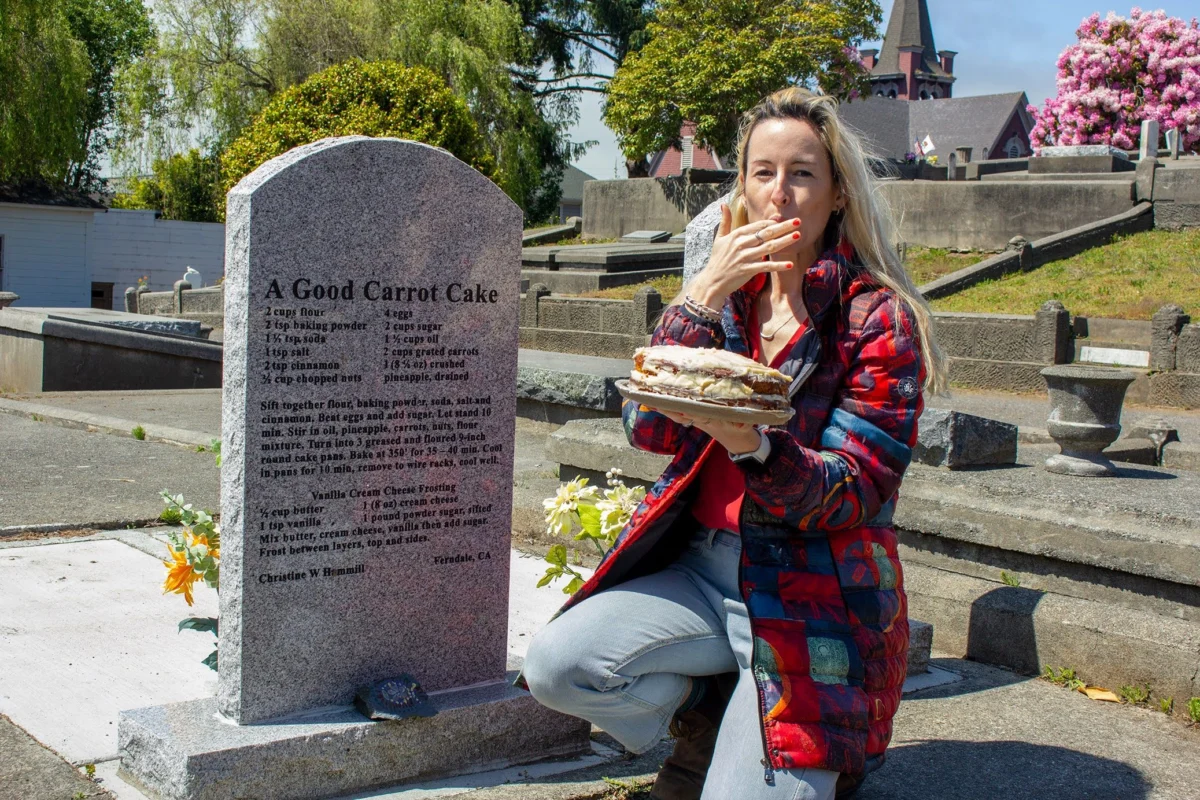
A novel archival endeavor, blending culinary tradition with the solemnity of memorialization, has culminated in Rosie Grant’s compelling new cookbook, To Die For. This project transcends mere recipe collection, offering a poignant exploration of identity, legacy, and the enduring power of food to connect generations, even beyond the grave. Grant’s work centers on a unique phenomenon: recipes immortalized on headstones, a testament to the profound role these dishes played in the lives of the departed and their communities.
The Genesis of a Unique Archive: From Internship to Global Quest
The journey began over five and a half years ago, rooted in an unexpected discovery during a digital archives internship at the Congressional Cemetery in Washington, D.C. What started as a flicker of curiosity for Rosie Grant, an archivist by training, quickly ignited into a full-fledged passion project. She launched her now widely followed social media accounts, @ghostly.archive on TikTok and Instagram, initially sharing glimpses of these fascinating culinary epitaphs. This digital outreach quickly revealed a broader, more emotional realization about how individuals wish to be remembered, the indelible marks they leave on their communities, and the surprising ways in which food embodies these legacies.
Grant’s research has since evolved into an extensive, cross-continental pilgrimage. Her travels have taken her across the vast expanse of the United States, from the bustling urban cemeteries of the East Coast to the remote landscapes of Nome, Alaska, and even beyond to the maritime provinces of Nova Scotia. Each journey is a mission to visit these unique final resting places, to document the recipes etched into stone, and crucially, to connect with the families of the deceased. These personal interactions are not merely about obtaining permission to publish; they are about unearthing the stories behind the recipes, understanding the lives of the individuals they commemorate, and appreciating the deep emotional resonance these dishes hold for those left behind. This meticulous, empathetic approach has been foundational to transforming her "light curiosity" into a deeply meaningful anthropological and culinary study.
To Die For: A Culinary Journey Through Memorials
The cookbook, To Die For, is a curated collection of approximately 40 recipes, each with its own extraordinary backstory etched into granite. Far from being a morbid compilation, the book celebrates the lives of ordinary people who, through their culinary generosity and skill, performed extraordinary acts of love and community building. These were individuals from all walks of life: dedicated teachers and coaches, trusted local dentists, cherished neighbors, all united by their expression of affection through cooking.
The recipes themselves offer a fascinating cross-section of American and, in some cases, international home cooking, often evoking the comforting, communal spirit of funeral foods, designed to feed many and offer solace. Many yield dozens per batch, a practical nod to their original purpose within families and communities. The collection includes a nostalgic array of traditional Americana: classic spritz cookies, rich brownies, and moist carrot cake. However, the book also surprises with more unusual inclusions, reflecting diverse cultural influences and historical periods. Readers will find a unique WWII-era guava cobbler, a refreshing glazed, no-bake blueberry pie, and even the little-known true narrative behind the beloved Irish coffee. Beyond baked goods, the book ventures into savory territory with recipes for a robust Jack Daniel’s marinade, easy cheese and ranch dips, rustic breads, and hearty main courses such as "Texas’ best" meatloaf (as proudly proclaimed on its headstone), fried ripe tomatoes, a comforting spaghetti chicken casserole, and traditional kasha varnishkes. Each recipe is not just a list of ingredients; it’s a culinary artifact, a direct link to a life lived and a love shared.

Unearthing the Stories: The Heart of the Project
Grant’s initial inclination was to separate the recipes from their origins, focusing solely on the culinary aspect. However, this approach quickly felt incomplete, lacking the profound human element that defined the project. A pivotal moment came with her interaction with Richard Dawson and his daughter, Nailah. Two years after first discovering the gravestone of Naomi Odessa Miller-Dawson, Grant connected with her family. Naomi’s headstone, located in Brooklyn’s historic Green-Wood Cemetery, famously features an open recipe book carved in stone, displaying her celebrated spritz cookie recipe. Since her passing in 2009, Naomi’s quiet but fierce passion for baking has been a cherished family legacy, and her spritz cookies have gained widespread recognition through online communities and Reddit threads.
Richard Dawson’s vivid recollections of his mother, waiting by the oven for the cookies, the nostalgic aromas, and his childhood eagerness to snatch them hot off the tray, profoundly shifted Grant’s perspective. "The way Richard talked about waiting by the oven for the cookies to come out, recalling smells from when he was a little kid, trying to eat them right off the tray even though it’s still a little hot," Grant recounts, "It really changed the project in the sense that it made the project." This encounter underscored the irreplaceable connection between the food and the person, demonstrating how a recipe is not just a formula but a vessel for memories, emotions, and personal narratives. This realization transformed To Die For from a simple cookbook into a rich tapestry of human stories.
A Dialogue with Mortality: Food as a Conversational Catalyst
Rosie Grant views her project as an "almost feel-good way to get into the topics of mortality and death." In a society often uncomfortable with discussions surrounding death, food offers an accessible and comforting entry point. Sharing a meal or stepping into a memory-filled kitchen inherently dissolves conversational barriers, allowing for more open and authentic dialogue. Grant, whose parents conducted ghost tours in local cemeteries in Alexandria, Virginia, notes that while her family was comfortable with the idea of hauntings, planning for their own inevitable mortality was a different matter.
"Something like a recipe feels so life-giving," Grant expresses, highlighting how these conversations can extend to other life-affirming aspects like music or travel. "Talking about these many life-filling moments might be an easier way to talk about tough topics." This approach aligns closely with the tenets of the Death Positive Movement, a growing societal shift championed by hospice workers, death doulas, and other care professionals. This movement advocates for open discussions about mortality, end-of-life planning, and the grieving process, arguing that such transparency fosters healthier individuals and communities. Grant’s work, by celebrating life through the lens of death, inadvertently contributes to normalizing these essential conversations, making the abstract concept of legacy tangible through taste and memory.
The Evolution of Memorials: Granite and Personalization
Grant’s extensive research has also provided insights into the changing landscape of memorialization. Over time, burials and grave markers have become increasingly personalized, reflecting evolving societal attitudes towards individual expression and remembrance. The advent of mass industrialization made tools for working with granite more accessible, leading to its widespread use in headstones. Granite, being significantly more durable than earlier materials like wood, slate, or marble, offered a lasting canvas for customization. This technological shift allowed for intricate engravings, including detailed recipes, turning grave markers into unique, enduring testaments to a person’s life and passions.
These personalized memorials transform cemeteries from mere resting places into vibrant repositories of history and culture. Grant observes that cemeteries are "beautiful grounds still vibrating with life and knowledge, if you’re open to it." Her pilgrimages involve not just documenting the recipes but also honoring the deceased by sharing the prepared dishes at their gravesites, a deeply respectful gesture that bridges the gap between the past and the present. To ensure the authenticity and integrity of the project, all 40 recipes featured in To Die For received explicit approval from the families of the deceased. Grant meticulously tracked down these relatives, often through diligent internet sleuthing via obituaries and social media, to seek their permission and to learn the intimate stories that breathe life into each recipe. She has even had the privilege of cooking with seven of the families highlighted in the book, further cementing the project’s foundation in personal connection and shared experience.

Public Reception and Lasting Implications
Rosie Grant’s unique approach to preserving individual histories has deeply resonated with a global audience, fostering an intimate sense of collectivity among strangers. Her work has garnered significant positive attention, inspiring countless individuals to reflect on their own family legacies and consider how they might document their cherished recipes. Many commenters on her social media platforms express regret over not having asked their own loved ones for recipes or specific culinary tips when they had the chance, highlighting the project’s powerful call to action.
However, the project has not been without its detractors. Grant acknowledges receiving feedback from self-identified Mediums who claimed that the deceased, and in one notable instance, a still-living participant, did not appreciate their culinary secrets being publicly shared. Despite these isolated critiques, the overwhelming response underscores the profound cultural and emotional impact of To Die For.
The decision to publish the project as a physical book, rather than a mere digital PDF, was a direct response to the families’ wishes. "I thought I could just have this on socials and do a PDF format online," Grant explains, but the families voiced a preference: "They were like ‘We like the idea of a physical book. Something that’s precious.’ Even the visual style of it is meant to be something you’d inherit from a grandparent." This emphasis on tangibility reinforces the book’s role as an heirloom, a vessel for intergenerational connection.
One of the most "underrated" sections of To Die For is a thoughtful list of questions designed to guide readers in documenting their own familial food legacies. Grant humorously acknowledges the potential awkwardness: "It can feel really morbid to be like ‘Hey mom, can you write down your recipe because you’re gonna die someday?’" She offers practical, less daunting alternatives: "That can look like a lot things. Take pictures of the recipe box and text it to all the cousins or the family group chat and save it to a drive somewhere. Cook with your family member. Teach me how to do it, let’s cook it together. Passing down that knowledge, there’s something very powerful about that shared experience."
The sentiments shared by both the participants in the book and Grant’s growing audience echo a common theme: revisiting these recipes offers a unique form of sensory catharsis, a tangible way to process grief and remember loved ones. What began as a "nerdy food adventure" has blossomed into a profound exploration of what it means to be remembered, focusing on how people made others feel when they were alive. The project highlights turn-of-the-century attitudes toward heritage, family, and home life, serving as a modern "rite of passage" and a means to pass the torch of culinary and familial knowledge to the next generation. Grant’s work is a powerful reminder of the importance of observing and maintaining such rituals, emphasizing that "If we don’t do it, nobody else will." Her cookbook is more than a collection of recipes; it is a vital act of remembrance, a celebration of life, and an invitation to connect with history, one delicious bite at a time.
