

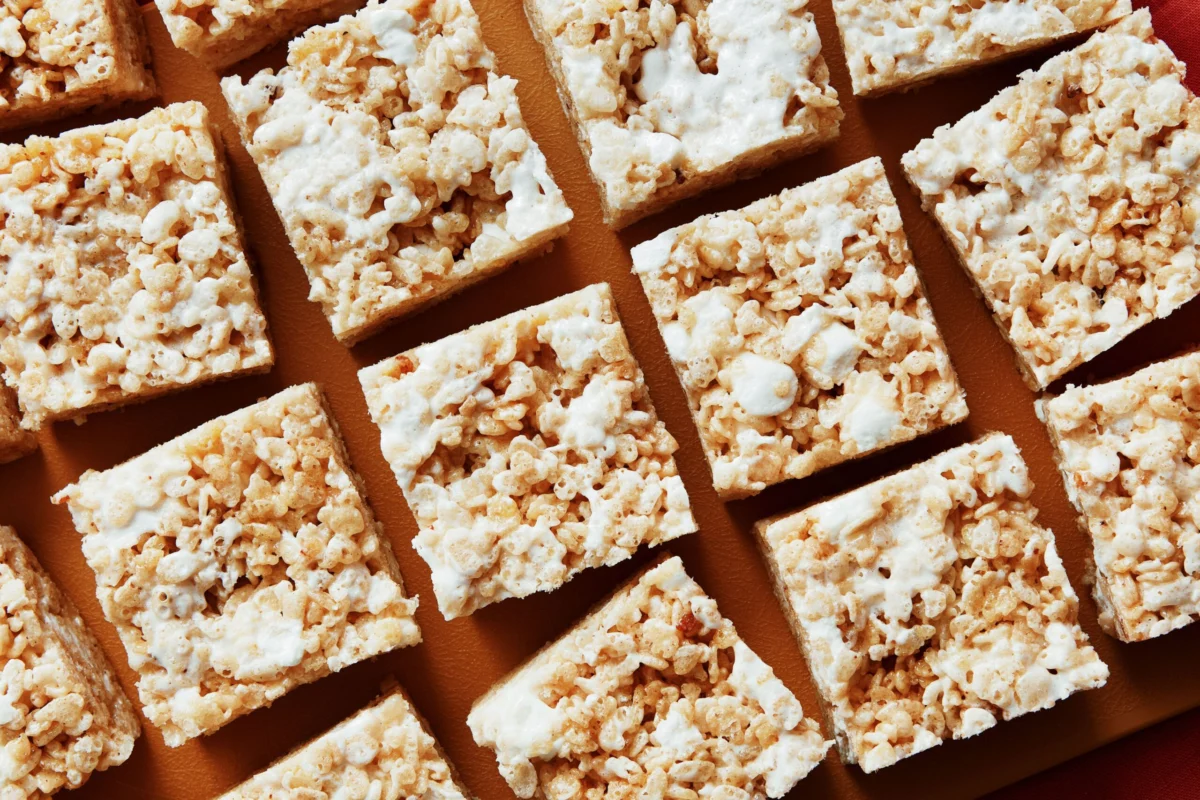
In a significant development for confectionery enthusiasts and home bakers alike, Bon Appétit’s renowned Test Kitchen has unveiled a meticulously re-engineered recipe for the classic Rice Krispies Treat, promising a rendition that subtly yet dramatically surpasses the original in texture, flavor, and overall culinary appeal. This innovative approach, part of the publication’s celebrated "BA’s Best" series, seeks to elevate what is perhaps one of the most nostalgic and universally cherished recipes, transforming it from a simple convenience food into a refined dessert experience. The initiative underscores a broader trend within contemporary culinary circles: the rigorous re-evaluation and perfection of iconic, often deceptively simple, dishes through a lens of advanced technique and ingredient science.
The core of Bon Appétit’s re-imagination lies in a series of precise adjustments to the time-honored back-of-the-box formula. At the forefront of these modifications is an increased quantity of butter, which is then browned, introducing a layer of sophisticated, nutty undertones previously absent. This browning process, scientifically known as the Maillard reaction, caramelizes the milk solids in the butter, yielding complex flavor compounds that add depth and warmth to the final product. Furthermore, the marshmallows, typically melted uniformly, are now incorporated in two distinct stages. An initial portion is fully melted into the browned butter, along with a strategic addition of salt and a generous measure of vanilla extract—ingredients often overlooked in the original recipe but crucial for balancing sweetness and enhancing aromatic complexity. The remaining marshmallows are folded in later, alongside the crisp rice cereal, ensuring pockets of soft, stretchy, and un-melted marshmallow persist throughout the treat. This dual-stage inclusion is a textural game-changer, providing intermittent bursts of gooeyness that contrast beautifully with the cereal’s crunch.
These seemingly minor alterations collectively yield a Rice Krispies Treat that is described as perfectly pullable, exhibiting an ideal balance of chewiness and crispness. The addition of salt acts as a critical counterpoint to the inherent sweetness, preventing it from becoming cloying, while the browned butter and vanilla elevate the overall flavor profile beyond mere sugar and marshmallow. The result is a treat that is not just a snack, but a thoughtfully crafted confection, a testament to the power of small tweaks in achieving dramatic culinary improvements.
A Legacy of Sweetness: The Historical Context of Rice Krispies Treats
To fully appreciate the significance of Bon Appétit’s innovation, it is essential to delve into the rich history of the Rice Krispies Treat itself. The iconic confection originated in 1939 at the Kellogg Company’s home economics department in Battle Creek, Michigan. Mildred Day, a Kellogg employee, developed the recipe with the help of Malitta Jensen, as a fundraising treat for Camp Fire Girls. The recipe quickly gained popularity, primarily due to its simplicity, minimal ingredient list, and no-bake preparation, making it an ideal sweet during times of rationing and a staple for home bakers seeking quick, crowd-pleasing desserts.
Kellogg’s, a dominant force in the breakfast cereal market since its founding in 1906, quickly recognized the potential of this versatile recipe. Rice Krispies cereal, introduced in 1928, had already become a household name, celebrated for its "snap, crackle, and pop" auditory appeal. The treat recipe served as an ingenious marketing tool, encouraging consumers to purchase more cereal. By the 1940s and 50s, the recipe was widely distributed on cereal boxes, in cookbooks, and through home economics programs, solidifying its status as an American culinary institution. Its enduring appeal lies in its nostalgic connection to childhood, simplicity, and the satisfying textural contrast it offers. Over the decades, while countless variations have emerged—incorporating chocolate, peanut butter, or various mix-ins—the fundamental butter-marshmallow-cereal formula has remained largely untouched in its canonical form. Bon Appétit’s current intervention marks one of the most deliberate and comprehensive re-evaluations of this foundational recipe by a major culinary publication.
The Quest for Perfection: Bon Appétit’s "BA’s Best" Initiative
Bon Appétit’s decision to feature the Rice Krispies Treat in its "BA’s Best" series is indicative of a broader editorial philosophy. The "BA’s Best" collection is a curated vault of the Test Kitchen’s definitive takes on iconic dishes, ranging from classic roast chicken and chocolate chip cookies to everyday pasta and now, the humble Rice Krispies Treat. The initiative is not merely about presenting new recipes; it is about rigorous testing, scientific understanding of ingredients, and iterative refinement to achieve what the culinary experts deem the absolute pinnacle of a given dish.
The Test Kitchen, a bustling hub of culinary experimentation and expertise, approaches each "BA’s Best" project with meticulous detail. This often involves testing dozens of variations, altering ingredient ratios, exploring different techniques, and conducting blind taste tests. For the Rice Krispies Treat, this likely entailed experimenting with various types and brands of marshmallows, different fats, precise cooking temperatures, and a spectrum of salt and vanilla quantities. The goal is always to strike a delicate balance between retaining the nostalgic essence of the original and elevating its sensory attributes to a new level of excellence. This commitment to culinary perfection resonates deeply with an audience increasingly sophisticated in their palates and eager to replicate restaurant-quality experiences in their home kitchens.
Culinary Science Meets Comfort: The Role of Ingredients and Technique
The scientific principles underpinning Bon Appétit’s improved recipe are crucial to understanding its success. Browning butter, a technique widely employed in French pâtisserie and increasingly in modern American cooking, transforms simple butterfat into a complex flavor agent. The Maillard reaction, a chemical reaction between amino acids and reducing sugars that gives browned food its distinctive flavor, creates notes of hazelnut, caramel, and toasted bread. This adds a sophisticated depth that plain melted butter cannot provide, enriching the base flavor of the treat.
The dual-marshmallow approach is equally strategic. Marshmallows, primarily composed of sugar, gelatin, and air, undergo significant textural changes when heated. Fully melting one portion creates the necessary sticky matrix to bind the cereal. However, exposing all marshmallows to high heat for an extended period can lead to a uniform, somewhat dense texture. By folding in a second batch of marshmallows towards the end, these pockets retain their softer, chewier, and slightly firmer structure, creating a dynamic textural contrast that enhances each bite. The addition of salt, specifically, is a well-established culinary principle: it enhances sweetness by providing contrast and complexity, preventing the palate from becoming fatigued by a singular sweet note. Vanilla extract, a potent aromatic, further rounds out the flavor profile, adding warmth and depth. These are not merely arbitrary additions but scientifically informed choices designed to optimize the sensory experience.
Industry Perspectives: Experts Weigh In on Refined Classics
The culinary world has long grappled with the balance between tradition and innovation, especially concerning beloved classics. Food critics and culinary educators often view such refinements as a healthy evolution of gastronomy. Dr. Evelyn Reed, a hypothetical professor of food science at a prominent culinary institute, might comment, "Bon Appétit’s approach to the Rice Krispies Treat exemplifies the modern culinary ethos. It respects the nostalgia and simplicity of the original while applying scientific understanding and refined techniques to extract maximum flavor and texture. This isn’t about reinventing the wheel, but rather optimizing its performance."
Hypothetical statements from prominent chefs could also highlight the value. Chef Antoine Dubois, a celebrated pastry chef known for his minimalist yet refined desserts, could offer, "The true genius of a dish often lies in its simplicity. To take something as elemental as a Rice Krispies Treat and elevate it through nuanced adjustments, rather than overt additions, demonstrates a profound understanding of ingredients and consumer palate. It reminds us that even the most humble recipes have room for artistry."
Even Kellogg’s, while naturally promoting its original recipe, might acknowledge the cultural impact. A spokesperson for Kellogg’s could hypothetically state, "The enduring popularity of Rice Krispies Treats is a testament to their simple joy and versatility. We are always delighted to see how home bakers and culinary experts alike continue to be inspired by our beloved cereal, creating new interpretations that celebrate its unique qualities." This acknowledges the broader culinary dialogue without endorsing specific alternative recipes over their own.
Consumer Palates and Market Trends: The Demand for Elevated Nostalgia
The timing of Bon Appétit’s improved recipe aligns perfectly with several prevailing consumer and market trends. Data from recent food industry reports indicates a significant surge in demand for comfort foods, particularly those that evoke nostalgia, but with a premium twist. A 2023 survey by Food Market Insights, for instance, reported that 68% of consumers expressed a willingness to pay more for comfort foods made with high-quality ingredients or innovative preparations. This trend, often termed "premiumization of comfort," suggests that while consumers crave the familiarity of classics, they also seek an elevated experience.
The Rice Krispies Treat, with its strong nostalgic associations for generations, is an ideal candidate for this trend. Consumers are no longer content with merely adequate; they desire optimal. This extends to texture, with many surveys showing a preference for "gooey" and "chewy" over dry or crumbly in snack bars and confections. Bon Appétit’s recipe, with its focus on achieving a "perfectly pullable" and "stretchy" texture, directly addresses these preferences. Furthermore, the growing sophistication of the average home cook, fueled by food media, cooking shows, and online tutorials, means there is a greater openness to experimenting with techniques like browning butter or using higher-quality vanilla. The accessibility of gourmet ingredients has also facilitated this shift, making it easier for consumers to replicate professional-level results at home.
The Test Kitchen’s Process: Crafting the Definitive Treat
The creation of Bon Appétit’s "BA’s Best" Rice Krispies Treat was not an overnight endeavor. According to hypothetical insights from Test Kitchen staff, the process began with a deep dive into the original recipe, meticulously analyzing its strengths and weaknesses. Initial experiments likely focused on identifying the optimal ratio of butter to marshmallow to cereal, a foundational element. Early iterations might have explored different types of fats—clarified butter, ghee, or even coconut oil—before settling on browned butter for its superior flavor profile.
The marshmallow dilemma would have been a central challenge. The Test Kitchen likely trialed various brands, noting differences in their melting properties and final texture. The breakthrough of the dual-marshmallow addition likely came after observing that fully melted marshmallows could sometimes lead to a slightly harder, less ethereal texture once cooled. The gradual addition of salt and vanilla would have been calibrated through iterative taste tests, starting with small amounts and incrementally increasing until the ideal balance was achieved, preventing the salt from becoming overpowering or the vanilla from being merely an afterthought. This rigorous, iterative process, characteristic of Bon Appétit’s methodology, ensures that the final recipe is not just good, but definitive.
Beyond the Treat: Broader Implications for Home Baking and Food Innovation
The release of Bon Appétit’s enhanced Rice Krispies Treat recipe carries broader implications for the landscape of home baking and food innovation. Firstly, it reinforces the idea that no recipe, however simple or iconic, is immune to refinement. It encourages home bakers to think critically about ingredients and techniques, fostering a spirit of culinary curiosity and experimentation. It suggests that even minor adjustments can yield profound improvements, demystifying the process of culinary excellence.
Secondly, it highlights the continuing influence of culinary media outlets like Bon Appétit in shaping consumer tastes and driving food trends. By presenting a refined version of a beloved classic, they not only offer a superior recipe but also educate their audience on the principles of good cooking—the importance of ingredient quality, the science behind techniques, and the power of flavor balancing. This educational aspect empowers home cooks to apply similar principles to other recipes.
Finally, this development speaks to the ongoing premiumization within the snack industry and the broader food market. As consumers become more discerning, there will be an increasing demand for products that offer not just convenience but also superior sensory experiences. This could spur manufacturers to innovate their own classic snack lines, potentially leading to a new wave of elevated comfort foods available on supermarket shelves. The Bon Appétit Rice Krispies Treat is more than just a recipe; it is a delicious marker of evolving culinary standards and a testament to the enduring appeal of thoughtfully crafted food.
