

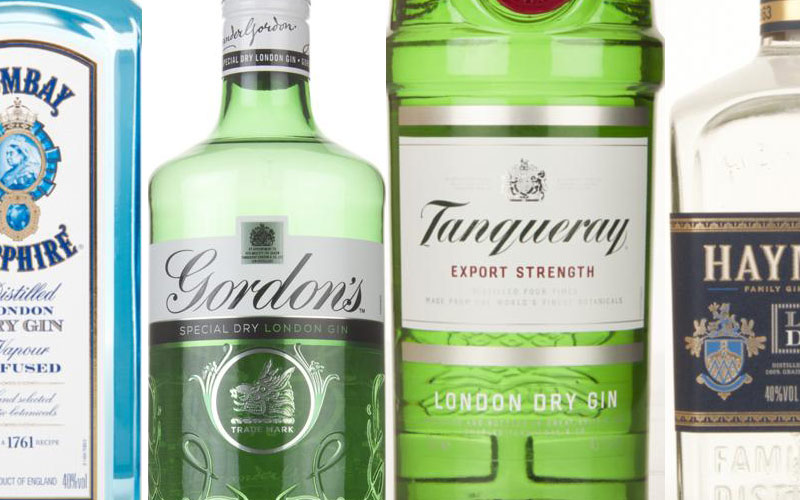
The legal framework governing the production and labeling of gin has undergone significant refinement in recent years, culminating in the European Union’s 2019/787 legislation and its subsequent amendments. For consumers and industry professionals alike, the term "London Dry Gin" often evokes a specific flavor profile—typically juniper-forward, crisp, and traditional. However, under international law, the designation is strictly a process-driven standard rather than a geographical or flavor-based one. Despite its name, London Dry Gin does not need to be produced in London, nor does it mandate a specific taste, provided the final product remains "predominantly" juniper-flavored. As the distilling industry continues to expand globally, understanding the nuances of these regulations is essential for maintaining market transparency and quality control.
The Shift from Traditional Practice to Modern Regulation
The history of gin is inextricably linked to the evolution of distillation technology. In the 18th and 19th centuries, spirits were frequently distilled from low-quality grains in rudimentary pot stills. These early spirits often contained high levels of impurities, including methanol and fusel oils, which resulted in a harsh, unpalatable product. To mask these flaws, distillers frequently added heavy doses of sugar, turpentine, or other adulterants.
The landscape changed dramatically with the invention of the continuous column still in the early 19th century, most notably the design perfected by Aeneas Coffey. This technology allowed for the production of highly rectified spirit, reaching up to 96% alcohol by volume (ABV). At this strength, the spirit becomes "neutral," having been stripped of the heavy congeners associated with the base mash. This clean slate provided the foundation for what we now recognize as London Gin: a spirit where the botanical character is the primary focus, rather than the raw agricultural base.
In 2019, the European Union updated its spirit drinks regulations to provide further clarity, incorporating feedback from the distilling industry. While the United Kingdom has since left the EU, the 2019/787 legislation remains the functional baseline for British distillers, as it was the version in effect at the time of the UK’s departure.
Technical Requirements for the "London Gin" Designation
Under Regulation 2019/787, the path to a "London Gin" label is defined by a series of rigorous technical hurdles. To qualify, a spirit must first meet the criteria for "Distilled Gin," which requires that the base spirit be of agricultural origin and distilled to an initial strength of at least 96% ABV. This ensures the base is a pure, neutral ethanol.
The defining characteristic of London Gin is that all flavors must be imparted exclusively through the redistillation of this neutral spirit in the presence of natural plant materials. The legislation specifies several key constraints:
- Distillation Strength: The resulting distillate must come off the still at no less than 70% ABV.
- Purity Standards: The methanol content must not exceed 5 grams per hectoliter of 100% alcohol. This is a legacy quality control measure designed to ensure the removal of "heads"—the toxic early portions of a distillation run.
- No Post-Distillation Additives: No flavorings or colorings can be added after the distillation process. Only water and neutral alcohol of the same quality may be added to reach the desired bottling strength.
- Sugar Content: To be labeled "Dry," the final product must not contain more than 0.1 grams of sweetening products per liter, expressed as invert sugar.
This "no-additives" rule is what distinguishes London Dry Gin from many contemporary gins. Popular brands such as Hendrick’s or Martin Miller’s, while highly regarded, do not qualify as London Dry Gins because they incorporate flavors—such as cucumber and rose essence or Icelandic spring water additions—after the final distillation.
The Methanol Factor and Safety Standards
While modern distillation technology has made methanol poisoning a rarity in the legal market, the London Gin regulations maintain strict limits on this substance. Methanol, often called "wood alcohol," is a natural byproduct of fermentation. Because it has a lower boiling point (64.7°C) than ethanol (78.2°C), it can be separated during distillation.
In the 18th century, unscrupulous producers might leave methanol in the spirit to increase volume, leading to blindness or death among consumers. By codifying a limit of 5 grams per hectoliter, the London Gin designation serves as a historical and modern guarantee of chemical purity. Industry analysts note that while almost all modern commercial distillers meet these standards regardless of their label, the London Dry designation remains the "gold standard" for safety and rectification.
The Botanical Debate: Plants vs. Animals
One of the more contentious aspects of the 2019/787 regulation is the requirement that flavors be derived exclusively from "natural plant materials." This phrasing creates a legal grey area for innovative distillers. For example, mushrooms are biologically classified as fungi, not plants. Technically, a gin flavored with mushrooms, such as Radoune Gin, would fall outside the strict definition of London Gin.
Similarly, the use of animal products in the distillation process has come under scrutiny. Portobello Road’s "Director’s Cut No. 03," a Pechuga-style gin, involves suspending a turkey breast in the still to allow the vapors to pass through the meat. Because meat is an animal product, the resulting spirit cannot legally be marketed as a London Dry Gin under the current EU and UK framework. Interestingly, the base spirit itself can be derived from animal-adjacent agricultural products, such as milk whey, as long as it is distilled to the 96% neutrality threshold.
The Paradox of Sweetening in "Dry" Spirits
The inclusion of a 0.1g/L sugar allowance in a spirit labeled "Dry" often confuses consumers. If the term "Dry" signifies the absence of sugar, why allow any at all? The answer lies in the industry’s fight against counterfeiting.
Major global brands, such as Gordon’s Gin, utilize "tracer molecules" or "sugar dyes" to verify the authenticity of their products. These tracers allow companies to use laboratory testing to determine if a bottle found in a secondary market is a genuine product or a counterfeit refill. The 0.1g/L threshold is high enough to permit these microscopic tracking elements without significantly altering the perceived sweetness or caloric content of the gin.
Global Variations: The US Perspective
The regulatory landscape shifts when moving across the Atlantic. In the United States, the Alcohol and Tobacco Tax and Trade Bureau (TTB) maintains a more inclusive definition of gin. The TTB defines gin as a spirit with a main characteristic flavor derived from juniper berries, produced by distillation or the mixing of spirits with aromatics or extracts.
Unlike the EU, the U.S. regulations do not strictly protect the term "London" as a process designation. While many U.S. distillers follow the London Dry process out of respect for tradition, the lack of a corresponding federal "London" standard means that the term is sometimes used more loosely in the American market. This discrepancy highlights the importance of the 2019 EU updates in protecting the technical integrity of the category in international trade.
The Role of Modern Science in Quality Control
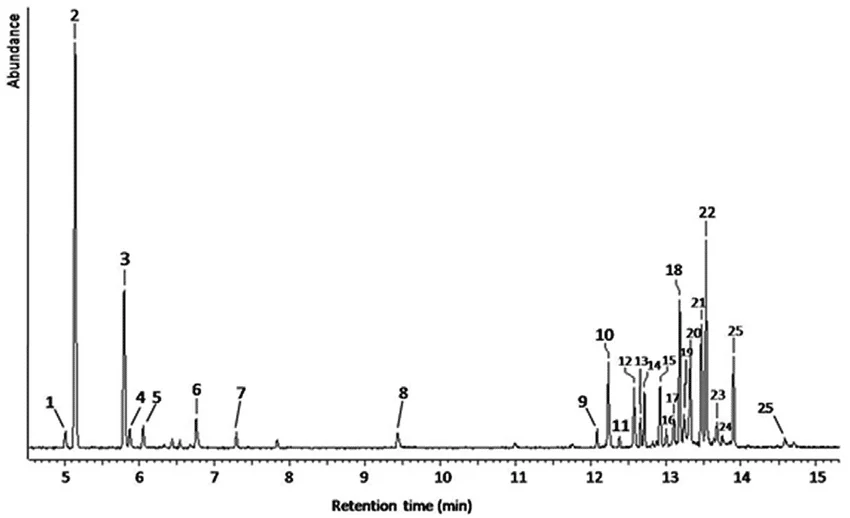
While the legal definition of gin relies on the subjective "predominant flavor of juniper," many large-scale distilleries have moved toward objective measures of consistency. Facilities like Laverstoke Mill, the home of Bombay Sapphire, employ Gas Chromatography-Mass Spectrometry (GC-MS) to analyze the volatile compounds in each batch.
By identifying the specific "peaks" of alpha-pinene (juniper) and limonene (citrus), distillers can ensure that every bottle produced matches a master chromatogram. This technology bridges the gap between the vague legal requirement of "predominant juniper" and the commercial necessity of batch-to-batch uniformity. However, for smaller craft distillers, the cost of such equipment remains a barrier, leaving the "predominant flavor" clause as a largely symbolic and unenforceable standard in the artisanal sector.
The Future of Gin Designations
As the gin market continues to diversify into "Contemporary," "Old Tom," and "Navy Strength" styles, the London Dry designation remains an anchor for the industry. There have been past efforts, notably around 2015, to grant London Dry Gin "Geographical Indication" (GI) status, similar to Champagne or Scotch Whisky.
However, the industry largely rejected this move. GI status requires a highly specific "technical file" that would mandate exact maceration times and botanical lists. Because the "London Dry" process is used by thousands of distillers with vastly different recipes, an industry-wide agreement on a single technical file proved impossible.
The 2019/787 regulation represents a compromise: it codifies a high-quality production process without stifling the botanical creativity that has fueled the global gin renaissance. For the consumer, the takeaway is clear: a bottle labeled London Dry Gin is a guarantee of a specific, high-purity distillation method—even if the flavor profile inside ranges from a classic pine-heavy spirit to a modern, citrus-forward infusion. In the evolving world of spirits, "London Dry" stands not as a map of where a gin was made, but as a map of how it was crafted.
