

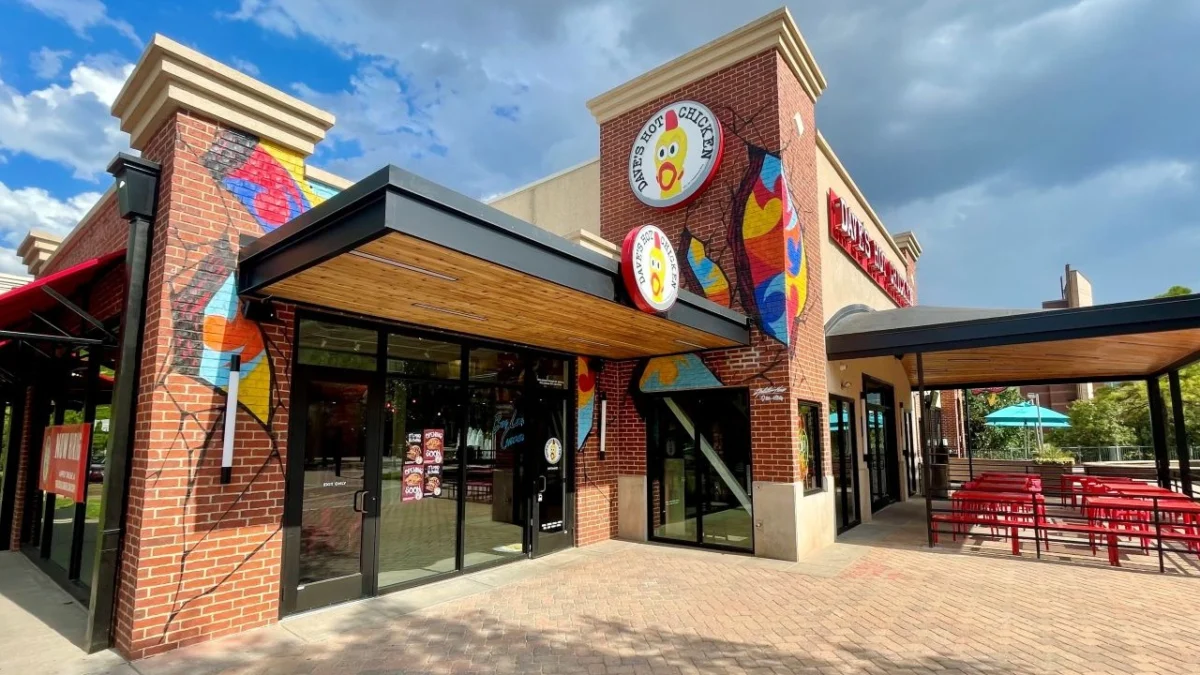
A significant financial entanglement has emerged within the burgeoning fast-casual dining sector, as TIG Reaper, a prominent franchisee of Dave’s Hot Chicken and Qdoba, has officially filed for Chapter 11 bankruptcy protection. The filing, lodged with the U.S. Bankruptcy Court for the Eastern District of Pennsylvania on September 21, 2026, highlights a complex legal battle with its primary lender, Bank Midwest, and raises questions about the financial stability of multi-brand franchise operators navigating rapid expansion. TIG Reaper currently operates seven Dave’s Hot Chicken locations across Pennsylvania, New Jersey, and Delaware, with an additional three in advanced stages of development. The company also manages a substantial portfolio of 41 Qdoba restaurants spread across Delaware, New Jersey, New York, Pennsylvania, and Florida.
The bankruptcy petition reveals that TIG Reaper’s total assets and liabilities are estimated to be between $10 million and $50 million. The largest creditor listed is Bank Midwest, to which the franchisee owes approximately $8.8 million. Further financial strain is evident through about $305,000 in outstanding merchant cash advances from three separate lenders. This situation underscores the considerable financial leverage and potential risks associated with multi-unit franchise operations, particularly when reliant on substantial debt financing for growth.
The Genesis of the Dispute: A Mounting Debt
The core of TIG Reaper’s financial distress appears to stem from its extensive borrowing relationship with Bank Midwest. The financing timeline indicates a significant loan facility extended in August 2024, comprising a $1.65 million term loan and a $5 million drawdown line of credit. This financial arrangement was further bolstered in November 2025, when Bank Midwest increased the drawdown facility to $8.35 million. Crucially, this modification also expanded the bank’s collateral package to encompass ten of TIG Reaper’s restaurant locations, suggesting a strategic move to secure its lending against a broader base of assets.
However, the relationship soured as TIG Reaper reportedly encountered difficulties in meeting its repayment obligations. According to court documents, Bank Midwest subsequently accelerated approximately $8.8 million of the outstanding debt. This acceleration led to a lawsuit filed by the bank on September 8, 2026, seeking to recover roughly $8.84 million, inclusive of penalties and accrued fees. In its legal action, Bank Midwest also requested the appointment of a receiver to take control of and subsequently sell TIG Reaper’s restaurant assets, a move aimed at liquidating collateral to satisfy the debt.
TIG Reaper, however, disputes the bank’s claims, asserting that it made a payment of nearly $104,000 on July 20, 2026, and challenging the validity of several alleged nonmonetary defaults cited by the bank. This contention forms a critical point of divergence in the ongoing legal proceedings, suggesting a potential disagreement over the interpretation of loan covenants and the circumstances surrounding the alleged breaches.
A Proposed Sale Interrupted
In parallel to the escalating conflict with Bank Midwest, TIG Reaper was reportedly in the process of divesting its Dave’s Hot Chicken business for an estimated $30 million. According to TIG Reaper’s legal filings, this proposed sale was anticipated to be sufficient to fully repay its outstanding debt to Bank Midwest. However, TIG Reaper alleges that the bank’s aggressive actions, including the declaration of defaults and the subsequent lawsuit, directly interfered with this potential transaction. The franchisee claims that these actions led a prospective buyer to significantly reduce their offer, effectively derailing the planned sale and exacerbating the financial crisis.
This alleged interference highlights a common tension in distressed business situations: the desire of a lender to recover its funds versus the operational needs and strategic initiatives of the borrower. The franchisee’s narrative suggests that the bank’s pursuit of immediate debt recovery may have inadvertently undermined a more amicable and complete resolution through a strategic sale.
Counterclaims and Cross-Collateralization Concerns
In a significant development, TIG Reaper and three affiliated entities filed a countersuit against Bank Midwest on September 21, 2026, the same day the bankruptcy petitions were submitted. The countersuit includes claims of breach of contract, among other allegations. TIG Reaper is seeking at least $14 million in damages and is petitioning the bankruptcy court to formally declare that its Dave’s Hot Chicken entities are not liable for the debts incurred by TIG Reaper’s separate Qdoba businesses. Furthermore, the franchisee is seeking a judicial ruling that the collateral securing the Dave’s Hot Chicken loans cannot be used to satisfy the obligations of the Qdoba operations, a clear effort to segment the financial liabilities.
This legal maneuver points to a crucial distinction TIG Reaper aims to uphold: the separation of financial commitments between its Dave’s Hot Chicken and Qdoba franchises. The franchisee maintains that the loans for each brand were distinct and that the Dave’s Hot Chicken entities did not guarantee the Qdoba debt, nor were the loans cross-collateralized. The bankruptcy court’s decision on this matter will have significant implications for how Bank Midwest can pursue its claims and recover its funds.
.jpg?width=1280&&quality=80&disable=upscale)
Dave’s Hot Chicken Responds: A Franchisee’s Financial Matter
In the wake of the bankruptcy filing, Dave’s Hot Chicken corporate issued a statement to Nation’s Restaurant News, emphasizing that the situation is a financial dispute solely between TIG Reaper and its lender. "This is a financial matter involving TIG, an independently owned and operated franchisee, and its lender," the statement read. "The loan and related financial dispute are between TIG and its lender, not Dave’s Hot Chicken corporate, and the situation does not involve the broader Dave’s Hot Chicken franchise system."
The company further assured stakeholders that the affected Dave’s Hot Chicken restaurants remain operational and that the brand remains committed to upholding its standards and guest experience across its entire network. This official response aims to contain any potential negative perception of the brand and reassure both consumers and other franchisees that the issues are isolated to a single operator’s financial dealings.
Dave’s Hot Chicken: A Growth Phenomenon
The bankruptcy filing by TIG Reaper occurs against a backdrop of remarkable growth for Dave’s Hot Chicken. Founded just nine years ago, the Nashville-hot chicken chain has experienced a meteoric rise in popularity and expansion. In 2025 alone, the company reported a staggering 51% increase in sales, reaching $965.9 million. Its unit count also surged by 52.3%, concluding the year with nearly 400 locations nationwide, according to data from industry analysis firm Technomic. This impressive growth trajectory highlights the strong consumer demand for the brand’s concept and its successful market penetration.
The contrast between the brand’s overall success and the financial struggles of one of its franchisees underscores the complexities of the franchise model, where the performance of individual operators can diverge significantly from the brand’s aggregate success.
Qdoba Franchise Defaults Add Another Layer of Complexity
The financial entanglement of TIG Reaper extends beyond its Dave’s Hot Chicken operations. The company has also defaulted on a separate $20 million loan from Bank Midwest that is specifically tied to its 41 Qdoba restaurants. Court filings related to the Qdoba default reveal that Bank Midwest alleges TIG Reaper violated the terms of its loan agreements and failed to rectify the situation after being provided an opportunity to do so. The bank contends that TIG Reaper has experienced a significant liquidity problem, which it failed to disclose, thereby breaching its contractual obligations.
Adding to the legal complexities, the lawsuit alleges that TIG Reaper entered into an agreement to terminate its Qdoba franchise relationship and sell those restaurants without notifying Bank Midwest. This action, according to the bank, potentially jeopardizes the collateral securing the $20 million loan. Consequently, Bank Midwest is seeking the appointment of a receiver for the 41 Qdoba locations to manage and eventually sell them to recover the outstanding debt.
This situation further complicates TIG Reaper’s bankruptcy proceedings, as it involves a second major financial distress event with the same lender, albeit related to a different brand. The franchisee’s assertion that Dave’s Hot Chicken and Qdoba operations are financially distinct is crucial in navigating these intertwined liabilities.
Analysis: Implications for Franchise Systems
The Chapter 11 filing by TIG Reaper serves as a stark reminder of the inherent risks and financial pressures faced by multi-brand franchisees, particularly those operating in rapidly expanding markets. The case highlights several key implications:
- Leverage and Growth: While debt financing is a common tool for franchisees to fuel expansion, excessive leverage can create a precarious financial situation, making operators vulnerable to market downturns or operational challenges. The substantial loans from Bank Midwest, while enabling growth, also became a significant burden when repayment faltered.
- Lender-Borrower Relationships: The dispute with Bank Midwest illustrates the critical importance of clear communication, transparency, and robust loan covenants. The differing accounts of defaults and payment history underscore the potential for adversarial relationships when financial pressures mount.
- Brand Dilution vs. Isolation: Dave’s Hot Chicken’s swift response to distance itself from the franchisee’s financial issues demonstrates a strategy to protect its brand reputation. However, prolonged or widespread franchisee distress can eventually cast a shadow over a brand, even if corporate operations are sound.
- Multi-Brand Operator Challenges: TIG Reaper’s dual involvement with Dave’s Hot Chicken and Qdoba presents a complex web of financial obligations. The legal battle over cross-collateralization and the separation of debts underscores the intricate financial management required for multi-brand operators.
- Regulatory Scrutiny: As the restaurant industry continues its rapid evolution, financial distress among large franchisees may attract greater scrutiny from lenders, franchisors, and potentially regulatory bodies concerned with market stability.
The outcome of TIG Reaper’s bankruptcy proceedings and the ongoing litigation with Bank Midwest will be closely watched by industry stakeholders. It may provide valuable insights into how financial disputes are resolved within the franchise ecosystem and the strategies employed by both lenders and franchisees to navigate challenging economic landscapes. The case also serves as a cautionary tale about the delicate balance between ambitious growth and sustainable financial management in the competitive restaurant sector.
This article was originally published on September 25, 2026.
