

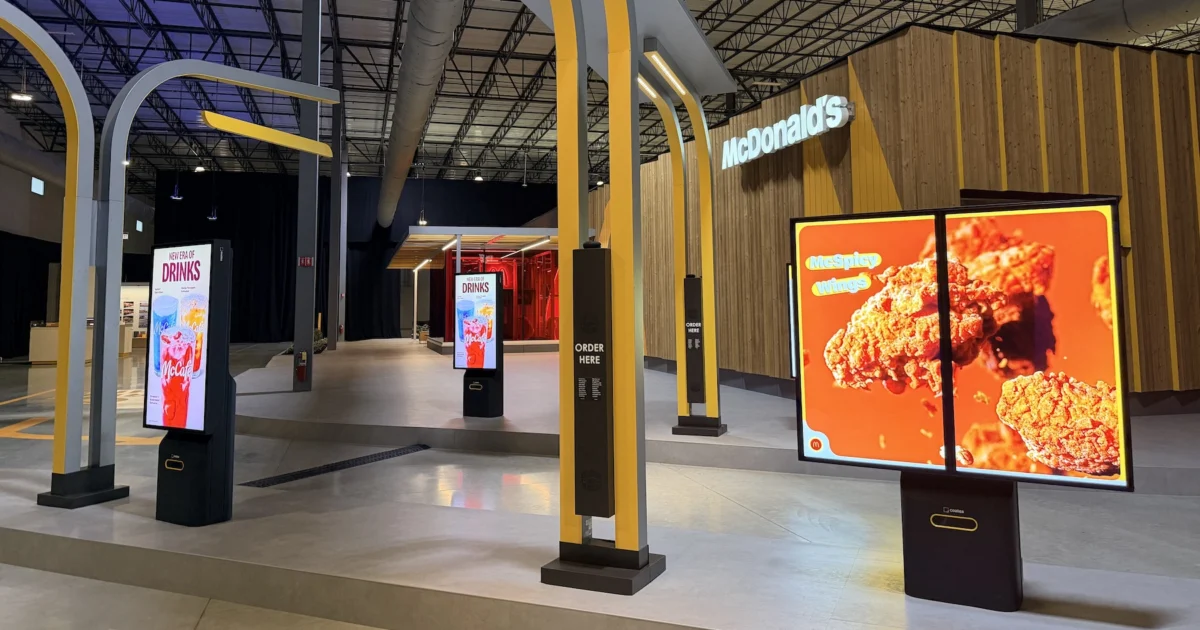
The fast-food giant McDonald’s is actively exploring a new frontier in revenue generation by transforming its extensive digital screen real estate into a platform for advertising. This strategic pivot, revealed during the company’s recent Investor Day presentation, centers on the development of a "commerce media network." This initiative aims to leverage McDonald’s immense customer reach and physical presence to sell advertising space to a diverse range of non-competing companies, effectively turning menu boards and in-restaurant displays into potential billboards.
A New Era of Digital Advertising for Fast Food
The core of McDonald’s new strategy involves a pilot program currently underway at approximately 450 of its locations. During the Investor Day presentation, a prominent example of this strategy was showcased: a Geico advertisement displayed on one of the chain’s drive-thru menu boards. This visual demonstration underscored the tangible shift the company is contemplating, moving beyond its traditional role as a purveyor of food to also become a significant player in the digital advertising ecosystem.
Morgan Flatley, McDonald’s Global Chief Marketing Officer, articulated the company’s vision for this new venture during the Investor Day presentation. She emphasized the potential for this initiative to generate substantial revenue for the McDonald’s system with minimal additional costs or operational complexities. Crucially, Flatley assured stakeholders that the program is designed to avoid any disruption to the customer experience, a critical factor for a brand built on convenience and speed. "It’s an opportunity to generate revenue for the system, with little in the way of additional costs, no operational complexity, and no disruption to our customer experience," Flatley stated. This measured approach suggests a careful rollout, prioritizing learning and optimization before widespread implementation.
The Rise of Commerce Media Networks
The move by McDonald’s aligns with a broader, rapidly expanding trend in the retail and digital advertising sectors: the proliferation of commerce media networks. These networks are essentially platforms that allow businesses to monetize their customer data and digital touchpoints by selling advertising to third-party brands. EMarketer projects that U.S. ad spending in these networks is poised to exceed $100 billion by 2028, highlighting the significant financial potential and growing advertiser interest in this space.
This model is not new to the retail landscape. Major players such as Amazon, Walmart, Target, Kroger, and Instacart have already established robust commerce media networks, demonstrating their efficacy in generating significant revenue streams. The convenience store sector has also embraced this model, with brands like 7-Eleven, Wawa, Circle K, and Kwik Trip all operating their own media networks. These companies have found success in leveraging their high-traffic locations and customer engagement to attract advertisers.
For instance, Walmart Connect, Walmart’s commerce media network, reported an impressive $6.4 billion in revenue last year. In the most recent quarter, this network saw a substantial growth of 43%, underscoring the immense financial upside for retailers that successfully implement such strategies. While less common among traditional restaurant chains, some "eatertainment" concepts, like Topgolf and Chuck E. Cheese, have already ventured into this territory, paving the way for broader adoption within the industry.
McDonald’s Ambitious Revenue Projections
McDonald’s, with its unparalleled global footprint, is uniquely positioned to capitalize on the commerce media network model. The company boasts over 46,000 locations worldwide, including 13,700 in the United States alone. On a daily basis, these restaurants serve an astonishing 70 million customers globally. This immense scale provides an unparalleled opportunity to reach a vast and diverse consumer base.
Chief Financial Officer Ian Borden articulated the strategic importance of this initiative, stating, "Our brand is one of the most valuable in the world of any category or any industry, and we have more physical proximity than any other brand. We’re interacting with about 85% of the U.S. population at least once a year. So I think all those things mean we have a really interesting opportunity that’s going to allow us to generate more revenue over time." Borden’s comments highlight the synergistic relationship between McDonald’s brand power, its physical presence, and its customer engagement, all of which are key assets for a successful media network.

The company’s projections reflect this optimism. McDonald’s anticipates that its new media network could ultimately generate as much as $1 billion in annual revenue. This ambitious target underscores the company’s belief in the transformative potential of this venture.
Potential Advertising Venues and Franchise Considerations
McDonald’s new restaurant prototypes are designed with advertising in mind, incorporating multiple potential locations for ad placements. These include screens within the dining areas, which could host large, impactful advertisements, as well as the drive-thru menu boards, which already serve as a captive audience for quick-service promotions. The integration of these digital displays allows for dynamic content, potentially offering advertisers a range of creative options.
A significant consideration for McDonald’s is its franchise-dominant business model. In approximately 95% of cases, McDonald’s restaurants are owned and operated by independent franchisees. To date, the company has focused its testing efforts on company-owned locations. A crucial question that remains to be answered is how the revenue generated from these advertisements will be shared between McDonald’s corporate and its franchisees.
CFO Ian Borden acknowledged this early stage of the program, stating, "Right now we’re just learning, and we’re learning in company restaurants because we’ve got to figure out if we have an opportunity, and how we execute that." This indicates that the financial and operational frameworks for involving franchisees are still under development. The success of this initiative will likely depend on establishing a clear and mutually beneficial revenue-sharing model that incentivizes franchisee participation and ensures the program’s long-term viability.
Broader Implications for the Quick-Service Restaurant Industry
McDonald’s foray into commerce media signals a significant evolution for the quick-service restaurant (QSR) sector. As profit margins in the core business face increasing pressure from rising labor and ingredient costs, and as competition intensifies, brands are actively seeking diversified revenue streams. The success of McDonald’s in this area could inspire other large QSR chains to explore similar ventures.
The ability to leverage existing digital infrastructure and customer touchpoints for advertising revenue offers a low-overhead path to incremental profit. For advertisers, partnering with a brand as ubiquitous as McDonald’s provides access to a highly engaged audience at a critical moment – when they are actively making purchasing decisions. This "point-of-decision" advertising can be particularly effective, driving impulse buys and brand awareness.
However, the implementation of such networks also presents challenges. Maintaining brand consistency and ensuring that advertisements do not detract from the customer experience are paramount. The selection of advertisers will be crucial to avoid alienating customers or creating a perception of commercial overload. Furthermore, the ethical considerations surrounding the use of customer data for targeted advertising will likely come under increased scrutiny as these networks expand.
A Look Ahead: The Future of QSR Media
The coming years will likely see a more defined landscape emerge for commerce media within the QSR industry. McDonald’s strategic move is a strong indicator of the direction the sector may be heading. As the company refines its pilot program and potentially rolls out its media network more broadly, the industry will be watching closely.
The integration of advertising into the customer journey at fast-food establishments raises questions about the evolving definition of a "digital touchpoint" and the potential for new forms of customer engagement. While the primary focus for McDonald’s remains on serving food, its exploration of advertising revenue demonstrates a forward-thinking approach to maximizing the value of its brand and its vast operational infrastructure. The outcome of this initiative could redefine how fast-food companies interact with consumers and generate profits in the digital age.
