

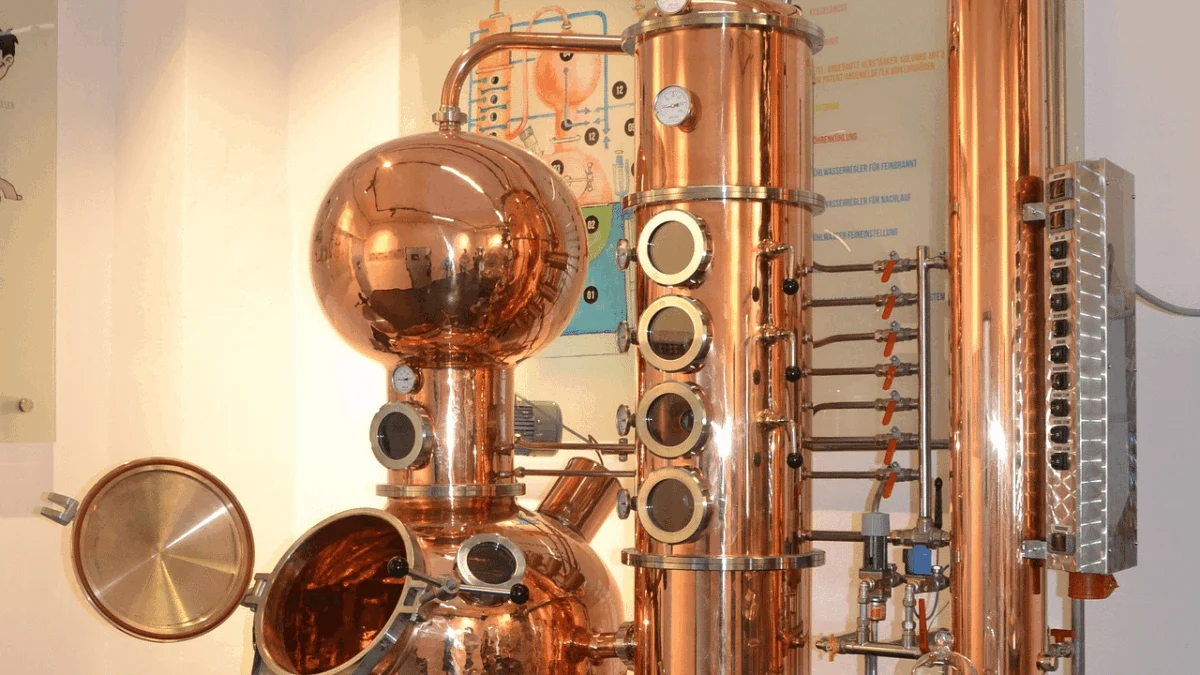
The global gin market, valued at approximately $15.3 billion in 2023 and projected to reach $20 billion by 2030, is defined by a singular botanical requirement: the predominant presence of juniper. However, the finished profile of a premium gin is the result of a sophisticated series of technical decisions made long after the botanical bill has been finalized. While the selection of herbs, spices, and fruits provides the raw aromatic potential, the distiller’s mastery over ratios, extraction methods, distillation strategies, and the precision of the "cut" determines whether the final spirit is a cohesive masterpiece or a disjointed collection of flavors. To understand the complexity of modern gin production, one must look past the ingredients and into the engineering of the distillation process itself.
The production cycle generally begins with a Neutral Grain Spirit (NGS), typically a high-proof ethanol distilled to at least 96% alcohol by volume (ABV). This base provides a "blank canvas," stripped of the heavy congeners and esters found in whiskey or rum bases. By starting with a clean, high-proof foundation, distillers can ensure that the volatile essential oils extracted from their botanicals remain the primary focus of the consumer’s palate.
The Calculus of Botanical Ratios and Concentration
The foundational step in gin engineering is the determination of the botanical-to-spirit ratio. Industry benchmarks for premium gin typically range between 20 and 35 grams of botanicals per liter of spirit. Within this mass, juniper remains the undisputed anchor, often comprising 60% or more of the total volume. The remaining 40% is where the distiller’s "signature" is etched.
Technical precision in these ratios is often expressed relative to the juniper weight. A standard "London Dry" style might utilize a "half-ratio" for coriander seeds—the second most common botanical—providing citrus and spicy notes that bridge the gap between the resinous juniper and other lighter aromatics. Secondary botanicals, such as angelica root, cassia bark, or cinnamon, are frequently introduced at a "one-tenth" ratio (approximately 1 gram for every 10 grams of juniper). At the most minute level, potent "modifier" botanicals—such as clove, grains of paradise, or dried citrus peel—may be added at a "one-hundredth" ratio. Despite their tiny mass, these ingredients can fundamentally alter the spirit’s finish and mouthfeel.
A critical late-stage decision involves the choice between "single-shot" and "multi-shot" distillation. In a single-shot process, the botanicals are distilled in a ratio that reflects the final desired flavor, requiring only the addition of water to reach bottling strength. Conversely, the multi-shot method—a technique employed by many large-scale commercial brands for efficiency—involves distilling a highly concentrated "botanical essence" using a much higher density of ingredients. This concentrate is later "stretched" by adding more NGS and water. While some purists argue that single-shot distillation preserves more delicate top notes, multi-shot distillation offers significant logistical advantages and a more consistent profile for high-volume international brands.
The Chronology of Extraction: Maceration versus Vapor Infusion
Once the ratios are set, the distiller must choose the method of flavor extraction. This choice dictates the "weight" and "brightness" of the gin. The two primary schools of thought are maceration (steeping) and vapor infusion.
Maceration involves soaking the botanicals directly in the spirit. This can occur at room temperature for an extended period—such as Beefeater’s celebrated 24-hour soak—or directly within the pot still as it begins to heat. This "tea-bag" approach allows for the extraction of heavier, earthier compounds and oils. The result is typically a more robust, "traditional" gin with a significant presence on the mid-palate.
Vapor infusion, popularized by brands such as Bombay Sapphire, takes a different mechanical approach. The botanicals are placed in a specialized basket—often a Carter-Head still or a similar modification—suspended above the boiling spirit. As the ethanol evaporates and rises, the hot vapors pass through the botanical basket, volatilizing the aromatic compounds without boiling the ingredients themselves. This method is favored for creating lighter, more floral, and "elegant" gins, as it avoids the extraction of some of the more bitter, tannic compounds found in roots and barks.
The physical placement of these baskets further refines the flavor. A basket placed high in the still’s neck encounters higher temperatures and more concentrated vapors, leading to a faster, more intense extraction. A lower placement or a slower distillation rate allows for a more nuanced integration of flavors. Modern craft distillers frequently employ a hybrid approach, macerating hardy roots and seeds while vapor-infusing delicate florals and fresh citrus peels to achieve a multi-dimensional profile.
Distillation Strategy: The Choice Between Unity and Individualism
The regulatory landscape often dictates the distillation strategy. To be labeled as a "London Dry Gin," all botanicals must be distilled together in a single process, and no flavorings or colorings can be added after distillation. This requires the distiller to find a "goldilocks zone" where every botanical performs optimally at the same temperature and time.
However, the "Contemporary" or "New Western" gin movement has embraced a more modular approach: individual botanical distillation. In this method, each ingredient is distilled separately in its own run. This allows the distiller to perfect the "cuts" for every specific item. For instance, the temperature at which lemon peel releases its best oils is different from the temperature required to extract the deep, earthy notes of orris root. Once these individual distillates (or "essences") are created, they are blended in precise proportions. This method offers unparalleled control and consistency but lacks the "chemical marriage" that some distillers believe occurs when ingredients are boiled together in the same pot.
The Science of the ‘Cut’: Navigating the Distillation Timeline
Perhaps the most vital skill in a distiller’s repertoire is the management of "cuts." Distillation is a linear process governed by boiling points and time. As the still heats up, different chemical compounds emerge in a specific sequence:
- Foreshots and Heads: These are the first compounds to come off the still. They contain low-boiling-point alcohols like methanol and acetone, as well as high-intensity esters. While they smell "bright" and "fruity," they are often harsh, solvent-like, and potentially toxic. Distillers discard the foreshots and carefully monitor the heads.
- The Heart: This is the "sweet spot" of the run. It contains the cleanest ethanol and the most desirable essential oils from the botanicals. The goal of any distiller is to maximize the volume of the heart while ensuring it remains free of the harshness of the heads and the heaviness of the tails.
- The Tails: As the run nears its end, the temperature rises, and heavier, oilier compounds—known as fusel oils—begin to dominate. These can introduce flavors of damp cardboard, bitter roots, or cooked vegetables. While a small amount of "tail" can add body and "bass notes" to a gin, too much will cloud the spirit (louching) and ruin the clarity of flavor.
The decision of exactly when to switch from heads to hearts, and from hearts to tails, is the "art" of distilling. A "tight" cut results in a very clean, crisp gin, while a "wide" cut produces a more complex, oily, and pungent spirit.
Broader Implications: The Evolution of Consumer Palates
The technical decisions made on the distillery floor have direct implications for the global market. As consumer interest in "craft" spirits has grown, so too has the demand for transparency and innovation in production. The rise of "terroir-driven" gins—those using local, foraged botanicals—has forced distillers to adapt these traditional techniques to unconventional ingredients.
Data from the Spirits Business suggests that "Super Premium" gin (bottles priced above $35) is the fastest-growing segment of the market. This growth is driven by consumers who value the technical narrative of the product—the maceration time, the type of still used (copper pot vs. column), and the purity of the water used for dilution. Water itself is a final, critical technical variable; most high-end distillers utilize reverse osmosis or demineralization to ensure the water does not interfere with the delicate botanical balance achieved during distillation.
In conclusion, the flavor of a gin is far more than a recipe of ingredients. It is a reflection of a distiller’s ability to manage the physics of evaporation and the chemistry of botanical extraction. By manipulating ratios, choosing between maceration and vapor, deciding on a blending strategy, and executing precise cuts, the distiller transforms a neutral industrial spirit into a complex sensory experience. As the industry continues to evolve, these technical nuances will remain the primary differentiator between standard commercial offerings and the world’s most celebrated gins.
