

The 2022 publishing landscape was characterized by a profound shift toward themes of resilience, historical reclamation, and the intersection of science and human experience. As the global community moved further into a post-pandemic reality, readers and critics alike gravitated toward literature that offered both deep specialized knowledge and emotional catharsis. This trend is exemplified in the year’s curated selections across the culinary, fiction, and nonfiction genres, which reflect a collective desire to understand the complexities of trauma, the nuances of global culture, and the hidden mechanics of the natural world. From the chemical wonders of salt to the neurological impacts of music, the literature of 2022 provided a roadmap for navigating an increasingly complex social and political environment.
Culinary Literature and the Preservation of Global Traditions
The culinary books of 2022 moved beyond simple recipe collections, evolving into anthropological studies of culture and survival. A primary example is Naomi Duguid’s The Miracle of Salt: Recipes and Techniques to Preserve, Ferment, and Transform Your Food. Duguid, an award-winning writer known for her deep dives into regional cuisines, explores the fundamental role of salt in human civilization. The book serves as a technical manual for fermentation and preservation—techniques that have regained popularity as global supply chains fluctuated. Duguid’s work emphasizes that salt is not merely a seasoning but a historical cornerstone of food security and flavor development across continents.
In the realm of regional spotlighting, Rambutan: Recipes from Sri Lanka by Cynthia Shanmugalingam and On the Himalayan Trail: Recipes and Stories from Kashmir to Ladakh by Romy Gill represent a significant effort to document cuisines often overshadowed by broader South Asian narratives. Shanmugalingam’s work brings Sri Lankan gastronomy to a Western audience, utilizing photography and narrative to celebrate the island’s unique spice profiles. Conversely, Romy Gill’s exploration of the Himalayas provides a vital record of Kashmiri and Ladakhi traditions. Given the ongoing political volatility in the Kashmir region, Gill’s documentation of over 80 recipes serves as a form of cultural preservation, ensuring that the stories and flavors of a conflict-ridden area remain accessible to the global community.

Additionally, the collaboration between the Atlas Obscura and Gastro Obscura teams resulted in The Explorer’s Library: Books That Inspire Wonder. This two-book set reflects a broader 2022 trend of "curiosity-driven travel," focusing on the quirky and the overlooked. These publications suggest that even as physical travel faced hurdles, the appetite for global exploration through literature remained robust.
Fiction: Reimagining History and the Female Perspective
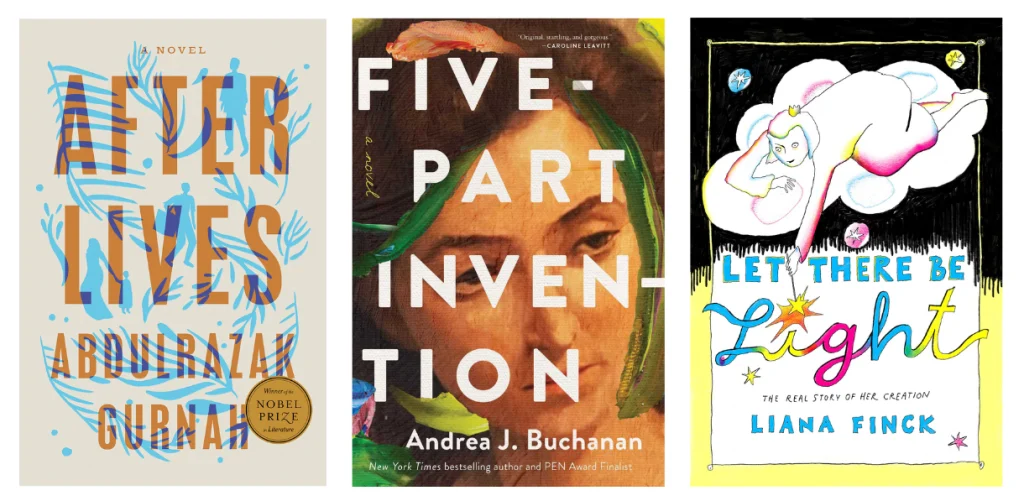
The fiction of 2022 was marked by a reimagining of foundational narratives and a focus on intergenerational legacies. Andrea J. Buchanan’s Five-Part Invention explores the concept of inherited trauma through the lives of five generations of women. This work aligns with contemporary psychological research into epigenetics, suggesting that the experiences of ancestors can leave biological and emotional imprints on subsequent generations.
In a more irreverent vein, Liana Finck’s Let There Be Light: The Real Story of Her Creation offers a feminist retelling of the Book of Genesis. By depicting the Creator as a female figure and placing biblical patriarchs in modern settings like New York City, Finck uses humor and illustration to question traditional power structures and the "baggage" of religious tradition.
A major highlight for the year was the North American paperback release of Afterlives by Abdulrazak Gurnah. Gurnah, the 2021 Nobel Prize laureate in Literature, uses this novel to examine the devastating effects of German colonial rule in East Africa (modern-day Tanzania). The narrative follows the trajectory of characters displaced by war and colonization, providing a necessary counter-perspective to Eurocentric historical accounts. The book’s longlisting for the Orwell Prize for Political Fiction underscores its significance as a tool for understanding the long-term impacts of imperialist aggression.

Nonfiction: Science, Geopolitics, and Exploration
The nonfiction sector in 2022 saw several landmark releases that bridged the gap between academic research and mainstream storytelling. Candice Millard’s River of the Gods: Genius, Courage, and Betrayal in the Search for the Source of the Nile exemplifies the "narrative nonfiction" style. Millard’s research highlights the expeditions of Richard Burton and John Hanning Speke, but more importantly, it rehabilitates the legacy of Sidi Mubarak Bombay. Bombay, an formerly enslaved man from East Africa, was instrumental to the success of these British expeditions, yet he was largely erased from the Victorian historical record. Millard’s work reflects a larger movement in 2022 to acknowledge the indigenous and local figures who made "Western" discoveries possible.
In the sphere of geopolitics, Louisa Lim’s Indelible City: Dispossession and Defiance in Hong Kong provides a timely analysis of a city in transition. Lim, an award-winning journalist, combines memoir with investigative reporting to document Hong Kong’s struggle for identity under both British colonial rule and the current Chinese administration. The book challenges established myths and gives voice to the residents navigating the "knife edge" of modern political suppression.
Scientific exploration also took center stage with Ed Yong’s An Immense World: How Animal Senses Reveal the Hidden Realms Around Us. Following his Pulitzer Prize-winning coverage of the COVID-19 pandemic, Yong shifted his focus to sensory biology. The book introduces the concept of the Umwelt—the unique "sensory bubble" in which every organism exists. By explaining how animals perceive magnetic fields, vibrations, and ultraviolet light, Yong encourages readers to look beyond human-centric reality, a theme that resonated with a public seeking a deeper connection to the natural world.
The Science of Belief and the Architecture of Healing
Mental health and the "science of the self" were perhaps the most dominant themes in the 2022 memoir and self-help categories. David McRaney’s How Minds Change: The Surprising Science of Belief, Opinion, and Persuasion addressed the growing social polarization of the decade. McRaney’s research into the psychology of persuasion suggests that empathy and rapport-building are more effective at changing minds than logic-based arguments alone—a finding with significant implications for addressing conspiracy theories and political divides.

The year also saw a convergence of literature focusing on chronic illness and trauma. Meghan O’Rourke’s The Invisible Kingdom: Reimagining Chronic Illness arrived at a critical juncture as the medical community began to grapple with the long-term effects of "Long COVID." O’Rourke, a patient with Ehlers-Danlos Syndrome (EDS), critiques the Western medical system’s inability to handle poorly understood, multisystemic conditions. Her work has been praised by caregivers and medical professionals for shedding light on the "invisible" struggle of millions living with chronic dysfunction.
Similarly, Dr. Gabor Maté’s The Myth of Normal: Trauma, Illness, and Healing in a Toxic Culture became a bestseller by arguing that modern society’s definition of "normal" is fundamentally unhealthy. Maté explores how "small t" and "big T" traumas act as epigenetic triggers for physical disease. This work, along with Susan Cain’s Bittersweet: How Sorrow and Longing Make Us Whole, suggests that acknowledging grief and pain is a prerequisite for genuine healing. Cain’s book argues against "toxic positivity," advocating instead for an embrace of the bittersweet nature of life as a way to foster deeper human connection.
Chronology of 2022 Literary Milestones
The progression of 2022 was marked by several key literary events that shaped the year’s reading habits:
- Spring 2022: The release of Bittersweet and The Invisible Kingdom sparked a national conversation on the intersection of mental health and chronic physical illness.
- Summer 2022: Candice Millard’s River of the Gods and Ed Yong’s An Immense World dominated the nonfiction charts, highlighting a renewed interest in history and natural science.
- Autumn 2022: The publication of The Myth of Normal and Lighter by Yung Pueblo signaled a peak in the "self-evolution" movement, with readers seeking structured ways to process the collective trauma of the preceding years.
- Winter 2022: The holiday season saw the release of high-concept sets like The Explorer’s Library, emphasizing the role of books as significant cultural gifts.
Broader Impact and Implications
The curated literature of 2022 indicates a shift in the role of the author from mere storyteller to "sense-maker." In a world characterized by rapid change and information overload, these books provided frameworks for understanding history, biology, and the human mind. The success of titles like How Minds Change and An Immense World suggests that the public is increasingly interested in the "why" behind human behavior and the natural world.

Furthermore, the emphasis on marginalized voices—from Alice Wong’s disability activism in Year of the Tiger to the reclamation of Hong Kong’s history in Indelible City—points toward a more inclusive future for the publishing industry. These works suggest that the most impactful stories of the decade will be those that challenge existing power structures and provide a voice to the "invisible" members of society. As readers look toward the future, the lessons of 2022—rooted in empathy, curiosity, and the courage to face difficult truths—remain more relevant than ever.
