

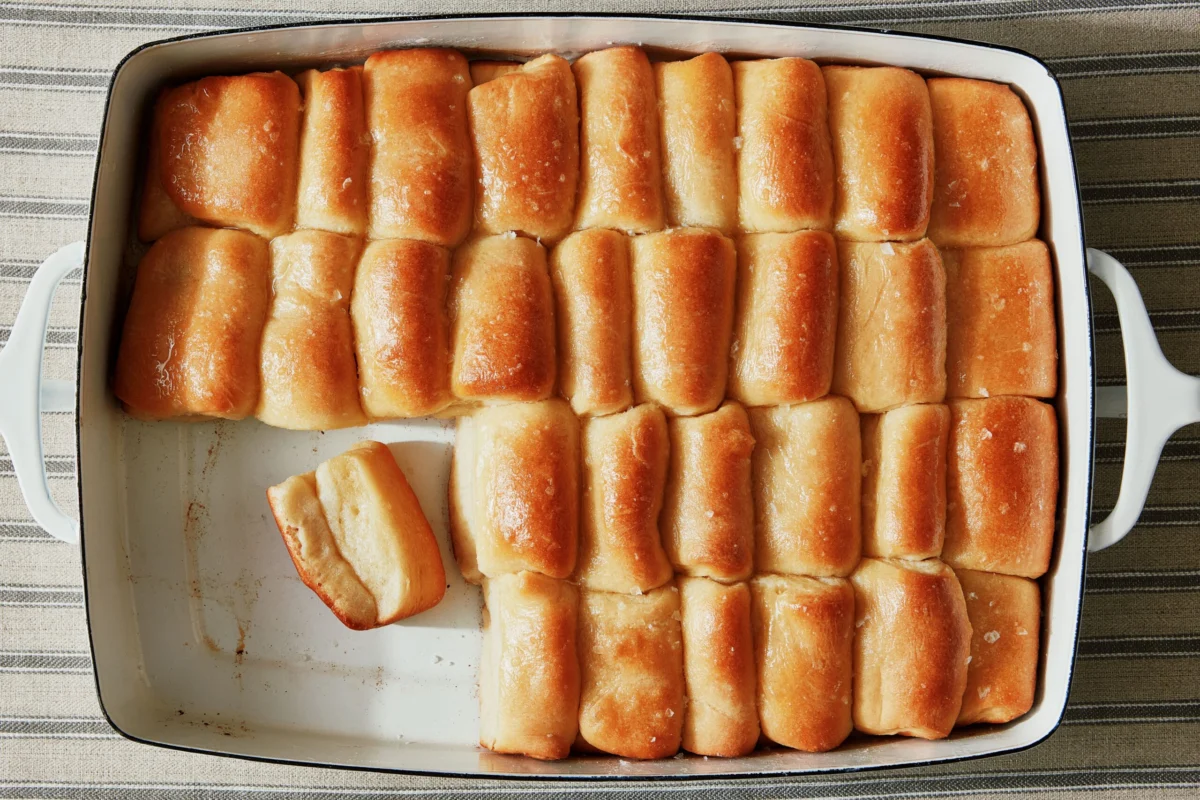
With burnished tops, buttery layers, and a sprinkle of flaky sea salt, Parker House rolls stand as a quintessential American dinner roll, their distinctive form and rich flavor having graced tables for over a century and a half. Created at Boston’s venerable Parker House Hotel in the 19th century, these soft, fluffy yeast rolls are often affectionately termed “pocketbook rolls” due to their signature folded shape, a design that is as functional as it is aesthetically pleasing. Far more than a mere accompaniment, they have become a cherished tradition, served alongside holiday centerpieces like Thanksgiving turkey or festive ham, and repurposed for breakfast, their tender interiors readily accepting a slather of honey or jam. This enduring appeal solidifies their place not just in American gastronomy but also in its cultural memory, representing a blend of culinary ingenuity and historical significance.
A Glimpse into the Parker House Hotel’s Genesis
To fully appreciate the genesis of the Parker House roll, one must first delve into the rich history of its birthplace: the Parker House Hotel in Boston, Massachusetts. Established in 1855 by Harvey D. Parker, the hotel quickly ascended to prominence, becoming a landmark of luxury and innovation in the burgeoning American hospitality industry. Located on School Street, it was a marvel of its time, boasting amenities such as an elevator (reportedly the first in an American hotel), private bathrooms, and a sophisticated dining experience that attracted a distinguished clientele. Parker, a visionary entrepreneur, meticulously oversaw every detail, from the decor to the kitchen, ensuring an unparalleled standard of service and cuisine. The hotel’s commitment to culinary excellence created an environment ripe for the birth of a dish that would become an American classic. Over its storied existence, the Parker House Hotel, now known as the Omni Parker House, has hosted luminaries ranging from Charles Dickens, who resided there for two years while giving readings, to U.S. Presidents, and members of the literary elite like Ralph Waldo Emerson and Henry Wadsworth Longfellow, all of whom would have experienced its culinary offerings, including its now-famous rolls.
The Enigmatic Origin of the Pocketbook Roll
The precise moment and method of the Parker House roll’s creation are shrouded in a blend of culinary legend and historical ambiguity, a common characteristic of many beloved dishes from the 19th century. While the exact date remains debated, culinary historians generally place its invention sometime in the 1870s. One popular anecdote attributes the roll’s unique shape to an exasperated or perhaps playful baker. The story goes that a baker, supposedly annoyed by a customer’s complaint or a sudden disturbance, angrily shoved a sheet of partially rolled dough into the oven, resulting in the distinctive folded indentation. Another, more plausible narrative suggests a deliberate act of innovation, where a baker sought to create a roll that was simultaneously soft, rich, and easy to tear apart, optimizing the experience for diners.
Regardless of the exact circumstances, the defining characteristic—the fold—is central to its identity. Unlike conventional dinner rolls, which are often shaped into simple spheres or braids, Parker House rolls begin as flattened rectangles of dough, generously brushed with melted butter, and then folded over themselves. This technique achieves several culinary objectives: it creates a soft, buttery seam down the middle, making them effortlessly pull-apart; it traps steam during baking, contributing to their renowned fluffy interior; and the double layer of dough ensures a delightful textural contrast between the crisp, buttery exterior and the tender crumb within. The result was a roll that was not only delicious but also visually distinctive, quickly gaining favor among the hotel’s discerning patrons and subsequently spreading its fame beyond Boston’s culinary circles.
Spreading the Word: From Hotel Dining Rooms to Home Kitchens
The popularity of Parker House rolls grew organically, initially by word of mouth among the hotel’s elite clientele, and later through their inclusion in prominent cookbooks of the era. As the 19th century gave way to the 20th, the demand for this unique roll surged, becoming a standard offering in fine dining establishments across the United States. Its appearance on restaurant menus and in society cookbooks cemented its status as a sophisticated yet comforting staple.
A pivotal moment in the democratization of the Parker House roll came with its inclusion in Marion Cunningham’s 1984 The Fannie Farmer Baking Book, an adaptation and modernization of the foundational Fannie Farmer Cookbook. Fannie Farmer herself, a trailblazing culinary educator, revolutionized American home cooking in the late 19th and early 20th centuries by advocating for standardized measurements and clear, precise instructions, transforming cooking from an art based on intuition into a more accessible science. Cunningham’s adaptation brought the classic Parker House roll recipe to a new generation of home bakers, ensuring its continued legacy. By providing a "straightforward enough for novice bread bakers" recipe, as noted, the roll transcended its exclusive hotel origins to become a beloved project for home cooks, further solidifying its place in the national culinary consciousness. This transition from professional kitchen secret to accessible home recipe highlights a broader trend in American culinary history, where once-exclusive dishes become widely adopted through the power of popular cookbooks and a growing interest in home baking.
The Art and Science of the Perfect Parker House Roll
The appeal of Parker House rolls lies in their seemingly simple yet deceptively precise construction. The core ingredients—flour, yeast, milk, sugar, salt, and, crucially, butter—combine to create a dough that, when handled correctly, yields a product of remarkable texture and flavor. The process begins with the activation of yeast, a living organism responsible for the dough’s rise, lending the rolls their characteristic lightness. Kneading, whether by hand or with a stand mixer, develops the gluten in the flour, providing the necessary structure to trap the gases produced by the yeast, resulting in a soft, elastic crumb.
The distinctive “pocketbook” shape is achieved by rolling out the dough into a thin sheet, cutting it into rectangles, and then, critically, brushing each piece with a generous amount of melted butter before folding it in half. This internal layer of butter not only contributes to the roll’s rich flavor and tender texture but also prevents the two halves from fully fusing during baking, allowing them to be easily pulled apart at the table. A second application of melted butter immediately after baking provides the signature sheen and enhances the golden-brown crust, often finished with a sprinkle of flaky sea salt for a subtle counterpoint to the buttery sweetness.
Addressing Common Baking Challenges: Insights for Success
Even with a well-tested recipe, baking can present challenges. For Parker House rolls, issues such as density or an inadequate rise are common concerns for aspiring bakers. Culinary experts and seasoned bakers emphasize several key factors to mitigate these problems.
- Flour Measurement: One of the most frequent culprits for dense rolls is an excess of flour. Many home bakers tend to scoop flour directly from the bag, which can compact it, leading to significantly more flour by weight than intended. Professional bakers and recipes often recommend weighing flour using a kitchen scale for precision. If a scale is unavailable, the "spoon and level" method—gently spooning flour into a measuring cup and then leveling it off with a straight edge—is preferred over scooping.
- Proofing: The rising process, or "proofing," is crucial. Insufficient rising results in a heavy, dense roll because the yeast hasn’t had enough time to produce sufficient carbon dioxide to aerate the dough. Conversely, overproofing can also lead to a dense, sometimes crumbly texture, as the yeast exhausts its food supply and the gluten structure weakens and collapses. The "poke test" is a reliable indicator: gently press a floured finger into the dough; if the indentation slowly springs back halfway, the dough is perfectly proofed. If it springs back immediately, it needs more time; if it collapses, it’s overproofed.
- Temperature and Environment: Yeast activity is highly sensitive to temperature. A warm, draft-free environment is ideal for rising, typically between 75-85°F (24-29°C). Too cold, and the rise will be sluggish; too hot, and the yeast may over-ferment, leading to off-flavors.
Strategic Preparation: Making Ahead and Freezing
The versatility of Parker House rolls extends to their preparation, offering significant flexibility for home cooks and professional kitchens alike, a crucial aspect for holiday meal planning.
- Advance Dough Preparation: The dough for Parker House rolls can be mixed up to 8 hours ahead of time. After the initial knead, the dough can be covered tightly and refrigerated, allowing for a slow, cold fermentation. This not only fits into a busy schedule but can also enhance the flavor development of the dough, producing a more nuanced taste.
- Shaped Rolls for Later Baking: Once the rolls are shaped into their distinctive pocketbook form, they can be covered and refrigerated for anywhere from 30 minutes to 6 hours before baking. This allows for partial proofing in the cold, providing a head start without overproofing.
- Partial Baking for Freshness: For ultimate convenience, rolls can be baked earlier in the day and then finished just before serving. This involves removing them from the oven about 5 minutes before they are fully done—they should be puffed and cooked through but not yet deeply golden. A final stint in a hot oven when ready to serve will crisp them up and give them their perfect color and warmth.
- Freezing Options: Parker House rolls are excellent candidates for freezing, both baked and unbaked.
- Baked Rolls: Fully baked and cooled rolls can be frozen for up to a month. To restore their soft texture, thaw them at room temperature and then rewarm them in a low oven. A light spritz of water on top of the rolls before reheating can help maintain their plushness and prevent them from drying out or becoming too dark.
- Unbaked Rolls: For a truly fresh-baked experience on demand, risen, unbaked rolls can also be frozen for up to a month. They can be baked directly from the freezer, typically requiring an additional 5 minutes of cooking time to account for their frozen state. This method allows for the aroma of freshly baked bread to fill the kitchen at a moment’s notice, a significant advantage for entertainers and busy families.
Cultural Resonance and Broader Implications
The Parker House roll’s enduring presence in American cuisine transcends its simple ingredients and elegant shape; it embodies a cultural touchstone. It represents a particular era of American culinary sophistication, a period when hotels were at the forefront of gastronomic innovation. Its adoption into home kitchens, thanks in part to figures like Fannie Farmer and Marion Cunningham, underscores its transition from an exclusive hotel delicacy to a democratic staple, accessible to all who wished to try their hand at baking.
The roll’s consistent appearance at holiday tables, particularly Thanksgiving and Christmas, highlights its role as a comfort food, evoking warmth, family gatherings, and tradition. It’s a dish that connects generations, with recipes often passed down, sometimes with personal adaptations. This tradition contributes to a broader appreciation for foundational American recipes, ensuring their survival in an ever-evolving culinary landscape.
From an economic perspective, the enduring popularity of such classic recipes fuels a market for baking ingredients, cookbooks, and kitchen equipment. It encourages a culture of home baking, which, while sometimes challenging, offers immense satisfaction and a connection to culinary heritage. The Parker House roll, therefore, is not merely a bread product; it is a symbol of American culinary history, a testament to the power of a well-crafted recipe, and a continuing source of comfort and tradition for millions. Its legacy serves as a reminder that some of the most profound culinary experiences are often found in the elegant simplicity of a perfectly executed classic.
