

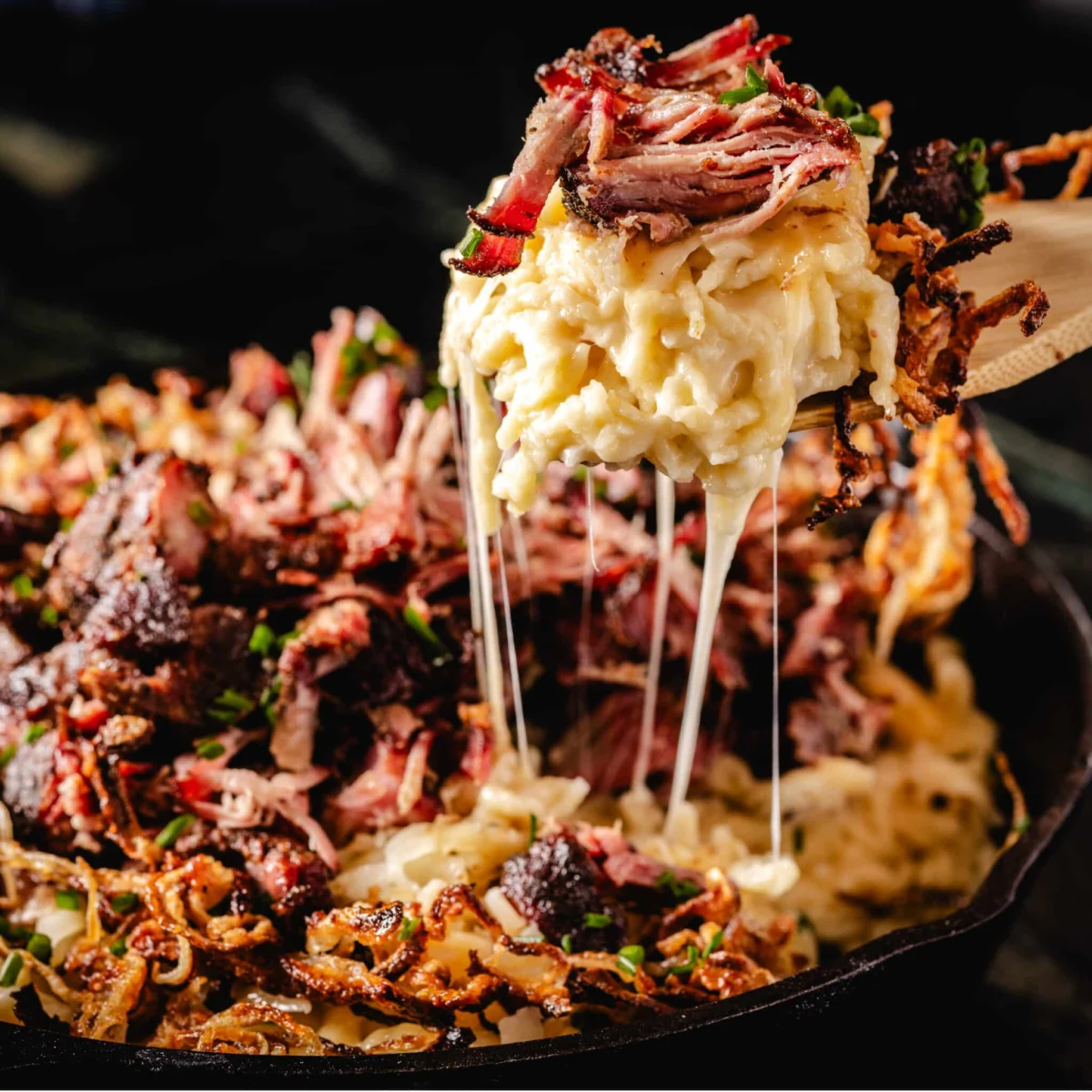
The culinary landscape of contemporary American barbecue is undergoing a significant transformation as traditional techniques intersect with international comfort foods, a trend exemplified by the emergence of the Smoked Pulled Pork Käsespätzle. This dish, which recently gained national attention following its feature on the Food Network’s competitive series Pitmasters, represents a sophisticated marriage between the Swabian traditions of Southern Germany and the slow-smoked flavors of the American backyard. By integrating slow-cooked pork shoulder elements with the rustic, hand-pressed egg noodles of Central Europe, culinary experts are redefining the boundaries of fusion cuisine.
The Cultural Significance of Käsespätzle and Barbecue Fusion
Käsespätzle, often referred to as the Alpine version of macaroni and cheese, is a staple of German, Austrian, and Swiss cuisine. Unlike its American counterpart, which typically relies on a roux-based béchamel sauce, Käsespätzle achieves its creamy consistency through the residual heat of freshly boiled egg noodles, which melts a combination of high-fat cheeses. The traditional preparation involves layering these noodles with shredded cheese and topping them with caramelized or fried onions.

The introduction of smoked pulled pork into this traditional framework is not merely a stylistic choice but a calculated effort to balance the heavy, buttery profiles of the noodles with the acidic and smoky notes of barbecue. This trend reflects a broader movement within the gastronomic community to elevate "comfort foods" by introducing complex textures and layered flavor profiles. The version developed by Susie Bulloch of Hey Grill Hey, in collaboration with Christie Vanover of Girls Can Grill, serves as a primary case study in how competitive barbecue techniques can be adapted for the residential kitchen.
Chronology of Development: From Competition to Home Kitchen
The development of the Smoked Pulled Pork Käsespätzle follows a specific timeline that highlights its transition from a high-stakes competition dish to a replicable home recipe.
- The Pitmasters Challenge: During a featured episode of Food Network’s Pitmasters, Bulloch and Vanover were tasked with a full German-style feast centered around a whole hog. The team utilized pork cheek—a delicacy known for its high fat content and tenderness—to top their Käsespätzle. This iteration was designed to impress a panel of judges looking for technical mastery and innovative pairing.
- The Collaborative Influence: The foundation of the noodle preparation was informed by Sophie Sadler, a German culinary specialist and founder of Dirndl Kitchen. This collaboration ensured that while the topping was uniquely American, the base of the dish remained authentic to Swabian standards.
- The Home Adaptation: Recognizing that pork cheek is often difficult for the average consumer to source, the recipe was modified to utilize country-style pork ribs. Despite their name, these are cut from the pork shoulder, providing the same pull-apart texture as a traditional pork butt but in a significantly shorter cooking window.
- Public Release and Reception: Following a surge in viewer requests, the finalized recipe was released to the public, emphasizing accessibility without compromising the smoky depth required of a "Pitmaster" designated dish.
Technical Composition and Ingredients
The Smoked Pulled Pork Käsespätzle is divided into three distinct technical components: the spätzle noodles, the fried onion garnish, and the smoked protein.

The Spätzle Noodle Base
Authentic spätzle is characterized by a high egg-to-flour ratio. The dough is typically more hydrated than standard Italian pasta dough, resulting in a soft, almost dumpling-like texture. The inclusion of nutmeg provides a subtle aromatic quality that distinguishes it from other noodle varieties. For the fusion version, the cheese blend is critical; a 50/50 mix of Smoked Gouda and Emmentaler (or Swiss) is utilized to bridge the gap between German tradition and the smoky profile of the pork.
The Smoked Protein Component
The choice of country-style pork ribs is a strategic efficiency. While a full pork shoulder (Boston Butt) can require 12 to 16 hours of smoke time, country-style ribs reach the "shredding" internal temperature of 203°F to 205°F within approximately six hours. This allows for a same-day preparation cycle that is more compatible with standard household schedules.
The Maillard Reaction and Texture
The final component involves onions fried in butter until crispy. This adds a necessary crunch to contrast the soft noodles and tender pork, while the Maillard reaction—the chemical reaction between amino acids and reducing sugars—provides a savory depth that complements the sweetness of the barbecue rub used on the pork.

Culinary Analysis: Why the Fusion Works
From a sensory analysis perspective, the Smoked Pulled Pork Käsespätzle succeeds because it addresses the four pillars of flavor: salt, fat, acid, and heat. The cheese and butter-laden noodles provide the fat, the smoked pork adds salt and umami, the wood smoke provides the "heat" or depth, and the optional addition of vinegar-based barbecue sauces or side dishes (such as Rotkohl or red cabbage) provides the necessary acidity to cleanse the palate.
Unlike traditional macaroni and cheese, the lack of a roux in Käsespätzle means the dish is less "saucy" and more "stretchy." This structural difference allows the smoked pork to sit on top of the noodles without becoming lost in a heavy cream base, preserving the integrity of the bark (the outer crust of the smoked meat).
Supporting Data and Nutritional Profile
A nutritional analysis of the dish reveals its status as a high-protein, calorie-dense comfort food. Based on a standard serving size for an eight-person yield, the dish contains:

- Calories: 439 kcal
- Protein: 26g
- Total Fat: 28g (Saturated Fat: 13g)
- Carbohydrates: 21g
- Sodium: 2053mg
The high sodium content is largely attributed to the dry rubs used in the smoking process and the inherent saltiness of the Emmentaler and Gouda cheeses. The protein-to-calorie ratio is notably higher than standard pasta dishes due to the inclusion of the smoked pork shoulder and the high egg content in the spätzle.
Industry Impact and Market Trends
The popularity of this recipe highlights a growing demand in the "Backyard BBQ" market for recipes that move beyond the standard repertoire of ribs, brisket, and chicken. According to market analysts, the "Outdoor Cooking" segment has seen a shift toward "Global BBQ," where consumers use their smokers to prepare components of international dishes.
Furthermore, the involvement of prominent female pitmasters like Bulloch and Vanover reflects a demographic shift in the barbecue community. Historically a male-dominated field, the rise of female-led BBQ platforms has led to a diversification of recipes, often focusing on family-style "comfort" meals that utilize smoking equipment in unconventional ways.

Broader Implications for Culinary Education
The transition of this dish from a Food Network set to the American dinner table serves as an example of the democratization of culinary expertise. By providing detailed instructions on the "shortcut" of using country-style ribs, experts are lowering the barrier to entry for slow-smoked barbecue.
The Smoked Pulled Pork Käsespätzle also encourages the use of specialized tools, such as the Spätzlehobel (spätzle maker), which has seen a modest increase in sales on e-commerce platforms as home cooks seek to replicate authentic textures. This suggests that American consumers are increasingly willing to invest in traditional international kitchenware when it is paired with familiar flavors like barbecue.
Conclusion and Serving Recommendations
For optimal results, culinary experts recommend serving the Smoked Pulled Pork Käsespätzle as part of a larger spread that includes acidic components. In the original Pitmasters presentation, the dish was paired with Sauerbraten (pot roast) and Rotkohl (sweet and sour red cabbage). The acidity of the cabbage is particularly effective at cutting through the richness of the Gouda and the pork fat.

As barbecue culture continues to evolve, the Smoked Pulled Pork Käsespätzle stands as a testament to the versatility of smoke as a seasoning. It honors the rigorous traditions of German noodle-making while embracing the bold, experimental spirit of American pitmasters. For the home cook, it offers a path to "backyard hero" status by delivering a dish that is culturally rich, technically accessible, and flavor-forward.
