

The fourth episode of Food Network’s high-stakes competition series, Pitmasters, marked a significant pivot in the show’s structural format, transitioning from a general field competition to a high-pressure head-to-head elimination bracket. As the remaining six teams entered the midpoint of the season, the intensity escalated with the introduction of "nose-to-tail" culinary requirements, forcing contestants to demonstrate not only their mastery of fire and smoke but also their technical proficiency in butchery and whole-animal utilization. Leading the charge in this episode were Susie Bulloch of Hey Grill Hey and Christie Vanover of Girls Can Grill, who leveraged a previous victory to dictate the terms of the competition, ultimately presenting a sophisticated, German-inspired menu that challenged the traditional boundaries of American barbecue.

Strategic Matchups and the Shift in Competitive Format
The episode began with a strategic advantage awarded to Bulloch and Vanover following their "Big Burn" victory in the preceding episode. In a move that underscored the tactical depth of the competition, the duo was permitted to select the matchups for each team and assign the specific proteins to be used. The available animals included goat, lamb, and pig—each presenting unique challenges in terms of fat content, connective tissue, and flavor profiles.
Bulloch and Vanover strategically opted to compete in the pig bracket, facing off against fellow competitors Matt and Max. This decision was rooted in their extensive experience with pork, a staple of the barbecue circuit, yet the challenge was complicated by the "nose-to-tail" mandate. By choosing the pig, they aimed to utilize their deep repertoire of family recipes and technical knowledge of pork anatomy to secure a spot in the next round. The other four teams were divided into goat and lamb brackets, ensuring that the judging panel, led by culinary experts Andrew Zimmern, Moe Cason, and Ernest Servantes, could evaluate the teams based on their ability to handle diverse and often difficult-to-cook whole carcasses.

The Big Burn: Technical Execution of Nose-to-Tail Cooking
The primary challenge, known as the "Big Burn," provided teams with a 10-hour window to transform a whole animal into two main courses and two side dishes. The judging criteria were exceptionally rigorous; Andrew Zimmern emphasized that the animal’s essence must be present in every component of the meal. This required teams to move beyond the "prime cuts" like ribs and loins, incorporating offal, bones, and trimmings into their final presentation.
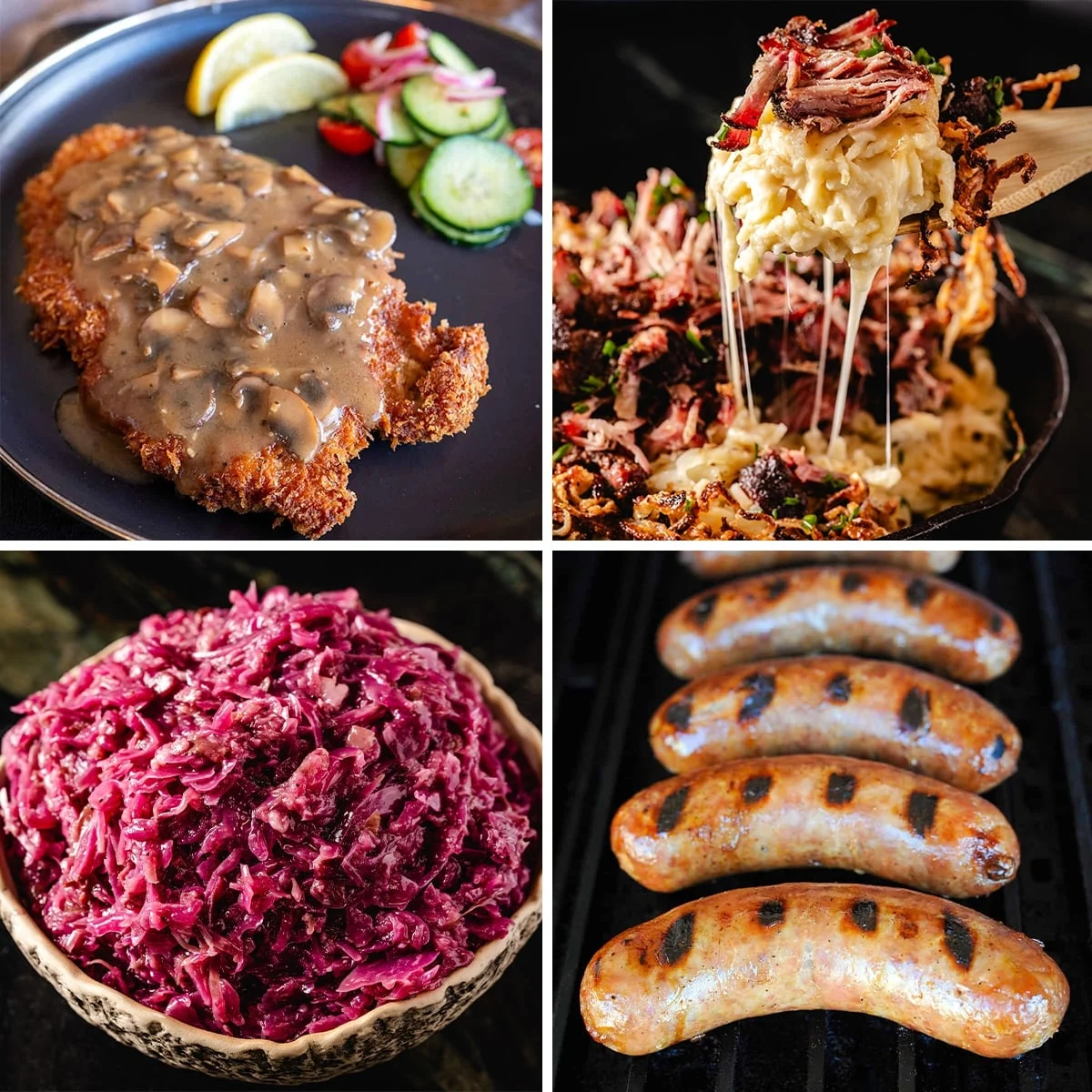
Bulloch and Vanover elected to pursue a cohesive German-inspired theme, a choice that allowed them to showcase both rustic and refined techniques. Their menu was anchored by a Smoked Sauerbraten, a dish traditionally requiring a multi-day marinade. To adapt this for a 10-hour competition, the team utilized pork shoulder and shanks, seasoned with a robust beef rub, and subjected the meat to a high-intensity braise over an open fire. The resulting sweet and sour stew provided a deep, complex flavor profile that utilized the tougher, collagen-rich portions of the pig.

The second main dish was a Pork Loin Jägerschnitzel. Vanover demonstrated high-level culinary resourcefulness by building a pork stock from scratch using the pig’s rib bones. This stock served as the foundation for a rich mushroom gravy, which complemented the lean, breaded, and pan-fried pork loin. The use of the bones for the sauce was a direct response to the "nose-to-tail" requirement, ensuring that even the skeletal structure of the animal contributed to the flavor of the dish.
Culinary Innovation in Side Dishes and Open-Fire Techniques
The side dishes in Episode 4 were required to be as integral to the "nose-to-tail" theme as the proteins. Bulloch and Vanover produced a Rotkohl—a traditional German braised red cabbage—incorporating smoked and chopped pork belly to provide a fatty, savory counterpoint to the acidity of the cabbage. This substitution of fresh pork belly for traditional bacon allowed the team to adhere strictly to the whole-animal challenge while maintaining the flavor profile expected of the dish.

The most technically demanding component of their menu was the Käsespätzle, a German egg noodle made entirely from scratch at the cook site. Preparing dough and boiling noodles in a pot over an open flame presents significant variables in temperature control and timing. The team topped the cheesy noodles with smoked pig cheeks, a delicacy often overlooked in standard barbecue but highly prized in "nose-to-tail" cooking for its tender texture and high fat content. This dish served as a bridge between traditional comfort food and high-concept competition barbecue.
The Flash Burn: The Precision of Sausage Crafting
Midway through the 10-hour Big Burn, the teams were interrupted by the "Flash Burn" challenge. This 60-minute sprint required teams to produce a perfectly executed sausage link using the remaining portions of their animal. Judge Moe Cason, a renowned expert in pit-smoking and meat preparation, set strict parameters: the sausage had to be properly cased, correctly ground, seasoned with precision, and cooked to a safe yet juicy internal temperature. The prize for the winning team was a $2,000 cash injection, a significant incentive that added a layer of financial pressure to the culinary task.

Bulloch and Vanover developed a beer-braised pork bratwurst, garnished with caramelized onions, cabbage, and pickled mustard seeds. The inclusion of pickled mustard seeds was a nod to the acidic brightness often found in the work of chef Michael Symon, intended to cut through the richness of the pork fat. The technical difficulty of grinding, stuffing, and poaching/grilling a sausage within an hour cannot be overstated, as any error in the fat-to-meat ratio or a burst casing would result in immediate disqualification from the top spot.
Judging Analysis and Cumulative Scoring Implications
The judging for Episode 4 was conducted through a head-to-head lens, but the broader implications of the season’s "running total" scoring system loomed large. Under the rules of this season of Pitmasters, winning a head-to-head matchup grants a team safety for the following week. However, the elimination is not necessarily the loser of a specific matchup; rather, the team with the lowest overall cumulative Big Burn score across the entire season is the one sent home.

This format creates a unique psychological environment where teams must not only beat their immediate opponent but also maintain a high standard of excellence to protect their seasonal average. During the evaluation, Ernest Servantes noted the exceptional aromatic quality of Bulloch and Vanover’s cook site, particularly during the braising stages of the Sauerbraten. Andrew Zimmern focused on the integrity of the "nose-to-tail" execution, looking for evidence that the teams understood the anatomy of the animal they were tasked with cooking.
Broader Impact and the Evolution of Barbecue Media
The performance of Susie Bulloch and Christie Vanover in Episode 4 highlights a shifting demographic and stylistic trend within the barbecue world. Historically dominated by regional male-led teams focusing on "The Big Four" (brisket, ribs, pork butt, and chicken), modern competition barbecue—as seen on Food Network—is increasingly embracing global flavors and diverse techniques. The success of digital-first influencers like Bulloch and Vanover on a traditional broadcast platform suggests a convergence between social media culinary education and professional competition.

Furthermore, the emphasis on "nose-to-tail" cooking reflects a broader culinary movement toward sustainability and the reduction of food waste. By tasking pitmasters with using the entire animal, Food Network is educating a mainstream audience on the value of alternative cuts and the importance of butchery skills. This episode demonstrated that barbecue is not merely about the application of smoke to meat, but a complex discipline involving chemistry, heat management, and classical culinary foundations.
As the competition moves toward its final stages, the results of the head-to-head matches in Episode 4 will dictate the momentum of the remaining teams. While the specific winner of the pig bracket remains a point of discussion for viewers catching up on streaming platforms like HBO Max and Discovery+, the technical prowess displayed by the contestants has set a new benchmark for the season. The integration of German culinary traditions into the American smokehouse framework provided a refreshing and educational narrative that challenged the contestants to think beyond the rub and the smoke ring.
