

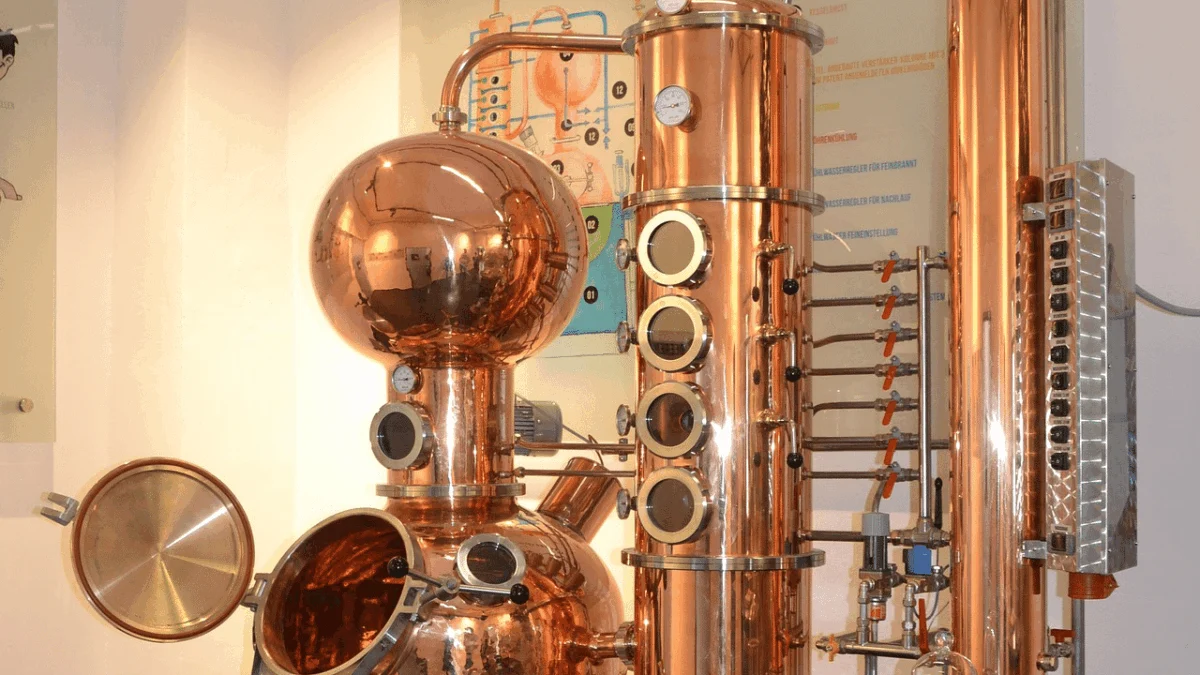
The global gin market, valued at approximately $15.3 billion in 2023 and projected to reach nearly $20 billion by 2030, owes its "gin-aissance" not merely to the selection of exotic botanicals but to the rigorous technical methodologies employed behind the scenes. While the average consumer often focuses on the presence of rare berries or citrus peels, the flavor profile of a premium gin is the culmination of a sophisticated series of decisions made by the master distiller after the recipe is finalized. From the choice of base spirit to the precise timing of "cuts" during distillation, the production of gin is as much an exercise in chemical engineering as it is in culinary artistry.
The Foundation of Neutral Grain Spirit
For the vast majority of modern gin production, the process begins with Neutral Grain Spirit (NGS). This is a highly rectified ethanol, typically distilled to at least 96% alcohol by volume (ABV), ensuring that the base is nearly odorless and tasteless. The selection of NGS is a strategic decision; by starting with a "blank canvas," the distiller ensures that the volatile aromatic compounds extracted from the botanicals are not obscured by the congeners—residual impurities like esters and fusel oils—found in less refined spirits.
While grain is the traditional source (wheat, rye, or corn), some contemporary distillers experiment with spirits derived from grapes, apples, or even honey. However, wheat remains the industry standard for its soft, slightly sweet mouthfeel. The use of NGS is not merely a convenience; it is a regulatory benchmark. In the European Union and the United States, the classification of "distilled gin" requires the starting material to be of a high-quality ethyl alcohol, allowing the botanical infusion to take center stage.
Quantitative Precision: The Science of Botanical Ratios
The defining characteristic of gin is the presence of juniper berries (Juniperus communis). By international legal standards, the flavor of juniper must be "predominant." Achieving this requires a mastery of botanical ratios. An industry benchmark for botanical quantity is generally cited as 20 to 35 grams of total botanicals per liter of spirit. Within this mixture, juniper typically accounts for at least 60% of the total volume.
The remaining 40% represents the distiller’s "signature." This is often constructed in a tiered hierarchy relative to the juniper weight:
- Core Botanicals: Coriander seeds, which provide citrus and spicy notes, are often used at 50% of the juniper’s weight.
- Fixatives: Earthy components like angelica root or orris root, which act as "anchors" to prevent more volatile citrus aromas from evaporating, are used sparingly, often at 10% of the juniper weight.
- Accent Notes: Bold spices like cassia, cinnamon, or cardamom may be reduced to 1% or even 0.1% of the total botanical mass.
At these minute levels, the interaction between compounds—such as the terpene alpha-pinene in juniper and the linalool in coriander—creates a synergistic effect that defines the spirit’s complexity.
The Methodological Divide: Maceration versus Vapor Infusion
Once the ratios are established, the distiller must decide how to transfer these flavors into the ethanol. This choice fundamentally alters the texture and "weight" of the gin.
The Maceration Technique
Maceration involves steeping the botanicals directly in the spirit. This can be done within the pot still itself or in a separate vessel. Many renowned brands, such as Beefeater, employ a 24-hour maceration period. This "long soak" allows the ethanol to break down the cellular walls of the botanicals, extracting heavier, more robust oils. When the heat is finally applied to the still, these oils are carried over into the distillate, resulting in a "London Dry" style that is typically punchy, full-bodied, and rich.
The Vapor Infusion Technique
Alternatively, vapor infusion—famously utilized by Bombay Sapphire—suspends the botanicals in a "Carter-head" basket located in the neck of the still. As the ethanol boils and turns into vapor, it passes through the botanicals. This gentler process extracts only the most volatile aromatic compounds. The resulting gin is often described as lighter, more floral, and more ethereal than its macerated counterparts. The placement of the basket also matters; higher placement in the still column exposes the botanicals to cooler vapors, whereas lower placement subjects them to higher temperatures, further refining the flavor extraction.
Distillation Strategy: Collective vs. Individual Runs
A pivotal decision in gin development is whether to distill all botanicals together in a single "pot" or to distill each ingredient individually and blend the results afterward.
The London Dry Standard
For a spirit to be labeled as "London Dry Gin," all botanicals must be distilled together in the presence of the spirit. No flavors or colors can be added after the distillation process (with the exception of water and a minute amount of sugar). This requires the distiller to balance the extraction rates of vastly different ingredients—roots, barks, seeds, and peels—all in one go. It is a high-stakes process where the timing must be perfect to ensure no single ingredient overpowers the others.
The Blended Approach
Conversely, many "New Western" or "Contemporary" gins utilize individual distillation. By distilling juniper, citrus, and spices separately, the distiller can optimize the "cuts" for each specific ingredient. This allows for unparalleled precision, as the distiller can discard the bitter end of a citrus run while keeping the sweet heart of a juniper run. These individual distillates are then blended, much like a perfumer or a winemaker, to create a final product. While more labor-intensive, this method offers a level of consistency and clarity that is difficult to achieve in a single-pot distillation.
The Critical Moment: Managing the "Cuts"
The most technical phase of gin production occurs during the distillation run, where the distiller must make "cuts" based on time, temperature, and sensory analysis. Distillation is a chronological process where different compounds evaporate at different boiling points.
- The Foreshots and Heads: The first liquid to emerge from the still contains high concentrations of methanol and other low-boiling-point volatiles. These often smell like nail polish remover or harsh chemicals. They are always discarded or recycled.
- The Heart: This is the "gold" of the distillation. It contains the most desirable ethanol and the cleanest botanical oils. The distiller’s goal is to maximize the volume of the heart while ensuring it remains free of the harshness of the heads and the heaviness of the tails.
- The Tails: As the run nears its end, the ABV drops and heavier, oilier compounds begin to emerge. While some tails can provide necessary "base notes" and mouthfeel, too much can introduce aromas of wet cardboard, burnt rubber, or bitter vegetable matter.
The decision of exactly when to switch from "heart" to "tails" is what separates a world-class distiller from an amateur. It is a sensory-driven decision that requires constant tasting and nosing of the spirit as it flows from the condenser.
Economic and Qualitative Considerations: Single-Shot vs. Multi-Shot
In the modern industry, a distinction is made between "single-shot" and "multi-shot" gins, a choice often dictated by the scale of production and equipment capacity.
- Single-Shot Gin: This is the traditional method where the amount of botanicals used is exactly calibrated for the amount of spirit in the still. Once the distillation is complete, the resulting high-proof gin is diluted only with water to reach bottling strength (usually 40–47% ABV).
- Multi-Shot Gin: This is a more concentrated method used by many large-scale producers to maximize efficiency. The distiller uses a much higher ratio of botanicals—sometimes two to four times the standard amount—to create a "gin concentrate." This intense distillate is then diluted with additional Neutral Grain Spirit and water before bottling.
While some purists argue that single-shot gin possesses a more integrated flavor profile, multi-shot gin is a standard industry practice that allows for greater volume without the need for massive, energy-intensive stills. Blind tastings often show that when executed correctly, both methods can produce spirits of exceptional quality.
Broader Implications: The Evolution of the Category
The technical rigor involved in gin production has significant implications for the broader spirits industry. As consumer preferences shift toward transparency and craft, the "how" of gin production has become a marketing tool as much as a production necessity. The rise of "Geographical Indications" (GIs) for gin—such as Plymouth Gin or Vilnius Gin—mirrors the protectionist measures seen in the wine industry, emphasizing that the combination of local water, specific still shapes, and traditional "cut" timings creates a unique product that cannot be replicated elsewhere.
Furthermore, the mastery of these techniques has paved the way for the "non-alcoholic gin" sector. By using the same distillation equipment and botanical knowledge but removing the ethanol, producers are attempting to capture the complex "bite" and aroma of gin for a more health-conscious demographic.
In conclusion, the flavor of a gin is far from accidental. It is the result of a calculated sequence of events: the selection of a pure base, the mathematical precision of botanical ratios, the physics of vapor versus liquid extraction, and the expert sensory timing of the cuts. As the industry continues to evolve, the distillers who successfully bridge the gap between traditional craftsmanship and modern chemical precision will continue to define the future of the spirit.
