

The fifth installment of the current season of Food Network’s Pitmasters presented a significant shift in competitive format, moving away from thematic challenges toward the fundamental pillars of American barbecue. In a departure from previous episodes that featured "Big Burn" and "Flash Burn" segments, Episode 5 introduced the "Core Four" challenge. This format required competitors to prepare the four essential proteins of professional barbecue—chicken, pork ribs, pork shoulder, and beef brisket—on a rolling delivery schedule. The structural change tested not only the culinary expertise of the participants but also their logistical management and ability to maintain consistent heat profiles under deteriorating atmospheric conditions.
The competition featured prominent pitmasters Susie Bulloch of Hey Grill Hey and Christie Vanover of Girls Can Grill, who operated as a cohesive unit against a field of elite challengers. With a total of $7,000 in prize money at stake—comprising $1,000 for each individual round winner and a $3,000 bonus for the highest aggregate score—the stakes necessitated a high degree of technical precision. The judging panel, consisting of barbecue luminaries such as Big Moe Cason and Jess Pryles, emphasized a strict adherence to the "Three Ts": Time, Temperature, and Texture.

The Structural Framework of the Core Four Challenge
Professional barbecue competitions, such as those sanctioned by the Kansas City Barbeque Society (KCBS), typically revolve around these four specific meats. By stripping away the "gimmicks" and "themes" prevalent in earlier episodes, the producers forced competitors to rely solely on their mastery of smoke, salt, and fire.
The rolling schedule created a compounding pressure. Unlike a standard kitchen environment where dishes can be timed to a single service window, the Pitmasters format required overlapping cook times. Competitors had to manage a single fire source to accommodate the varying thermal requirements of a delicate chicken wing and a dense, collagen-rich beef brisket simultaneously. To mitigate the risks associated with these overlapping timelines, Bulloch and Vanover opted for a "hot and fast" cooking strategy. This method utilizes higher temperatures (typically between 300°F and 350°F) to accelerate the rendering of fats and the breakdown of connective tissues, significantly shortening the traditional "low and slow" window without sacrificing moisture, provided the internal temperatures are monitored with surgical precision.
Round One: Technical Execution of Poultry
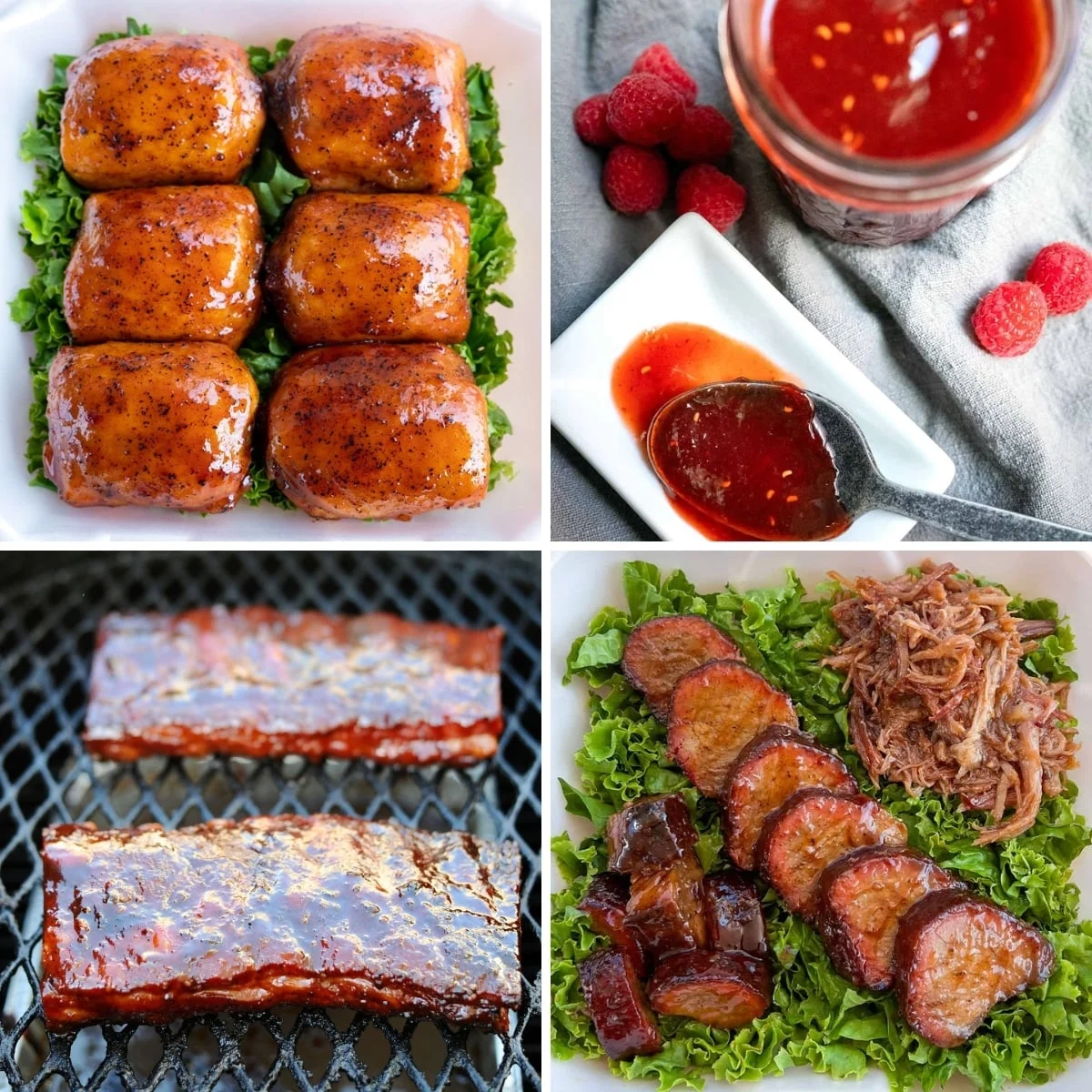
The first protein to be presented was chicken. Bulloch and Vanover selected a smoked raspberry chipotle profile, aiming for a balance of sweetness, acidity, and a delayed capsaicin heat. From a technical standpoint, their decision to break the whole birds down into specific primal cuts—thighs, wings, and legs—was a strategic move to ensure textural consistency.

In poultry, different muscles reach optimal texture at different internal temperatures; for instance, dark meat (thighs) benefits from being cooked to 175°F to allow for better fat rendering, whereas white meat (breasts) can become dry if pushed past 165°F. By discarding the breasts and focusing on the more resilient dark meat, the team gained greater control over the final product. A notable addition to their entry was the use of fried chicken skin as a garnish. Achieving "bite-through" skin is one of the most difficult feats in competitive barbecue, as smoked skin often becomes rubbery. By rendering and crisping the skin separately, they addressed the "Texture" requirement of the Three Ts directly.
The round was complicated by a sudden hailstorm that struck with less than 30 minutes remaining on the clock. Meteorological shifts pose a severe threat to outdoor pit management. Precipitation and falling temperatures can cause "heat sink" effects, where the metal of the smoker loses thermal energy to the environment, causing internal temperatures to plummet. Vanover’s background as a park ranger proved instrumental in maintaining operational continuity during the storm, allowing the team to successfully rest their proteins despite the freezing precipitation. While the team did not secure the $1,000 round prize, judge Big Moe Cason praised the rendered texture of the skin and the overall smoke profile.
Round Two: The Complexity of Pork Ribs and Citrus Integration
For the second round, the focus shifted to pork ribs. The team continued their "hot and fast" approach, a technique that requires careful monitoring to prevent the exterior sugars in the rub from scorching before the interior meat is tender.

The culinary highlight of this entry was the use of a yuzu-infused sauce. Yuzu, a Japanese citrus fruit, offers a complex acidity that sits between the profiles of lemon and grapefruit. In professional barbecue, heavy, molasses-based sauces are common; however, the integration of yuzu was designed to provide a "bright" contrast to the heavy fat content of the pork.
Judge Jess Pryles, an expert in meat science, noted that the texture of the ribs met the "competition-style" standard. In the industry, a perfect competition rib is defined by its ability to pull cleanly away from the bone with a single bite, leaving a distinct semi-circle mark without the rest of the meat falling off (which would indicate overcooking). Despite the positive feedback on texture, the judging panel was divided on the flavor profile. Judge Andrew (Zimmern) suggested the citrus notes were not pronounced enough, highlighting the subjective nature of "balance" in high-level culinary judging.
Round Three: The Science of the Pork Shoulder and the Salt Margin
The third round involved pork shoulder, specifically the "money muscle." Located at the end of the pork butt (the upper shoulder of the hog), the money muscle is a heavily marbled, cylindrical muscle that is prized for its tenderness and fat-to-meat ratio. In competitive circuits, this muscle is often sliced into medallions to showcase the internal marbling and the "smoke ring"—a pink discoloration caused by the reaction of nitrogen dioxide in the smoke with the myoglobin in the meat.

Bulloch and Vanover paired the pork with a Whiskey Peach BBQ Sauce, a flavor profile designed to evoke traditional Southern barbecue tropes while providing a sophisticated alcoholic undertone. The judges confirmed that the thermal execution was flawless; the meat was tender and the fat had fully gelatinized.
However, the team encountered a critical setback regarding seasoning. The judging panel determined that the entry lacked sufficient salinity. Salt is not merely a flavor enhancer in barbecue; it is a functional ingredient that assists in moisture retention through denaturing proteins and helps to "bridge" the gap between the smoke and the natural sugars of the meat. The lack of salt resulted in a loss for the round, a reminder that even when Time, Temperature, and Texture are achieved, the fundamental balance of seasoning remains the ultimate arbiter of success.
Market Context and Professional Implications
The participation of Bulloch and Vanover in this high-stakes environment underscores a broader trend in the barbecue industry: the rising prominence of female pitmasters. Historically a male-dominated field, the professional barbecue circuit has seen a surge in female-led teams who are redefining both the flavor profiles and the business models of the industry. Bulloch’s "Hey Grill Hey" and Vanover’s "Girls Can Grill" represent significant digital and commercial footprints, bridging the gap between competitive excellence and consumer-facing education.

Furthermore, the episode highlighted the commercial aspect of the sport through the appearance of specialized equipment, such as "Pitmaster Gloves." These heat-resistant, silicone-coated gloves have become a staple for professionals who must handle hot proteins directly to preserve the structural integrity of the bark (the dark, flavorful crust on the outside of smoked meat).
Conclusion and Future Outlook
Episode 5 of Pitmasters concluded on a cliffhanger, with the results of the final Brisket round and the overall $3,000 aggregate winner yet to be announced. The brisket round is widely considered the "King of BBQ" due to the difficulty of the cut. Brisket consists of two distinct muscles—the "flat" and the "point"—connected by a thick layer of fat and heavy connective tissue. Cooking a brisket to the point where the flat is moist and the point is fully rendered is the ultimate test of a pitmaster’s skill.
The "Core Four" challenge served as a rigorous validation of the competitors’ foundational skills. By removing the ability to "hide" behind creative themes, the competition forced a return to the technical essence of the craft. As the series moves toward its conclusion, the performance of Bulloch and Vanover remains a focal point for analysts, demonstrating that even under the pressure of a hailstorm and the scrutiny of world-class judges, the application of culinary science and logistical discipline remains the key to survival in the pits. The upcoming episode will determine if their "hot and fast" strategy and technical precision were enough to overcome the seasoning deficit of the pork round and secure a podium finish in one of television’s most demanding culinary arenas.
