

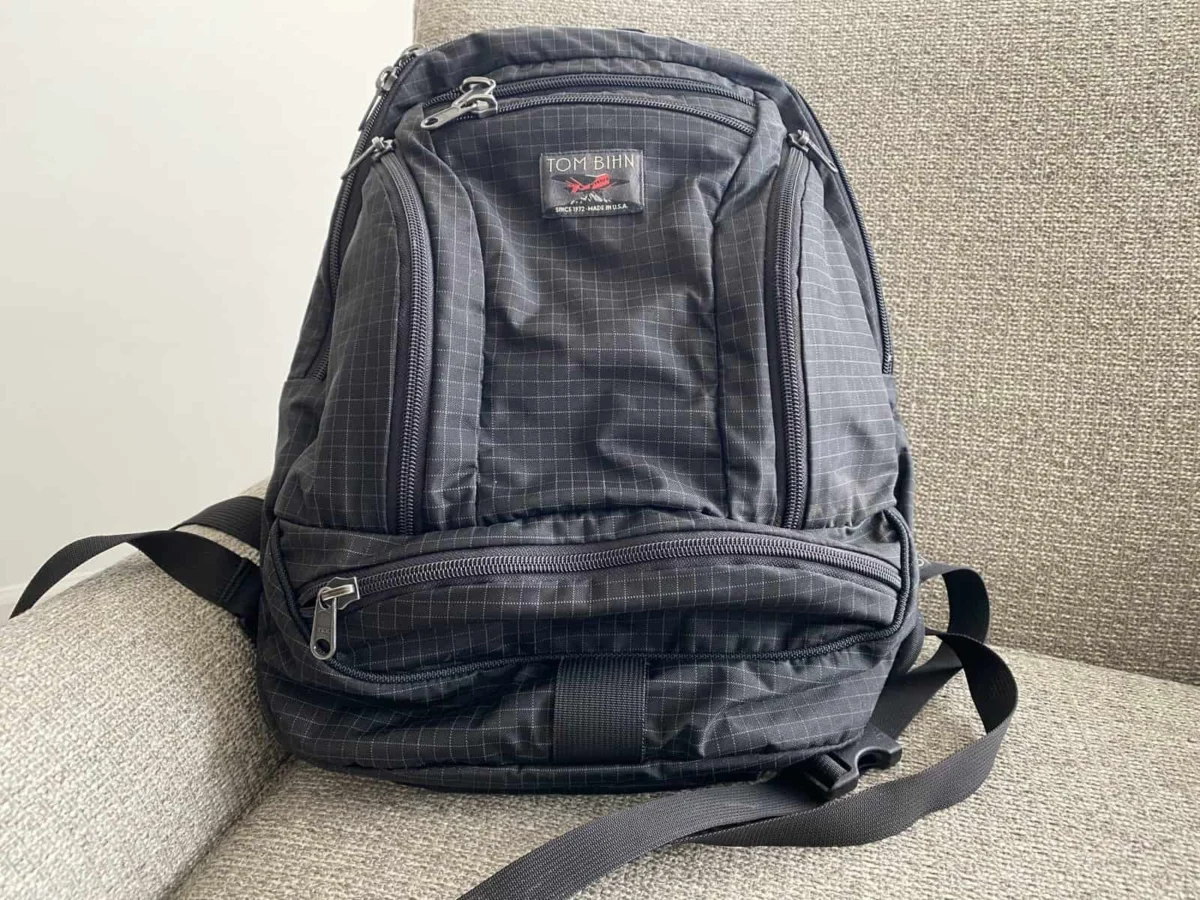
A specialized chimney cleaning operation in the Park Slope neighborhood of Brooklyn has led to the unexpected recovery of personal property stolen more than three years ago, sparking a renewed discussion on the intersection of urban crime, digital communication, and the psychological process of trauma recovery. The discovery of a discarded backpack on a residential rooftop has provided a rare closing chapter to a 2017 burglary case that occurred simultaneously with a life-altering medical emergency for the victim, Jodi Ettenberg, a former attorney and prominent travel writer.
The recovery began in late 2020 when a homeowner in Park Slope hired a contractor to service a chimney vent that had not been maintained for several years. During the cleaning, the contractor discovered a Tom Bihn Synapse daybag tucked into a vent on the roof. Upon inspecting the contents, the homeowner found several expired credit cards and business cards belonging to Ettenberg. Utilizing social media to track the owner, the finder sent a message via Facebook, which remained in the "Message Requests" folder—a filtered inbox for messages from non-contacts—for several weeks before Ettenberg discovered it in January 2021.
Chronology of the 2017 Incident and Subsequent Recovery
The history of the recovered property is inextricably linked to a pivotal moment in the owner’s life. In August 2017, Ettenberg was undergoing a lumbar puncture (spinal tap) at a New York City hospital. The procedure was intended to diagnose a medical issue but ultimately resulted in a cerebrospinal fluid (CSF) leak, a condition that left her with a long-term disability.
Evidence from a digital security camera (baby cam) inside the apartment where Ettenberg was residing at the time confirmed that a burglar entered the premises at the exact moment the medical procedure began in the hospital. The perpetrator used Ettenberg’s own backpack to consolidate stolen items, including a laptop, jewelry, and cash belonging to the apartment’s primary tenants. In a peculiar display of selective theft, the burglar left behind Ettenberg’s Canadian passport and a five-dollar bill on a couch before exiting the building.
The backpack remained missing for forty months, presumably discarded on a nearby rooftop shortly after the crime to allow the perpetrator to transfer the high-value electronics and jewelry into a less conspicuous or more manageable container. The timeline of events is as follows:

- August 2017: Burglary occurs in Park Slope, Brooklyn, while the victim is hospitalized for a spinal tap.
- August 2017 – Late 2020: The stolen backpack remains exposed to the elements on a rooftop chimney vent, just a few houses away from the crime scene.
- December 2020: A chimney sweep discovers the bag during routine maintenance. The homeowner attempts to contact Ettenberg via Facebook.
- January 2021: Ettenberg discovers the filtered message and coordinates the recovery of the bag.
- February 2021: The bag is cleaned, restored, and eventually gifted to a new owner, symbolizing a "transmutation" of the traumatic event.
Supporting Data: Burglary Trends and Medical Context
The 2017 burglary occurred within the jurisdiction of the NYPD’s 78th Precinct, which covers Park Slope. According to historical CompStat data provided by the New York City Police Department, Park Slope has traditionally experienced lower violent crime rates compared to other Brooklyn sectors, yet property crimes, including residential burglaries, have remained a persistent challenge for local law enforcement. In 2017, the 78th Precinct reported a significant number of "opportunity crimes," where perpetrators exploited temporary absences or unsecured entry points.
The recovery of the bag also brings to light the medical context of Ettenberg’s disability. A lumbar puncture involves the insertion of a needle into the spinal canal to collect cerebrospinal fluid. While generally considered safe, complications such as post-dural puncture headaches (PDPH) occur in approximately 10% to 30% of patients. In rare cases, like Ettenberg’s, the puncture site fails to heal, leading to a chronic CSF leak that can cause debilitating neurological symptoms, including severe "orthostatic" headaches that worsen when standing.
The confluence of a traumatic medical outcome and a simultaneous violation of personal space through burglary creates a complex psychological landscape. According to victim advocacy data, property crime victims often experience a sense of "secondary victimization" when the loss of property coincides with other life stressors. For Ettenberg, the backpack was not merely a utility item but a vessel that held the "liminal weight" of her life just before it was fundamentally altered by disability.
Inventory of Recovered Items and Condition Report
Upon receiving the backpack, Ettenberg noted that while high-value items like the laptop were long gone, several personal effects remained. The items recovered included:
- Prescription Eyewear: Two pairs of glasses were found inside. Due to three years of exposure to New York’s extreme temperature fluctuations—ranging from sub-zero winters to high-humidity summers—the frames were significantly warped. However, professional optometrists suggest that high-quality acetate or metal frames can often be reshaped using localized heat treatments.
- Financial Instruments: Several credit cards were found, all of which had expired in the years following the theft.
- Personal Care Items: A bottle of hand lotion and a container of Tylenol remained in the pockets.
- Miscellaneous Objects: A single blue die (which Ettenberg noted did not belong to her) and business cards from travel industry events.
The backpack itself, a Tom Bihn Synapse model known for its durability and high-grade ballistic nylon construction, survived the exposure with minimal structural damage. The manufacturer had previously sent Ettenberg a replacement bag after learning of the 2017 burglary, a gesture often cited in the travel community as an example of high-level brand engagement and consumer support.
Official Responses and Social Repercussions
The return of the property was facilitated by a long-time friend and former legal colleague, identified as Cheryl. Cheryl, who worked with Ettenberg at a New York law firm before Ettenberg transitioned into travel writing, retrieved the bag from the Park Slope resident. In an effort to mitigate the emotional distress associated with the bag’s return, Cheryl performed what she termed a "llamafication" of the backpack.

Recognizing that the bag was a "trigger" for the memories of the worst evening of Ettenberg’s life, Cheryl sanitized the item and filled it with llama-themed gifts, including apparel and stationery. This act of communal support is highlighted by sociologists as a vital component of "resilience engineering," where social networks intervene to reframe negative stimuli into positive or neutral experiences.
Ettenberg’s reaction to the recovery was one of profound emotional resonance. She described the initial shock of the Facebook message as a "heart-stopping" moment that "dredged up sediment" from a traumatic past. "It did serve as an opportunity to work through some of those emotions in ways I hadn’t yet gotten to," Ettenberg stated, noting that the bag’s return felt like an "outlier of possibilities."
Broader Impact and Analysis of Property Recovery
The likelihood of recovering stolen property after more than three years is statistically low. National clearance rates for burglaries in the United States typically hover around 13%, according to FBI Uniform Crime Reporting (UCR) data. Furthermore, property is rarely recovered once it has been discarded by the perpetrator, as most items are either sold or destroyed.
The fact that the bag remained on a rooftop for three years speaks to the "vertical" nature of urban crime disposal. In densely populated areas like Brooklyn, rooftops often serve as temporary staging areas or disposal sites for thieves who need to quickly lighten their load while fleeing a scene.
The resolution of this case offers a case study in the "spiral of life" philosophy often discussed in trauma recovery circles. By choosing to donate the bag to another friend rather than destroying it, Ettenberg effectively "transmuted" a symbol of theft and medical tragedy into a functional gift for another. This act of "closing the chapter" is recognized by mental health professionals as a significant milestone in reclaiming agency after a period of victimization and chronic illness.
Ultimately, the recovery of the Tom Bihn backpack serves as a reminder of the persistence of community and the unexpected ways in which the digital and physical worlds can intersect to provide closure. While the high-value items and Ettenberg’s pre-disability health cannot be restored, the return of the "miracle bag" provides a rare, tangible conclusion to a period of profound upheaval. As Ettenberg continues to navigate her life as an "outlier of possibilities," the backpack stands as a testament to the tenacity of both physical objects and the human spirit in the face of urban adversity.
