

The digital and physical recovery of a decade’s worth of stolen memories has provided a rare moment of respite for Jodi Ettenberg, a former corporate attorney and the founder of the influential travel platform Legal Nomads, who has spent the last seven years incapacitated by a chronic medical condition. Ettenberg, whose career transition from law to international food journalism served as a blueprint for the modern travel blogging industry, recently announced the return of digital archives stolen during a 2010 burglary in Brooklyn, New York. This development occurs against the backdrop of Ettenberg’s ongoing struggle with a spinal Cerebrospinal Fluid (CSF) leak, a debilitating condition that has reframed her life’s work from global exploration to medical advocacy and the study of "living grief."
The recovery of these archives, facilitated by a stranger who purchased the hardware at a flea market more than a decade ago, marks the conclusion of a fifteen-year search for lost data. For Ettenberg, the event serves as a focal point for a broader discussion on the nature of ambiguous loss—a psychological state where a person mourns a life or a version of themselves that is still physically present but functionally altered.
A Chronology of Loss and Physical Trauma
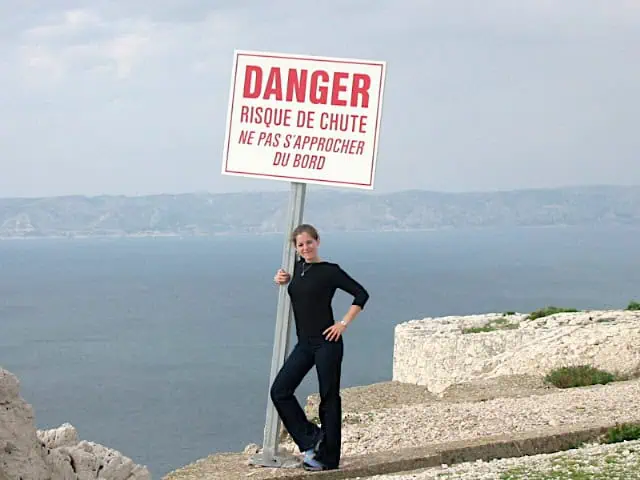
The trajectory of Ettenberg’s life and career has been defined by two distinct periods of trauma: a childhood accident and a more recent iatrogenic medical injury. In the mid-1980s, Ettenberg suffered a significant fall from a ten-foot metal playground structure after an altercation with another child. The resulting impact on cement caused a fractured rib and long-term spinal complications that would persist throughout her adulthood. Despite this, Ettenberg maintained a high level of physical activity, establishing a birthday tradition of climbing mountains, including Gunung Rinjani in Indonesia and South Sister in Oregon.
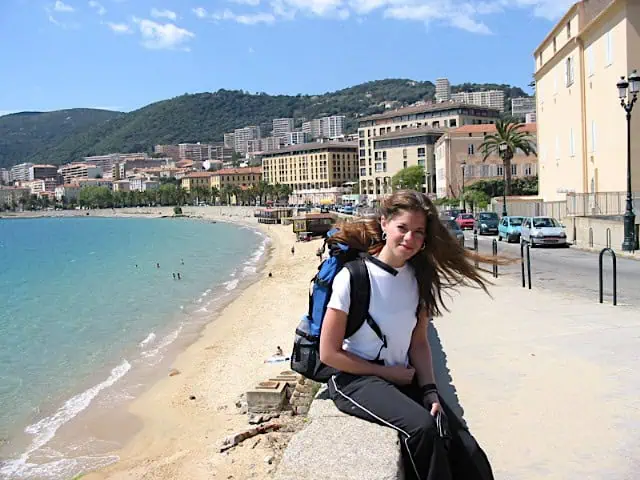
In 2008, Ettenberg resigned from her legal practice to embark on a one-year sabbatical that eventually evolved into Legal Nomads. The platform became a primary resource for cultural storytelling through the lens of gastronomy. However, in 2010, while residing in Brooklyn, her residence was burgled. The perpetrator seized her laptop and all primary and secondary backup drives, effectively erasing the original photographic record of her first two years of world travel, as well as personal family archives and law school graduation documents.

The most significant turning point occurred in August 2017, one week after her birthday. During a diagnostic lumbar puncture intended to investigate neurological symptoms, Ettenberg sustained a spinal CSF leak. This condition occurs when a hole or tear in the dura mater—the tough membrane covering the brain and spinal cord—allows fluid to escape. The resulting loss of fluid volume and pressure causes the brain to sag within the skull, leading to severe positional headaches, tinnitus, cognitive dysfunction, and a host of other neurological deficits. For Ettenberg, the injury proved catastrophic, leaving her largely bedridden and ending her career as a field-based journalist.
The Serendipitous Recovery of Digital Archives
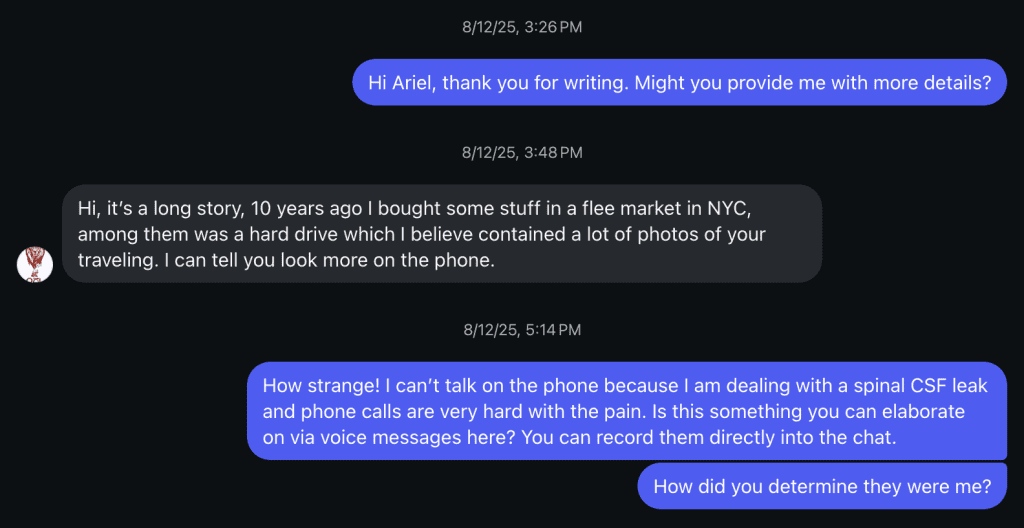
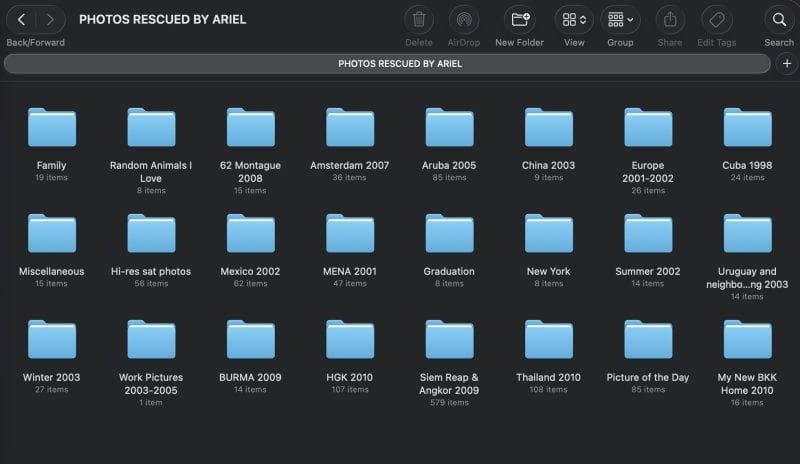
The recovery of the 2010 archives began with an unsolicited message on Instagram from a New York-based filmmaker identified as Ariel. According to the reported sequence of events, Ariel had purchased several external hard drives at a Brooklyn flea market over ten years ago. Upon discovering that the drives contained personal photographs rather than being blank, Ariel opted to back up the data to his own servers before reformatting the hardware, intending to one day locate the owner.

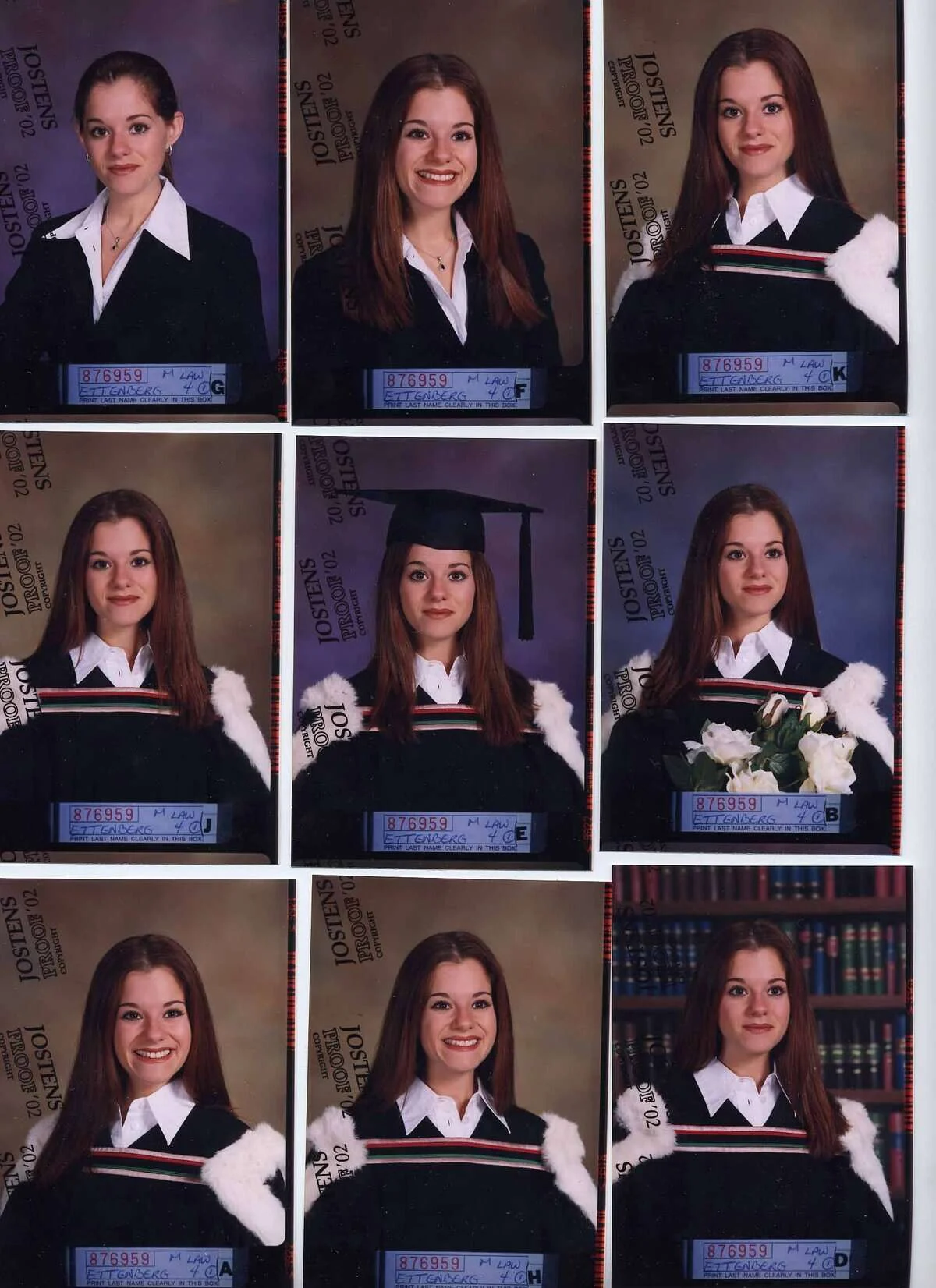
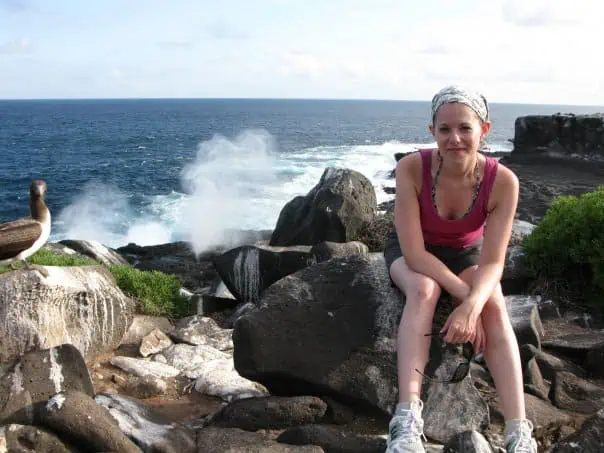
The process of identification was delayed by personal life events and professional obligations until August 2023. Using folders labeled with Ettenberg’s surname and graduation proofs from McGill University’s Faculty of Law, Ariel was able to cross-reference the images with Ettenberg’s public profile. The verification process involved a series of digital exchanges, including screenshots of early travel photos from Mongolia, the Galapagos Islands, and family gatherings.
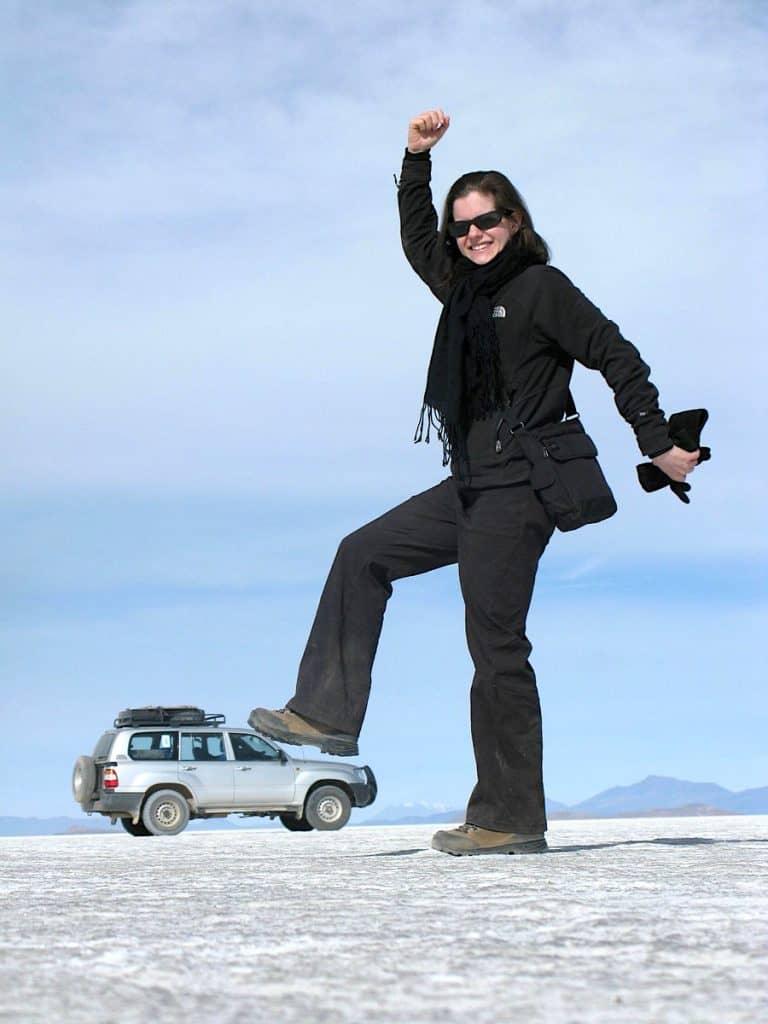
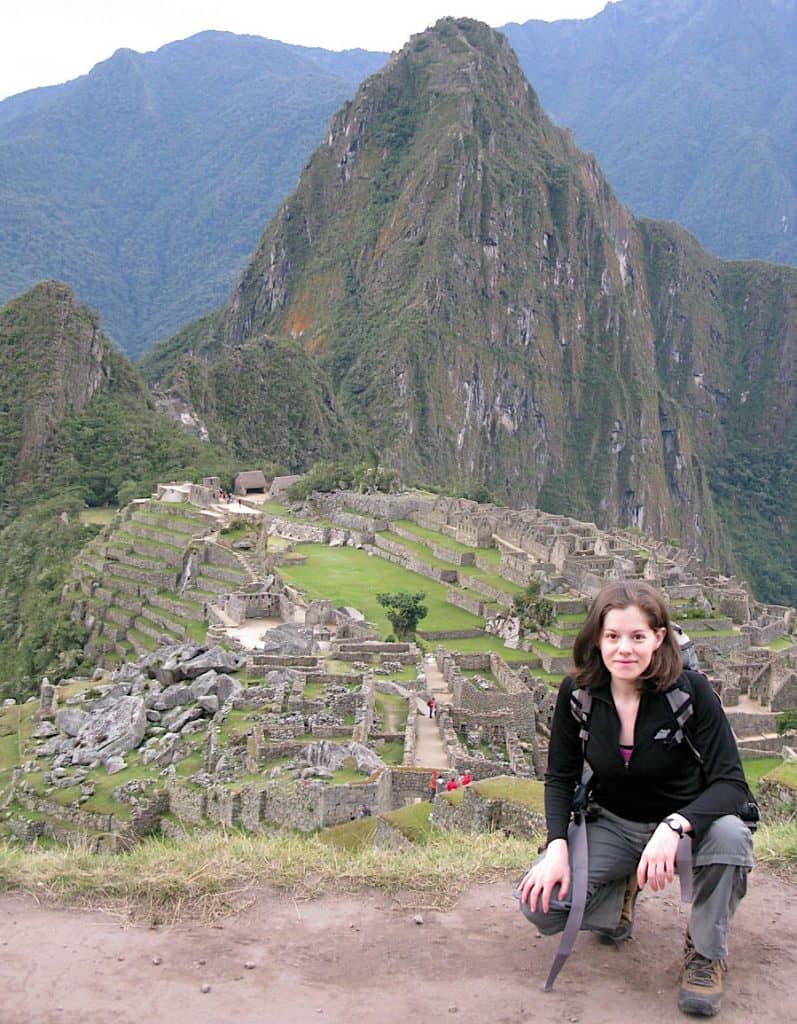
This event follows a previous instance of serendipity in 2021, when a Brooklyn homeowner discovered a backpack belonging to Ettenberg—stolen during a separate 2017 burglary—hidden inside a chimney. The recovery of these physical and digital items has provided Ettenberg with a "time capsule" of her life prior to her disability, allowing her to reconstruct a visual history that was previously thought to be permanently extinguished.
Medical Context: Understanding Spinal CSF Leaks
Ettenberg’s case highlights the complexities of spinal CSF leaks, a condition that remains underdiagnosed and often misunderstood by the general medical community. According to data from the Spinal CSF Leak Foundation, the condition affects approximately 5 out of every 100,000 people annually. While some leaks are spontaneous—often linked to connective tissue disorders such as Ehlers-Danlos Syndrome (EDS)—others are iatrogenic, resulting from medical procedures like epidurals or lumbar punctures.

The primary symptom of a spinal CSF leak is an orthostatic headache, which worsens when the patient is upright and improves when lying flat. However, long-term "leakers" often face a secondary set of complications, including:
- Brain Sagging: The physical descent of the cerebellum and brainstem, which can mimic symptoms of Chiari malformation.
- Neurological Deficits: Including muffled hearing, facial nerve palsy, and interscapular pain.
- Treatment Resistance: While many patients find relief through an autologous blood patch—a procedure where a patient’s own blood is injected into the spinal space to create a seal—a subset of patients, including Ettenberg, remains "unfixable" due to underlying genetic factors or the location of the dural tear.
Ettenberg has used her platform to co-author medical papers and advocate for better diagnostic protocols, emphasizing that the "will to recover" is often insufficient when faced with structural physiological failures.

Psychological Analysis: The Concept of Living Grief
A significant portion of Ettenberg’s recent work focuses on the distinction between bereavement grief and "living grief." While bereavement follows the finality of death, living grief—often categorized under Pauline Boss’s 1999 theory of "Ambiguous Loss"—pertains to losses that lack resolution.
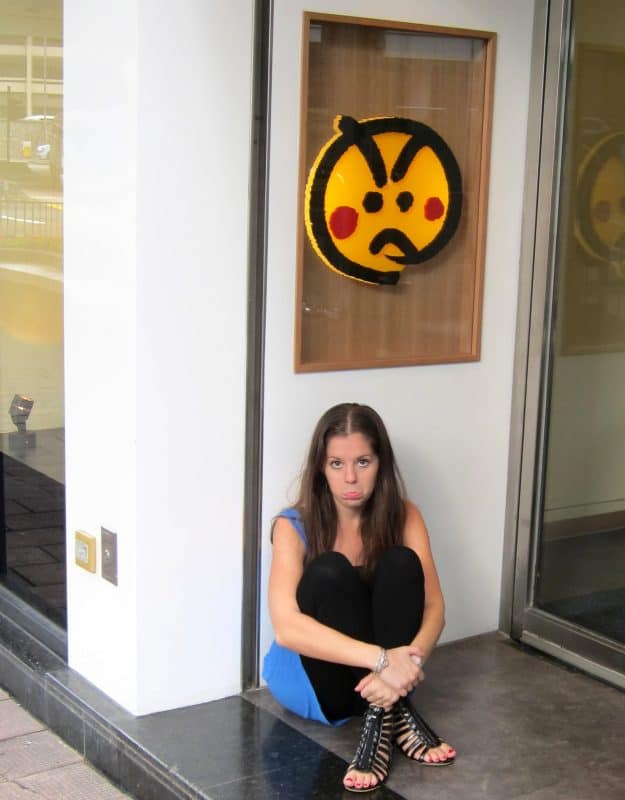
Boss’s research identifies two types of ambiguous loss:
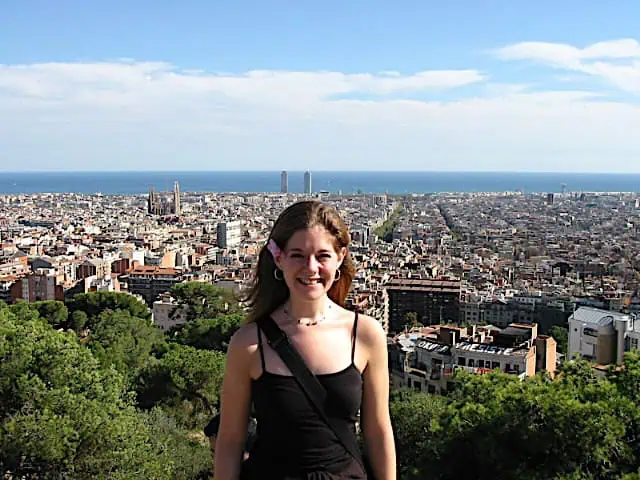
- Physical Absence with Psychological Presence: Such as a missing person or a kidnapped child.
- Physical Presence with Psychological Absence: Such as a loved one with dementia or a person whose identity has been fundamentally altered by chronic illness.
Ettenberg argues that society lacks the ritualistic framework to support those experiencing the latter. Unlike the communal support often seen following a death, patients with chronic, invisible illnesses frequently face "othering" or "patient-blaming," where friends and family may withdraw if the patient does not show quantifiable progress.
The author’s analysis suggests that the "expectation of progress" creates a disconnect between the patient’s reality and societal norms. For Ettenberg, the month of August serves as a period of heightened living grief, as it marks both her birthday—formerly celebrated with physical feats—and the anniversary of the medical injury that ended her mobile life.
Broader Implications and Societal Impact
The recovery of Ettenberg’s memories serves as a case study in the intersection of digital security, human altruism, and the enduring nature of identity. From a journalistic perspective, the story underscores several broader implications:

The Fragility of Digital Memory
The loss of Ettenberg’s data in 2010 occurred during the transition period between physical storage and cloud-based redundancy. Her experience highlights the evolution of digital archiving and the critical importance of decentralized backups for journalists and historians.
The Value of Human Altruism in the Digital Age
In an era often defined by digital scams and cybersecurity threats, the actions of the filmmaker, Ariel, represent a counter-narrative. His decision to preserve a stranger’s data for over a decade and his subsequent effort to return it without seeking compensation reflects a rare form of digital ethics.
The Visibility of Long-Term Disability
By documenting her "leakaversary" and the psychological toll of her condition, Ettenberg contributes to a growing body of literature regarding the lived experience of disability. Her narrative challenges the "triumph over adversity" trope common in mainstream media, offering instead a factual account of "reframing" a life within the constraints of permanent impairment.
As Ettenberg enters her late 40s, her focus has shifted from the mountains she once climbed to the "bright spots" of a restricted existence. The return of her travel and family archives does not cure her physical condition, but it provides a necessary bridge to a past identity, allowing for a more integrated sense of self. The story remains a poignant reminder that while the path of chronic illness is often one of subtraction, the universe occasionally allows for a surprising addition.
